
pro
ibrahim Haras
Software Developer | Vide Coding Cleanup Specialist



A Family of Modern, Plain‐Language, NonCommercial Licenses
The Haras License Suite is a family of plain‐language licenses that are non‐commercial by default, inspired by Blue Oak Model License and Blue Oak Contributor License.
Features
Plain Language
The license texts use plain language and short sentences wherever possible. They aim to remain understandable to creators, contributors, and users without requiring legal expertise, while preserving the legal effect of traditional license terms.
Broad Permissions
The license texts grant permissions through broad and concise terms rather than long lists of individual rights. Each grant covers all contributions to the work—present and future.
Companion Contributor License
Each Public license in the suite is paired with a Contributor license. Together they provide a straightforward framework for accepting contributions while ensuring that contributors retain ownership of their work and grant the permissions necessary for the project to use, distribute, and maintain it.
Lightweight Attribution
Attribution requirements are minimized wherever legally permissible. When attribution is required, it is stated explicitly and kept simple—no complex conditions, no chained obligations, and no burdensome compliance requirements for downstream users.
An automatic cure provision allows licensees who fall short to correct the failure within 30 days of the notice before losing their license.
Legal Certainty
Most common licenses leave open a key question: whether they constitute a bare license, a contract, or both. The Public licenses resolve this explicitly— their terms are both conditions of the license and obligations under an agreement. This clarifies what contributors can enforce and ensures the license cannot be quietly disregarded.
NonCommercial by Default
All Public licenses restrict use to non‐commercial purposes. This allows authors to share their work openly while retaining control over commercial exploitation. Users seeking commercial rights must obtain a separate arrangement with the steward.
0
38
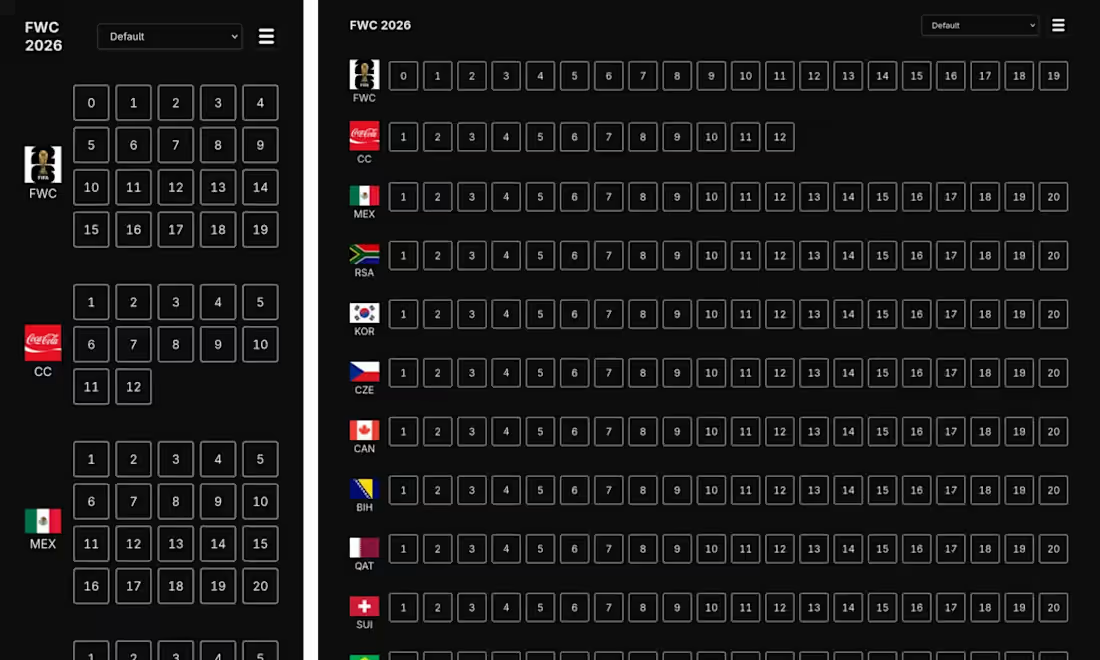
A fast, privacy‐focused, offline‐first web application for tracking and
sharing your FIFA World Cup 2026™ Panini Sticker collections.
Features
Complete List
Track all 992 stickers in the official Panini album:
• 48 qualified nations × 20 stickers
• 20 FIFA stickers
• 12 Coca‐Cola stickers
Fast Collection Management
• Left Click (or Tap) to mark a sticker as collected.
• Right Click (or Long Press) to remove it.
Multiple Collections
Create and manage multiple named collections:
• Personal album
• Friend’s album
• Swap inventory
Sharing & Trading
Generate structured summaries of Completed/Missing/Duplicate stickers.
Formatted to be easily understood by both people and AI agents, making
trading, exchange, and collection analysis more efficient.
Privacy First
All data is stored locally in your browser. Your collection data:
• Never leaves your device
• Is never uploaded to a server
• Requires no account or registration
Light & Dark Mode
Automatically follows your operating system or browser theme.
Mobile Friendly
Designed for both desktop and mobile devices, including touch‐friendly
controls for quick collection updates.
0
48
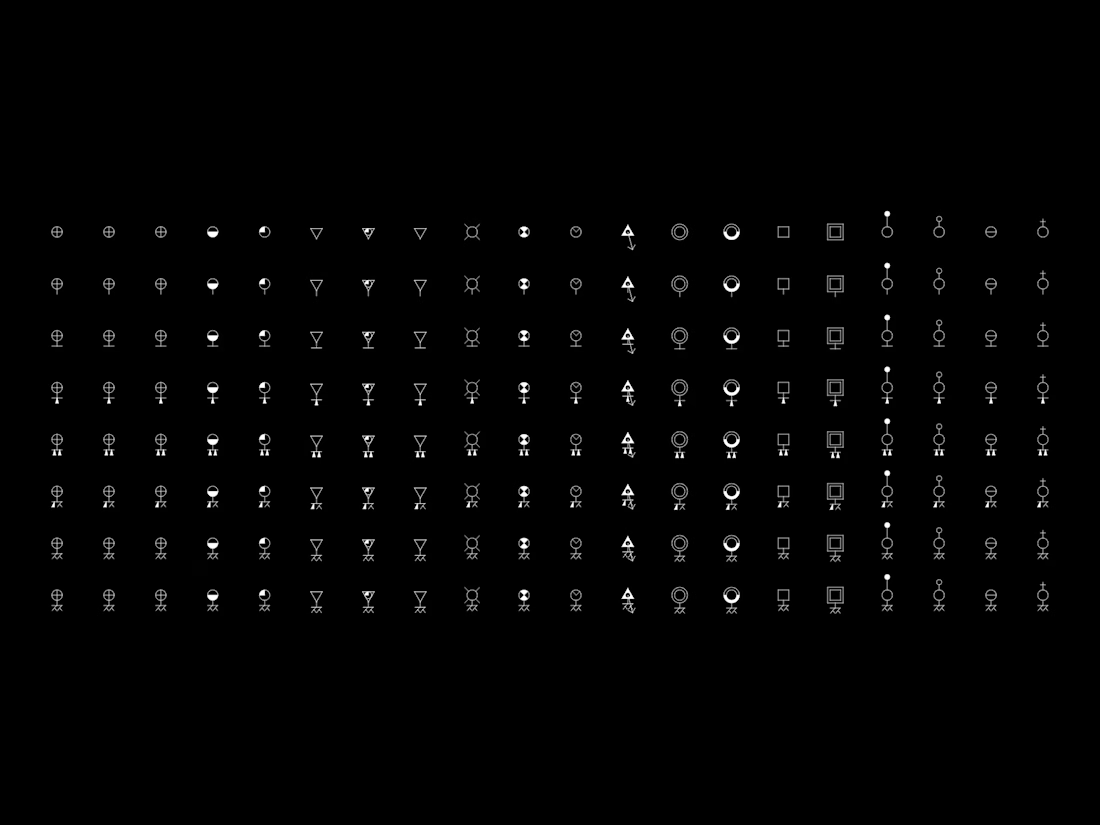
tek2dxf — Python library to parse .tek files and render them in DXF format.
0
107
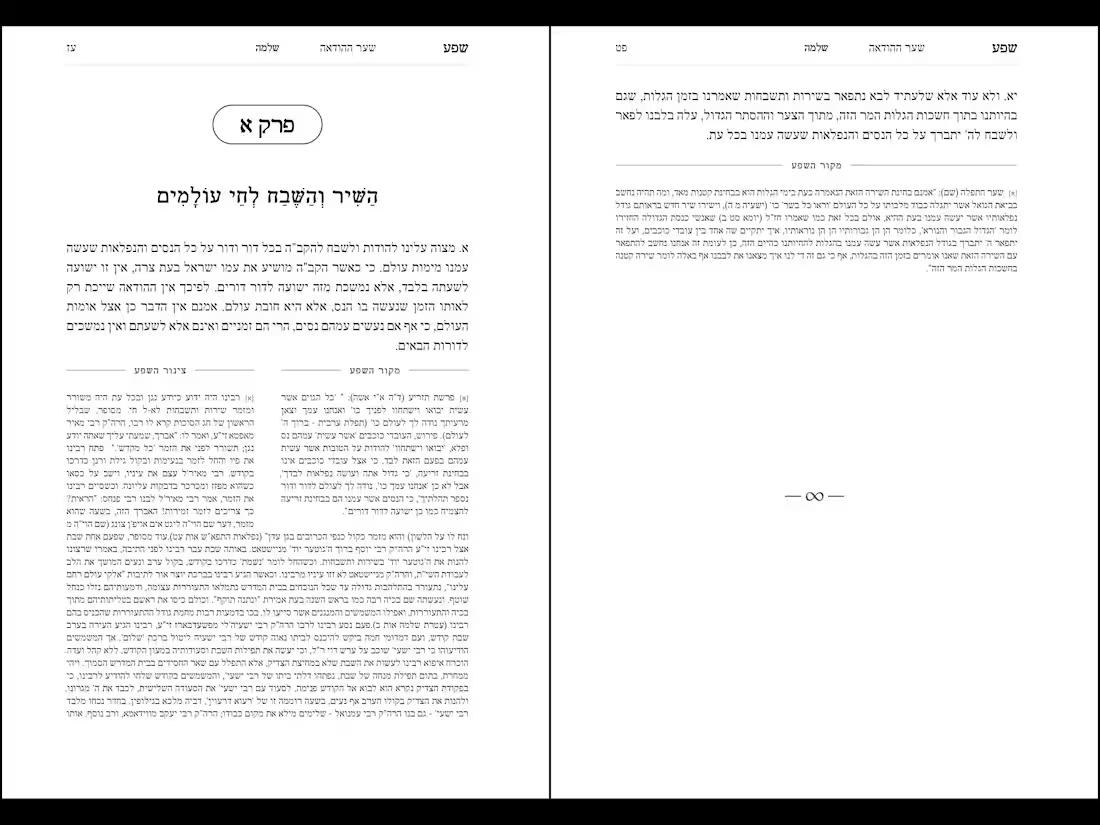
Automated Hebrew Sefer Typesetting in Typst
An end‐to‐end publishing pipeline that transforms structured JSON extraction of a Hebrew sefer (religious book) into a typeset PDF matching the 8‐zone layout of published editions:
1. Running header (folio letter in gematria, shaar/chapter label)
2. Chapter cartouche
3. Vowelised chapter title
4. Section subtitle (grey, letter‐spaced)
5. Main body (justified, RTL, inline call‐outs)
6. Two‐column note apparatus: footnotes (right) + endnotes (left)
7. Spillover zone (full‐width continuation of column overflow)
8. End‐of‐chapter ornament
Engineered a data‐driven Typst template that consumes structured JSON and automatically manages document composition. The system performs chapter detection, counter management, note placement, cartouche rendering, and page‐level layout calculations while balancing note columns dynamically to maximize space efficiency and maintain visual consistency.
The system replaced a labor‐intensive manual typesetting workflow with automated PDF generation while preserving the typographic conventions of the published edition. Complex page composition, note placement, chapter formatting, and RTL layout are handled automatically, reducing production effort and eliminating repetitive layout work.
0
64