
Syed Ather
Interactive Systems Engineer automating workflow and insight
New to Contra
Syed is ready for their next project!

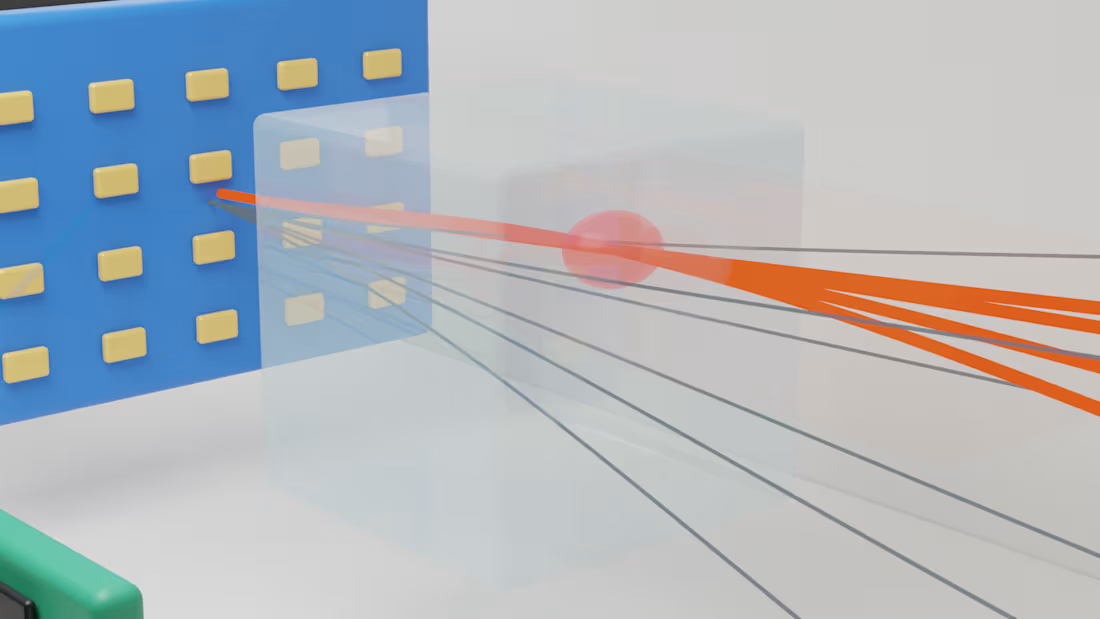
Janus Sphere Innovations - RBYRCT
0
25
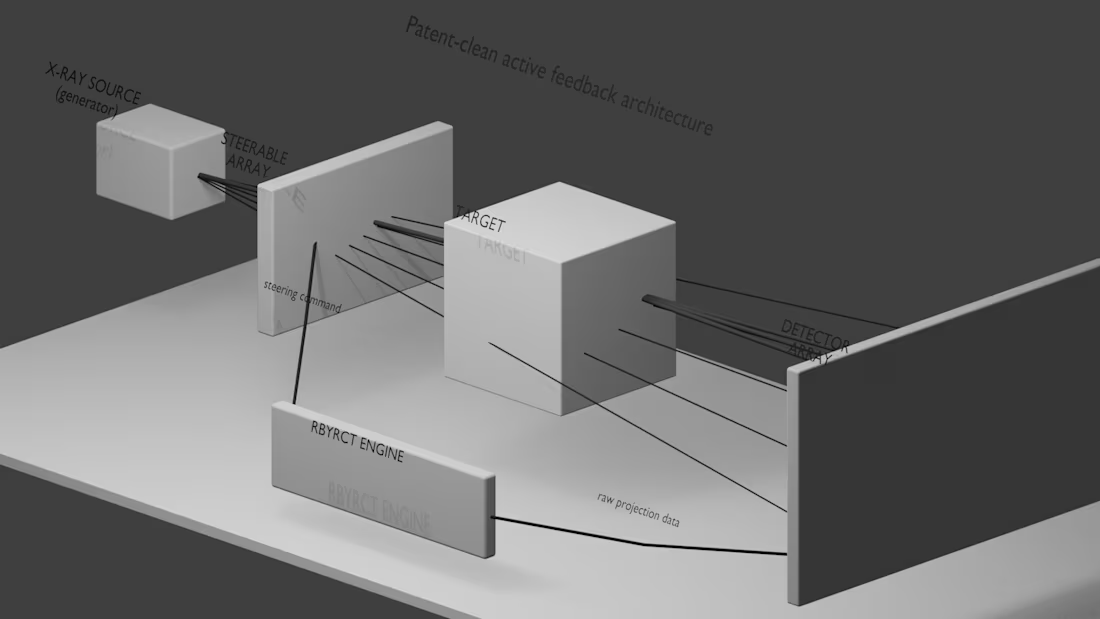
Janus Sphere Innovations - RBYRCT Architecture
0
45
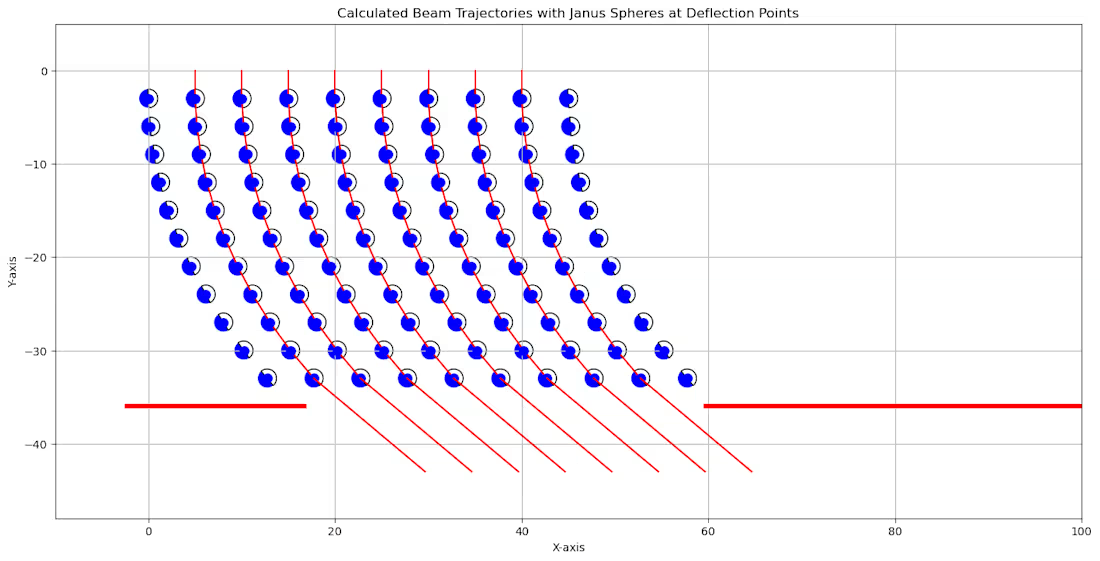
This project models programmable beam steering through layered deflection systems using physics-informed simulation and computational geometry. The visualization shows calculated trajectory paths through a structured array of steering elements, enabling controlled directional behavior across multiple interaction points.
The work combines simulation, optimization, and systems modeling to study how complex trajectories emerge from local decision rules - the same types of computational reasoning used in AI systems, robotics, scientific computing, and advanced engineering workflows.
0
47
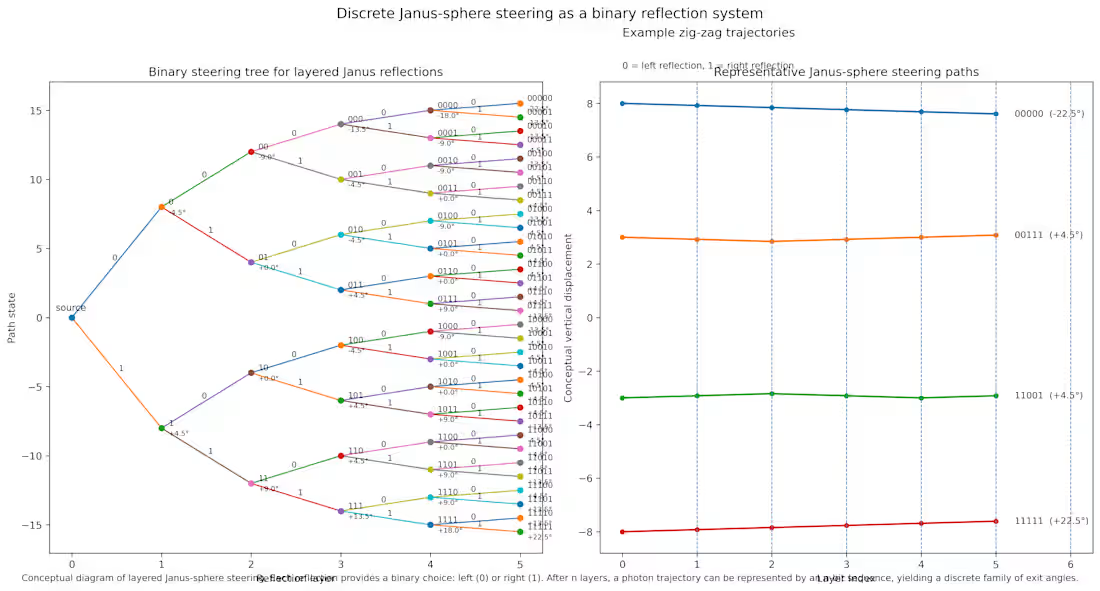
This project explores a novel computational model for steerable X-ray trajectories using layered Janus structures and binary reflection logic. The system treats each reflection event as a discrete decision point, allowing photon paths to be represented as binary sequences that produce controllable exit trajectories.
The visualization demonstrates how complex steering behavior can emerge from simple layered interactions, combining ideas from computational modeling, physics-based simulation, optimization, and systems architecture. This work contributes to broader research in computational imaging, medical technology, and intelligent physical systems design.
0
49