























Additional resources
What Does a Data Modelling Analyst Do?Defining the data modelling analyst roleDistinction between data modelling and data analysisBusiness value of robust data modelsThe Business Case for Hiring Data Modelling AnalystsCost savings through optimized database designEnabling data-driven decision-making at scaleMitigating risk via data integrity and compliance
In today's data-driven business landscape, organizations are increasingly recognizing the critical role that structured data frameworks play in enabling informed decision-making. Behind these powerful frameworks are the skilled professionals who design and implement them - data modelling analysts.
What Does a Data Modelling Analyst Do?
Defining the data modelling analyst role
A data modelling analyst serves as the architect of an organization's data infrastructure, creating structured frameworks that transform raw information into valuable business assets. These specialists design comprehensive blueprints that define how data is organized, stored, accessed, and related within various systems. Unlike other data professionals who might focus on extracting insights, data modelling analysts establish the foundational structures that make those insights possible in the first place.
Their work spans multiple levels of abstraction - from high-level conceptual designs that capture business entities to detailed physical implementations that optimize database performance. By establishing clear data relationships and hierarchies, they ensure information flows efficiently throughout the organization while maintaining integrity and consistency.
Distinction between data modelling and data analysis
While often confused, data modelling and data analysis represent distinct disciplines with complementary functions:
Data modelling focuses on creating structural frameworks that organize information logically, defining relationships between different data elements, and establishing rules for data integrity. This process is primarily concerned with how data is stored and structured within systems.
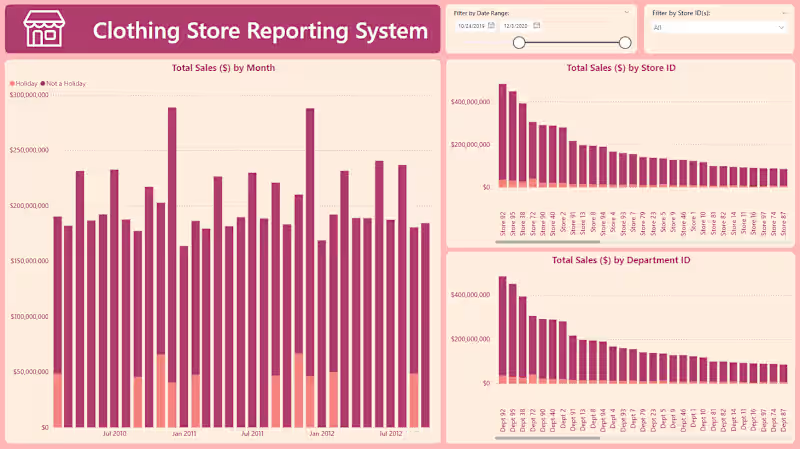
In contrast, data analysis concentrates on examining existing datasets to identify patterns, draw conclusions, and generate actionable insights. Analysts work with the data structures that modellers have created, applying statistical methods and visualization techniques to extract business value.
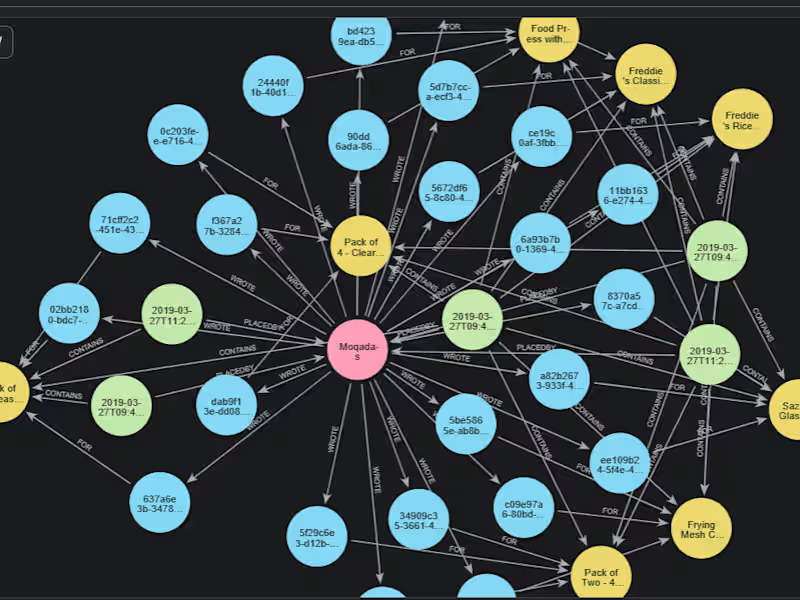
The key difference lies in their primary outputs: data modelling analysts produce entity-relationship diagrams, schema definitions, and database designs, while data analysts generate reports, dashboards, and predictive models. Both roles are essential, but they operate at different stages of the data lifecycle.
Business value of robust data models
Well-designed data models deliver substantial business value across multiple dimensions:
Improved data quality and consistency through standardized definitions and validation rules
Enhanced data integrity that prevents errors and duplications
Faster query performance and reporting through optimized database structures
Better business intelligence capabilities built on properly organized information
Reduced development time for new applications and features
Simplified compliance with regulatory requirements through clear data lineage
Greater agility in responding to changing business needs
Organizations with mature data modelling practices typically experience 30-40% improvements in storage efficiency and significantly faster development cycles compared to those without formalized models. As data volumes continue to grow exponentially, the value of effective modelling becomes increasingly pronounced.
The Business Case for Hiring Data Modelling Analysts
Cost savings through optimized database design
Investing in skilled data modelling analysts delivers substantial cost savings through more efficient database designs. Without proper modelling, organizations often experience:
Excessive storage costs from redundant data and inefficient structures
Performance bottlenecks requiring expensive hardware upgrades
Extended development cycles due to unclear data relationships
Higher maintenance costs from managing complex, undocumented systems
By implementing normalized database designs with appropriate indexing strategies, data modelling analysts can reduce storage requirements by 30-40% while simultaneously improving query performance. This optimization extends hardware lifecycles and reduces cloud infrastructure costs, particularly for organizations dealing with large data volumes.
Furthermore, well-designed data structures minimize the need for complex workarounds and custom code, reducing development and maintenance costs over the application lifecycle. The upfront investment in proper modelling pays dividends through reduced technical debt and more sustainable systems.
Enabling data-driven decision-making at scale
Robust data models create the foundation for organization-wide data-driven decision making. When information is properly structured and relationships are clearly defined, businesses can:
Generate consistent reports across departments using standardized definitions
Create self-service analytics capabilities for non-technical users
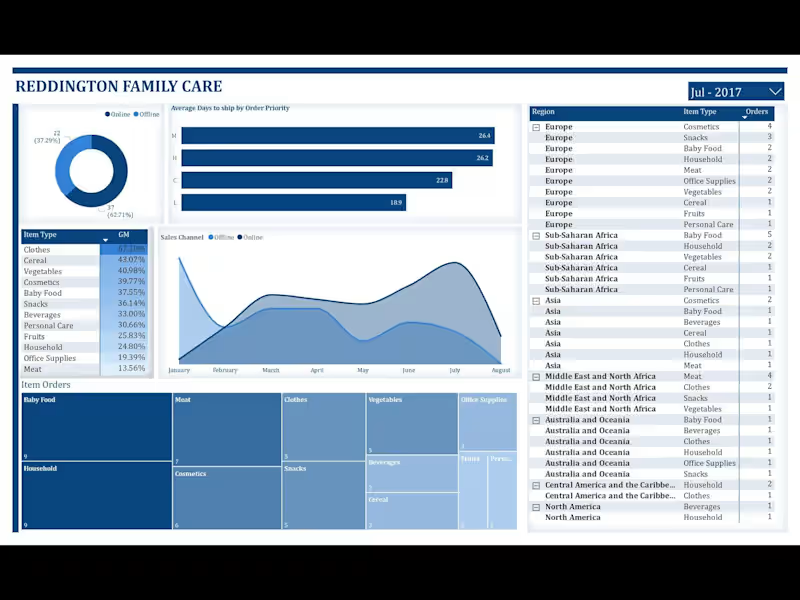
Develop dashboards that combine data from multiple sources accurately
Scale analytical capabilities without compromising performance
This democratization of data access empowers stakeholders throughout the organization to make informed decisions based on reliable information. Rather than waiting for IT to generate custom reports, users can leverage pre-built analytical tools that draw from well-structured data sources.
The result is faster, more confident decision-making that drives competitive advantage. Organizations with mature data modelling practices report 25-35% improvements in decision velocity compared to those lacking structured approaches.
Mitigating risk via data integrity and compliance
In today's regulatory environment, data-related risks pose significant threats to organizations. Data modelling analysts play a crucial role in mitigating these risks through:
Implementing validation rules that prevent invalid data entry
Creating clear data lineage documentation for audit purposes
Designing security controls at the data model level
Establishing frameworks for regulatory compliance (GDPR, CCPA, etc.)
By embedding these controls directly into the data architecture, organizations can prevent issues before they occur rather than detecting them after the fact. This proactive approach significantly reduces the risk of compliance violations, data breaches, and decision errors based on faulty information.
Organizations with formalized data modelling practices report 60% fewer data quality incidents and substantially lower compliance-related costs compared to those without structured approaches. As regulatory scrutiny intensifies across industries, this risk mitigation function becomes increasingly valuable.