Jarrit Hosking
Website design, Saas, Custom tools, Full stack Development
- 5.00
- Rating
- 1
- Followers



Logos created with AI.
0
9
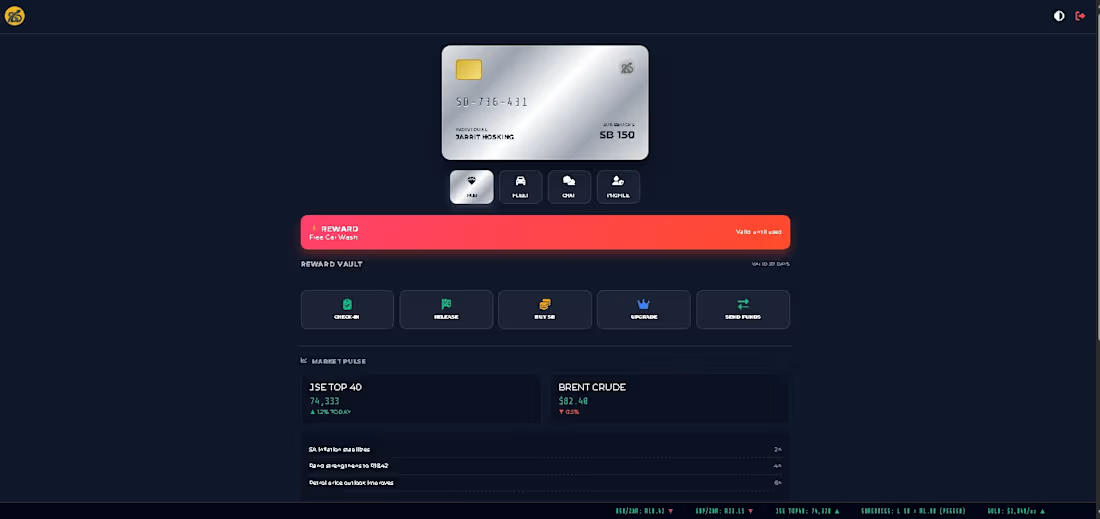
Sure Drive solves a payment and trust problem for repair workshops. A straightforward repair savings fund would have run into South African lay-by and financial-services rules, so I designed the product differently. Customers pay through the payment gateway and receive Sure Bucks (R1 = 1 SB), a digital credit they redeem for workshop services such as repairs, washes and polishes. Because it is structured as prepaid credit and not a savings or credit product, it avoids the obligations those products carry.
I designed and built the whole system myself:
A customer dashboard showing live Sure Bucks balance and available rewards
An admin dashboard for the workshop covering repair intake, progress tracking and reward redemption
Payment integration, with money handled through the gateway and the customer-facing balance held as credit
Cloud-hosted infrastructure that reduces cash handling and gives the business more certainty on advance payments
The interesting part of this project was the problem definition. I had to work out which legal category each version of the idea fell into, then design the lightest structure that still delivered the same value to the customer.
I built it with AI-assisted development (Claude and Claude Code) as my core working method, and I direct, review and test every change.
0
27
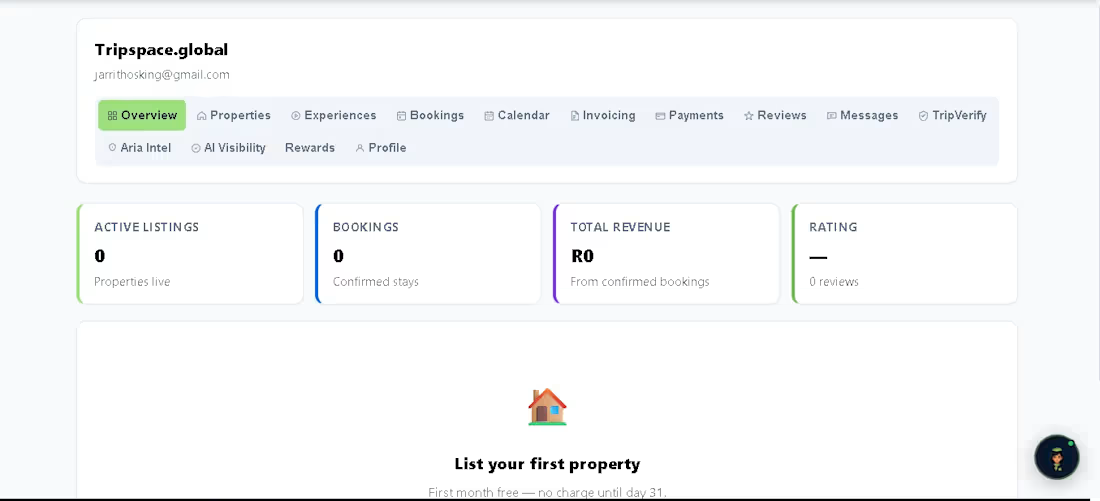
A live accommodation marketplace where hosts pay one flat monthly fee instead of the 15-25% per-booking commission charged by Booking.com (http://Booking.com) and Airbnb. Designed, built and deployed solo.
Full description
tripspace.global (http://tripspace.global) is a two-sided accommodation marketplace built around a different pricing model. Hosts pay a flat subscription (R450 per 5 rooms) and keep 100% of their booking revenue. The platform never touches guest payments, which keeps the model simple and avoids payment-facilitator regulation.
I designed and built the whole product myself: frontend, backend, security rules, admin tooling and growth systems. It includes:
Host and traveller experiences with listings, search and real-time messaging
A tiered Partner and Affiliate referral system with automated commission tracking
A role-based admin system with enforced Firestore security rules, not just hidden UI
TripGuard, an AI-driven traveller trust and safety feature built on Gemini
A lead-generation tool that uses the Google Places API, with hard spend caps to prevent runaway API costs
Subscription billing handled through serverless Cloud Functions
I built it with AI-assisted development (Claude and Claude Code) as my core working method. I direct, review and test every change, and I disclose that openly.
Tech stack
React, TypeScript, Vite, Firebase (Firestore, Auth, Hosting, Cloud Functions on Node.js), Google Cloud Platform, Cloudflare, PayPal, Google Places API, Gemini API, Resend
Suggested skill tags
Full-Stack Development, React, TypeScript, Firebase, Serverless, Web Security, API Integration, AI Integration
0
30
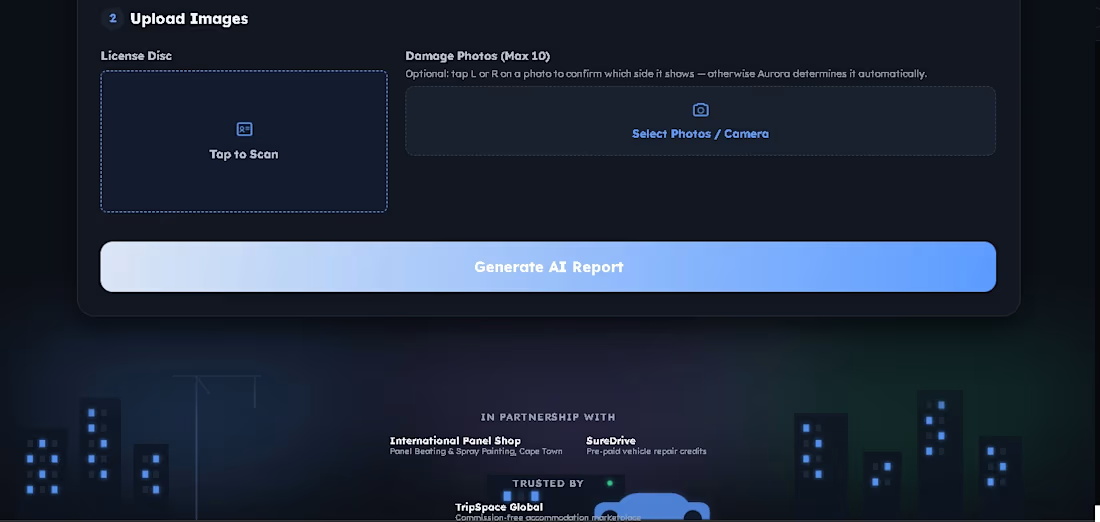
Aurora is an AI vehicle damage assessment tool. Upload photos of a damaged car and get an itemised, insurer-ready repair estimate in minutes.
Full description
Aurora turns photos of vehicle damage into a professional, panel-by-panel repair quote. The user uploads a photo of the vehicle’s license disc and up to 10 damage photos. Aurora identifies the vehicle, works out which panels and components are damaged, and produces a PDF estimate with three pricing tiers (Economy, Mid-tier and OEM) that can go straight to an insurer or panel shop.
It was built for the South African panel-beating and insurance market, where quotes normally need a physical inspection and a wait. It’s developed in partnership with International Panel Shop in Cape Town, which makes the output practical for real workshops.
What makes it more than a photo classifier:
Itemises repairs the way a real assessor does: supply, strip and assemble, and prime and spray for each panel, plus blend lines for adjacent panels.
Draws on collision-repair trade knowledge, including which components a given impact pattern predictably affects (radiator, A/C condenser, cradle sections, bonnet hardware, grille parts).
Separates outsourced mechanical work (cooling, A/C, suspension and steering) into its own section with a coordination fee.
Runs a second AI pass that independently checks the first one’s work, including left/right orientation, which is a common failure for vision models.
Lets the user manually confirm left or right on any photo as a hard override.
Learns from real data. Verified quotes, invoices and Audatex-style estimates from genuine motor-trade businesses are stored and blended into future pricing, so accuracy improves as more real documents are uploaded.
Cross-checks vehicle market value and part prices against live web search.
Works as an installable PWA on any device, with light and dark themes.
Tech stack
AI: Google Gemini (3.8 Flash) with Google Search grounding, plus Google Cloud Vision as a secondary cross-check
Backend: Firebase Cloud Functions (2nd gen, Node.js) on Google Cloud
Data and storage: Cloud Firestore, Cloud Storage, Secret Manager
Auth: Firebase Authentication (email and Google sign-in), with server-side access control
Frontend: HTML, CSS and JavaScript PWA with Tailwind CSS, hosted on Firebase Hosting
Infrastructure: Cloudflare for DNS and CDN, custom domain at aurora-repair.com (http://aurora-repair.com)
Structured data: JSON-LD schema (SoftwareApplication, FAQ, Organization) and an llms.txt file so AI search engines can cite it
0
40