
Fajar Rizwan
CS student & designer automating the future with AI.
New to Contra
Fajar is ready for their next project!
Taking corporate email automation beyond basic template generation. 🚀
I just open-sourced a new project: Autonomous Cold Email & Inbound Replier Agent! This is a modular, production-ready system built completely in pure Python using CrewAI for multi-agent orchestration and Streamlit for a clean, modern interactive UI.
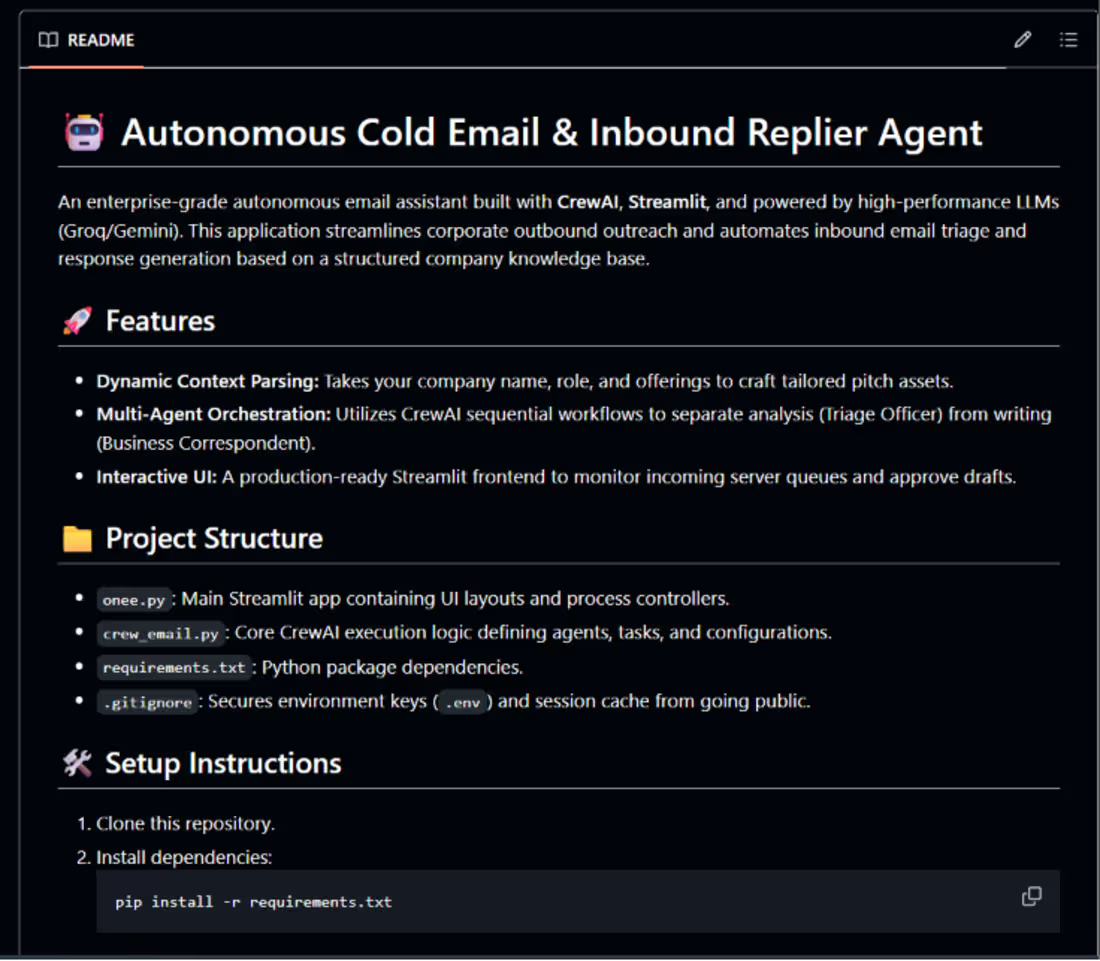
As shown in image_ea414f.png, the system moves away from single-prompt generation and splits the operational workload into specialized, sequential steps to ensure high-quality enterprise triage:
Dynamic Context Parsing: Ingests dynamic company names, specific roles, and product offerings to craft completely personalized pitch assets based on an internal knowledge base.
Multi-Agent Orchestration: Uses a CrewAI sequential flow to separate analysis from execution. A Triage Officer handles data categorization while a Business Correspondent handles context-aware drafting.
100% Free-Tier & Cost Compliance: Powered entirely by high-performance models via free-tier API orchestration (utilizing gemini-2.5-flash via Google AI Studio and Groq Cloud AI as a high-speed secondary model).
Interactive UI Safety: Features a polished Streamlit interface (onee.py (http://onee.py)) to monitor active server queues and act as a human-in-the-loop gatekeeper to approve drafts before they go live.
The repository is modularly structured, completely production-ready, and optimized with strict exception handling to respect rate limits safely.
🔗 Check out the code here: https://github.com/26FajarRizwan/Cold_Email_Replier_Agent
#CrewAI #Streamlit #AIEngineering #Python #GenerativeAI #LLMs #OpenSource #Automation #GoogleGemini
0
43
🎮 Level Up: Built a Multi-Agent AI Game Designer with CrewAI (https://www.linkedin.com/company/getcrewai/) & Groq (https://www.linkedin.com/company/groq/)! 🚀
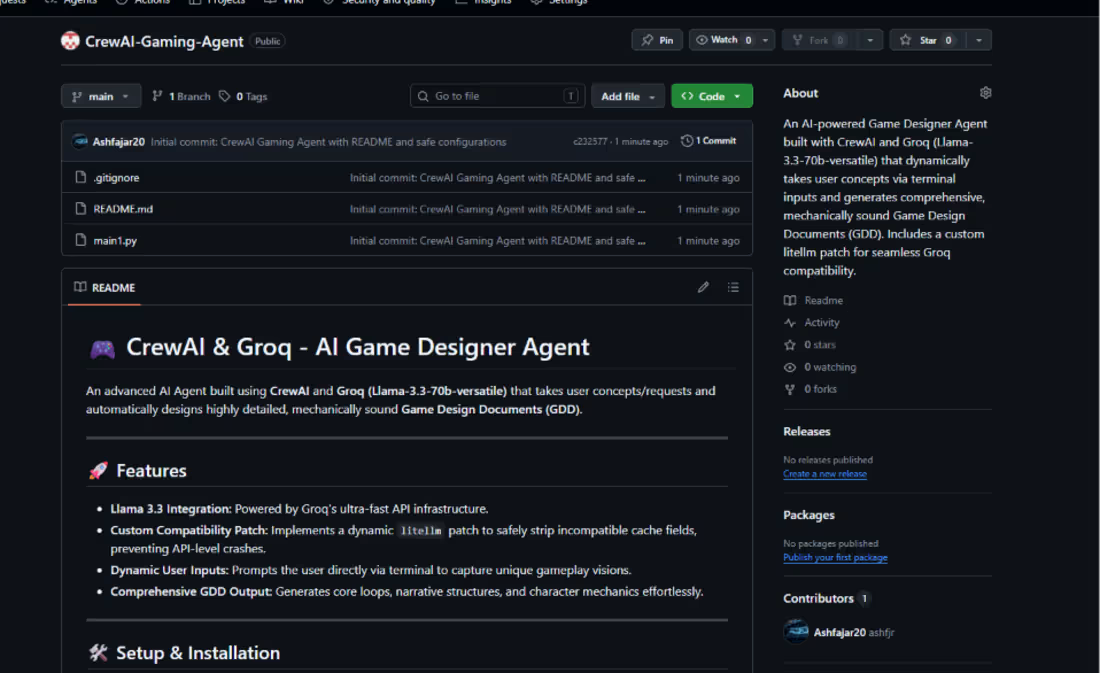
I'm thrilled to share my latest projecta modular hashtag#AI (https://www.linkedin.com/search/results/all/?keywords=%23ai&origin=HASH_TAG_FROM_FEED) Agent system designed to transform a simple text idea into a full, production-ready Game Design Document (GDD)! 🕹️🤖
As game development gets more complex, brainstorming core mechanics, balance, and narrative loops manually can take days. I built this automation agent to instantly structure wild game ideas into comprehensive design blueprints.
🛠️ How It Works:
Dynamic Terminal Prompting: Captures unique, raw gameplay ideas directly from user input via the terminal.
AI Game Designer Agent: Powered by Groq’s lightning-fast Llama-3.3-70b-versatile model, it acts as a veteran designer with 10+ years of AAA experience.
Custom Stability Patch: Implemented a robust dynamic litellm execution patch to strip out incompatible caching fields, ensuring 100% crash-free API calls.
Structured GDD Output: Automatically generates core gameplay loops, combat systems, character arcs, and world-building documentation.
🏗️ Modular Architecture & Tech Stack:
Framework: CrewAI (https://www.linkedin.com/company/crewai-inc/) (Multi-Agent Architecture)
Inference Engine: Groq (https://www.linkedin.com/company/groq/) API Cloud
LLM: Llama (https://www.linkedin.com/company/ai-deepseek/)-3.3-70b-versatile
Environment Management: Python (https://www.linkedin.com/company/learn-python-programming/) hashtag#python (https://www.linkedin.com/search/results/all/?keywords=%23python&origin=HASH_TAG_FROM_FEED)-hashtag#dotenv (https://www.linkedin.com/search/results/all/?keywords=%23dotenv&origin=HASH_TAG_FROM_FEED) & hashtag#strict (https://www.linkedin.com/search/results/all/?keywords=%23strict&origin=HASH_TAG_FROM_FEED) .hashtag#gitignore (https://www.linkedin.com/search/results/all/?keywords=%23gitignore&origin=HASH_TAG_FROM_FEED) protocol to ensure zero leakage of private hashtag#API (https://www.linkedin.com/search/results/all/?keywords=%23api&origin=HASH_TAG_FROM_FEED) credentials.
By separating my automation projects into clean, isolated ecosystems, I'm building a highly scalable portfolio of production-grade AI tools.
📂 Check out the GitHub Repository here: https://lnkd.in/dFecvgBc
(https://lnkd.in/dFecvgBc)What kind of game would you ask this agent to design first? Let's connect and discuss the power of fast inference in creative automation! 👇
hashtag#AI (https://www.linkedin.com/search/results/all/?keywords=%23ai&origin=HASH_TAG_FROM_FEED) hashtag#GenerativeAI (https://www.linkedin.com/search/results/all/?keywords=%23generativeai&origin=HASH_TAG_FROM_FEED) hashtag#CrewAI (https://www.linkedin.com/search/results/all/?keywords=%23crewai&origin=HASH_TAG_FROM_FEED) hashtag#Groq (https://www.linkedin.com/search/results/all/?keywords=%23groq&origin=HASH_TAG_FROM_FEED) hashtag#Llama3 (https://www.linkedin.com/search/results/all/?keywords=%23llama3&origin=HASH_TAG_FROM_FEED) hashtag#GameDesign (https://www.linkedin.com/search/results/all/?keywords=%23gamedesign&origin=HASH_TAG_FROM_FEED) hashtag#Python (https://www.linkedin.com/search/results/all/?keywords=%23python&origin=HASH_TAG_FROM_FEED) hashtag#Automation (https://www.linkedin.com/search/results/all/?keywords=%23automation&origin=HASH_TAG_FROM_FEED) hashtag#ArtificialIntelligence (https://www.linkedin.com/search/results/all/?keywords=%23artificialintelligence&origin=HASH_TAG_FROM_FEED) hashtag#SoftwareEngineering (https://www.linkedin.com/search/results/all/?keywords=%23softwareengineering&origin=HASH_TAG_FROM_FEED)
0
47
Just Built: A Multi-Agent AI CV/Resume Tailor using CrewAI & Google Gemini 2.5 Flash! 📝
Huge thanks to Skill2Success for giving me this platform and helping me in making these type of projects and also Zarmina Sanam for guiding me in best way!!!!
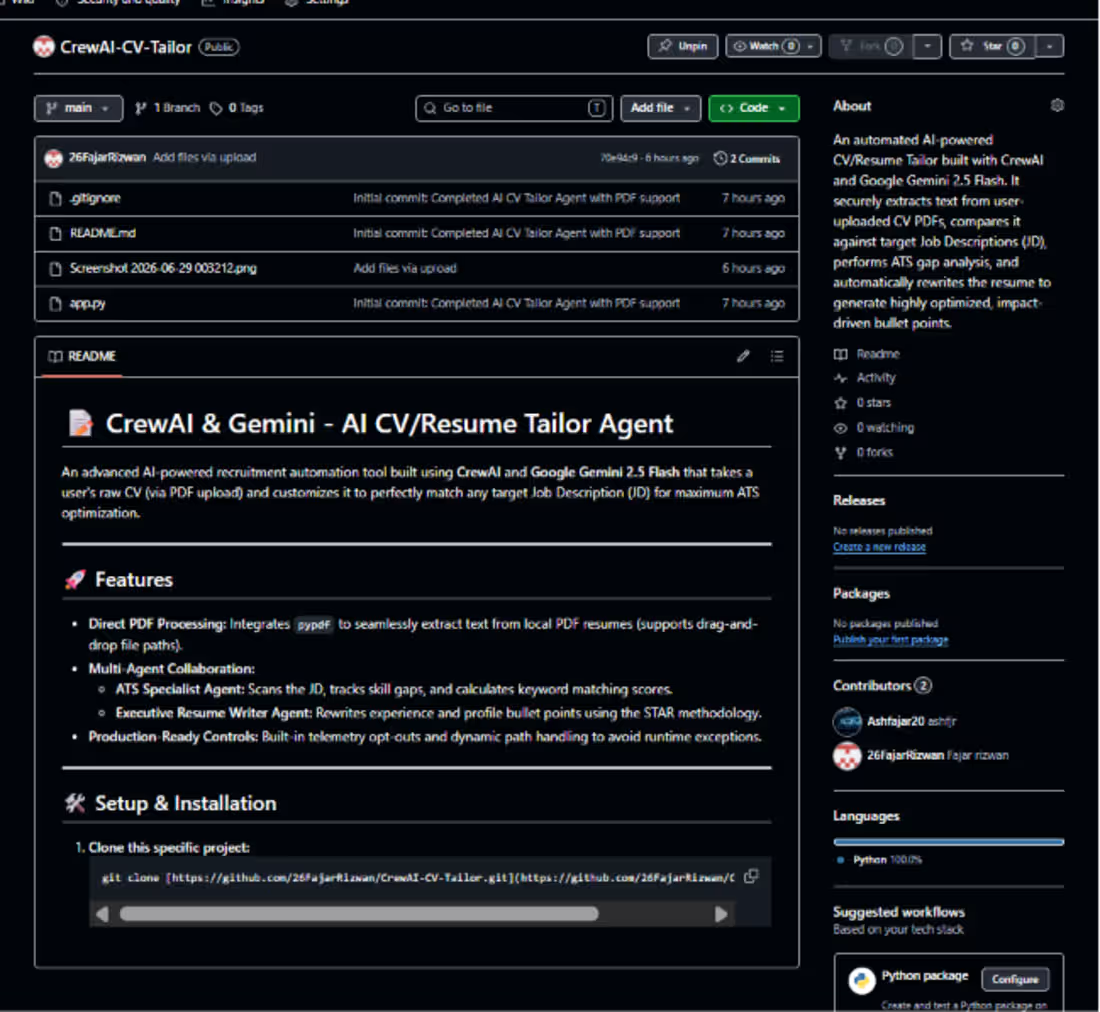
Job hunting is tough, but tailoring your resume for every single job description shouldn't take hours. To solve this real-world problem, I built an automated multi-agent system that optimizes resumes for ATS algorithms in seconds!
🛠️ How it works:
Local PDF Extraction: Uses pypdf to read the candidate's resume directly via file paths (supporting drag-and-drop inputs).
ATS Specialist Agent: Analyzes the target Job Description (JD), evaluates keyword density, and flags technical or formatting gaps.
Executive Resume Writer Agent: Automatically re-architects and rewrites resume bullet points using the impact-driven STAR methodology without fabricating skills.
🏗️ Tech Stack:
Orchestration: CrewAI Framework
LLM Backbone: Google Gemini 2.5 Flash (Ultra-fast & accurate processing)
Security: strict .gitignore configuration to safeguard personal API credentials.
This project isolates production environment workflows perfectly and delivers tailored markdown resumes ready for corporate submissions!
📂 Check out the GitHub Repository here: https://lnkd.in/dvT4BK2S
Let's connect and discuss building autonomous agents for productivity workflows! 👇
1
62
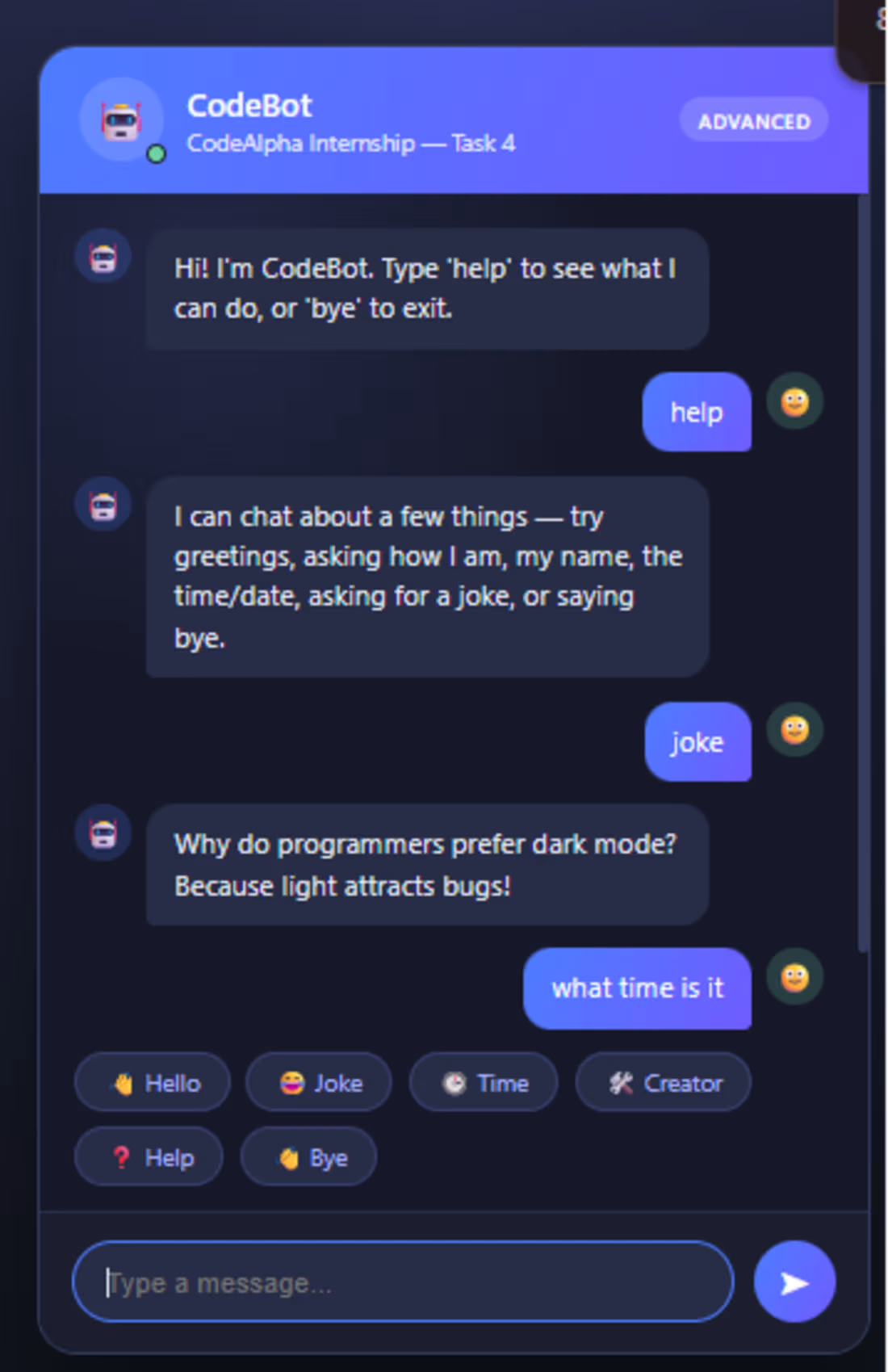
rule-based chatbot built in Python that replies to greetings, questions, and casual conversation using keyword matching — no AI/ML involved. Includes an advanced version with jokes, time/date, and emotion responses, plus a bonus HTML/CSS/JS chat UI. CodeAlpha Python Internship Task 4.
0
42