

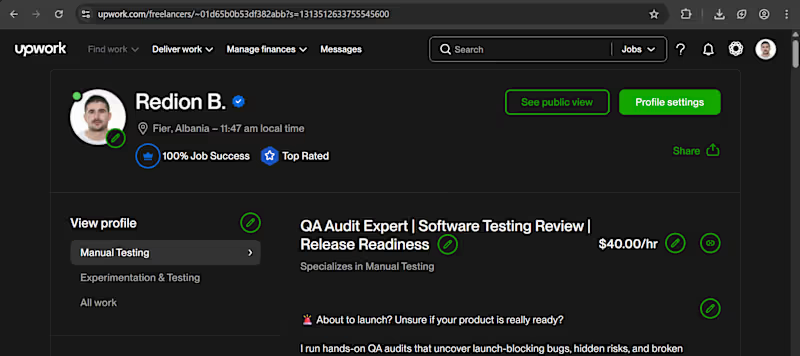
QA Audit — Rapid Product Quality Reviews (Upwork)
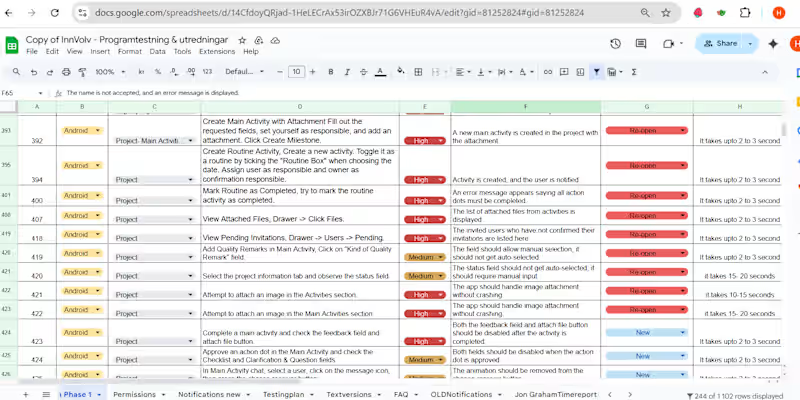
Delivered short-term QA audits for multiple startups, reviewing products from a first-time user and quality perspective. Focused on fast feedback, clarity, and launch readiness.
Highlights
Created smoke checklists and readiness / release validation documents
Identified blockers, broken flows, and UX issues quickly
Delivered clear reports with reproduction steps, screenshots, and actionable recommendations
3
199

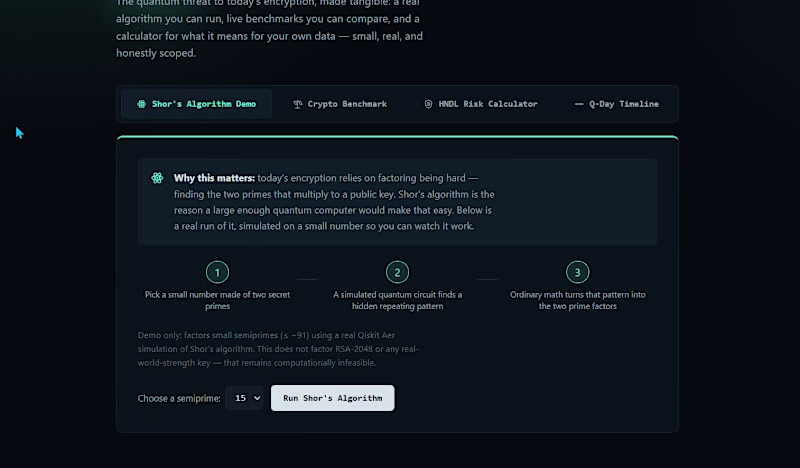
CryptoHorizon an interactive app that makes the quantum threat to encryption real instead of theoretical: a live Shor's-algorithm demo, a classical-vs-post-quantum crypto benchmark, a personal "harvest now, decrypt later" risk calculator, and a sourced Q-Day timeline, all in one dashboard.
Defining feature is honesty by design: every number on screen is computed live at request time, never hardcoded RSA-2048 and ECC P-256 keys get generated, benchmarked, and compared against NIST's ML-KEM and ML-DSA in real time, and the quantum demo runs an actual Qiskit circuit against small, pre-validated semiprimes rather than a lookup table dressed up as a result. Only one thing is allowed to leak into the UI's language: a rule baked in from commit one that nothing may imply real-world RSA is broken or claim quantum advantage.
Under the hood, Shor's algorithm runs for real superposition over a counting register, controlled modular exponentiation, inverse QFT, continued-fraction extraction, then a classical gcd step to pull out the factors on a FastAPI backend with no shortcuts. The risk calculator checks your required confidentiality window against five independently sourced Q-Day estimates from NIST, Google, and the Global Risk Institute, so "safe until 2035" is a real, cited comparison, not a guess.
medium.com/@anuragnagare77/cryptohorizon-i-built-a-quantum-computer-that-factors-91-and-thats-the-whole-point-2c156a00d0da
0
146
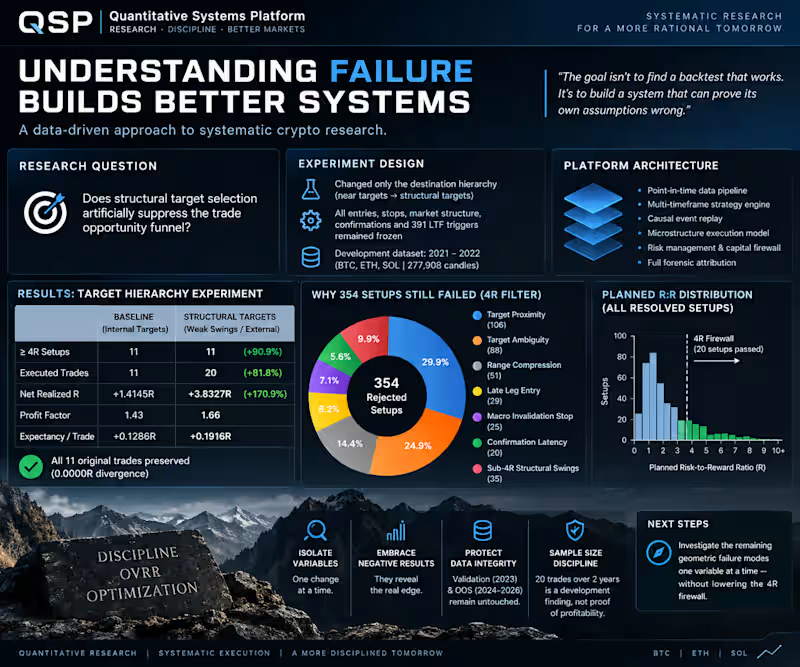
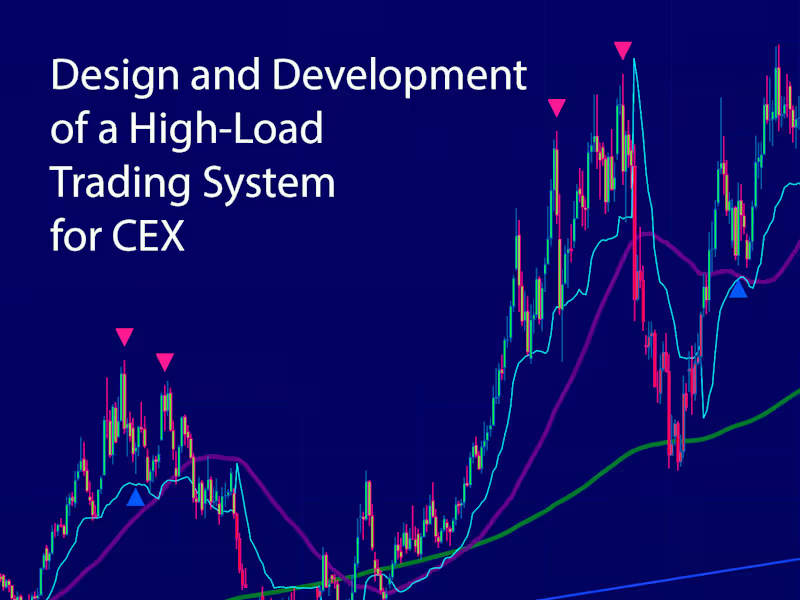
Why am I building a quantitative trading system?
Because I don't want trading to depend on spending hours staring at charts, making repetitive decisions manually, missing opportunities, or letting emotions and inconsistency affect execution.
For retail and independent traders, the difficult part isn't just finding a strategy.
It's knowing whether the strategy actually works, why it works, and why it fails.
That's what I'm trying to solve with my Quantitative Systems Platform.
Recently, I found a major bottleneck in my research.
Out of 387 target-resolved setups, only 11 met my ≥4R requirement.
Instead of lowering the requirement to create more trades, I asked:
Was the system choosing the wrong structural target?
I ran a controlled experiment where I changed only the target-selection hierarchy. Entries, stops, market structure, confirmations and the 391 LTF-confirmed triggers stayed frozen.
On the 2021–2022 development dataset:
≥4R setups: 11 → 21
Executed trades: 11 → 20
Net realized: +1.4145R → +3.8327R
Profit Factor: 1.43 → 1.66
All 11 original trades were preserved with 0.0000R divergence.
But the most important part wasn't the improvement.
I investigated the 354 setups that still failed the 4R firewall.
They revealed multiple failure modes:
target proximity, compressed ranges, late entries, wide structural stops, confirmation latency, target ambiguity — and 35 structurally healthy-looking setups that still fell between 1.5R and 3.9R.
So the answer isn't simply:
“Lower 4R.”
The real research problem is understanding the interaction between entry geometry, available expansion, structural risk, confirmation timing and destination selection.
That's why I'm building this platform.
Not to create another black-box trading bot.
I want a system that can tell me:
Why did this trade qualify?
Why did another fail?
Which assumption caused it?
Can I isolate that assumption?
Can I reproduce the result?
Does it survive unseen data?
The long-term objective is straightforward:
Less manual trading. Less inconsistency. More systematic research. More reproducible execution. And eventually, if the evidence earns it, automation.
This experiment is still a development finding, not proof of profitability or production readiness. Validation and out-of-sample data remain protected.
The next step is to investigate the remaining failure modes one variable at a time.
I'm not trying to build a system that only proves itself right.
I'm building one capable of proving itself wrong.
🔗 Project: Quantitative Systems Platform — GitHub (https://github.com/Quantitative-Systems/crypto-platform?utm_source=chatgpt.com)
#QuantitativeFinance #QuantitativeResearch #SystematicTrading #AlgorithmicTrading #TradingSystems #Python #FinTech #RiskManagement #Crypto
1
269
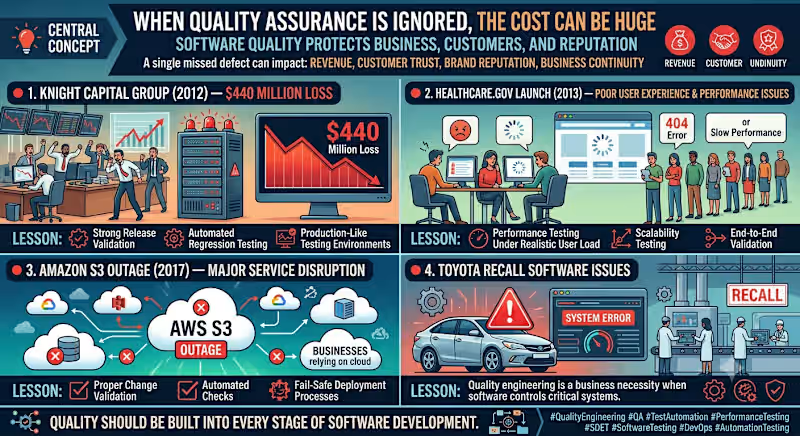
⚠️ When Quality Assurance Is Ignored, The Cost Can Be Huge
Software quality is not just about finding bugs — it is about protecting business, customers, and reputation.
Here are some real-world examples where software failures created massive impact:
🔴 1. Knight Capital Group (2012) — $440 Million Loss
A software deployment issue caused automated trading systems to behave incorrectly. Within minutes, the company faced enormous financial losses.
Lesson:
✅ Strong release validation
✅ Automated regression testing
✅ Production-like testing environments
are critical for high-risk systems.
🔴 2. Healthcare.gov (http://Healthcare.gov) Launch (2013) — Poor User Experience & Performance Issues
The initial launch faced severe performance problems, slow response times, and users were unable to complete registrations.
Lesson:
✅ Performance testing under realistic user load
✅ Scalability testing
✅ End-to-end validation
should happen before production launch.
🔴 3. Amazon S3 Outage (2017) — Major Service Disruption
A maintenance mistake impacted AWS services and caused outages for many businesses relying on cloud infrastructure.
Lesson:
✅ Proper change validation
✅ Automated checks
✅ Fail-safe deployment processes
are essential for reliable systems.
🔴 4. Toyota Recall Software Issues
Software-related issues in automotive systems highlighted the importance of rigorous validation and safety testing.
Lesson:
When software controls critical systems, quality engineering becomes a business necessity.
💡 A single missed defect can impact:
❌ Revenue
❌ Customer trust
❌ Brand reputation
❌ Business continuity
This is why QA is not a final checkpoint.
Quality should be built into every stage of software development.
#QualityEngineering #QA #TestAutomation #PerformanceTesting #SDET #SoftwareTesting #DevOps #AutomationTesting
1
316
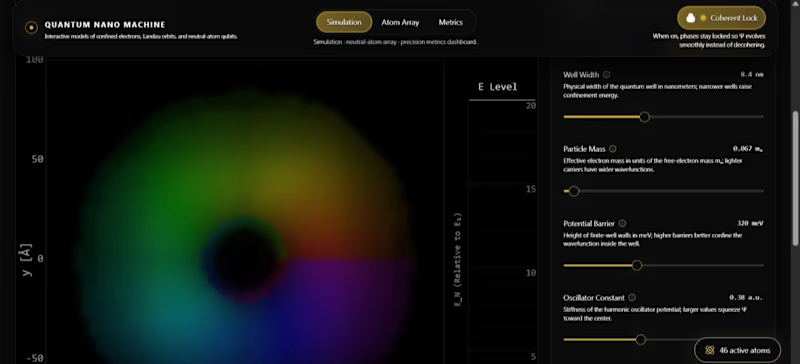
Engineered a real-time visualization interface for advanced quantum and nano-scale phenomena, focusing on dynamic matrix rendering for Landau Levels and electron orbital degeneracies.
Architected optimized computational pipelines using WebGL and client-side rendering to process complex wave functions Ψ(x,y), locking a stable 60 FPS during multi-variable parameter manipulation.
Designed custom telemetry control layouts, integrating high-density interactive components for precise tracking of field coupling, potential barriers, and particle mass.
Implemented a premium, high-contrast design system utilizing an obsidian and liquid gold visual hierarchy, strict component alignment, and glassmorphic UI constraints.
Integrated an advanced educational UX layer, embedding explicit telemetry descriptions and mathematical typography to translate complex nanoscale physical systems into intuitive interactive software.
Optimized and deployed production-ready web infrastructure via automated pipelines, ensuring ultra-low latency execution and fluid cross-platform responsiveness.
0
75
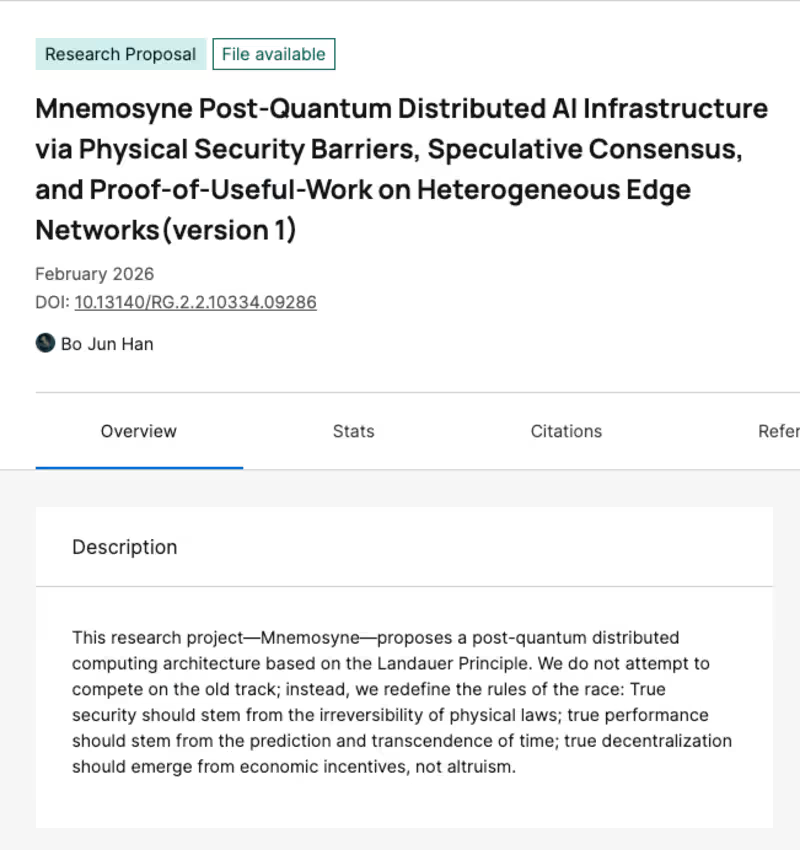


The "Monolith" Mag-Lev Modular Neural Core
The Product: A high-end desktop quantum computer or data drive shaped like a flawless, obsidian monolithic tower. It operates using zero-gravity magnetic levitation to separate its components when processing data.
Visual Style: Monolithic sci-fi luxury, perfect mirror reflections, intricate internal mechanics, and intense golden particle simulations.
1
184