
Building reliable software means designing for imperfect real-world data—not perfect demos.
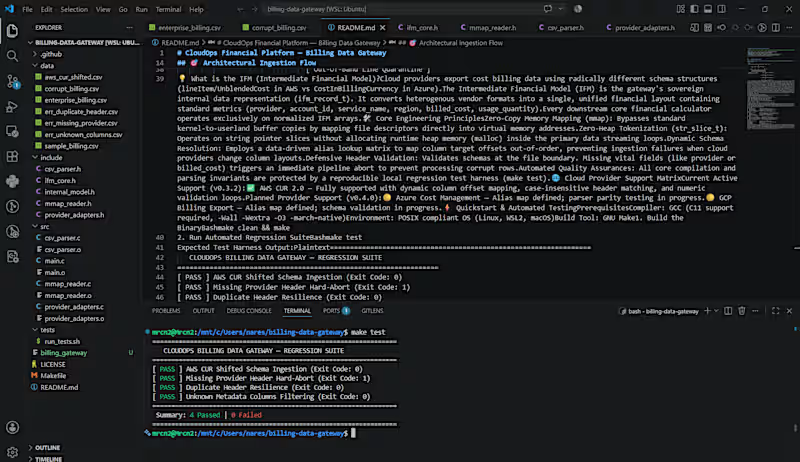
This week, I upgraded our open-source cloud billing ingestion engine to handle unpredictable CSV data drift automatically through dynamic header resolution and defensive validation.
Instead of assuming fixed column layouts, the parser dynamically adapts to changing vendor schemas while protecting downstream financial pipelines from malformed or incomplete records.
The result? Software that is more maintainable, resilient, and built for production environments where data rarely arrives in a perfect format.
The same engineering principles apply to client systems involving:
• Automated Data Pipelines & ETL
• Custom Business & Financial Tools
• Low-Latency Backend Infrastructure
• System Resiliency & Input Validation
I enjoy solving complex problems where software needs to be dependable, scalable, and engineered for long-term maintainability.
Sovereign Code Repository:
https://github.com/CloudOps-Financial-Platform/billing-data-gateway
#CustomSoftwareDevelopment #DataEngineering #Automation #BackendDevelopment #OpenSource
1
304
🔷 Project Title:
InternHub – AI-Powered Internship Marketplace
🔷 Category:
🛒 Marketplace
🔷 What the App Does:
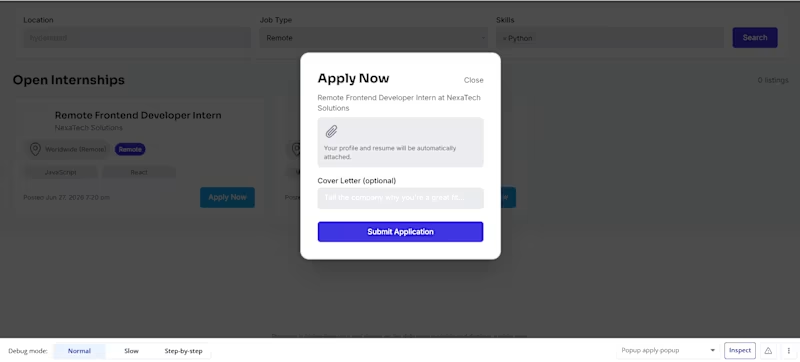
InternHub is an AI-powered internship marketplace designed to connect students with relevant internship opportunities posted by companies. The platform allows students to create profiles, upload resumes, and apply for internships, while companies can post internship listings and manage applications efficiently.
The system also includes an AI-based matching feature that evaluates the compatibility between a student’s skills and internship requirements, providing a match score to improve decision-making for both students and recruiters.
🔷 Key Features:
👨🎓 Student Side:
User registration and login
Profile creation with skills and resume upload
Browse internship listings
Apply for internships with one click
View application status (Pending / Accepted / Rejected)🏢 Company Side:
Company registration and login
Post internship opportunities
Define required skills, role, and location
View and manage student applications
Shortlist or reject candidates
🤖 AI Feature:
AI-based Skill Matching System
Generates a match score between student profile and internship requirements
Helps students understand their suitability for roles
Improves internship recommendations
📊 Dashboard System:
Separate dashboards for Students and Companies
Clean and intuitive UI for easy navigation
Centralized application tracking system
🔷 How It Was Built:
The application was built using Bubble AI App Builder as the foundation. The initial AI-generated internship marketplace provided the basic structure, including authentication, job listings, and dashboards.
On top of this base, enhancements were made by:
Adding AI-based skill matching logic
Improving UI layout for a modern dashboard experience
Strengthening application workflow (apply → review → decision)
Structuring a more realistic marketplace flow
Why This Project:
InternHub solves a real-world problem faced by students — finding relevant internships efficiently. Many students apply randomly without knowing their suitability. This platform introduces AI-driven matching to improve both opportunity discovery and hiring efficiency.
Tech/Platform Used:
Bubble AI (No-code development platform)
AI logic for matching system
Database-driven marketplace structure
Impact:
InternHub simplifies internship discovery, improves application quality, and reduces the gap between students and companies by introducing intelligent matching between skills and opportunities.
1
235
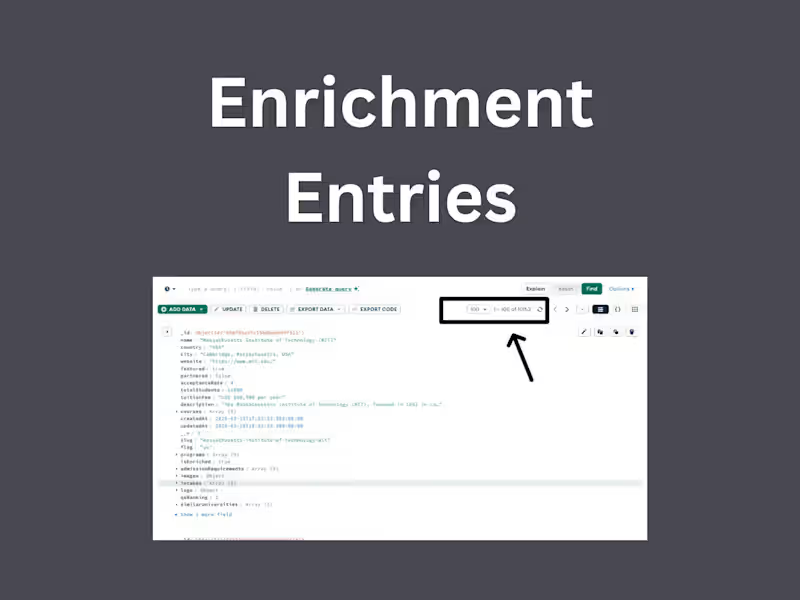
I built an AI-powered data enrichment system that efficiently processes and improves large university datasets. It automates the entire enrichment workflow, handles structured data cleanly, and gives real-time logs so you can easily monitor what's happening in the pipelines.
The main goal was to make the whole process scalable, automated, and easy to manage. I created a clean dashboard where users can track everything, which really helps improve data quality and gives full visibility into the operations.
Key Highlights:
AI-driven data enrichment workflows
Real-time processing logs and activity monitoring
Structured university data management
Automated backend pipelines
Clean dashboard for monitoring and control
Scalable and efficient architecture
Tech Stack: Node.js, Express.js, MongoDB, JavaScript, REST APIs, AI Automation Tools
1
79
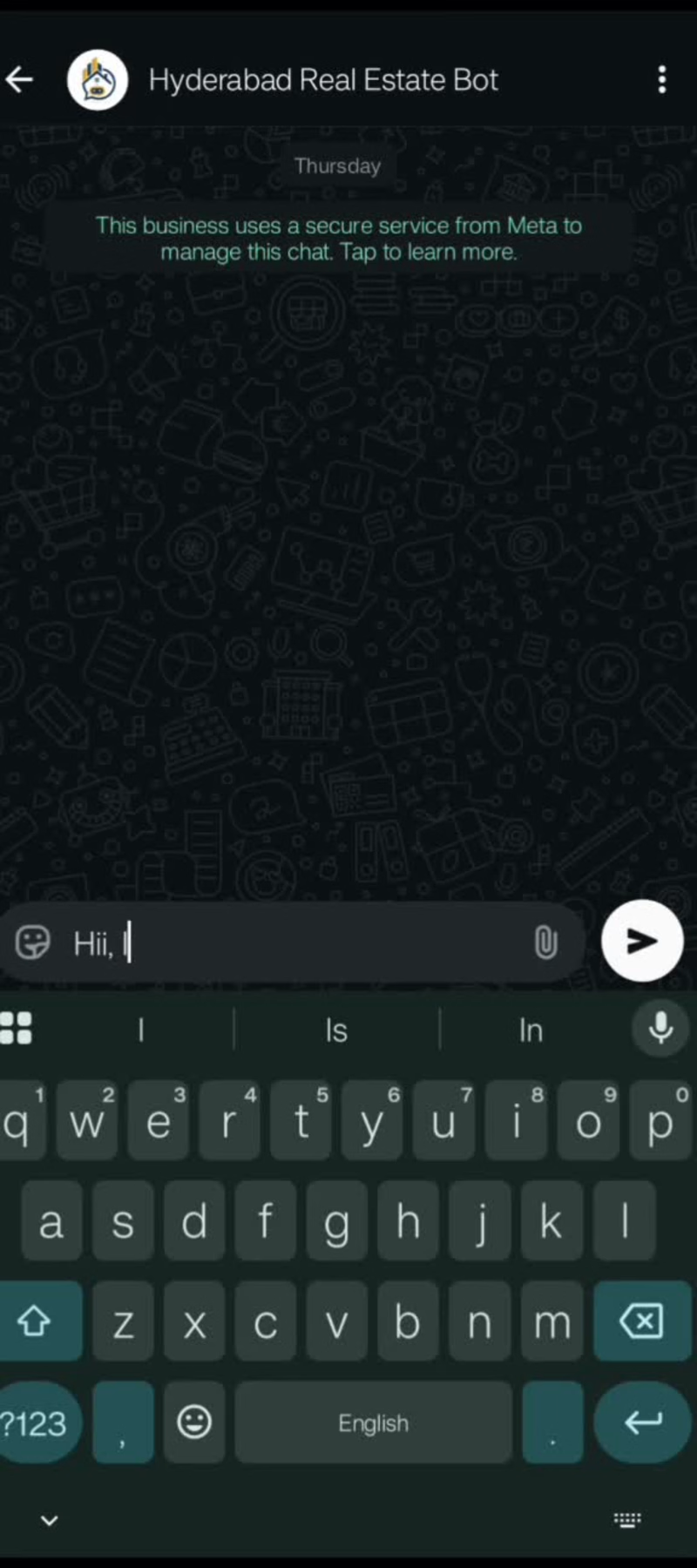
Built and deployed a production-grade multi-tenant WhatsApp AI lead qualification platform for real estate, using LangGraph, Meta Cloud API, and OpenAI.
An AI agent (not a script) qualifies leads through natural conversation — understanding property type, location, budget, and timeline. Runs on a 7-node LangGraph state machine, not hardcoded if-else flows. Includes multi-language support (English, Hindi, Telugu, Tamil), automated follow-ups, vector-based semantic search for vague queries, real-time broker alerts, and multi-tenant isolation with AES-256 encrypted credential storage.
0
124
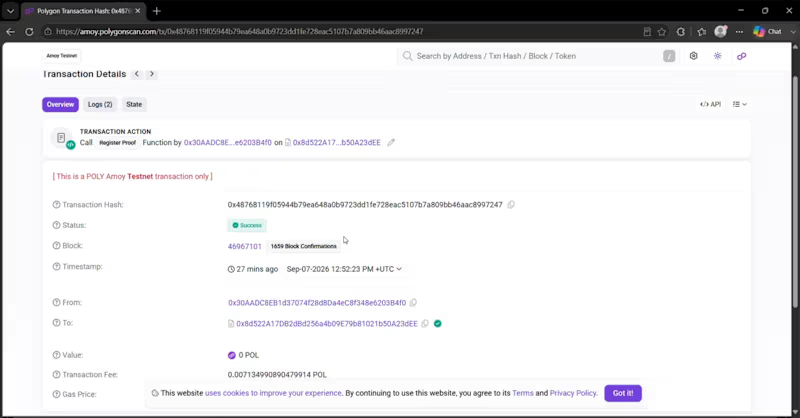
I built ProofFace a visual provenance & content verification engine in Rust
I have been building ProofFace an end-to-end visual provenance and content verification engine built in Rust.
The idea is simple:
Finding an image online doesn’t prove that it’s authentic, original, or unchanged.
So I built a verification pipeline that goes from:
📸 Image input
→ 🧠 Neural face detection
→ 🔎 Web visual discovery
→ 🧬 Biometric similarity
→ 🔐 Deterministic SHA-256 fingerprinting
→ ⛓️ Polygon Amoy blockchain proof
→ ✅ Verification result
Some of the things I worked on:
• ONNX-based face detection
• 128-dimensional biometric embeddings
• Presentation attack detection
• Parallel visual candidate evaluation
• Cosine similarity matching
• RFC 8785 JSON canonicalization
• SHA-256 content fingerprinting
• Polygon smart-contract integration
• Automated unit & integration testing
The project currently has 30 passing tests.
What I enjoyed most was bringing several different areas together computer vision, Rust systems programming, cryptography, and blockchain into one reproducible verification workflow.
GitHub:
https://github.com/nikhilkumarpanigrahi/proofFace
Would love to hear what you’d improve or add to a system like this.
3
372

Created an automated reconnaissance and asset discovery engine that integrates offensive utilities with AI-driven threat triage. Built a FastAPI backend backed by Celery and Redis to execute heavy subdomain discovery (subfinder), port scanning (httpx), and web crawling (katana) concurrently. Configured a PostgreSQL ledger to store asset records and integrated OpenAI/Ollama APIs to parse raw logs, filter out false positives, and suggest potential exploit targets. Exposes a clean REST API for configuring targets and viewing crawled subdomains.
1
48
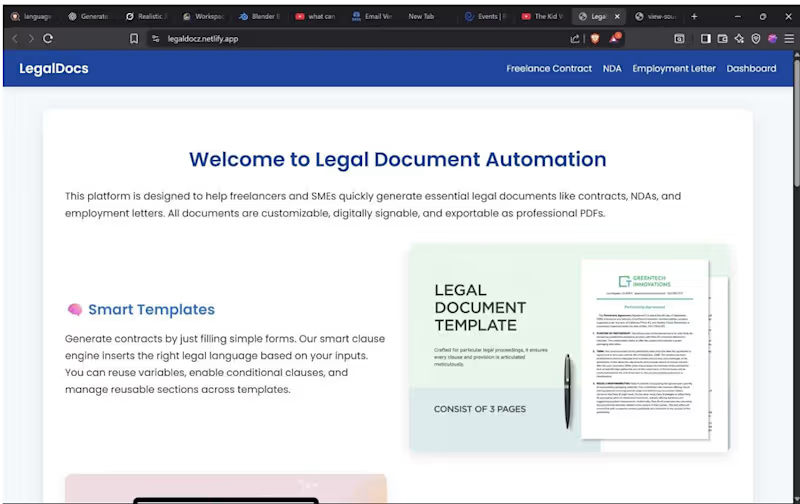
I developed a Legal Document Automation web application designed to simplify and streamline the process of creating professional legal documents for small businesses and freelancers. The platform enables users to generate documents such as contracts and NDAs using smart, customizable templates.
The system features dynamic form inputs that automatically populate legal content based on user requirements, reducing manual effort and errors. It also includes PDF generation and e-signature integration, allowing users to create, sign, and manage documents digitally in a seamless workflow.
On the backend, I implemented efficient document processing using Node.js and Express, ensuring smooth handling of data and secure operations. The application is designed with a user-friendly interface, making complex legal processes accessible even for non-technical users.
Overall, this project demonstrates my ability to build practical, end-to-end web solutions that combine automation, backend logic, and user-centric design to solve real-world problems.
0
45
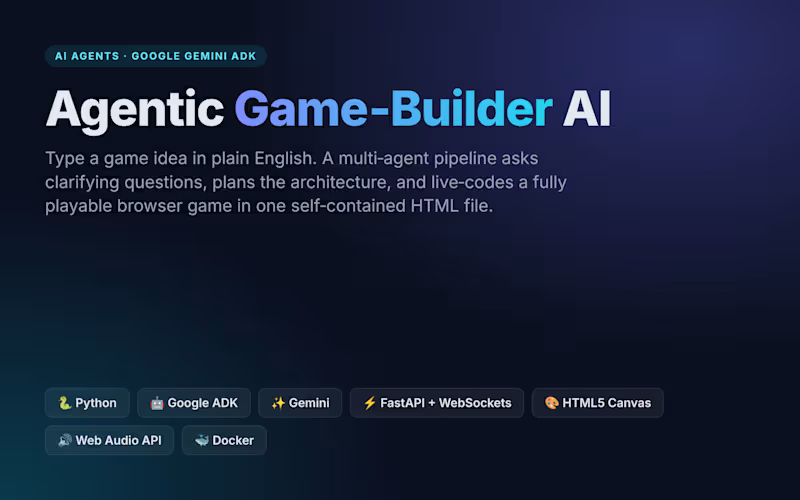
🎮 Agentic Game‑Builder AI: describe a game in plain English, get a fully playable browser game.
I built a multi‑agent pipeline on Google’s Agent Development Kit (ADK) and Gemini. It turns an idea like “a retro space shooter with power‑ups and a boss fight” into a working game in one self‑contained HTML file.
How it works:
1️⃣ Clarify: a LoopAgent asks focused questions until the requirements are clear.
2️⃣ Plan: a Planning agent designs the entities, mechanics, controls and win/lose rules as a validated JSON plan.
3️⃣ Build: Generator + Writer agents produce the code. Forced tool calls and a fallback extractor make sure a playable file always comes out.
4️⃣ Play: a live dashboard (FastAPI + WebSockets) streams the code as it’s written and runs the game in a sandboxed preview.
Highlights: Canvas‑drawn graphics and Web Audio sound effects (no external assets), keyboard + mobile touch controls, and Docker support.
Tech: Python · Google ADK · Gemini · FastAPI · WebSockets · HTML5 Canvas · Docker
🔗 github.com/bns218/Agentic-Game-Builder-AI-
0
57