Digital Accessibility Projects in SeattleDigital Accessibility Projects in SeattleThe Handoff Trap: Why accessibility fails on client projects.
As independent creators, we’ve all been there: you design or develop a beautiful digital product, hand it off to the client, and months later they come back with a 200-page accessibility audit asking for urgent refactoring.
It’s stressful, inefficient, and eats into your margins.
The issue isn’t a lack of care; it’s that accessibility is usually treated as a post-production chore rather than a core workflow.
In my latest article, I share a framework on how we can operationalize empathy to bridge the gap between marketing goals and engineering velocity:
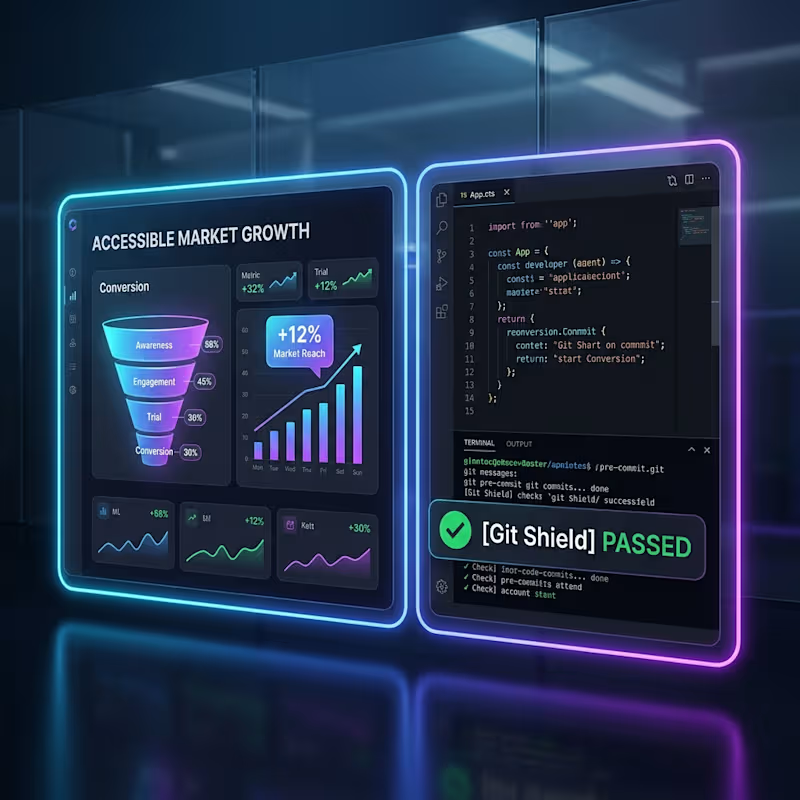
🛠️ Shift-Left Guardrails: Instead of checking for accessibility bugs at the end of a project, build automated pre-deployment shields (like Git Hooks) into your development flow to catch issues in real-time.
📊 Speak in ROI, Not Checklists: When presenting to clients, reframe accessibility from a compliance task to a growth metric. Use Accessible Market Growth (AMG) and Reach Recovery to show them exactly how many more users can navigate their checkout or sign-up funnels.
👁️ Visual Empathy: Equip your team or clients with simulation sandboxes to experience interactions through the eyes of users with cognitive, motor, or visual impairments.
By building accessibility directly into your release cycle, you protect your code quality, unblock enterprise sales for your clients, and deliver products built for everyone.
🔗 Read the full breakdown in the comments below
Are you currently using automated shields or manual simulators in your client workflows? Let's discuss in the comments! 📈 Stop Pitching "Compliance." Start Pitching Growth.
As independent developers, designers, and agencies, we've all been there: You identify critical accessibility barriers on a client's website, but when you pitch the fixes, you get shut down.
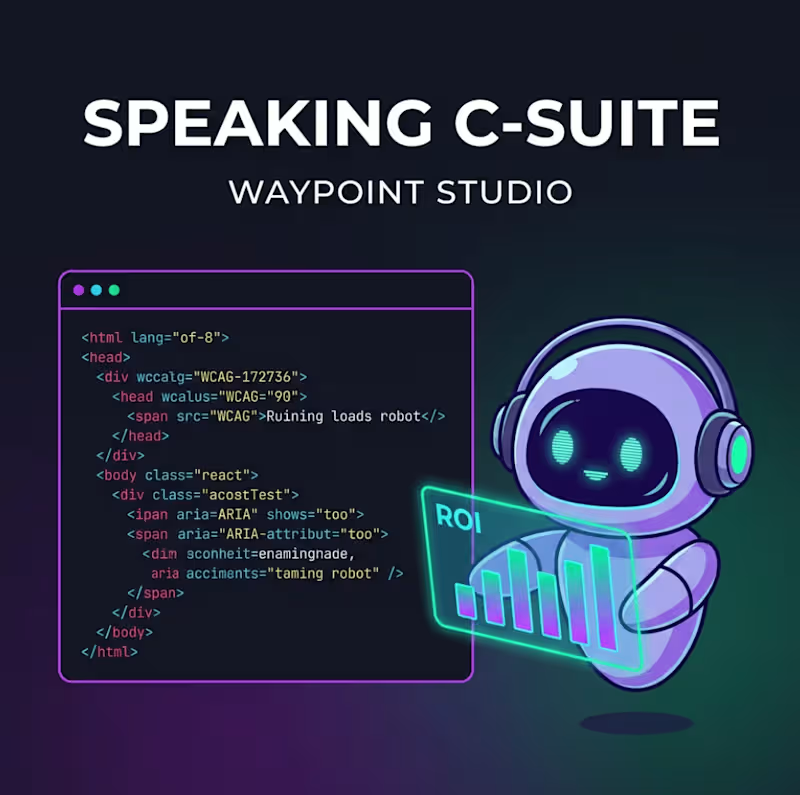
Why? Because when engineers talk, they speak the language of code (WCAG, ARIA labels, HTML validation). But when clients and executives listen, they hear "more work," "delayed features," and "costs." They see a cost center, not an opportunity.
If you want to get the budget, bandwidth, and buy-in to build better software, you need to learn to speak C-suite.
Our latest blog breaks down how to transform your accessibility pitch from a defensive lawsuit-prevention talk into an offensive revenue recovery conversation using Waypoint Studio’s key growth metrics:
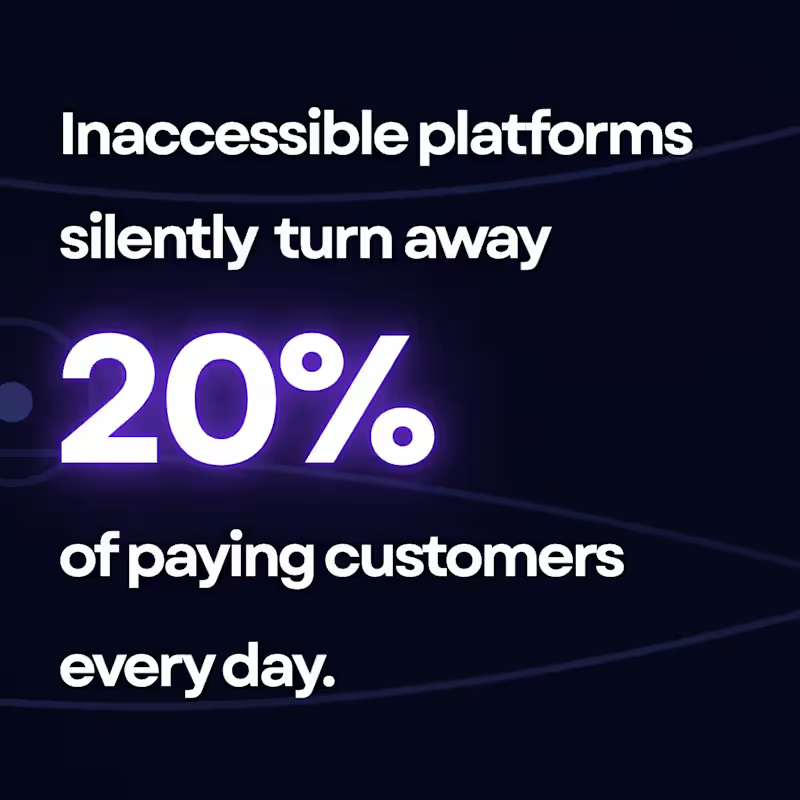
Accessible Market Growth (AMG): Quantify the exact percentage of the addressable market currently blocked from converting.
Reach Recovery Matrix: Show clients exactly how much traffic and checkout conversion rate they are bleeding out due to interaction barriers.
AI Executive Summary Forecasting: Auto-translate code audits into plain-language business slides ready for QBRs.
Stop letting important accessibility fixes get backlogged. Learn how to structure your next client pitch and turn inclusive design into a primary growth engine.
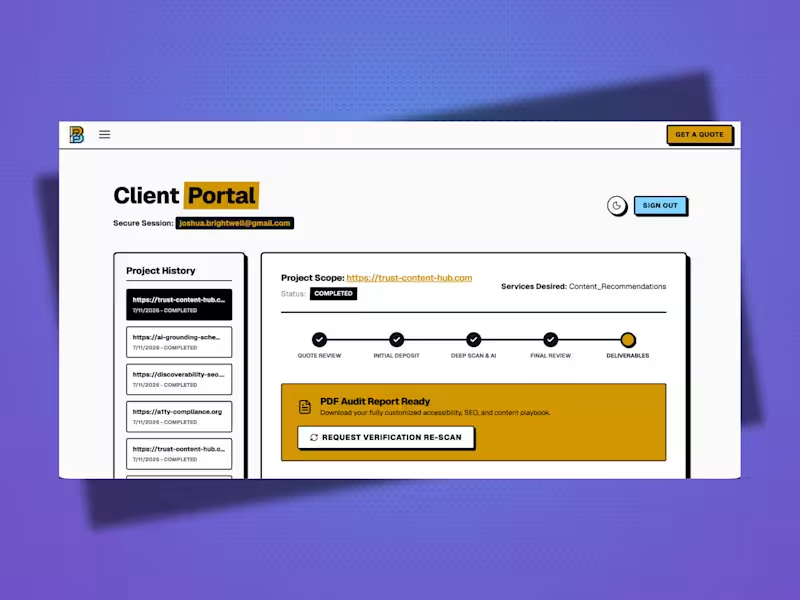
🔗 Read the full guide on our blog: https://waypointstudio.io/blog/speaking-c-suite I engineered a bespoke consulting platform designed to automate deep-site auditing and deliver a premium, high-touch client experience. Moving away from manual reporting workflows, I built a custom technical engine that scales my audit capabilities and organizes every client deliverable within a single, secure interface.
Key Features & Engineering Highlights:
Automated Deep-Scan Auditor: I built an automated scanning engine that crawls client sites to audit and score performance across four main pillars: Technical SEO, AEO (Answer Engine Optimization for AI search engines), Content Quality, and Accessibility.
Interactive Client Portal: I designed and developed a secure dashboard where clients can view live reporting metrics, track their site's audit scores over time, and manage their optimization pipeline.
Developer-Ready Ticket Markdowns: To bridge the gap between audit findings and execution, the portal automatically formats audit issues into clean Markdown tickets, ready to copy directly into Jira, Linear, or GitHub.
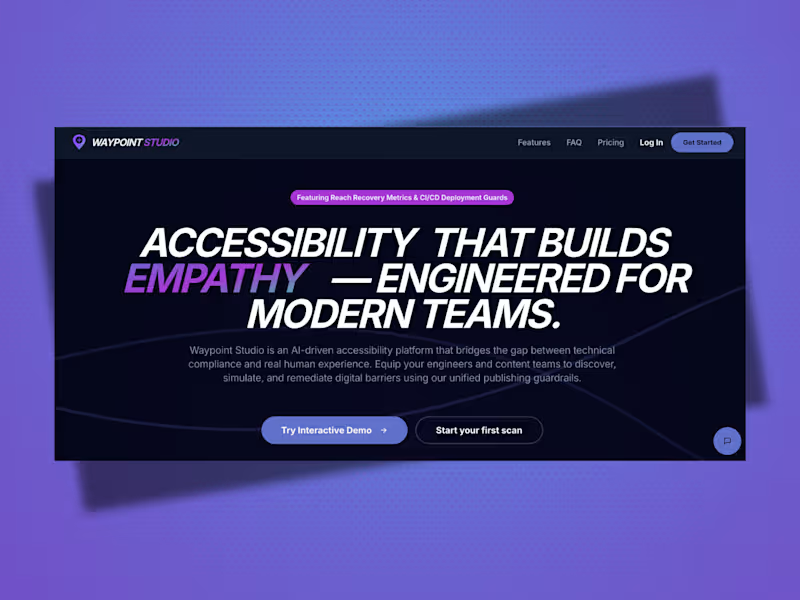
Training Playbooks & Deliverables: Built-in repository hosting customized training modules and playbooks alongside a secure file-download center for audits and strategy briefs. Built and launched Waypoint Studio LLC, an AI-driven web accessibility platform engineered to help digital product, engineering, and marketing teams systematically eliminate compliance barriers.
Designed from the ground up to eliminate the gap between compliance auditing and engineering execution, Waypoint synthesizes complex operational data through AMG Metrics, continuous Barrier Tracking, and an Empathy-Led Barrier Triage workflow. This empowers product leads with strategic marketing insights while equipping developer teams with a robust suite of tools—including GitShield for pipeline protection, automated Code Suggestions, and an Empathy Guard—so they can build with accessibility and inclusion from the design phase forward, rather than treating it as a retroactive must-do.
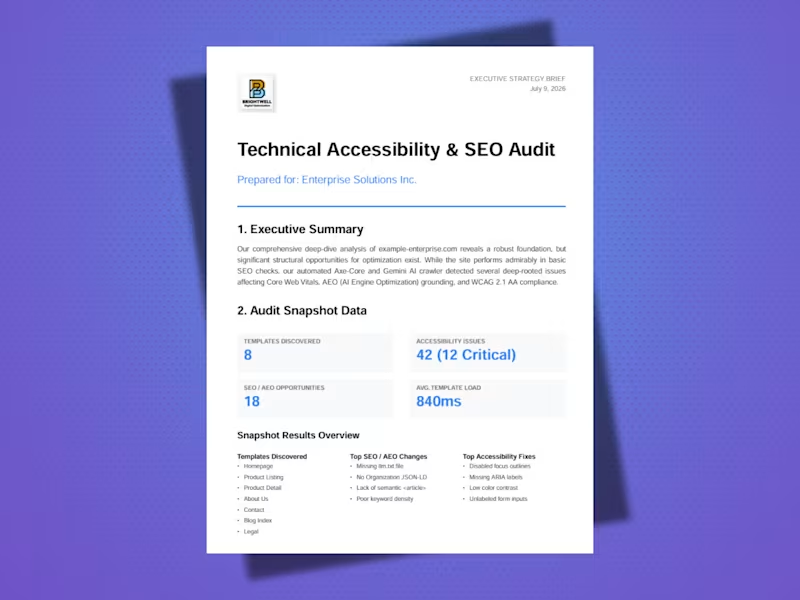
Waypoint translates complex digital footprint data into high-value executive briefs, actionable metrics, and empathy-guided code fixes that respect developer velocity, turning accessibility into a proactive advantage rather than a hurdle. I conducted a deep technical architecture and search discovery audit for an enterprise web platform to identify critical performance bottlenecks, search engine visibility blockers, and accessibility issues.
Rather than delivering a generic, static PDF report that gets shelved, I provided a high-impact, dual-delivery solution: an executive strategy brief paired with a production-ready development backlog. I translated complex technical SEO, accessibility (WCAG AA), and performance findings directly into structured tickets (with exact code-level fixes, severity levels, and clear acceptance criteria) ready to be imported straight into Jira, Linear, or GitHub issues.
My role and key deliverables included:
Technical SEO Audit: Pinpointed search discovery and crawling bottlenecks, including missing schema markup and structural indexation issues.
Core Web Vitals & Performance Optimization: Identified critical render-blocking JavaScript and unoptimized assets impacting page load speeds and organic search ranking signals.
Accessibility & Contrast Compliance: Conducted a comprehensive sweep for keyboard navigation focus trap failures, missing ARIA/input labels, and color contrast violations.
Developer-Ready Backlog: Translated all audit findings into action-oriented development tasks with explicit code recommendations to ensure seamless execution.