Freelance AI Artists in Rio de JaneiroFreelance AI Artists in Rio de Janeiro
Creative Director | Ads Videos That Convert with 3D and AI

$1k+
Earned
2x
Hired
55
Followers
Creative Director | Ads Videos That Convert with 3D and AI
Senior Art Director | AI Campaigns, Branding & Films
33
Followers
Senior Art Director | AI Campaigns, Branding & Films
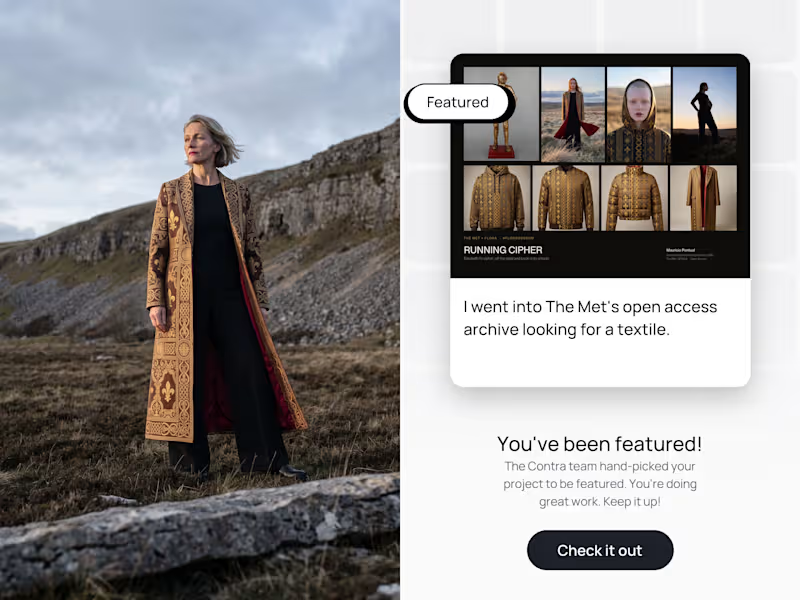
Cover image for I went into The Met's
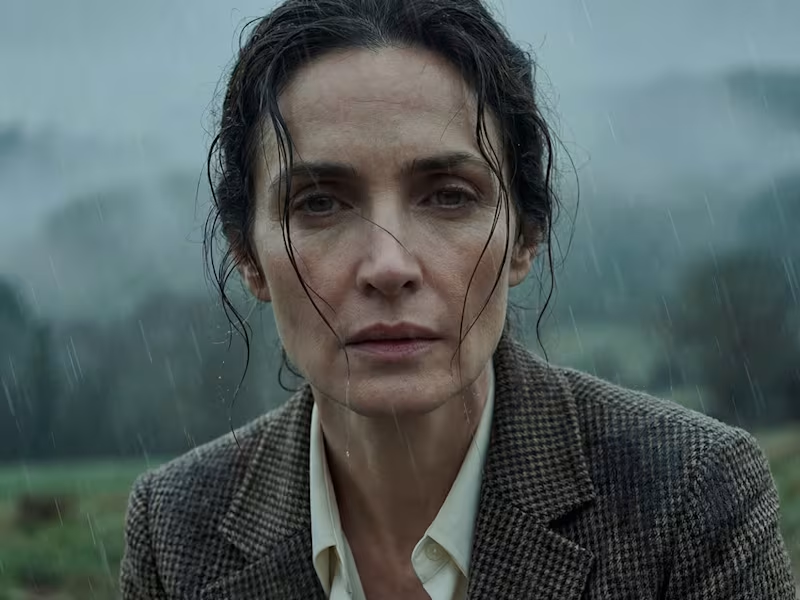
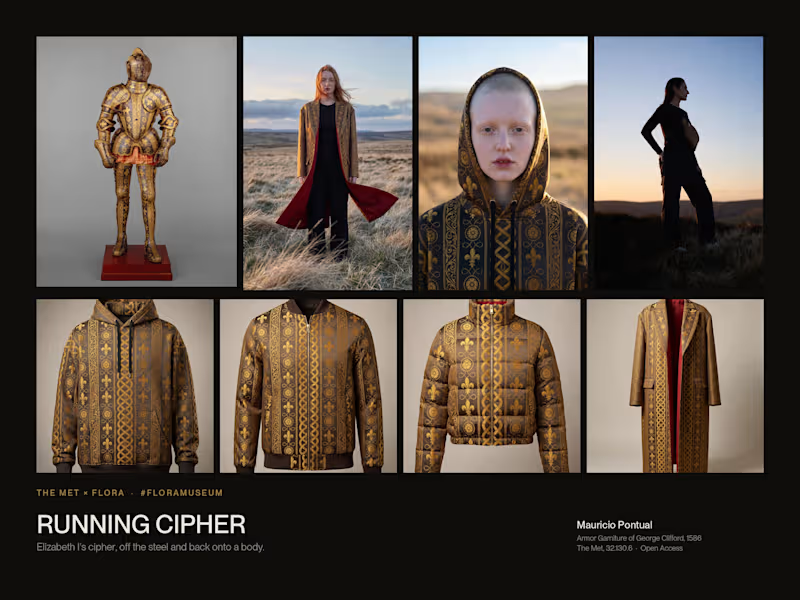
I went into The Met's open access archive looking for a textile. I found the pattern I wanted on a suit of armour instead. Greenwich, 1586. George Clifford was Queen's Champion to Elizabeth I, and his garniture is etched and gilded with her cipher, two E's back to back, repeated across every plate from helmet to sabaton without a break. Not a badge on the chest. A repeat running over an entire body, worn by royal licence, three hundred years before any house put its initials on a bag. So I took it off the steel and put it back on a body. RUNNING CIPHER is one woven matrix and eight streetwear pieces cut from it, shot on Yorkshire moorland in winter with the sun never higher than eighteen degrees above the horizon. My first matrix was wrong: I kept the cipher at armour scale and it collapsed into generic damask. Enlarging it four times was what made it read as a garment print instead of wallpaper. That failed version is still sitting on the canvas next to the one that worked. The casting carries the argument. Clifford's only child, Anne, was written out of the inheritance when her father left the northern estates to his brother. She spent thirty-eight years in court, won in 1643, and rebuilt the castles herself. The mark he borrowed from a queen is now worn by the women who took the land back. Everything is on the canvas: the Met plates that fed the matrix, every rejected generation, the casting tests, the frames that did not make it. Original work: https://www.metmuseum.org/art/collection/search/23939 Armor Garniture of George Clifford, Third Earl of Cumberland. Jacob Halder, royal workshops at Greenwich, 1586. The Metropolitan Museum of Art, 32.130.6a–y. Open Access. Canvas: https://app.flora.ai/view/js78s0ypjspgsg3t3pjf5xd6d98dkwrb @floraai #FLORAMuseum
20
30
1.7K
Cover image for The recipe survived the Bolshevik
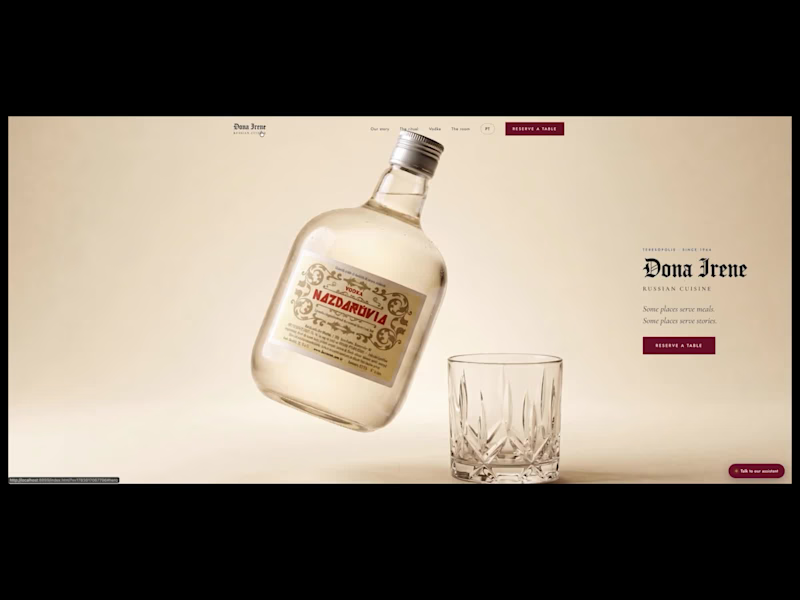
The recipe survived the Bolshevik Revolution. The website did not. Dona Irene is a 19th century Russian cuisine restaurant in the mountains of Teresópolis, Brazil. It was founded in 1964 by Mikhail and Eupraxia Smolianikoff, a couple who fled the 1917 Revolution and rebuilt their home four times: Russia, Mongolia, Shanghai, the United States. They arrived in Brazil in their seventies and started over one more time. The recipe crossed all of it intact. The restaurant's digital presence did not. This project started as an application for Base44's Give It A Glow challenge. I decided not to enter this edition, but the process produced a complete case worth telling. What follows is a preview of the proposal. The family rebuilt its home four times. The new website is the fifth rebuilding: the digital home that finally lives up to the story. The entire page architecture grows from that idea. The Our Story section is a five-chapter crossing that starts in the cold blue of exile and warms into the ivory of Teresópolis, the page you are reading. The restaurant's Instagram already had a strong photographic identity: warm natural light, white tablecloth, blue and white porcelain, dishes seen from above. The site does not invent a new brand, it elevates the one that exists. I defined a system with ivory backgrounds, institutional blue, wine as the exclusive action color for the reservation CTA, and gold only on dark surfaces. The brand's original gold failed WCAG AA contrast as text, so I created a lighter variant for typography only, keeping the original tone as a decorative color. Typography: Cormorant Garamond for display, Jost for body, with a literary, contemplative voice. Every dish and dining room photo was regenerated in 4K through Higgsfield (nano banana pro, img2img), always using the restaurant's real photographs as reference. The direction started from the house's own archive: the menu dishes, the porcelain, the warm natural light that was already the signature of the restaurant's Instagram. AI came in for editorial finish and resolution, guided by what the place really is. The hero is a video generated in Seedance from an approved still: the house's artisanal vodka bottle floating on a neutral background, the cap unscrewing itself before the pour. The video does not autoplay, it is scrubbed by scroll. The visitor controls the timing of the scene with their finger, and when the gesture ends the toast appears: Nazdaróvia. To health, and to memory. Built in plain HTML, CSS and JS, in two languages: Portuguese and English, with a language toggle right in the navigation. Sticky hero with scroll-tied video scrubbing. Birch forest parallax behind the story timeline. Staggered entrance on the menu section: each card rises with an expo-out ease, photos are revealed by a clip-path curtain while settling from scale 1.12 to 1, and the typographic label lands last with its letter-spacing easing into place. Everything gated by prefers-reduced-motion, replaying on every pass through the section. AA contrast audited across every color pairing. Reservation agent prototype: visitors ask menu and schedule questions to an AI Superagent and book a table in conversation, with confirmation fired to the restaurant's WhatsApp. In the current preview the flow is front-end only; real integration would be the next step. Claude Code as the development environment and direction hub for the whole project. Higgsfield (nano banana pro) for 4K img2img images with real photo references. Seedance for the hero video. HTML/CSS/JS with no framework. Product documentation, design system and prompt guide versioned alongside the code. Creative direction, design, code and AI direction: MP House Studio.
0
302
Designer for Startups: Branding, Motion, 3D and more