DevOps Projects in PunjabDevOps Projects in Punjab𝐀𝐈 𝐑𝐞𝐬𝐞𝐚𝐫𝐜𝐡 𝐈𝐧𝐭𝐞𝐥𝐥𝐢𝐠𝐞𝐧𝐜𝐞 & 𝐃𝐚𝐭𝐚 𝐐𝐮𝐞𝐫𝐲 𝐏𝐥𝐚𝐭𝐟𝐨𝐫𝐦
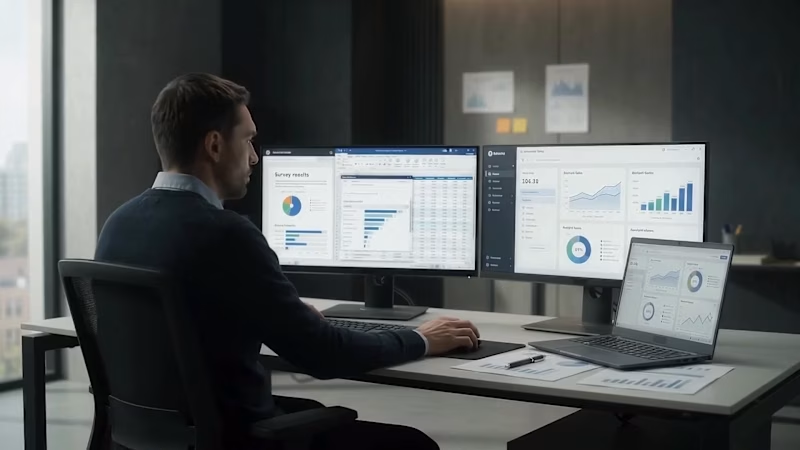
I built an AI-powered research intelligence platform that helps analysts and business teams query complex datasets through a single conversational interface.
𝐓𝐡𝐞 𝐏𝐫𝐨𝐛𝐥𝐞𝐦
Research teams often work across disconnected databases, reports, spreadsheets, dashboards, and documents. This slows analysis, makes cross-source searching difficult, and can reduce trust in AI-generated answers.
𝐓𝐡𝐞 𝐒𝐨𝐥𝐮𝐭𝐢𝐨𝐧
The platform combines RAG, AI agents, natural-language-to-SQL, structured and unstructured retrieval, source attribution, confidence scoring, and evaluation pipelines.
Users can ask a business question in natural language, and the system decides whether to search documents, query databases, run SQL, or combine multiple sources before returning an evidence-backed answer.
𝐀𝐜𝐜𝐮𝐫𝐚𝐜𝐲 & 𝐏𝐫𝐨𝐝𝐮𝐜𝐭 𝐄𝐱𝐩𝐞𝐫𝐢𝐞𝐧𝐜𝐞
The system evaluates answer correctness, retrieval quality, SQL accuracy, source relevance, hallucination risk, and response performance. Low-confidence results are captured for review and continuous improvement.
The frontend is built with React + TypeScript and includes AI chat, dataset exploration, source references, analytics, evaluation dashboards, and real-time updates.
𝐁𝐮𝐬𝐢𝐧𝐞𝐬𝐬 𝐕𝐚𝐥𝐮𝐞
The platform helps teams analyze data faster, reduce manual SQL work, improve trust in AI outputs, and uncover insights across multiple data sources.
𝐓𝐞𝐜𝐡 𝐒𝐭𝐚𝐜𝐤: 𝐑𝐞𝐚𝐜𝐭 • 𝐓𝐲𝐩𝐞𝐒𝐜𝐫𝐢𝐩𝐭 • 𝐏𝐲𝐭𝐡𝐨𝐧 • 𝐏𝐨𝐬𝐭𝐠𝐫𝐞𝐒𝐐𝐋 • 𝐑𝐀𝐆 • 𝐕𝐞𝐜𝐭𝐨𝐫 𝐒𝐞𝐚𝐫𝐜𝐡 • 𝐋𝐋𝐌 𝐀𝐠𝐞𝐧𝐭𝐬 • 𝐒𝐐𝐋 • 𝐀𝐏𝐈𝐬 • 𝐄𝐯𝐚𝐥 𝐏𝐢𝐩𝐞𝐥𝐢𝐧𝐞𝐬 I worked as the Full Stack Engineer on Solareum https://solareuml1.io/ , a Layer 1 blockchain platform that connects renewable-energy generation data with on-chain records through its patent-pending Proof of Generation® mechanism.
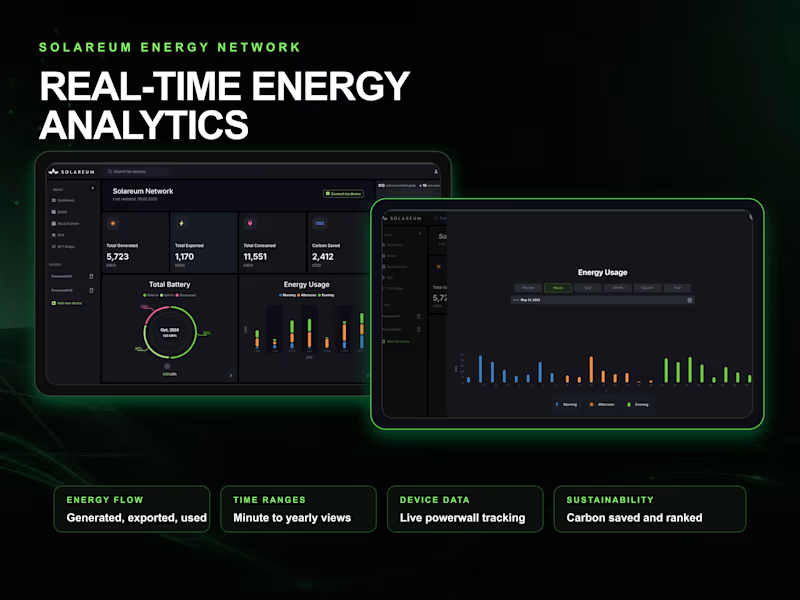
Solareum is a Layer 1 blockchain platform that records renewable-energy generation data through its Proof of Generation® mechanism. I worked as the Full Stack Engineer, developing dashboard workflows for energy production, consumption, export, battery storage, carbon savings, connected devices, wallet activity, and blockchain tools.
My work covered the dashboard, application services, serverless infrastructure, database integration, Web3 functionality, and deployment workflows.
I can help you build:
- Responsive Next.js dashboards
- Real-time energy and IoT analytics
- Device connection and management workflows
- Web3 wallets and transaction history
- Token funding, transfers, and exchange features
- Blockchain explorer integrations
- DEX and NFT bridge interfaces
- Serverless Node.js APIs with AWS Lambda
- MongoDB data models and integrations
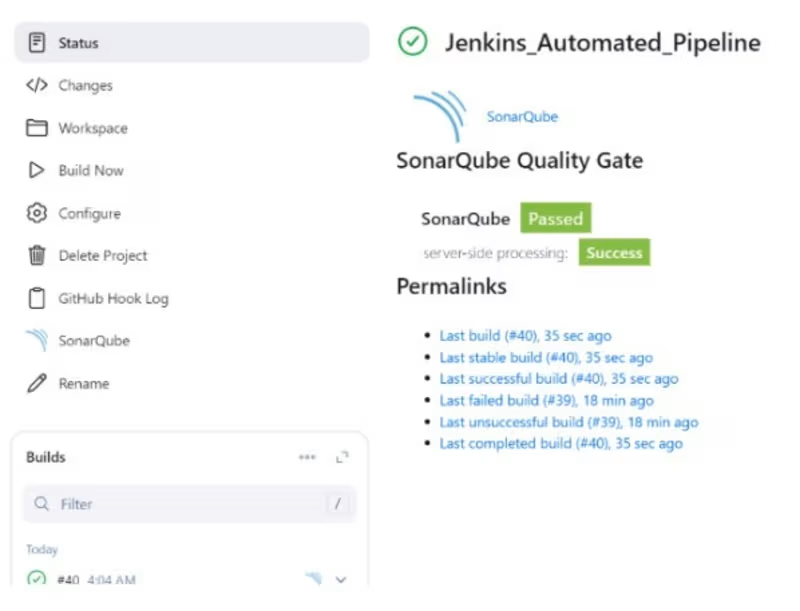
- Automated CI/CD pipelines
I have the shipped the following features:
- Renewable-energy generation tracking
- Energy exported and consumed metrics
- Battery storage analytics
- Carbon savings reporting
- Three-second dashboard data updates
- Minute, hourly, daily, monthly, quarterly, and yearly views
- Global network map and energy leaderboard
- Powerwall and IoT device management
- Wallet funding, transfers, and exchange
- Transaction history
- Block explorer
- Decentralized exchange
- NFT bridge
- Proof of Generation records
- On-chain energy data retention
- Dual-token and reward ecosystem
- ESG and environmental impact reporting
Skills used
- Full-stack web development
- Next.js development
- Node.js backend development
- Serverless architecture
- Web3 application development
- Blockchain dashboard development
- REST API integration
- MongoDB database development
- Data visualization
- IoT device integration
- Responsive UI development
- CI/CD implementation
Tools and technologies
- Next.js
- Node.js
- AWS Lambda
- MongoDB
- CI/CD
- JavaScript
- Web3
- Blockchain APIs
- Data visualization libraries
CandleMe — Interactive Digital Participation & Engagement Platform
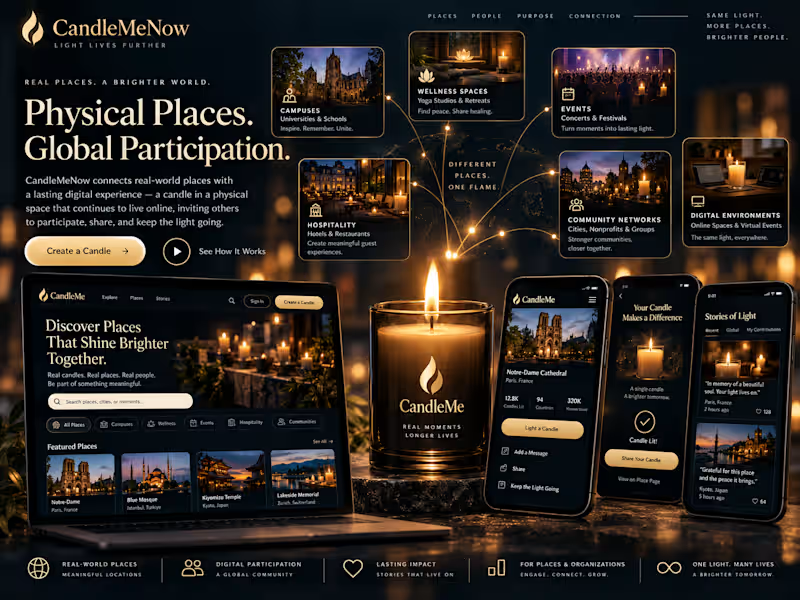
CandleMe is a large-scale interactive digital platform designed to connect physical experiences, digital participation, organizations, communities, and persistent user journeys through a unified web experience.
I contributed to the product as a full-stack engineer, working across an established production codebase and handling functionality that extended far beyond traditional web application development. My work included complex frontend interactions, application-state integration, backend-connected user flows, organization configuration, QR/direct-link experiences, and performance-sensitive real-time graphics using Three.js and PixiJS.
One of the defining parts of CandleMe is its interactive candle experience. Rather than functioning as a conventional website, the platform combines application logic with rich visual rendering to create dynamic experiences that respond to real product state and user interaction.
The candle and flame systems were built as functional parts of the application—not simply decorative animations. They had to integrate correctly with surrounding UI, application state, configuration, navigation, and the broader product journey while maintaining smooth performance across different browsers and devices.
Core Product & Engineering Areas
Interactive Candle Experience
The product includes highly interactive visual experiences powered by Three.js and PixiJS, with custom flame effects and graphical behavior integrated directly into real application workflows.
This required balancing visual quality with browser performance, device compatibility, responsive behavior, and application-state synchronization.
Production Graphics & Performance Optimization
Real-time graphics introduce a completely different set of engineering challenges compared with standard frontend development.
I worked on optimizing the rendering experience across devices, including testing flame effects at approximately 45–60 FPS on a Galaxy A24 and a stable 60 FPS on an iPhone 15, while also validating compatibility with Apple/Metal-based rendering environments.
This involved careful attention to rendering behavior, visual consistency, performance, and differences between local and deployed environments.
QR & Direct-Link Entry
CandleMe supports experiences that can begin through a QR scan or direct link, creating a bridge between physical locations and the digital application.
Users can enter the relevant CandleMe experience without navigating through a traditional application onboarding flow, making the system suitable for physical venues, activations, events, and distributed experiences.
Persistent Candle Experiences
A candle can represent more than a single interaction. The product is structured around persistent digital experiences that users can revisit, interact with, and share.
This required product flows that maintain the relationship between the candle, its configuration, its destination, and the environment in which it is being used.
Configurable Destinations & “Doors”
The platform supports configurable destinations or Doors, allowing CandleMe experiences to direct users into different journeys depending on the organization, location, campaign, or use case.
This adds an important configuration layer to the product because different deployments can use the same underlying platform while presenting different experiences to users.
Organization Ownership & Management
CandleMe includes organization-level functionality that allows experiences to be created and controlled within a larger operational structure.
The system needed to support ownership, organization configuration, locations, plans, activations, and the relationships between these entities rather than treating every candle as an isolated object.
Locations & Physical Environments
The product is designed to operate across real-world environments.
Candle experiences can be associated with physical locations and organizational contexts, allowing the digital platform to extend into venues, events, communities, hospitality environments, campuses, wellness spaces, and other physical settings.
Activations
Organizations can configure and manage activations around specific CandleMe experiences.
This introduces another layer of application state and business logic involving where an experience is deployed, how users enter it, what configuration is active, and which organization owns or manages it.
Responsive Cross-Device Experience
The product needed to work effectively across desktop and mobile environments because many users enter the experience directly from their phones after scanning a QR code.
The visual rendering layer, UI components, and application interactions therefore had to remain responsive and usable across very different viewport sizes and hardware capabilities.
Integration With an Existing Production Application
A major part of the engineering challenge was working within a large existing PHP-based frontend/backend application rather than building an isolated prototype.
New interactive functionality needed to integrate with existing business logic, state management, navigation, backend-driven configuration, and production user flows without disrupting established behavior.
That required understanding the existing architecture first and then introducing new functionality in a way that remained maintainable and compatible with the rest of the system.
Technical Complexity
CandleMe demonstrates a combination of several engineering disciplines:
Full-stack product engineering for the wider web application and business workflows.
Creative frontend engineering for highly customized interactive experiences.
Three.js / WebGL-style rendering for browser-based visual effects.
PixiJS integration for performant interactive graphics.
Backend integration with a mature PHP application.
Performance engineering across mobile and desktop hardware.
Responsive application development for QR-first mobile user journeys.
Configuration-driven architecture supporting organizations, locations, activations, destinations, and reusable experiences.
The project required thinking beyond individual pages or API endpoints. Features had to work together as part of a larger production ecosystem where the visual experience, backend configuration, organization structure, and user journey were tightly connected.
Result
The result is a production platform that combines interactive web graphics, physical-to-digital experiences, organization management, configurable user journeys, responsive UX, and full-stack application engineering within a single product.
For me, CandleMe represents the type of engineering work where frontend, backend, architecture, performance, and product thinking overlap—requiring both the ability to build technically complex functionality and the judgment to integrate it safely into an existing production system. OnPrem .NET to AWS Migration
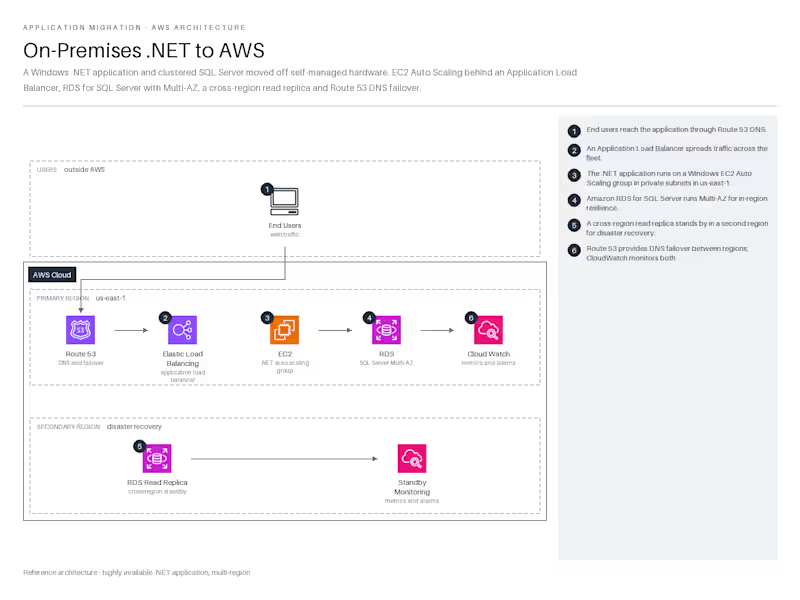
Migrated an on‐premises .NET web application and SQL Server database to AWS to achieve scalability, high availability, and cross‐region resilience. The legacy environment ran on Windows servers with a clustered SQL Server, resulting in high maintenance and limited elasticity. The new AWS architecture features EC2 Auto Scaling behind an Application Load Balancer (ALB), Amazon RDS for SQL Server with Multi‐AZ and a cross‐region read replica, and DNS failover via Route 53.
◦ Deployed the .NET application on an EC2 Auto Scaling group (Windows AMI) across private subnets in us‐east‐1.
5- Build Scalable Real-Time Data Analytics on AWS for Instant Insights
Designed and implemented a real-time data analytics platform on AWS, enabling stream processing, transformation, and visualization for high-volume IoT and log data. This system was built to process and analyze millions of records per second, providing actionable insights for business decision-making.
The solution leveraged AWS native services like Kinesis, Glue, Lambda, and Redshift, integrating Apache Spark Structured Streaming to handle real-time data ingestion and transformation. Airflow and Step Functions were used for workflow automation. Rangoli CRM - Serverless React CRM Platform
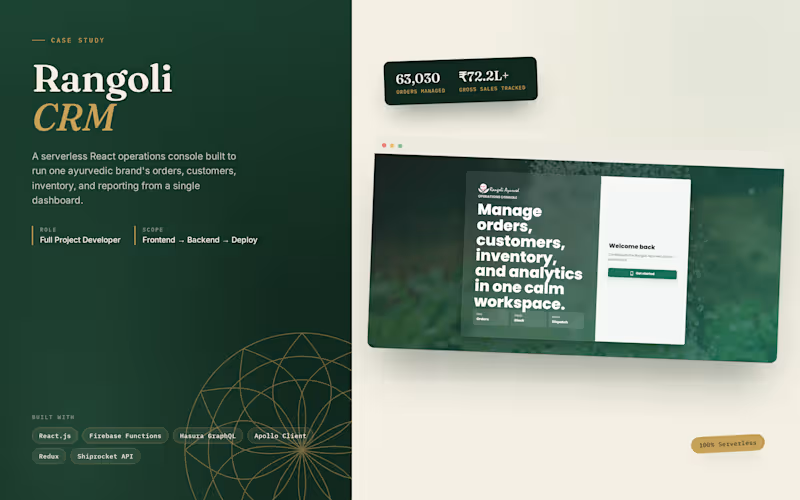
Rangoli CRM was a serverless React.js CRM platform that I developed from scratch, including the frontend, serverless backend workflows, API integrations, deployment, and production setup. The system was built to manage customers, orders, billing, printable invoices, shipments, and business reporting from a single dashboard.
The frontend was built with React.js and hosted on Firebase Hosting. For backend/serverless logic, I used Firebase Cloud Functions, while Hasura was deployed on Heroku to provide GraphQL APIs for application data. I integrated shipment workflows, including Shiprocket, so the business could manage order delivery and tracking directly through the CRM.
My Role
Full Project Developer
Key Work
Developed the complete CRM from scratch
Built React.js dashboard screens for customers, orders, billing, invoices, shipments, and reports
Hosted the frontend on Firebase Hosting
Built serverless workflows using Firebase Cloud Functions
Used Hasura on Heroku for GraphQL data APIs
Integrated GraphQL APIs with Apollo Client
Integrated Shiprocket for shipment and delivery workflows
Managed frontend state using Redux
Built responsive UI using Ant Design
Handled deployment, debugging, and production setup
Tech Stack
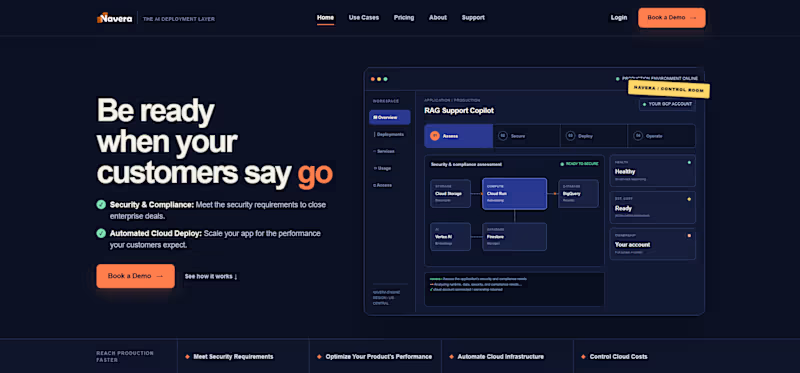
React.js, Redux, Ant Design, Firebase Hosting, Firebase Cloud Functions, Hasura, GraphQL, Apollo Client, Heroku, Shiprocket API, JavaScript Navera is a cloud-based AI platform that helps businesses build, deploy, and manage AI-powered applications and workflows on Google Cloud.
What I built: A unified platform with AI agents, knowledge bases (RAG), automated pipelines, one-click cloud deployments, and cost monitoring.
Why it matters: Teams can launch AI apps without managing the infrastructure themselves, while keeping cloud costs visible and under control.
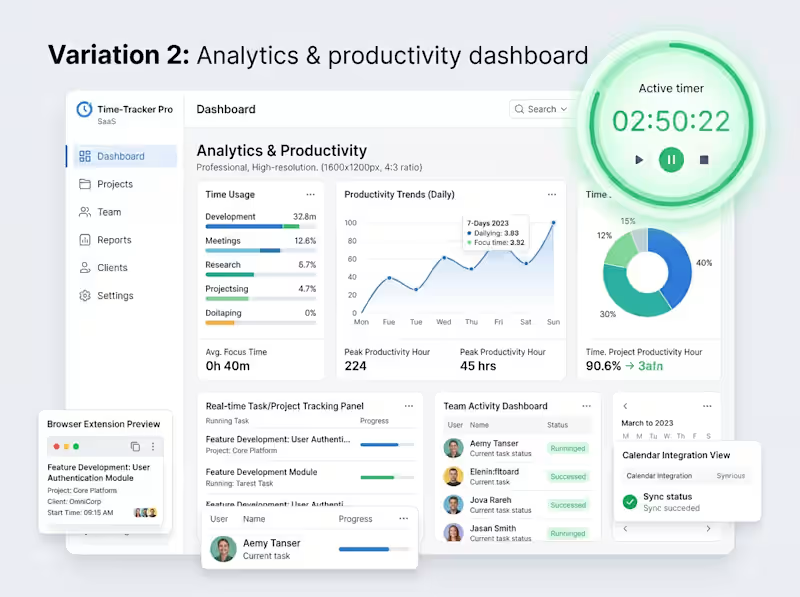
Tech: Google Cloud, [Python / Node.js / React], Docker, CI/CD, [LLM APIs] Time-Tracker Pro — Intelligent Time Management & Productivity SaaS
A comprehensive SaaS platform that helps teams and freelancers track time,
manage projects, and optimize productivity with AI-powered insights.
Core Features:
Real-time time tracking with automatic detection
Project & task management with hierarchical organization
Detailed time analytics and productivity reports
Team collaboration & billable hours tracking
Invoice generation from tracked time
Browser extension for seamless tracking
Mobile app for on-the-go time logging
Idle time detection & smart reminders
Integration with popular tools (Slack, Jira, Asana, Google Calendar)
AI-Powered Capabilities:
Automatic activity categorization using machine learning
Predictive project time estimates
Productivity insights & trend analysis
Smart recommendations for time optimization
Natural language project/task creation
Anomaly detection for unusual patterns
Dashboard & Reporting:
Real-time team activity dashboard
Customizable productivity reports
Time distribution charts & visualizations
Client billing reports with detailed breakdowns
Performance metrics & KPIs
Export to PDF, CSV, or integrate with accounting software
Technical Stack:
Frontend: React, Next.js, TypeScript, Tailwind CSS
Backend: Node.js, Express, NestJS
Database: PostgreSQL for relational data, Redis for caching
AI/ML: Python (scikit-learn, TensorFlow) for predictions
Real-time: WebSockets for live updates
Infrastructure: Docker, AWS EC2, S3, Lambda
CI/CD: GitHub Actions
Authentication: OAuth 2.0, JWT tokens
Key Accomplishments:
✓ 1000+ concurrent users support
✓ Sub-100ms API response times
✓ 99.9% uptime SLA
✓ Encrypted data storage & transmission
✓ GDPR compliant
✓ Scalable microservices architecture
✓ Automated testing (Jest, Cypress)
This project demonstrates expertise in:
SaaS architecture & scalability
Real-time systems & WebSockets
AI/ML integration for predictions
Payment processing & invoicing
User authentication & security
Team collaboration features
Production deployment & DevOps