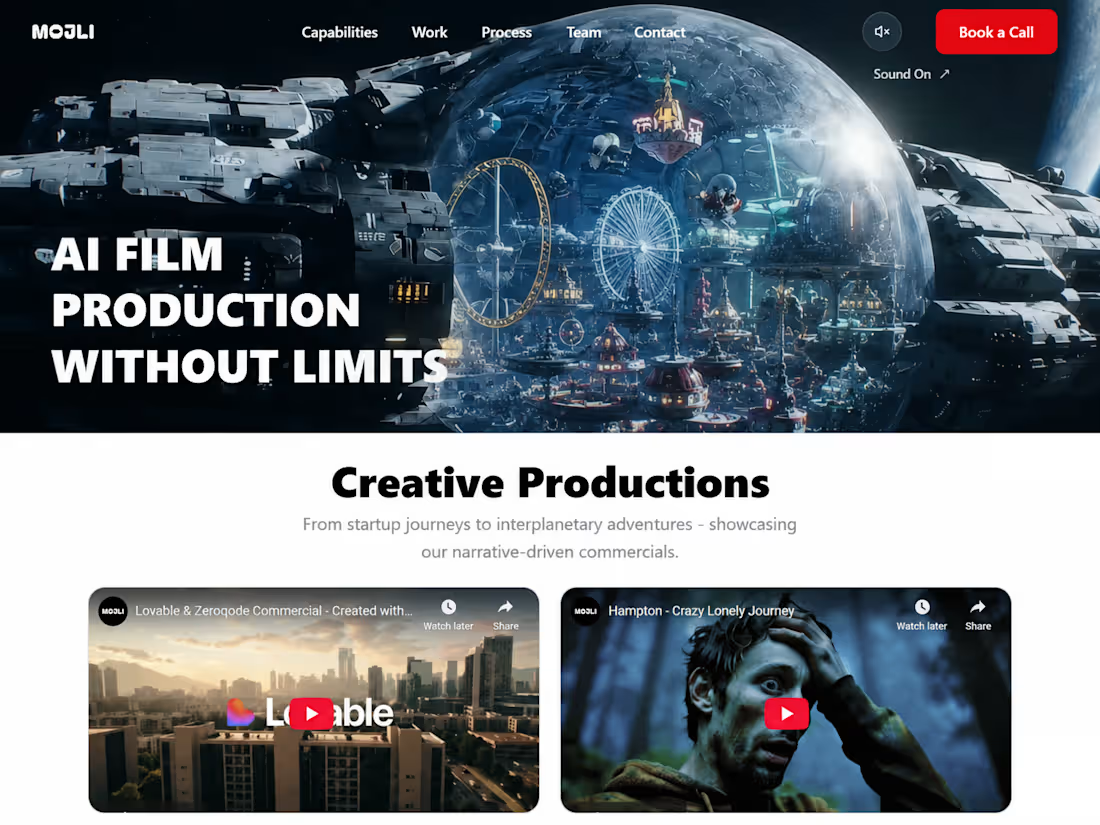
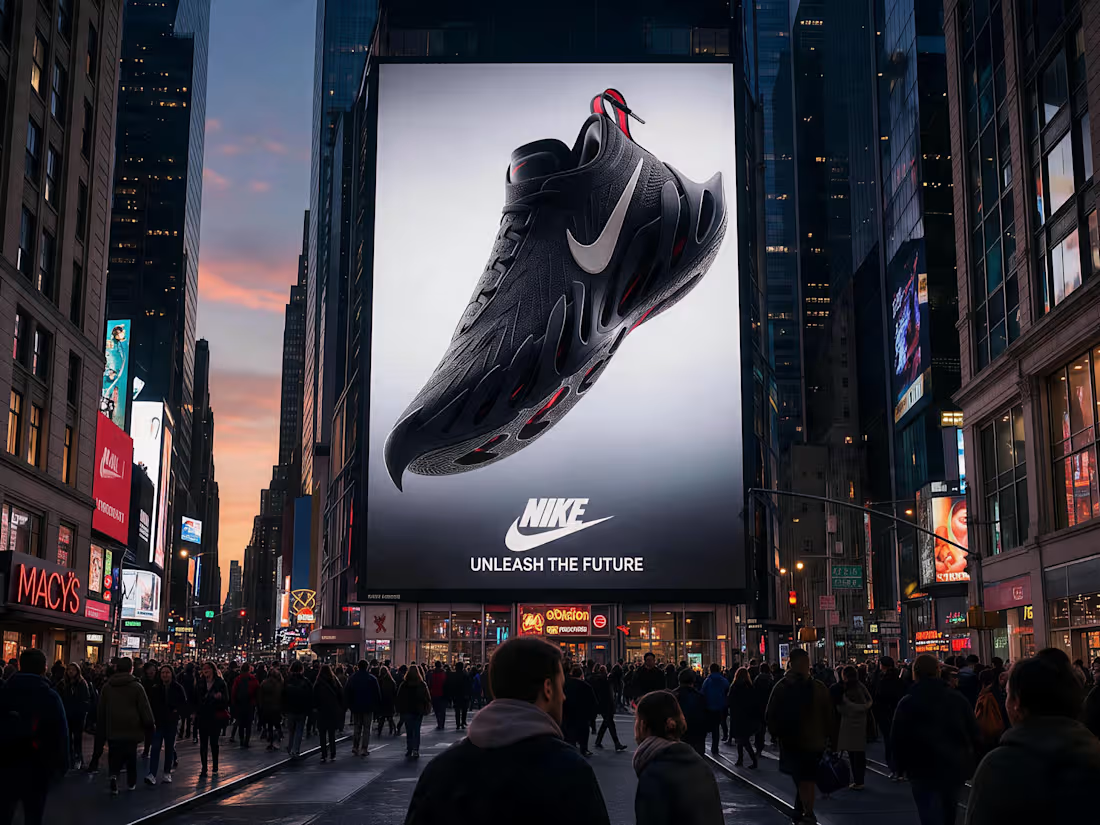
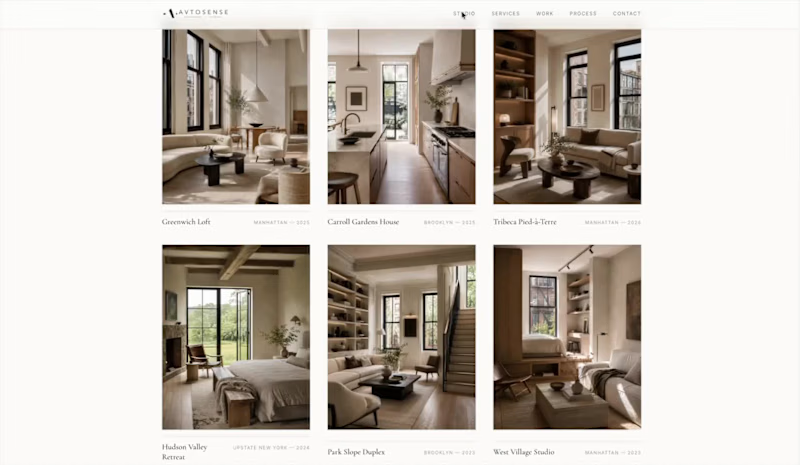
AI 3D Modeling Projects in New YorkAI 3D Modeling Projects in New YorkMojli is an AI Film Production studio powered by the creative and technical expertise of the Zeroqode team. The studio specializes in crafting high-quality commercials, product explainers, and brand stories — all produced entirely through artificial intelligence. Combining creative direction with advanced AI tools, Mojli delivers cinematic results with unmatched speed and precision.
Objective
The goal of Mojli is to redefine modern video production by merging storytelling and automation. With a fast time-to-market approach and a fully AI-driven workflow, the studio enables brands and creators to produce professional videos without traditional filming. Mojli’s team of directors and AI specialists guides each project from concept to final frame, ensuring both creative quality and technical consistency.
Achievements
Mojli has produced AI-generated commercials for Lovable, Hampton, and Bubble,SpaceX showcasing the potential of synthetic filmmaking for digital-first brands. The studio’s work has been recognized globally, earning multiple distinctions across international festivals — including Oniros Film Awards, Amsterdam New Cinema Film Festival, Top Shorts, AI Film Awards Venice, NYIFA, and Beyond Border International Film Festival.
Looking forward, Mojli aims to push the limits of AI storytelling — with an upcoming project exploring the creation of a fully AI-generated feature film. Project: Punk Kitty AR Lens
Overview
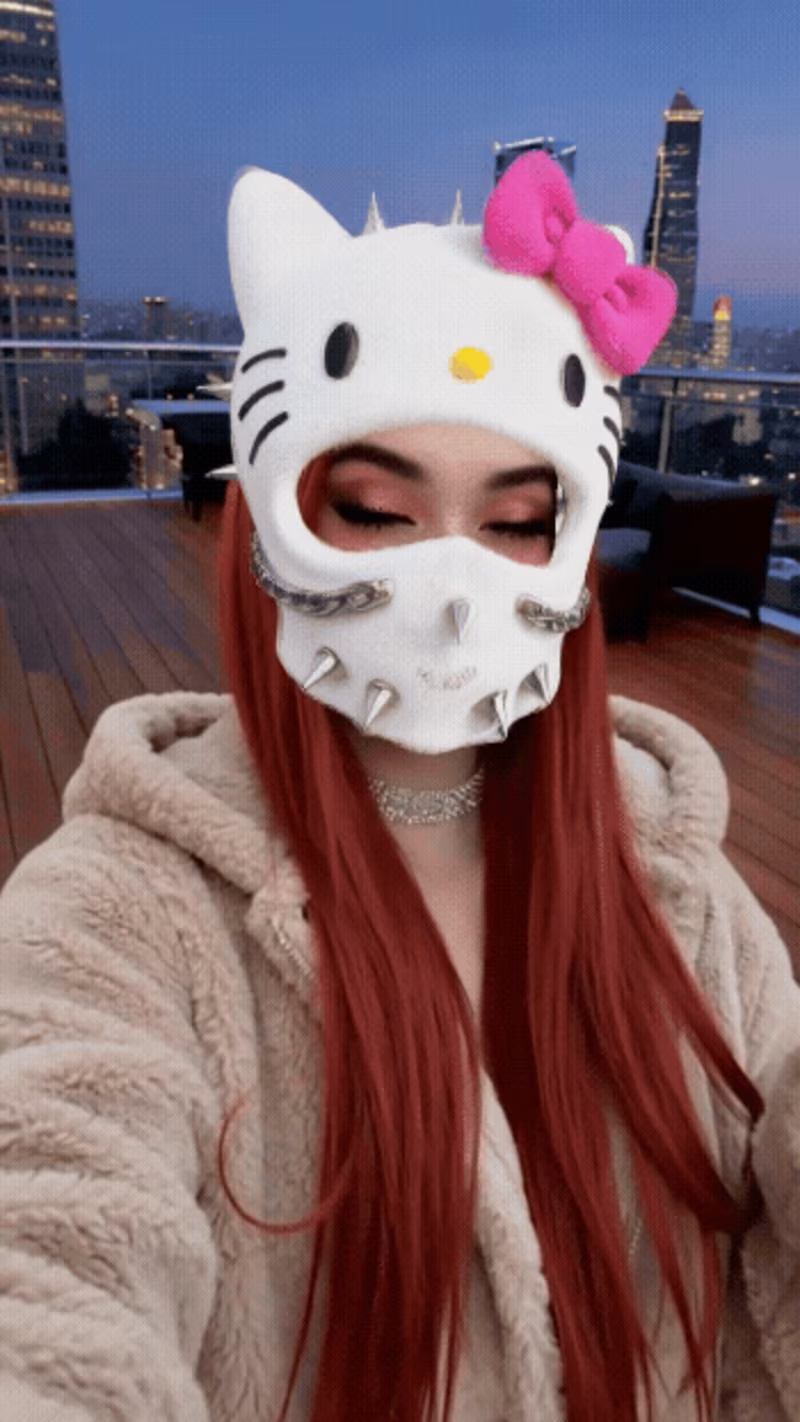
The Punk Kitty Glam AR Lens is a custom Augmented Reality experience developed for Snapchat. This project reimagines a beloved pop-culture icon through a subversive, edgy lens. By blending kawaii aesthetics with heavy punk elements and digital cosmetics, the mask offers users a unique, expressive, and high-quality digital accessory.
Key Features:
Advanced Face Tracking: Utilizes Snapchat's underlying face mesh technology to ensure the 3D mask securely anchors to the user's head, adapting to movements and lighting seamlessly.
Custom 3D Modeling: Features a uniquely sculpted, helmet-like mask that combines recognizable feline ears and a signature pink bow with an aggressive, skull-inspired lower jawline.
Material & Texture Design: Incorporates realistic PBR (Physically Based Rendering) materials for the metallic forehead spikes, nose cone, and heavy cheek chains, contrasting sharply with the soft matte white of the mask base.
AR Makeup Integration: Applies custom digital makeup directly to the user's eyes (visible through the mask's strategic cutouts), tying the edgy aesthetic together and ensuring a cohesive look regardless of the user's physical makeup.
Project Details:
Platform: Snapchat (Lens Studio)
Project Type: 3D Augmented Reality Face Mask & Digital Cosmetics Aesthetic: Punk, Edgy, Kawaii-Goth
Lens Link (https://www.snapchat.com/unlock/?type=SNAPCODE&uuid=f5073e7065a148bf8852105c9702611b&metadata=01)
Development Process
The development pipeline involved conceptualizing the design, modeling the base mesh and hard-surface accessories in a standard 3D software suite, and importing the optimized assets into Lens Studio.
Special attention was paid to the lighting setup and environment maps to ensure the chrome spikes and chains accurately reflected light.
Finally, facial tracking components were layered to introduce custom eye makeup that tracks accurately with the user's blinks and expressions, anchoring both the 3D and 2D digital objects realistically into the user's physical environment. A professionally directed music-video concept created entirely digitally, demonstrating what can be achieved without a traditional film production.
Parfumu pe piele - Xya
This project explores that possibility through a fully digital production built around an original song, an artist performance, cinematic direction, virtual locations, lighting, camera movement, animation and visual effects.
The goal was not to imitate a traditional production, but to demonstrate how current AI-assisted technology can give independent artists access to a level of visual storytelling that would traditionally require a much larger production budget.
THE CORE IDEA
The project isn't about making AI imagery. It's about using current digital technology to construct a complete cinematic production that would traditionally require a physical cast, locations, lighting equipment, cinematography and a production crew.
Creative Direction
This project explores the space between memory, reality and artificiality through a cinematic visual narrative built entirely in a digital environment.
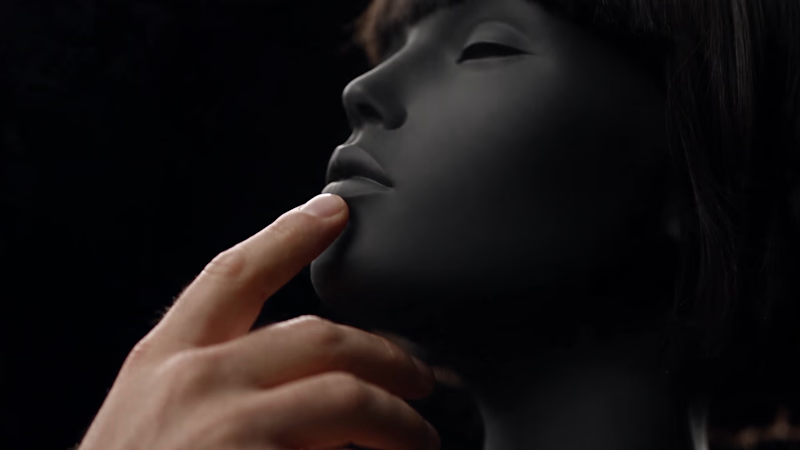
At the center of the film is a male performer and a female figure that exists in two distinct states: a motionless mannequin and an ultra-realistic human presence. The distinction between the two becomes increasingly ambiguous as fragments of another reality appear throughout the performance.
The visual world is deliberately reduced to deep blackness and controlled light. Stroboscopic flashes briefly reveal the characters, their movements and fragments of the environment, turning the lighting itself into part of the narrative and editing language. Between flashes, the viewer is left with incomplete moments — as if watching fragmented memories rather than continuous reality.
The male performer moves between solo performance, interaction with the mannequin, and fleeting memories of the woman as a living human. Their physical interaction develops through contemporary choreography influenced by the fluidity and precision of ballet, but interpreted through a more organic and expressive movement language.
The human sequences are treated almost as fashion-editorial memories: more fluid, dramatic and visually expressive, while maintaining the same visual universe as the mannequin scenes.
Rain appears only when caught by the light, adding another physical layer to the darkness. Every element was designed around believable physical behavior — body weight, clothing movement, skin, hair, rain, reflections and material response — to create a contrast between the surreal concept and physically convincing imagery.
The cinematography moves between extreme close-ups, observational angles, slow camera drift and abrupt temporal jumps. The flashes and changes in perspective are rhythmically connected to the structure of the original song, allowing the music to function as the spine of the visual edit.
Rather than using transformation as an obvious visual effect, the film treats the mannequin and the woman as two versions of the same memory. The viewer is never explicitly told which one is real.
THE VISUAL LANGUAGE
LIGHT
Near-total darkness interrupted by controlled stroboscopic flashes. Light becomes both illumination and an editing device.
MOVEMENT
A contrast between complete stillness and highly expressive contemporary choreography. Fast fragments coexist with suspended slow movement.
CAMERA
Extreme close-ups, upward observational perspectives, controlled drifting movements and abrupt temporal discontinuities create the sensation of discovering fragments of a memory.
MATERIALITY
The mannequin has an intentionally artificial, highly detailed plastic surface, while the human form emphasizes skin pores, imperfections, hair, fabric and realistic physical interaction.
RAIN
A restrained atmospheric element that becomes visible primarily when intersecting the light, giving depth to an otherwise almost completely black environment.
Parfumu pe piele - Xya
Creative Direction & Visual Concept
András Roland Partamas
Music Concept & Production
András Roland Partamas
Visual Production, Editing & Execution
András Roland Partamas
Artist(Singer)
AI-generated performance