Freelance Security Engineers in Nairobi
Freelance Security Engineers in Nairobi
Sign Up
Post a job
Sign Up
Log In
Filters
2
Projects
People
Stephen Kisong'e
Nairobi, Kenya
Cyber Security Analyst
Follow
Message
Cyber Security Analyst
1
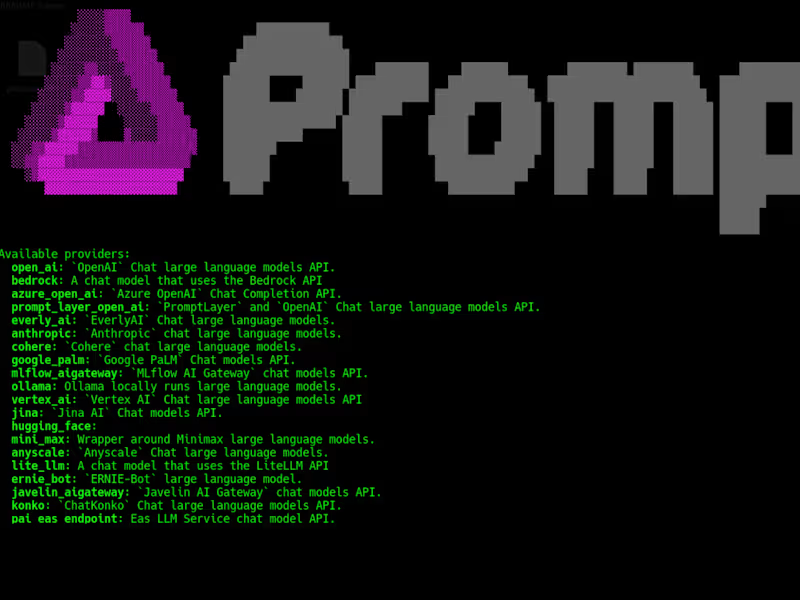
I conducted an authorized AI security assessment of Lily Cybersecurity 7B to evaluate how effectively a hardened system prompt could resist jailbreak and prompt injection attacks. Using Prompt Fuzzer, I ran 15 attack techniques against the model. The system prompt successfully blocked 8 attempts, including most roleplay and social engineering attacks. The successful bypasses mainly used translated or altered wording to disguise the intent of the request. This project demonstrates why system prompts should be supported by input validation, moderation, output filtering, and continuous AI red team testing.
1
151
0
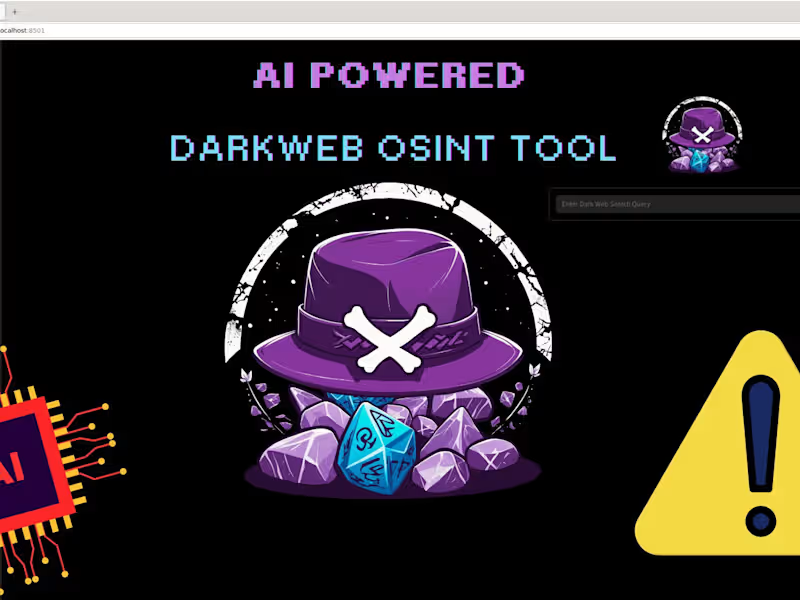
Designed and documented a secure environment for running Robin, an AI-powered dark web OSINT tool, inside a compartmentalized Qubes OS and Qubes-Whonix setup. The environment was structured to separate research activity, Tor-routed traffic, sensitive credentials, untrusted content, and final reporting. Robin was deployed through Docker inside a dedicated research qube, with traffic routed through sys-whonix and sensitive notes stored separately in an offline vault qube. Disposable qubes were incorporated for opening potentially unsafe links and files. The setup was built around security by compartmentalization rather than relying on a single tool for protection. Particular attention was given to Docker mount restrictions, credential hygiene, network-boundary verification, lawful research scope, and keeping raw research data isolated from personal or client environments. The final result was a repeatable AI-assisted OSINT workflow that supports faster search refinement, result filtering, investigation summarization, and structured reporting while maintaining stronger operational security and clearer separation between collection, analysis, and final output.
0
145
1
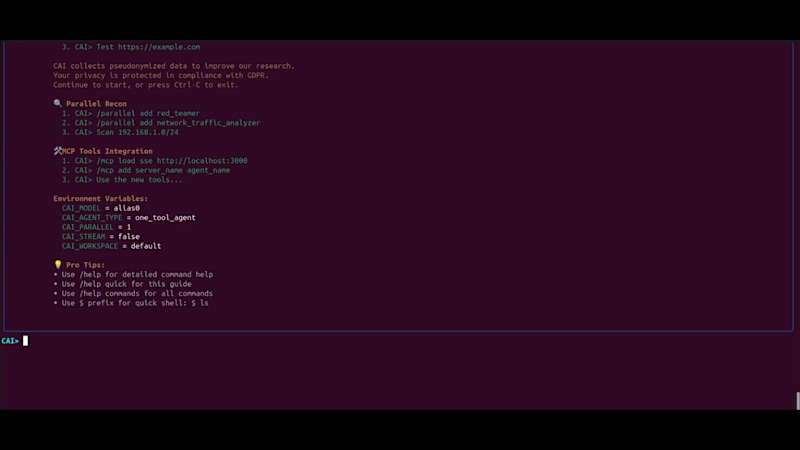
A hands-on overview of CAI, an AI-assisted cybersecurity agent framework configured and explored in a Linux terminal environment. The demonstration focuses on how AI agents can be organized and used to support different areas of cybersecurity testing, analysis, and research. The walkthrough covers command-line navigation, available help options, agent selection, model configuration, and the use of specialized security agents. It includes a closer look at DFIR-focused agents for digital forensics and incident response, along with other agent categories designed for bug bounty research, red team activities, network security, reverse engineering, Wi-Fi security, and reporting. The setup also highlights parallel agent configuration, showing how multiple AI-driven security agents can be prepared for structured analysis and task separation. This makes the environment useful for handling different cybersecurity activities in a more organized and scalable way. Overall, the work reflects practical experience with AI-powered security tooling, terminal-based security environments, agent configuration, cybersecurity automation, and ethical AI-assisted security research.
1
187
0
Performed a manual, black-box security assessment of a locally-hosted large language model served through LM Studio, using Burp Suite as the primary testing tool. The engagement began with no prior knowledge beyond a single IP address, mirroring how an external attacker would approach an exposed AI server discovered on a network. Worked through a full discovery-first methodology: confirming the target was live, enumerating the server's exposed endpoints by probing and reading response codes, extracting the loaded model name directly from the API, and proving the expected request format through the server's own error responses rather than assuming it. This reconnaissance phase converted an unknown target into a complete map of its attack surface. With the attack surface established, executed a series of manual techniques through Burp's Repeater and Intruder tools, including prompt injection, system prompt extraction, role and system-message injection, parameter manipulation, error-message disclosure, and authentication testing. Demonstrated additional Burp capabilities relevant to AI systems, including response comparison to prove behavioral changes under attack, randomness testing of server-generated identifiers, and live request tampering to illustrate a man-in-the-middle scenario against AI traffic. Organized all findings into a structured vulnerability map aligned to OWASP LLM risk categories, recording each technique's result, severity, and supporting evidence. Delivered the work as a complete, reproducible, beginner-accessible walkthrough covering environment setup, discovery, exploitation, and reporting.
0
125
Security Engineer
(6)
Follow
Message
Moses Mwangau
Nairobi, Kenya
Passionate Security Engineer & Developer
Follow
Message
Passionate Security Engineer & Developer
0
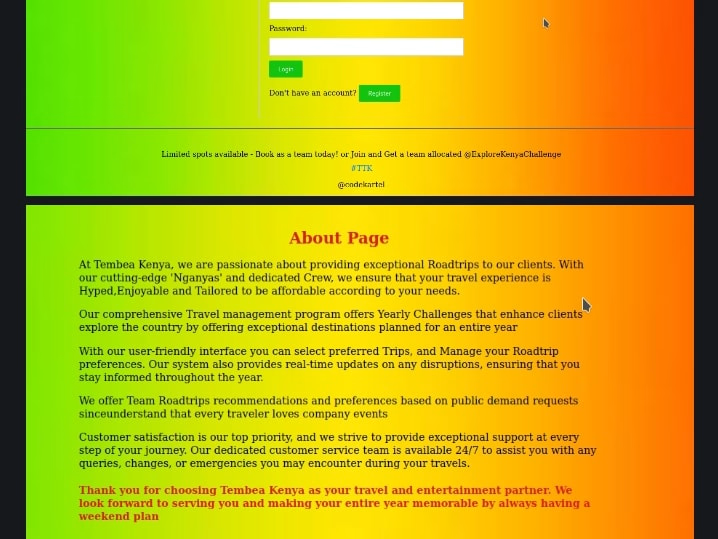
Web Development Portfolio
0
19
0
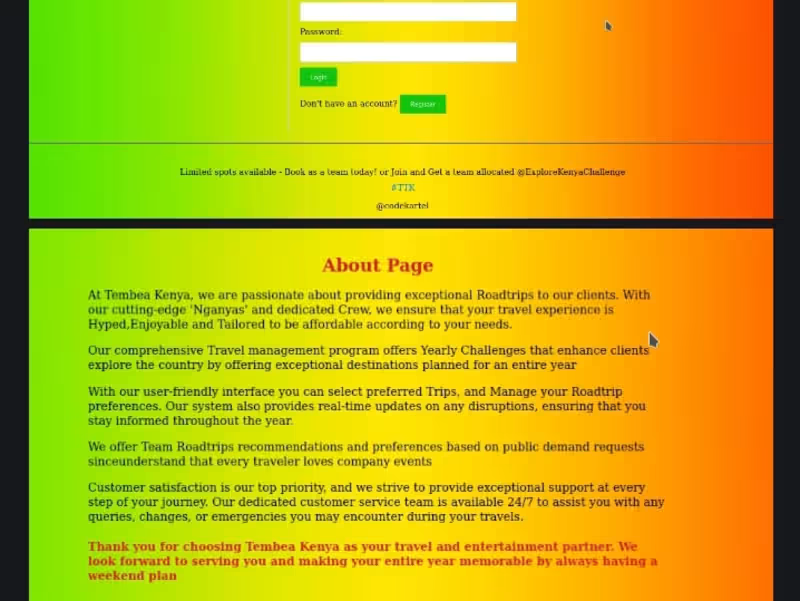
Penetration Testing Project
0
56
0
Devops Host on Azure
0
24
View more →
Security Engineer
(2)
Follow
Message
Explore people