AI Automation Projects in NairobiAI Automation Projects in NairobiThis week, I have been working on automating my boss's inbox management, delegating email triage to AI while I handle reviews and approvals that require sound judgment. Because one wrong response to a client can cost a business revenue, I wanted to build a system that saves time without handing over critical decisions to AI.
How I built it:
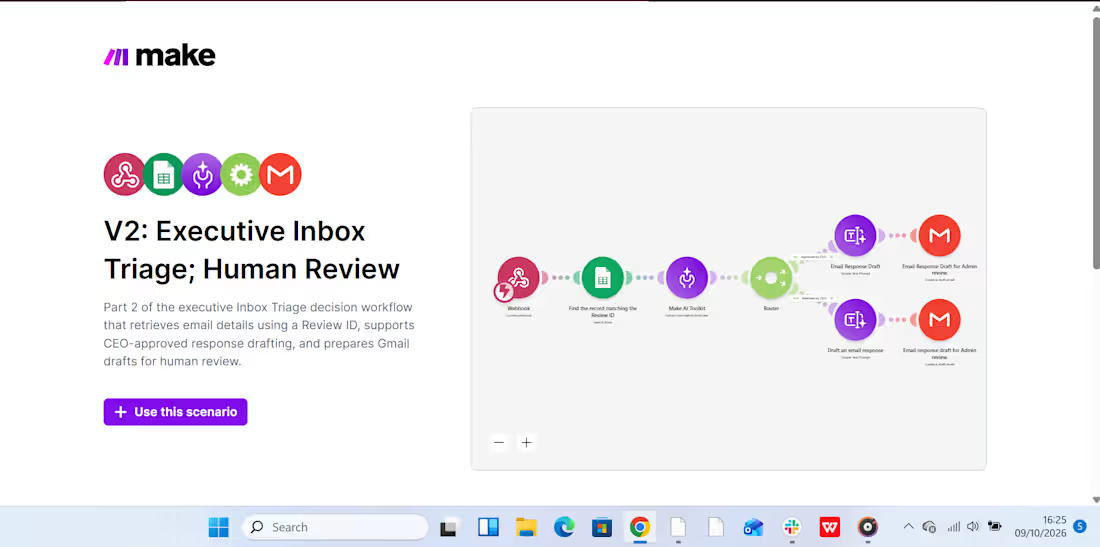
I created two connected automation scenarios in Make.com (http://Make.com).
Scenario 1: Intelligent Inbox Triage:
AI analyzes incoming emails, categorizes them by priority, summarizes their content, and recommends the next action. This makes it easier to identify urgent messages and decide what needs attention first.
Scenario 2: Human Review & Approval:
The workflow supports the review and approval process before an email is sent. Slack notifications help bring relevant updates to my attention, so I can review the proposed action and approve the response before it goes out.
Below are snippets of the two scenarios, including a Slack notification, showing how the workflow operates.
My takeaway? AI can help manage the inbox, but when a response could affect revenue or a client relationship, the final decision should remain human. 🤖 What if your business had an AI agent that could actually get work done?
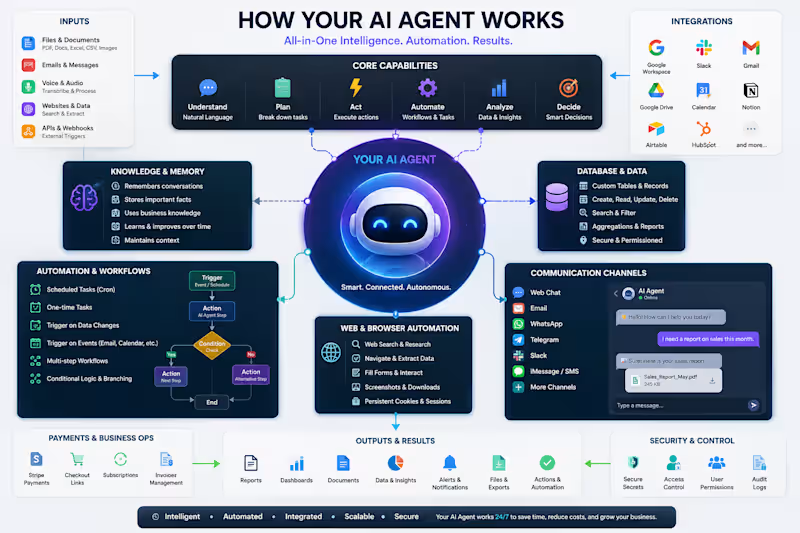
This is how the AI agents and automation systems I build can work.
From the moment information comes in, the agent can understand requests, access relevant knowledge, plan actions, connect with your business tools, automate workflows, manage data, communicate across channels, and deliver useful results.
⚡ Automate repetitive tasks
🧠 Maintain knowledge and context
🔌 Connect your business tools
📊 Manage and analyze data
💬 Support communication workflows
🌐 Perform web research and authorized browser tasks
🔄 Run scheduled and event-based workflows
🔐 Operate with controlled access and security
The goal isn't just to add AI to your business.
It's to build intelligent systems that help your business work smarter.
I'm now building custom AI agents and business automation systems for businesses, startups, agencies, and entrepreneurs.
If you have a repetitive workflow, manual process, or business task that takes too much time, let's explore how AI and automation can help.
🚀 Custom AI Agent & Business Automation
#AIAgents #AIAutomation #ArtificialIntelligence #BusinessAutomation #WorkflowAutomation #Automation #AIIntegration #BusinessTechnology #DigitalTransformation Flow Ledger – No-Code Finance MVP for Freelancers (Pre-Launch)
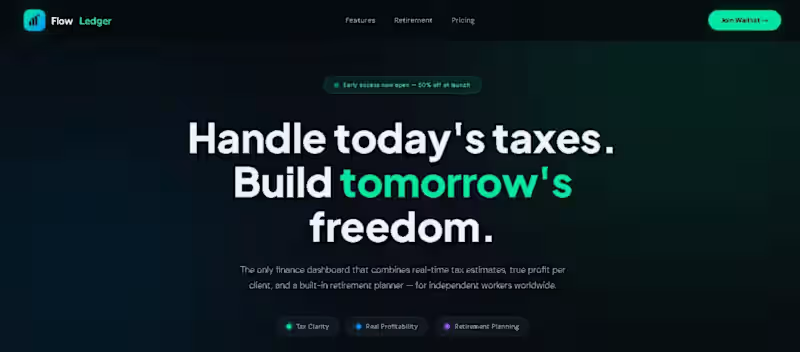
Building Flow Ledger: the dashboard freelancers need to manage chaotic income with auto tax estimates, true per-client profit, and retirement planningall in one place.
Flow Ledger auto-logs payments (Stripe-ready), deducts fees/taxes/retirement set-asides, and shows instant take-home.
MVP progress:
Live waitlist landing (free access) with signups from 30+ countries.
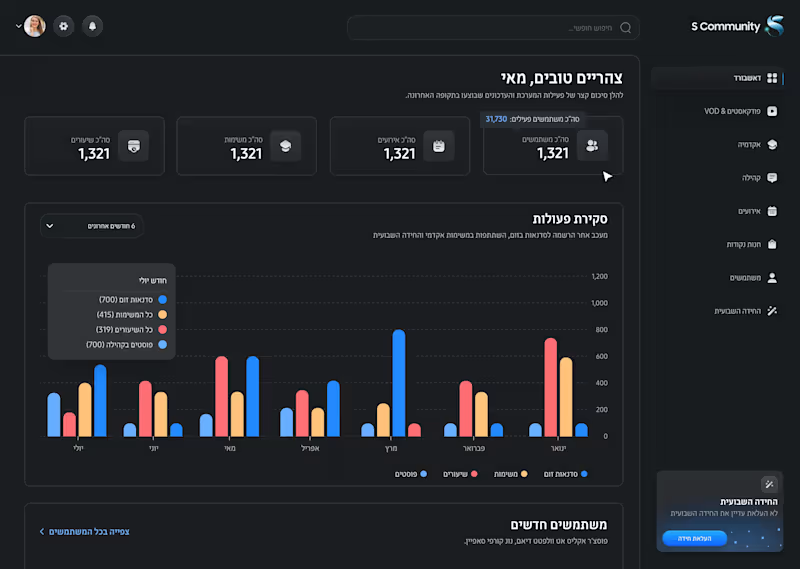
Dashboard mocks: real-time take-home calculator, tax engine for 40+ countries, profitability breakdowns, retirement tracker with sliders & auto-adjustments.
Built in Bubble.io (http://Bubble.io): dynamic workflows, global logic, dark-mode UI, multi-currency support.
Waitlist momentum shows strong demand from freelancers tired of spreadsheets. AI-Powered Lead Follow-Up & Management for Miale
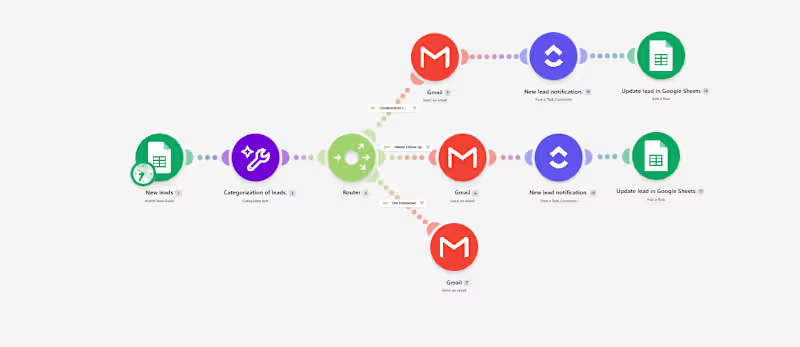
I automated lead follow-up and management for Miale to reduce the manual work involved in reviewing enquiries, categorizing leads, responding to prospects, and keeping the team informed.
The problem:
When leads come in, manually reviewing each response, deciding how to handle it, sending emails, and notifying the team can take time, and makes it easier for follow-ups to slip through the cracks.
The solution:
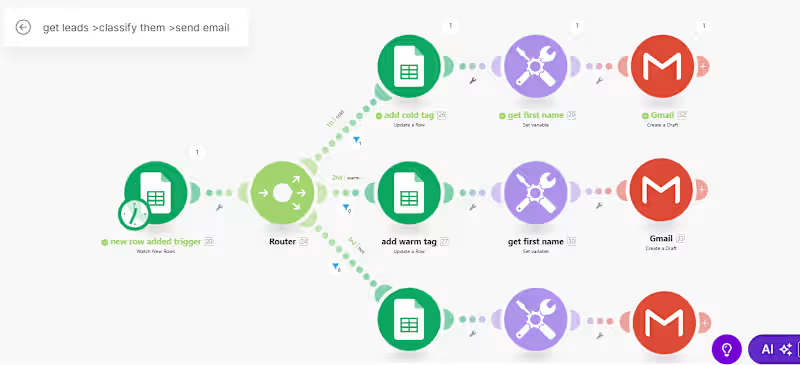
I built an AI-powered workflow in Make that automatically processes new lead submissions.
Here’s how it works:
Google Form → Google Sheets → AI Classification → Router → Email + Slack → Lead Tracking
When a prospect submits the form, AI analyzes their collaboration interest and categorizes the lead as Collaboration Lead, Needs Follow-up, or Not Interested.
The workflow then automatically:
- Routes the lead based on their response.
- Sends a relevant email to the prospect.
- Notifies the team in Slack when a new lead needs attention.
- Updates the lead record for easier tracking.
Tools used:
Make · Make AI Toolkit · Google Forms · Google Sheets · Gmail · Slack
The workflow can also be adapted for client enquiries, sales leads, service requests, bookings, applications, and other repetitive lead-management processes.
The goal isn't simply to automate tasks. It's to build a system that helps businesses respond faster, stay organized, and reduce manual follow-up work.