Projects using Blender in MajadahondaProjects using Blender in MajadahondaFrom screen to object: what should Flourland become next?
I’ve been developing Flourland since 2020, exploring this world through illustration, animation, paintings, murals, and stickers.
Now I’m working on bringing the same family of characters into physical products.
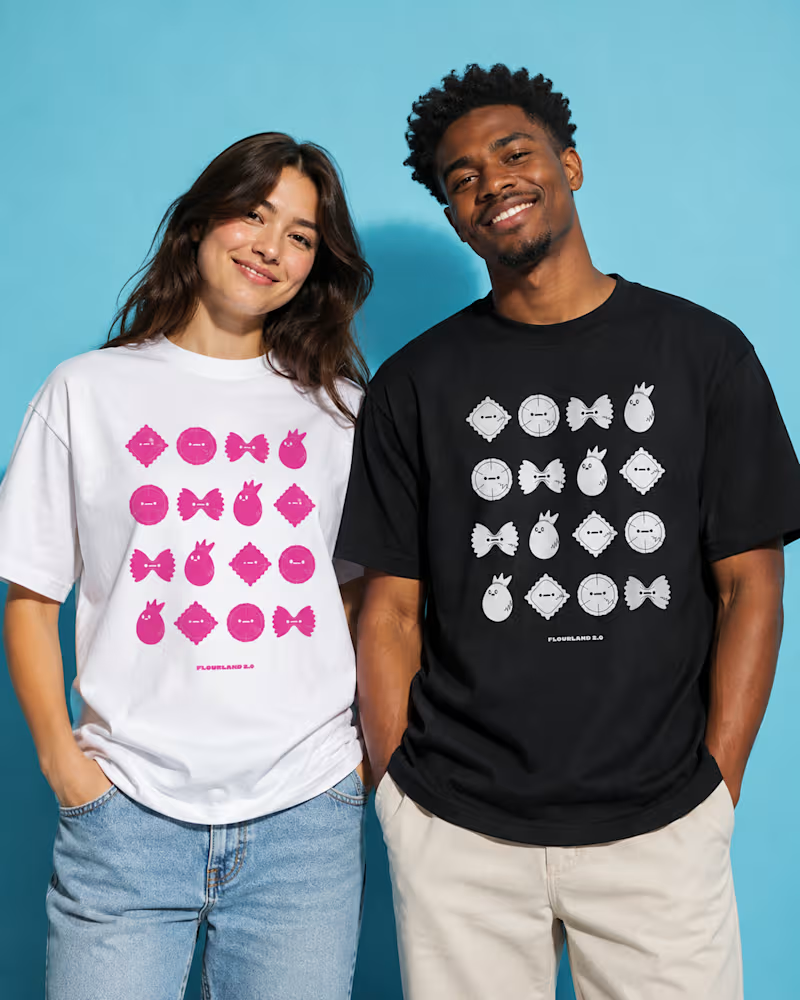
The sculptural pieces shown here are still prototypes. I’m currently sanding, filling, correcting imperfections, and gradually preparing them for their final finish. At the same time, I’m visualizing how the characters could work together on a first T-shirt—the image shown is an early product mockup.
I’m now deciding which direction to prioritize:
A small, limited edition of sculptural objects or the first Flourland T-shirt?
Which would you most want to own first, and why?
I’d especially value feedback on which format feels more distinctive, collectible, and capable of introducing Flourland to new people. El Loco Amor — Building a Visual Universe for Gen Z Dating TV
Expanding the Format
The creative work grew from within the format itself.
I developed new games, situations and content opportunities, thinking about what could happen inside each space and how the environment itself could generate storytelling rather than simply decorate it.
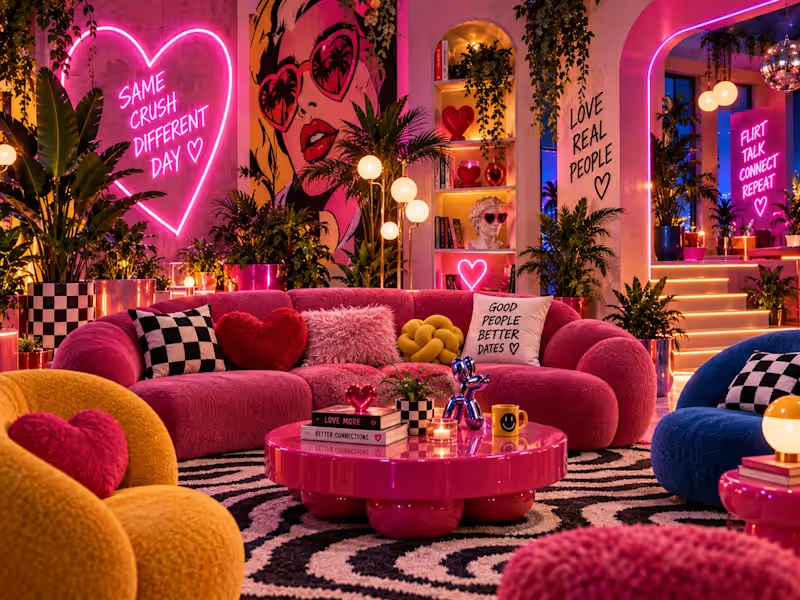
The different areas became more than functional corners. Each one was designed with its own purpose, energy and potential role in the narrative: spaces to meet, flirt, talk, play, reveal information, create tension, capture memories or generate short-form social content.
Building the Visual World
From that strategic foundation, I developed the visual direction.
The universe combined Neo-Memphis, Retro Pop, Boho-Urban and Art Pop, transforming the set into an emotional gallery-meets-pop home: colourful, excessive, playful and designed to be instantly recognisable and shareable.
Neon, tactile textures, handwritten messages, hearts, photography, vegetation, saturated colour and expressive objects became part of the format's language—not simply decoration.
One Idea Across Every Touchpoint
The graphic identity followed the same principle. It needed to be modular and expressive, capable of moving naturally between television screens, vertical video, social media and physical applications.
The creative rule was controlled chaos: layering, movement, romantic-pop symbols and visual elements entering the frame almost as if they belonged to an app interface.
The Result
The result was a proposal in which format development, games, set design, visual identity and social content all came from one creative idea.
The goal was never simply to build a set around a television programme. It was to explore what creative direction could add to the format itself: more world, more situations, more storytelling and more possibilities for content.
I received an idea. I stepped inside it, challenged it and expanded it into a complete creative universe.