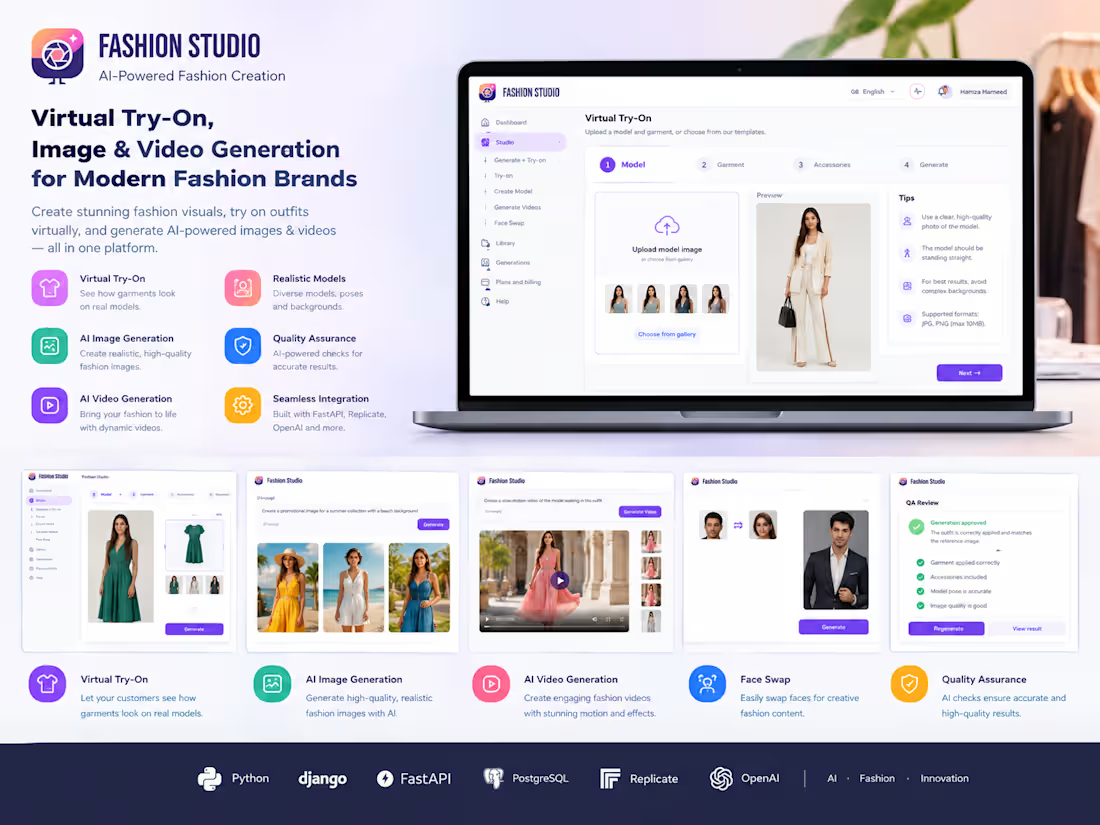
Projects using Docker in LahoreProjects using Docker in LahoreFashion Studio is an AI-powered fashion creation platform designed to help fashion brands and creators generate professional product visuals without traditional photoshoots.
The platform combines virtual try-on, AI model generation, image generation, video generation, face swapping, and quality assurance into a single workflow.
I worked on the backend and AI integration layer, building APIs and workflows that connect the platform with multiple AI services and handle the generation lifecycle from user input to final output.
Key features include:
👗 Virtual Try-On — Apply garments and accessories to generated or uploaded models.
🧑🎨 AI Model Generation — Create realistic fashion models with configurable gender, appearance, measurements, poses, and backgrounds.
🖼️ AI Image Generation — Generate fashion campaigns and product visuals from prompts and references.
🎬 AI Video Generation — Turn generated fashion imagery into promotional videos.
🔄 Face Swap — Generate customized fashion content using face-swapping workflows.
🛡️ AI Quality Assurance — Automatically evaluate generated results and retry failed generations when necessary.
📚 Generation Library — Track and manage generated assets and their parameters.
💳 Credits & Billing — Manage generation credits, subscriptions, usage, and add-on credits.
⚙️ Generation Parameters — Store model configuration, garments, poses, backgrounds, aspect ratios, and generation metadata.
Technology
Python · Django · FastAPI · PostgreSQL · REST APIs · Replicate · OpenAI · Docker · AI Image Generation · AI Video Generation
My Role
Backend Engineer / AI Integration Engineer
I focused on designing the backend APIs, integrating AI generation services, building generation workflows, handling asynchronous processing and failures, and connecting the AI capabilities with the product's user-facing workflows. I simulated a real-world Active Directory (AD) attack to identify and exploit misconfigurations within a Windows domain environment. The goal was to practice enumeration techniques, escalate privileges to domain admin, and establish persistent access.
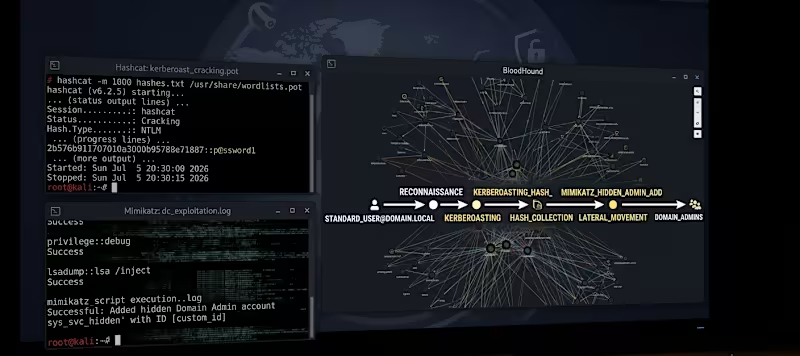
I started with LDAP enumeration using ldapsearch to map domain users and groups. Using BloodHound, I visualized attack paths and identified a Kerberoastable service account — a weak SPN tied to an outdated service. I extracted the hash using GetUserSPNs.py (http://GetUserSPNs.py) and cracked it with Hashcat, revealing the cleartext password. I then used Pass-the-Hash to authenticate as a domain admin using PsExec. To maintain persistence, I added a domain admin backdoor account using Mimikatz. Finally, I cleared event logs to avoid detection and exported a full attack report for remediation.
Tools Used: ldapsearch, BloodHound, Hashcat, GetUserSPNs.py (http://GetUserSPNs.py), PsExec, Mimikatz, eventlog (for cleanup)
Deliverable: Full attack timeline with screenshots, enumeration outputs, and security recommendations.