Freelance SEO Content Managers in Islamabad Capital TerritoryFreelance SEO Content Managers in Islamabad Capital Territory
Brand Management & Public Relations Professional.
CEO/Founder of SERPorians.com
New to Contra
CEO/Founder of SERPorians.com
Amazon FBA/FBM Account Manager & SEO Specialist | #1 Rank
New to Contra
Amazon FBA/FBM Account Manager & SEO Specialist | #1 Rank

Cover image for My Recent Client Was Stuck
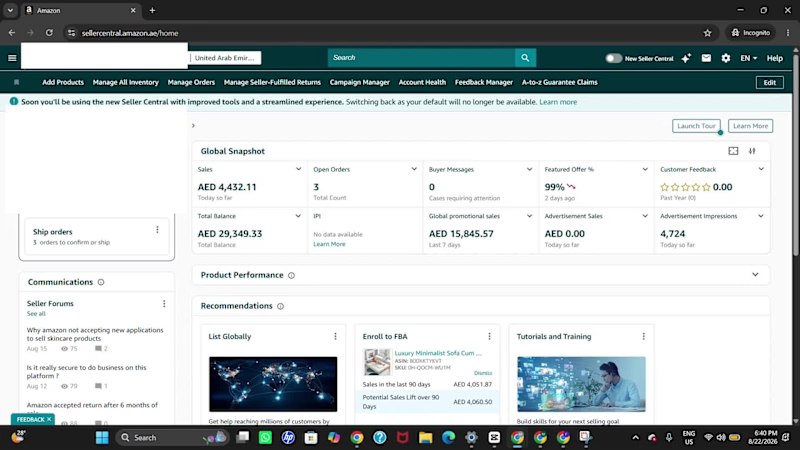
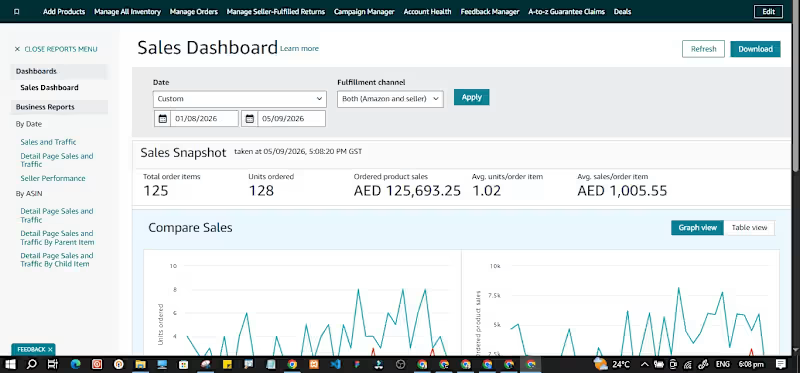
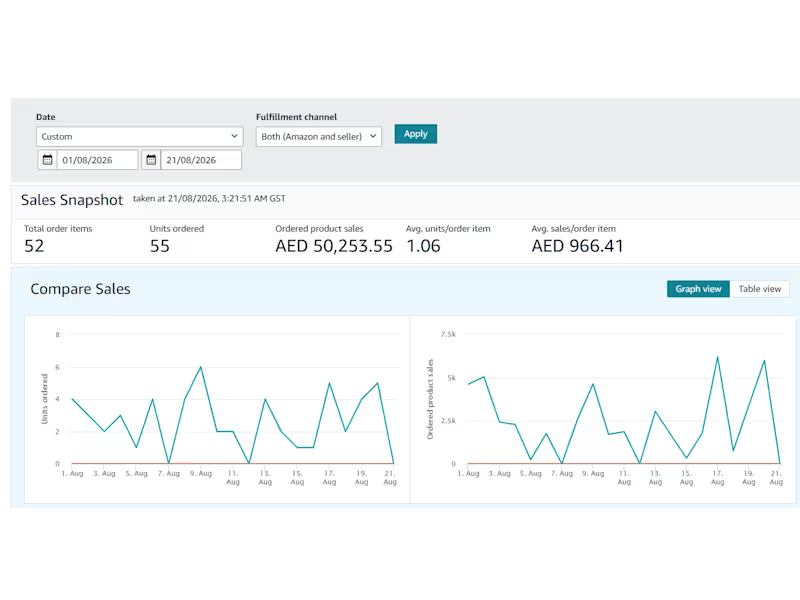
My Recent Client Was Stuck at 1 Lac AED? Here's What Finally Moved It A real look at what actually grows a stagnant Amazon store no hacks, no shortcuts, just a plan executed properly. For three straight years, one of my Amazon FBM clients was stuck. Not failing. Not losing money. Just… stuck. Same 1 Lac AED (roughly 100,000 AED) in yearly sales, year after year. The kind of plateau that's almost worse than a decline, because everything looks fine on the surface, but nothing is actually moving forward. When they came to me, the frustration was obvious: "We're doing everything right. Why aren't we growing?" Turns out, they weren't doing everything right. They were doing the same things right, over and over, and expecting a different result. Here's what we changed and what it did to their numbers. A stagnant Amazon FBM account grew past its three-year sales ceiling through three specific changes: a full listing rebuilds with optimized images, disciplined and timely use of Amazon's Deal tags, and PPC campaigns built around actual buyer intent instead of broad keyword guessing. Within the first months of the new cycle, ordered product sales had already crossed AED 125,000 surpassing what used to take a full year. The Real Problem Wasn't Traffic Most sellers assume a sales plateau means they need more ads, more budget, more everything. That wasn't the issue here. The account was getting traffic. People were clicking. What wasn't happening was conversion, visitors were landing on the product page and leaving without buying. That's a listing problem, not a traffic problem, and no amount of extra ad spend fixes a listing that doesn't convert. So that's where we started. 1. A New, Optimized Listing Built Around How People Actually Shop The old listing was technically complete. Title, bullet points, images all present. But "present" and "persuasive" are two very different things. We rebuilt it from the ground up: • Title restructured around how real buyers search, not how the seller described the product internally • Bullet points rewritten to lead with benefits, not just specs answering the silent question every shopper has: "why does this matter to me?" • Backend search terms cleaned up to close gaps the old listing was leaving on the table. This alone changed how the product showed up in search - and more importantly, how it performed once someone actually saw it. 2. Image Optimization: The Most Underrated Lever on Amazon Here's something I tell every client: on Amazon, your images are your salesperson. Nobody reads the full description before deciding whether to click into a listing. We overhauled the visual set: • A stronger, cleaner main image that stood out in a crowded search grid • Infographic-style secondary images that answered common questions before the customer had to ask • Lifestyle images that helped buyers picture the product in their own life, not just on a white background. This is one of those changes that doesn't show up in a single metric but it shows up in almost all of them. 3. Deal Tags, Timed Right Amazon's Deal badges (Lightning Deals, Best Deal, Coupons) work, but only when they're timed with intent not just switched on whenever a slot opens up. We mapped deal timing to: • Seasonal demand windows • Inventory levels, so a deal never triggered a stockout mid-promotion • Competitor pricing activity, so the discount actually stood out rather than blending in. A Deal tag next to a listing that's already been optimized to convert is a completely different tool than a Deal tag slapped onto a weak listing. Sequence matters. 4. PPC That Targeted Buyers, Not Just Keywords The account already had PPC campaigns running. The problem was that they were built around broad, high-volume keywords that sounded relevant but attracted browsers, not buyers. We rebuilt the campaign structure around: • High-intent, purchase-ready search terms rather than broad awareness keywords • Tight negative keyword lists, cutting spend on searches that were never going to convert • Bid adjustments based on actual ACoS performance, not guesswork The ad spend didn't necessarily go up. It just stopped being wasted. The Result Within the first several months of applying this new listing, new images, properly timed deals, and cleaner PPC the account's ordered product sales had already crossed AED 125,000. To put that in perspective: what used to take this account a full year to reach was now happening in a fraction of that time. No viral moment. No massive new ad budget. Just a listing that finally did its job, images that finally sold instead of just illustrating, deals that landed at the right moment, and ads that stopped subsidizing clicks that were never going to buy. The Actual Lesson Here If your Amazon account feels "stuck" rather than "failing," the fix usually isn't more spend. It's precision. • Is your listing built for how people actually search and decide? • Are your images doing the selling, or just filling space? • Are your deals timed with strategy, or just switched on when available? • Is your PPC chasing buyers, or chasing traffic? Answer those honestly, and a plateau almost always turns out to be fixable not with a bigger budget, but with a sharper one. If your Amazon store has been sitting at the same numbers for longer than it should, the fix is rarely "spend more." It's usually "spend smarter" starting with the listing itself.
0
29