Concept to Growth with Design, Development & Marketing
- 5.0
- Rating
- 58
- Followers
Concept to Growth with Design, Development & Marketing
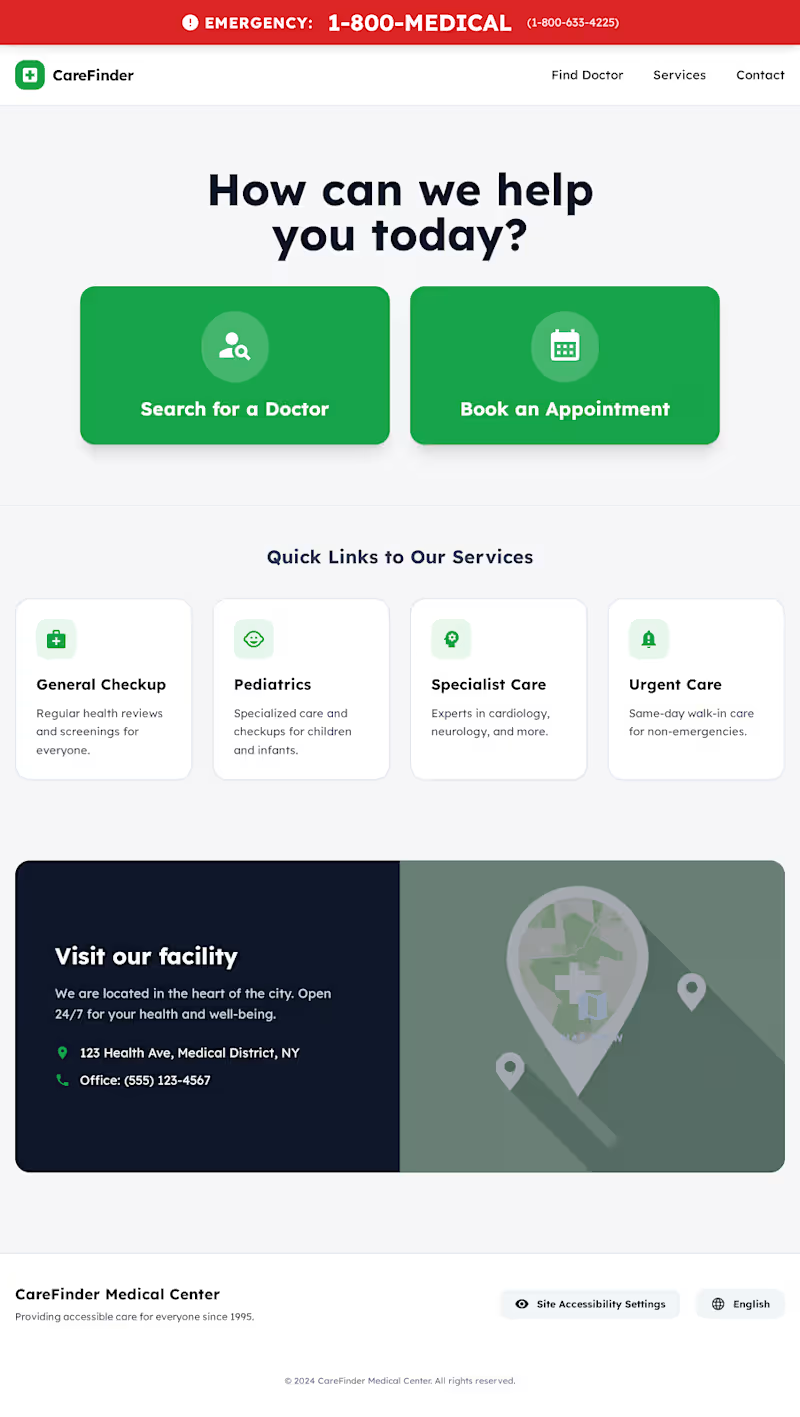
Healthcare Website Should Save Time - Not Confuse Patients
When someone is sick, they don’t want to struggle with small buttons and confusing booking steps.
I design simple, clear, and easy-to-use healthcare websites that help patients:
✅ Find doctors fast
✅ Read reviews easily
✅ Book appointments in seconds
✅ Trust your platform instantly
More clarity = More bookings.
Clinic, healthcare startup, or medical platform and need a website that actually converts…
3
611
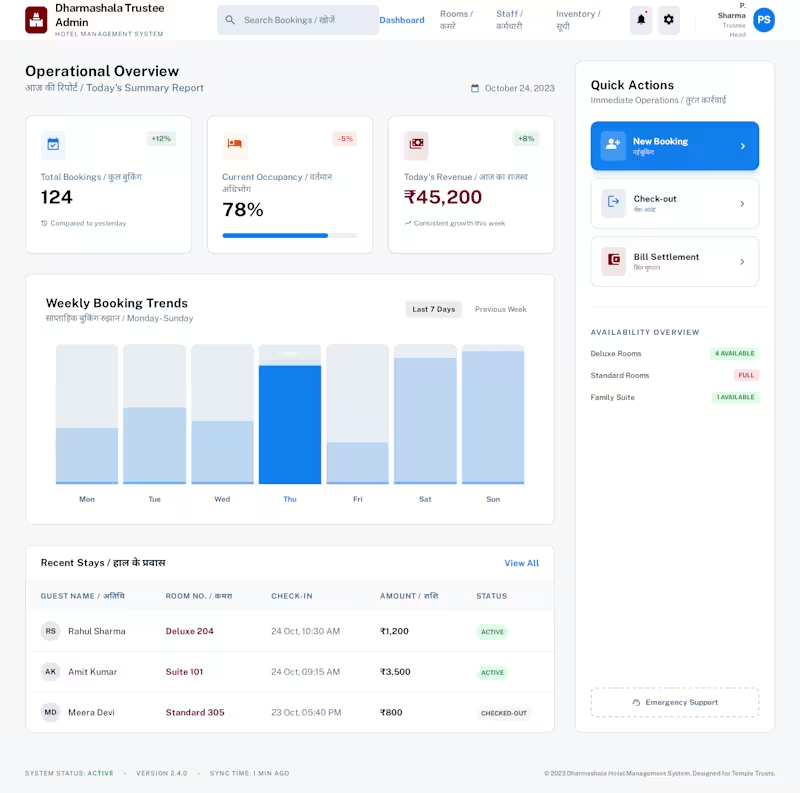
Dharmashala Management System - Smart, Fast & Easy to Use
We have created the first design for the Dharmashala Management System with focus on speed, clarity, and smooth daily work.
🔹 Trustee Admin Dashboard
🔹 Room Status Grid View
🔹 Fast Counter Booking System
This system is built to improve operations, reduce errors, and increase efficiency for Dharmashala and hostel management.
4
5
768
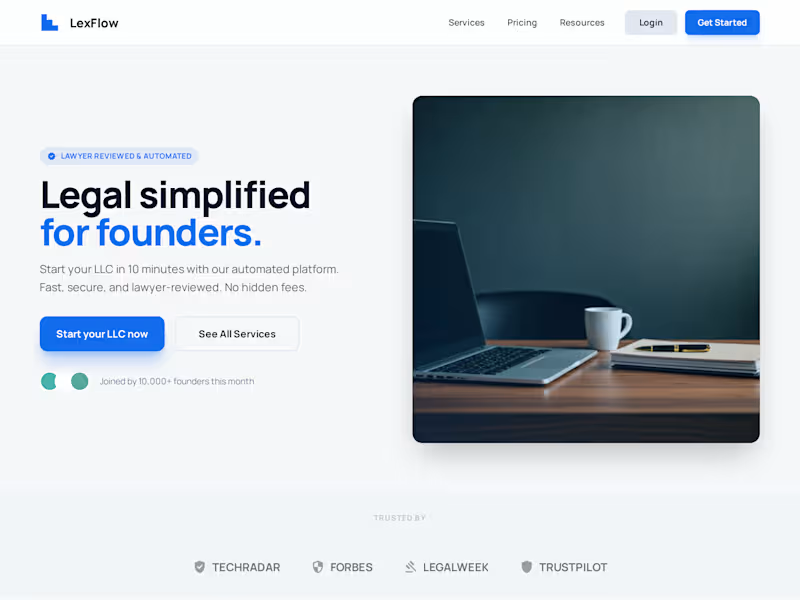
LexFlow - Legal Platform Design
Designed a smart and easy-to-use legal platform called LexFlow that helps users complete legal work step by step.
Here’s what I created:
✅ LexFlow Landing Page: It clearly explains what the platform does, shows a simple 3-step process, and helps users start quickly without confusion.
✅ Interactive Legal Intake System: It shows progress, gives helpful tips, and makes the process simple and stress-free.
✅ User Compliance Dashboard: A smart dashboard where users can track their filing status, download documents, and follow a clear checklist to stay compliant.
Need SaaS, dashboard, or high-converting landing page design?
1
533
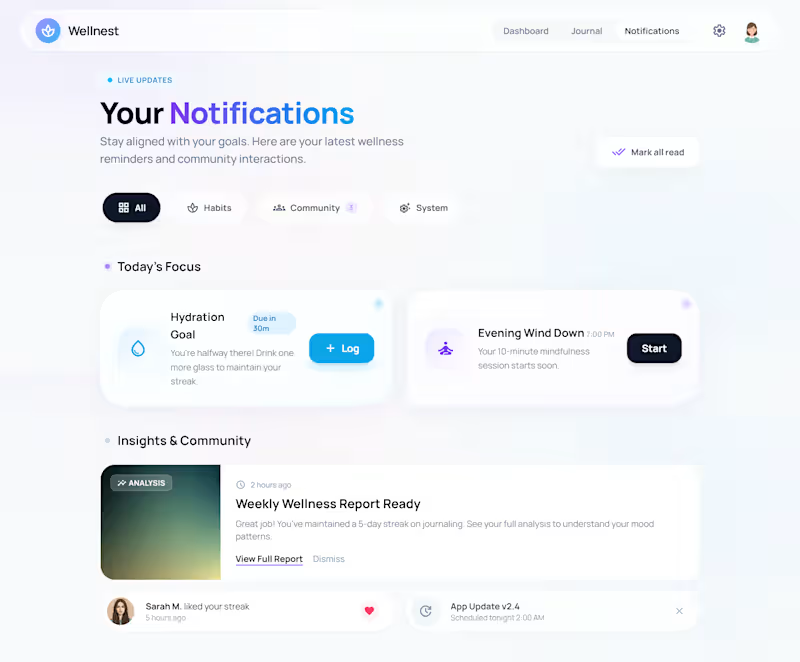
Most health apps feel like a chore. I built one that feels like a breath of fresh air.
Want to share Wellnest, a health and habit tracker designed and under developed from the ground up.
This focuses on the human side of wellness balancing habit tracking.
Handling the full lifecycle of this product from the initial UI/UX strategy in Figma to the final responsive deployment. Focused on soft gradients and clean "glassmorphism" to ensure the interface stays out of the user’s way.
#fullstack #UIUX #BuildInPublic
2
346


Develop Apps & websites that make businesses grow faster.
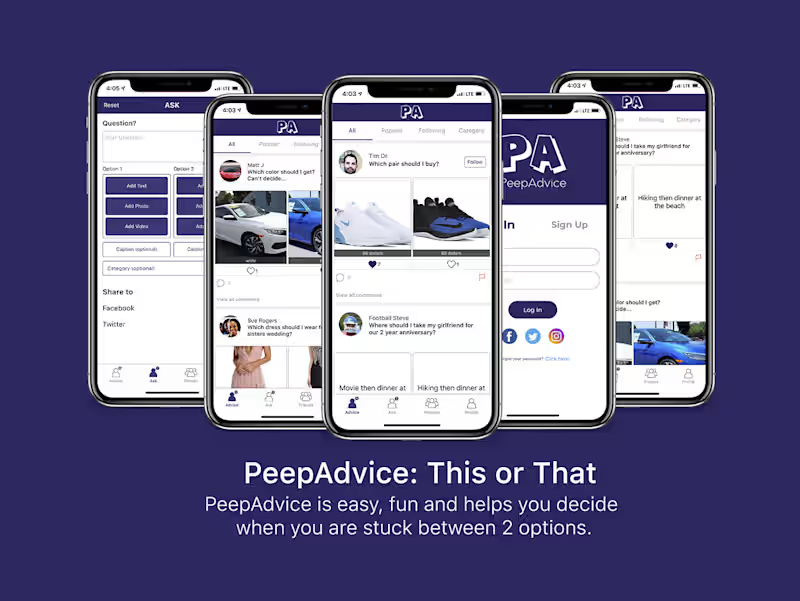
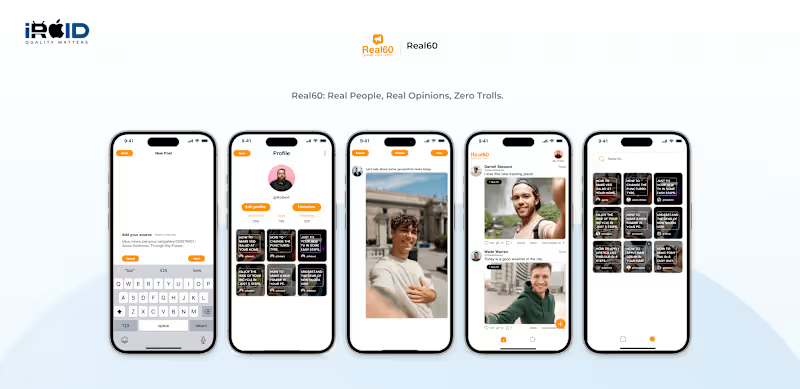
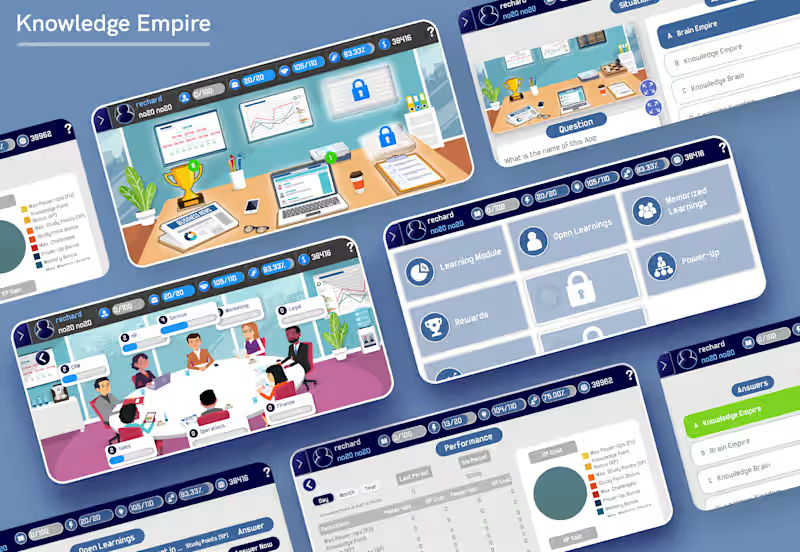
New to Contra, experienced in delivery. We're iRoid Solutions, and while this is our first day on this platform, we bring years of expertise building mobile and web apps for 30+ countries. Fintech, healthcare, e-commerce, we've helped startups launch and businesses scale. Excited to start fresh here and earn your trust with results, not just promises.
2
5
575


Tailor-Made iOS Solutions with a Decade of Expertise
- $1k+
- Earned
- 4x
- Hired
- 5.0
- Rating
- 72
- Followers
Tailor-Made iOS Solutions with a Decade of Expertise

Shopify Expert: Crafting Unique E-commerce Solutions
Shopify Expert: Crafting Unique E-commerce Solutions





Full-Stack Developer for SaaS & Business Applications
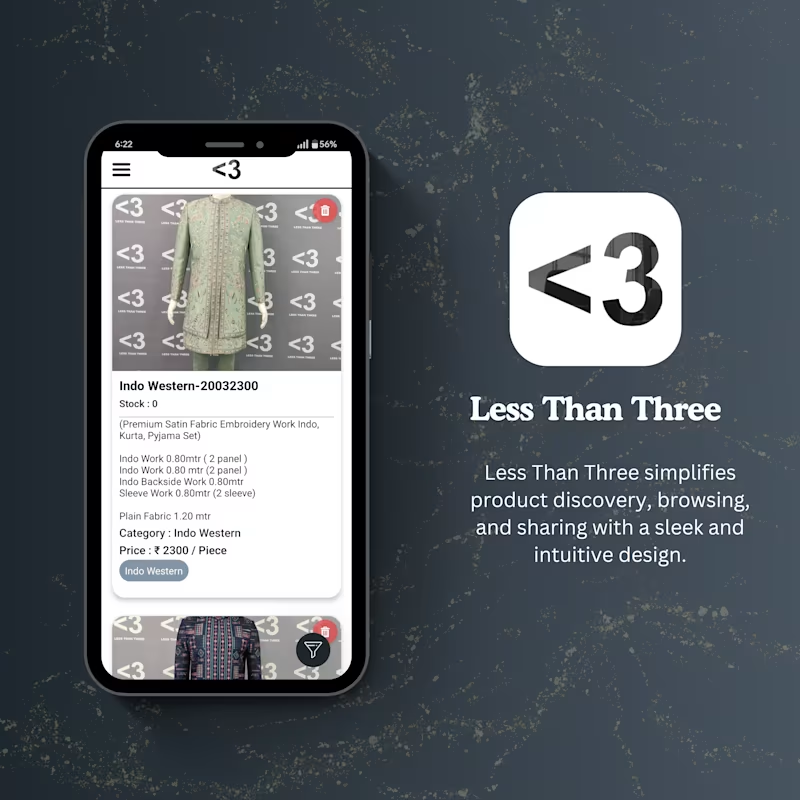
LessThanThree is a React Native–based product catalog management mobile application designed for businesses to manage and share product information efficiently. The app supports role-based access for admins and customers, allowing product creation, category management, stock tracking, multi-image galleries, advanced filtering, and PDF sharing. It provides a mobile-first solution for managing large product catalogs with rich media, secure access control, and smooth user experience.
0
38
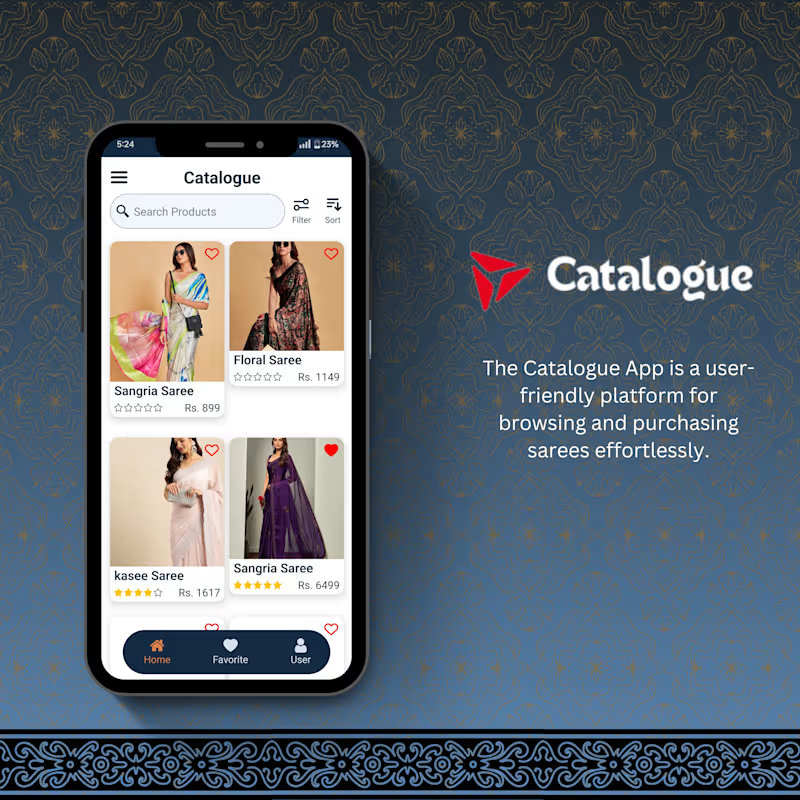
Catalogue App is a cross-platform mobile application built with React Native for browsing and managing product catalogues. The app allows users to explore products, view detailed information with image galleries, search and filter by categories, price, tags, and stock, save favorites, and submit reviews with ratings. It features secure authentication, dark/light mode, smooth animations, and optimized performance for both Android and iOS. The app delivers a modern, mobile-first shopping and product discovery experience.
0
42
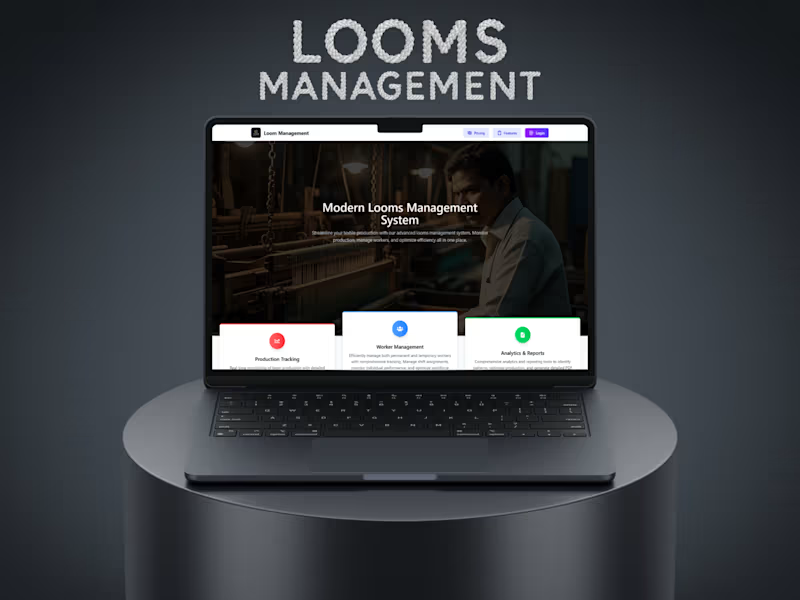
Looms Management System is a production management ERP built for textile manufacturers to digitize and automate loom operations. The system manages machines, workers, shifts, quality types, production units, salary calculations, and detailed reports. It provides real-time production tracking, automated meter-based salary computation, PDF reports, analytics dashboards, and PWA support. Built with Laravel and Filament, it replaces manual registers with a scalable and reliable digital solution.
0
45
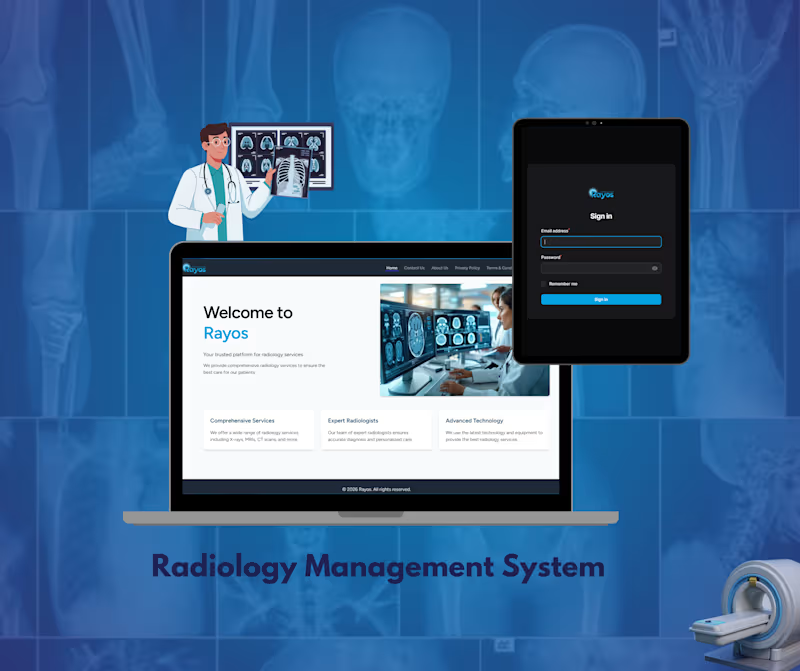
Radiology Management System is a web-based platform designed for dental radiology centers to manage patients, clinics, dentists, and medical images in one system. It supports secure role-based access, DICOM image storage and viewing, patient assignments, activity tracking, and PWA access. Built with Laravel and Filament, the system ensures secure handling of medical data, efficient workflows, and centralized management for multi-clinic operations.
0
40

Building websites, Laravel apps & CRMs that drive growth.
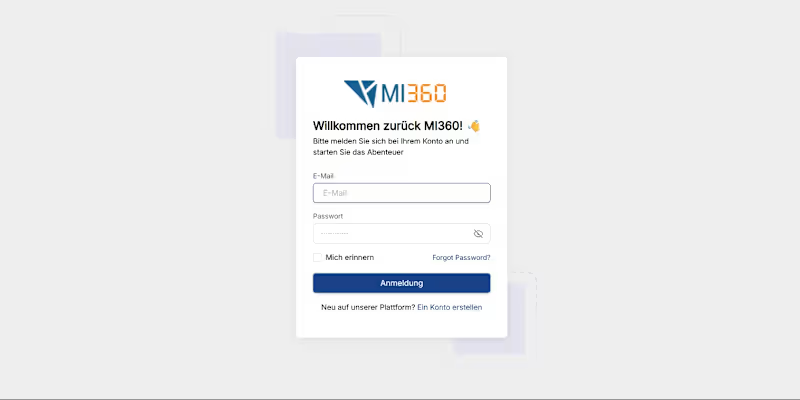
MI360 – Manufacturing Product & Business Management CRM
Client: Germany 🇩🇪
Project Overview
MI360 is a custom-built CRM and product management platform developed for a manufacturing business in Germany. The system centralizes product information, streamlines internal operations, and provides a single platform for managing manufacturing workflows, inventory, customer data, and business processes.
Designed with scalability and performance in mind, the application helps teams reduce manual work, improve collaboration, and gain real-time visibility into products and operations.
My Role
Full-Stack Laravel Development
Custom CRM Development
Product Management Module
Database Architecture & Optimization
REST API Development & Integration
Performance Optimization
Bug Fixing & System Maintenance
Responsive UI Development
Key Features
Product Catalog & Product Lifecycle Management
Customer & Contact Management
Manufacturing Workflow Tracking
Inventory & Stock Management
Order & Sales Management
Role-Based User Access Control
Dashboard & Business Analytics
Document & File Management
Reporting & Data Export
Secure Authentication & Data Protection
Mobile-Friendly Responsive Interface
Technology Stack
Laravel (PHP)
MySQL
HTML5
CSS3
Bootstrap
JavaScript
jQuery
AJAX
REST APIs
Results
The platform enables the client to manage manufacturing operations more efficiently by consolidating product, customer, and operational data into one secure system. It reduces manual processes, improves productivity, enhances reporting accuracy, and provides better visibility across business operations, supporting faster decision-making and scalable growth.
1
66
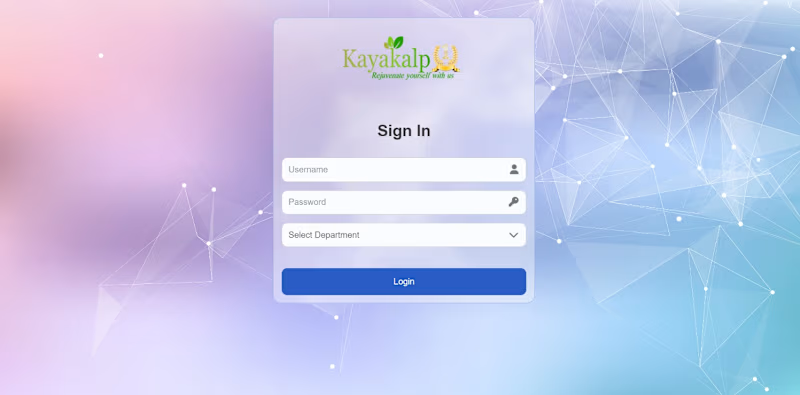
Kayakalp Hospital Management System
Project Overview
Kayakalp Hospital Management System is a comprehensive web-based healthcare platform designed to streamline hospital operations through a single, centralized solution. The system digitizes patient management, appointments, billing, pharmacy, laboratory, and administrative workflows, helping healthcare providers improve efficiency and deliver better patient care.
My Role
Full-Stack Laravel Developer
Database Design & Development
Custom Module Development
UI/UX Implementation
Performance Optimization
Bug Fixing & Maintenance
Key Features
Patient Registration & Medical Records
OPD & IPD Management
Doctor Appointment Scheduling
Pharmacy Management
Laboratory & Diagnostic Reports
Billing & Invoice Generation
User Role & Permission Management
Dashboard & Analytics
Secure Login & Data Management
Responsive Design for Desktop & Mobile
Technology Stack
Laravel (PHP)
MySQL
HTML5
CSS3
Bootstrap
JavaScript
jQuery
AJAX
Outcome
The system helps hospitals reduce paperwork, automate daily operations, improve data accuracy, and provide faster access to patient information. It enables staff to manage multiple departments from one secure platform, resulting in improved operational efficiency and a better patient experience.
1
80
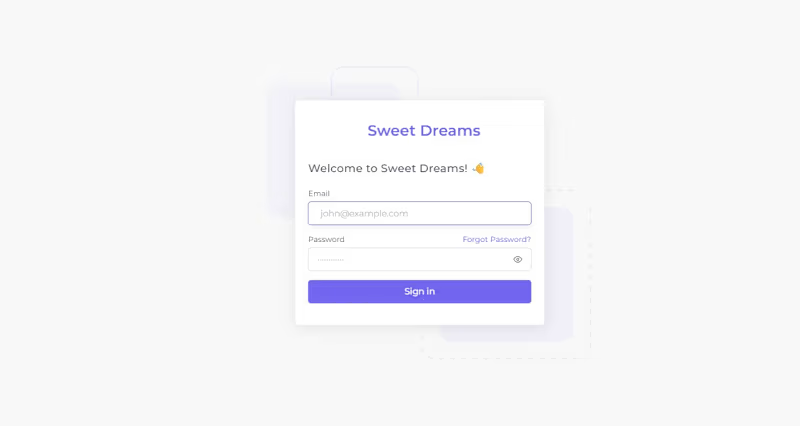
Designed and developed a custom CRM system for Sweet Dreams, a mattress and bedding company based in Nehru Nagar, Ahmedabad. The company previously relied on spreadsheets and manual processes to manage workers, dealers, sales, and daily business operations.
The CRM digitized these workflows, making data management faster, more accurate, and easier to track.
Project Features
Dealer Management
Worker & Employee Management
Customer Database
Sales & Order Tracking
Inventory Management
Daily Work Reports
User Roles & Permissions
Dashboard with Business Analytics
Secure Login System
Search & Filter Records
Export Reports
Responsive Admin Panel
Business Challenges
Before implementing the CRM:
Business data was managed using Excel sheets.
Tracking dealers and workers was time-consuming.
Reports had to be prepared manually.
Business information was scattered across multiple files.
There was no centralized system for monitoring operations.
Solution
I developed a centralized CRM platform that allows the management team to:
Manage all dealer and worker information in one place.
Track orders and business activities efficiently.
Generate reports instantly.
Reduce manual work and improve productivity.
Secure business data with role-based access.
Technologies Used
Laravel
PHP
MySQL
HTML5
CSS3
JavaScript
Bootstrap / Tailwind CSS
REST APIs
Result
The CRM replaced manual spreadsheet management with a centralized digital platform, helping streamline daily operations, improve data accuracy, and save valuable administrative time.
1
93
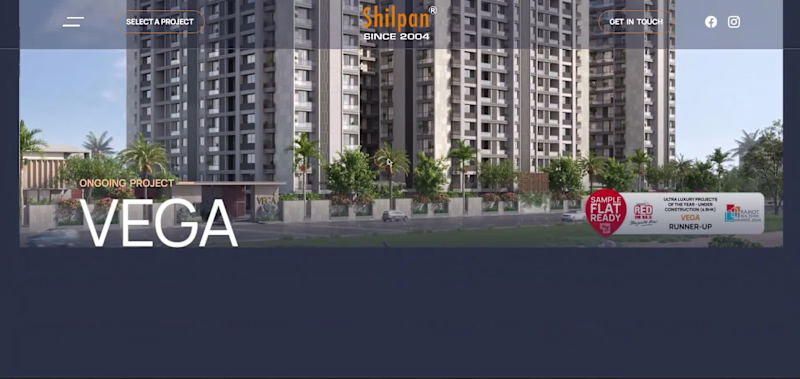
Designed and developed a modern real estate website for a property developer with a focus on performance, user experience, and lead generation. The website features responsive design, project listings, image galleries, contact forms, and an easy-to-manage admin panel. Built to help increase customer inquiries and showcase projects professionally across all devices.
Technologies: Laravel, PHP, MySQL, HTML, CSS, JavaScript, Bootstrap.
1
93

Web application developer (PHP, Laravel, Mysql, React)
New to Contra
Web application developer (PHP, Laravel, Mysql, React)

bsite does not bring customers by itself.
Many businesses launch a website and then wait for enquiries. But people still need to find you, understand your offer, and have a reason to contact you.
Here are 11 practical ways to improve your online visibility:
Build a useful website: Clearly explain your services, target customers, and contact options.
Focus on mobile and SEO: Make pages fast, mobile-friendly, and easy for search engines to understand.
Earn quality backlinks: Build genuine relationships instead of buying links or guaranteed rankings.
Use social media wisely: Choose platforms where your customers already spend time.
Reach customers directly: Use relevant calls, WhatsApp messages, emails, and business networking.
Be present where buyers search: Contribute to reputable industry websites, directories, and marketplaces.
Share photos and videos: Demonstrate your products, services, and expertise.
Improve local visibility: Maintain your Google Business Profile and encourage honest reviews.
Test paid advertising: Start small and focus on relevant enquiries, not just clicks.
Track results: Measure enquiries and conversions, not only website traffic.
Work step by step:
Month 1: Improve your website and tracking.
Month 2: Publish useful content and start outreach.
Month 3: Test advertising and review results.
Remember, the goal isn't more traffic. It's reaching people who actually need what you offer.
📖 Read the full guide:
How to Get Your Business Noticed Online
https://cubiqweb.com/articles/how-to-get-your-business-noticed-online-35/
Need a website that presents your services, showcases products, and collects enquiries?
Explore CubiqWeb: https://cubiqweb.com/
#SmallBusiness #Websites #DigitalMarketing #LeadGeneration
0
19
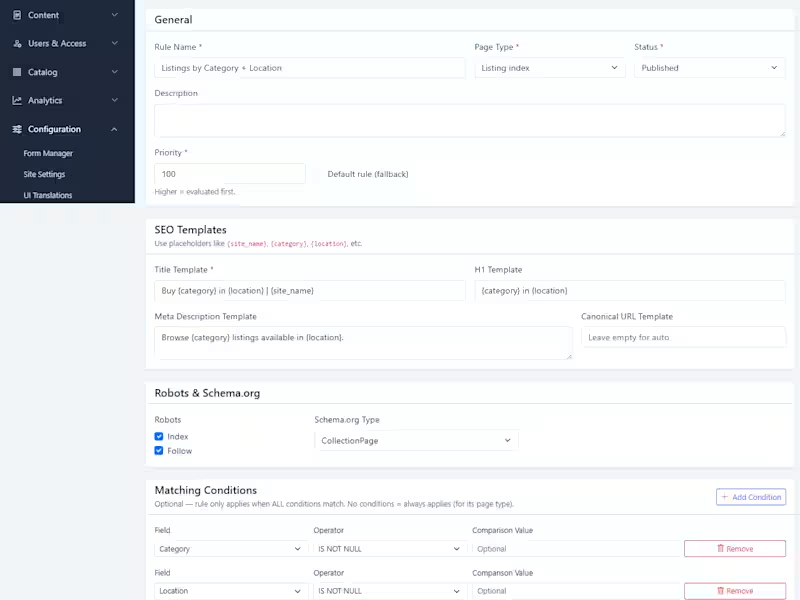
🚀 Laravel Modular Development: Internal Modules or Reusable Packages?
As a Laravel application grows, keeping everything inside the default Models, Controllers and Services directories can make the codebase difficult to maintain.
This raises an important question:
Should we create modules inside one Laravel application or develop separate Laravel packages?
Both approaches are useful—but at different stages.
1️⃣ Start Simple
During early development, requirements frequently change. A conventional Laravel structure helps us build faster without prematurely defining package boundaries.
⚠️ However, starting simple should not mean placing all business logic inside controllers. Services, actions, events, contracts and policies should still separate responsibilities.
2️⃣ Modularize as the Application Grows
Once domain boundaries become clear, related code can be moved into internal modules such as:
✔️ Identity and Access Control
✔️ Catalog
✔️ Listings and Moderation
✔️ CMS and Form Builder
✔️ Monetization
✔️ Search, Analytics and SEO
Each module can own its models, migrations, routes, controllers, services, requests, policies, events, enums, seeders and tests.
Modules should communicate through ✅ services, contracts or events instead of ❌ accessing one another’s internal implementation.
This creates a modular monolith: strong separation while retaining the simplicity of developing and deploying one application.
3️⃣ Let the First Application Reveal Patterns
While building the first application, it is difficult to predict which components will be reusable.
Something that appears generic may eventually depend heavily on product-specific rules, workflows or database structures. Completing the first application reveals the real module boundaries.
4️⃣ Confirm Reuse in Another Application
When building a second application, repeated patterns become visible. A module may be suitable for extraction when:
♻️ Multiple applications require it.
🔁 Its core behaviour remains similar.
⚙️ Differences can be configured.
🔌 It provides a stable public API.
🧩 It has few application-specific dependencies.
📦 Independent versioning provides value.
A Form Builder, Media Manager, Audit Log or Payment Gateway abstraction may become a reusable package.
However, marketplace-specific Listings, Dealers or Moderation modules may remain internal because their rules are closely connected to that product.
🛠️ Practical Progression
Conventional Laravel Application
➡️ Internal Domain Modules
➡️ Modular Monolith
➡️ Reuse Confirmed
➡️ Reusable Laravel Package
💡 My preferred principle:
“Start simple, modularize when boundaries become clear, and extract packages only when reuse is proven.”
The first application reveals the boundaries. The second proves what is genuinely reusable.
🎯 Reuse should be observed—not predicted.
How do you structure large Laravel applications: internal modules, packages or both?
0
69
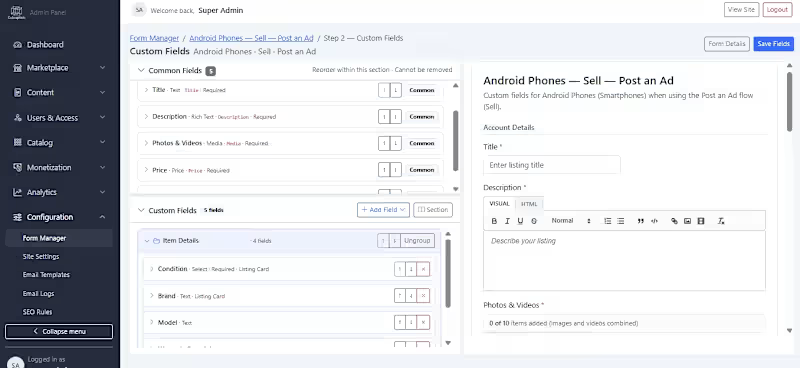
One of the features I’m most proud of in my marketplace platform is this custom form builder.
Building it required significant software-engineering work, particularly around database architecture, dynamic field rendering, validation, conditional logic, and marketplace integration. I’m very happy with the result—it has become one of the platform’s strongest features and a valuable selling point for potential clients.
The builder currently supports:
• A wide variety of field types—from basic inputs to autocomplete, rich-text editing, multi-select fields, and media uploads with image cropping
• Custom validation rules for every field
• Field grouping with drag-and-drop sorting for both groups and individual fields
• A live, side-by-side form preview
• Separation between common marketplace fields and category-specific dynamic fields
• Conditional visibility based on the value selected in another field
• Control over whether a field’s value appears on marketplace listing cards
The functionality is powerful, but the interface currently feels a little crowded. I have therefore started redesigning it to make it cleaner, more spacious, and easier to use—while creating room for additional capabilities.
The next improvements I’m considering include:
• Multilingual labels, placeholders, help text, and validation messages
• Display controls for deciding whether each field appears in advanced search, listing cards (i already have this), listing details, comparison pages, and other areas of the marketplace
The multilingual functionality itself is technically straightforward. The more interesting design challenge is finding an intuitive way to accommodate translations without making the builder feel even more crowded.
I’d love to hear your thoughts: how would you organize multilingual inputs and field-display settings while keeping this interface simple and user-friendly?:
0
74

Seasoned Fullstack Engineer & PM
Seasoned Fullstack Engineer & PM