
I'm a professional article & blog post writer
I'm a professional article & blog post writer
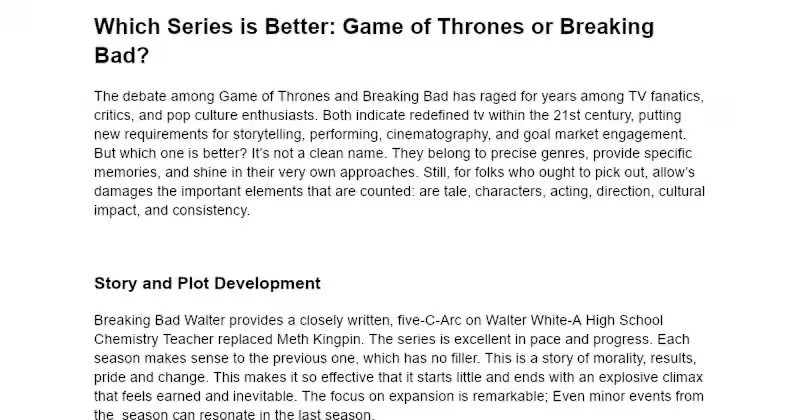
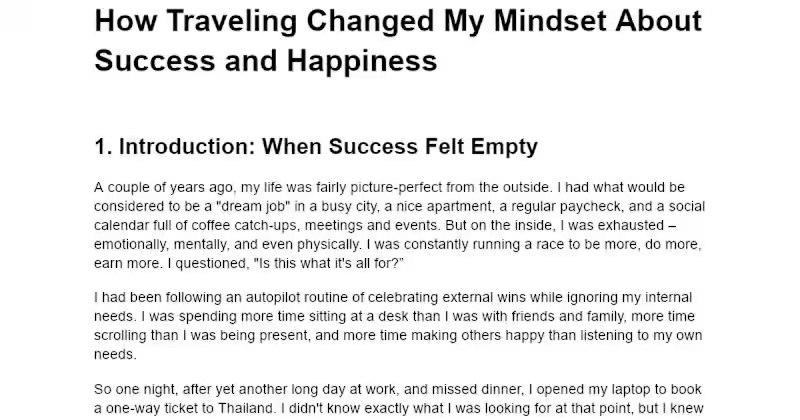
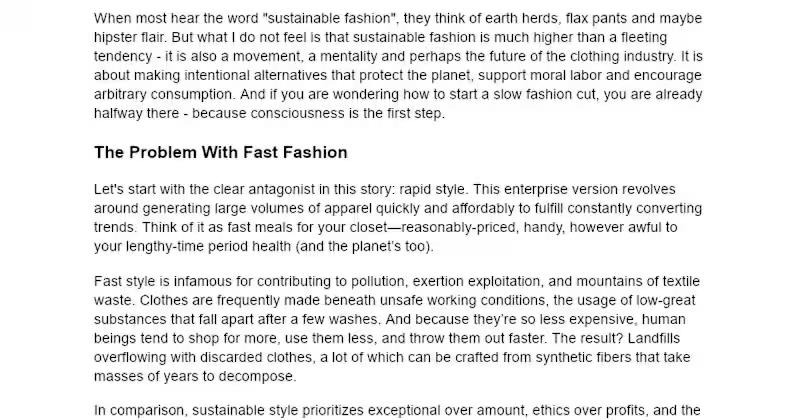

View more →

Full Stack Web & Mobile Dev
Full Stack Web & Mobile Dev




View more →

Freelance Writer & Digital Marketer
Freelance Writer & Digital Marketer





Web Designer & Developer | SEO Specialist


Web Designer & Developer | SEO Specialist
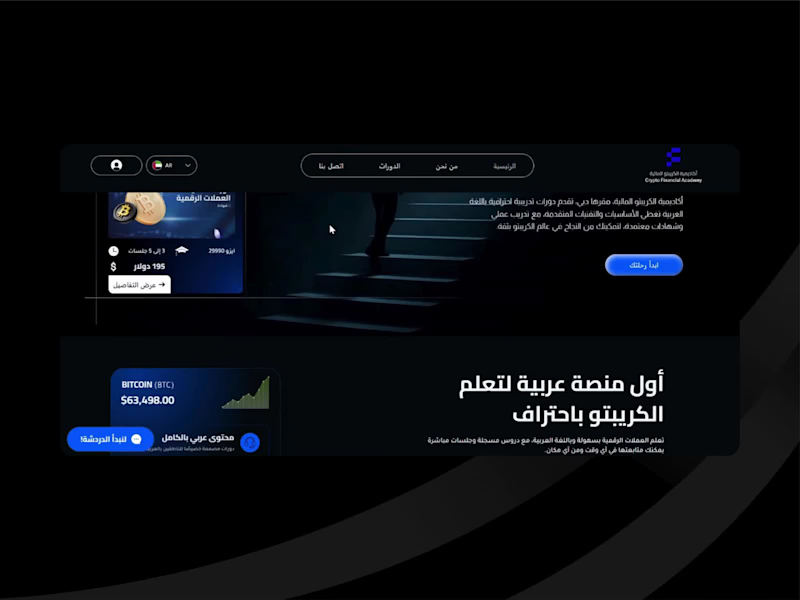
Crypto Finance Academy Website Development Case Study
Project Overview
Crypto Finance Academy is a UAE-based online learning platform that provides professional cryptocurrency and blockchain education through structured training programs, live sessions, and certification courses. The goal was to build a modern, multilingual website that delivers a seamless learning experience while making it easy for users to explore courses, learn about instructors, and enroll online. The platform supports both Arabic and English, with dedicated content and navigation for each audience.
Client
Crypto Finance Academy (CFA Academy)
Dubai, UAE
Industry
Online Education • Cryptocurrency • Blockchain • Financial Training
My Role
Wix Developer & UI/UX Designer
Tools & Technologies
Wix
Velo by Wix
Wix CMS
Wix Multilingual
Wix Stores
Wix SEO
Project Goals
Build a professional multilingual learning platform.
Deliver a seamless experience in both Arabic and English.
Showcase training programs and instructors.
Enable online course enrollment.
Create reusable components for future expansion.
Optimize the website for SEO and performance.
What I Delivered
Custom Website Design
Designed and developed a modern education platform that reflects the academy's brand while providing an intuitive experience for prospective students across desktop and mobile devices.
Multilingual Website
Implemented a complete bilingual experience using Wix Multilingual, ensuring smooth navigation, localized content, and consistent layouts for both Arabic (RTL) and English (LTR) users.
Custom Wix Development
Built the website using Wix with custom layouts and reusable sections, creating a scalable foundation for future courses and content updates.
Custom Elements with Velo
Developed custom elements and interactive sections using Velo by Wix to extend the platform beyond standard Wix functionality, improving user experience and content presentation.
Course Showcase
Designed dynamic course pages that clearly present training programs, pricing, learning outcomes, instructor information, and enrollment options, helping users compare and select the right course.
Instructor Profiles
Created professional trainer profile layouts highlighting expertise, experience, and credentials to build trust and credibility with prospective students.
Blog & Educational Content
Built a scalable blog structure that allows the academy to publish cryptocurrency education, blockchain resources, and industry insights to support long-term content marketing and SEO.
SEO Optimization
Configured Wix SEO with:
Optimized page titles and meta descriptions
Clean URL structure
Proper heading hierarchy
Image optimization
Internal linking
Mobile-first optimization
The website was built with a strong technical SEO foundation to improve organic visibility.
Performance Optimization
Optimized images, page structure, and responsive layouts to deliver a fast and consistent experience across all devices.
Key Features
Fully custom Wix website
Arabic & English multilingual support
RTL & LTR layouts
Velo by Wix custom development
Dynamic course pages
Instructor profile pages
Blog & educational resources
Course enrollment experience
Responsive design
Wix SEO optimization
Performance optimization
Easy content management
Business Impact
The new platform provides Crypto Finance Academy with a professional online presence that supports student acquisition and course enrollment. The multilingual experience enables the academy to reach both Arabic and English-speaking audiences, while the scalable architecture allows new courses, instructors, and educational content to be added with ease. The improved user experience also helps visitors quickly discover training programs and take the next step toward enrollment
Outcome
This project showcases my ability to build complex multilingual learning platforms on Wix. By combining custom UI/UX design, Velo development, multilingual implementation, dynamic content, and SEO optimization, I delivered a scalable education website that supports the academy's growth and provides an engaging learning experience for students interested in cryptocurrency and blockchain education.
3
446
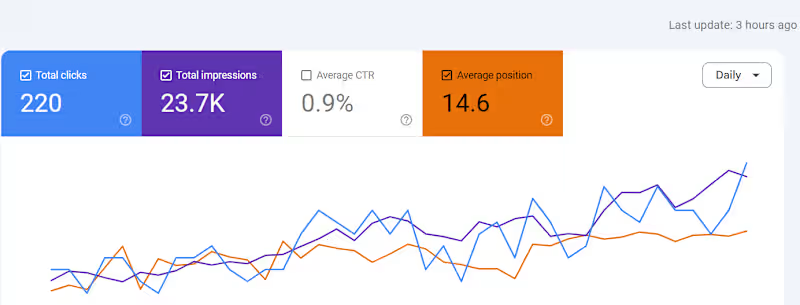
Proof that website optimization works.
23.7K impressions, 220 clicks, and steady ranking improvement through strategic content and performance-focused optimization.
3
435
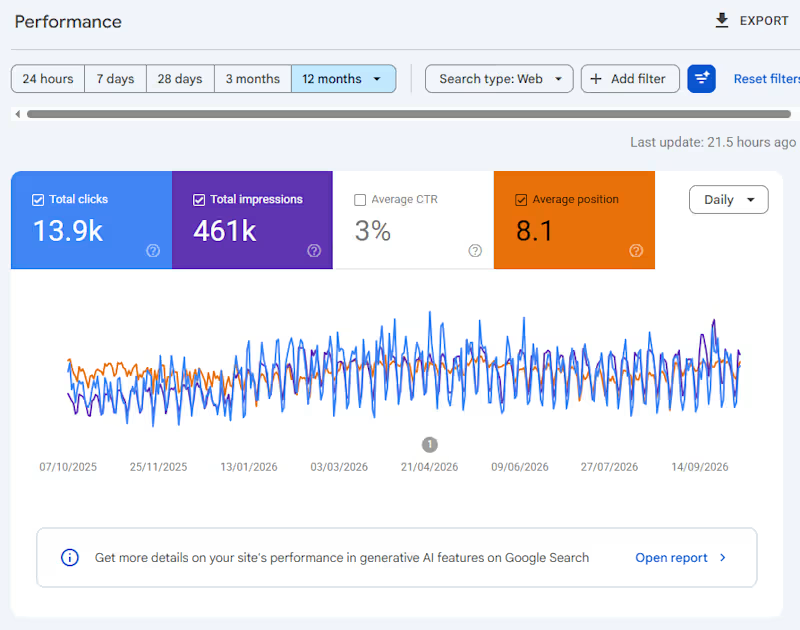
13.9K clicks. 461K impressions. Average Google position of 8.1.
This is what consistent SEO work can look like over 12 months.
The focus is on improving organic visibility, attracting relevant visitors, and helping websites gain traction in Google Search without relying entirely on paid ads.
My SEO approach focuses on:
Technical SEO and website audits
On-page SEO and keyword optimisation
Indexing, sitemap and robots.txt improvements
Search performance tracking through Google Search Console
Ongoing optimisation based on real search data
Need help getting more organic traffic to your website?
If your website is struggling to rank, getting impressions without enough clicks, or not bringing in consistent organic traffic, let's talk.
Send me a message on Contra with your website URL, and I'll take a look at where your SEO can improve.
#SEO #TechnicalSEO #OrganicTraffic #GoogleSearchConsole #DigitalMarketing
2
279


UI/UX . Website Designer & Developer . Brand Identity .



Investigative & Technical Writer | AI, Cyber, Climate
Investigative & Technical Writer | AI, Cyber, Climate
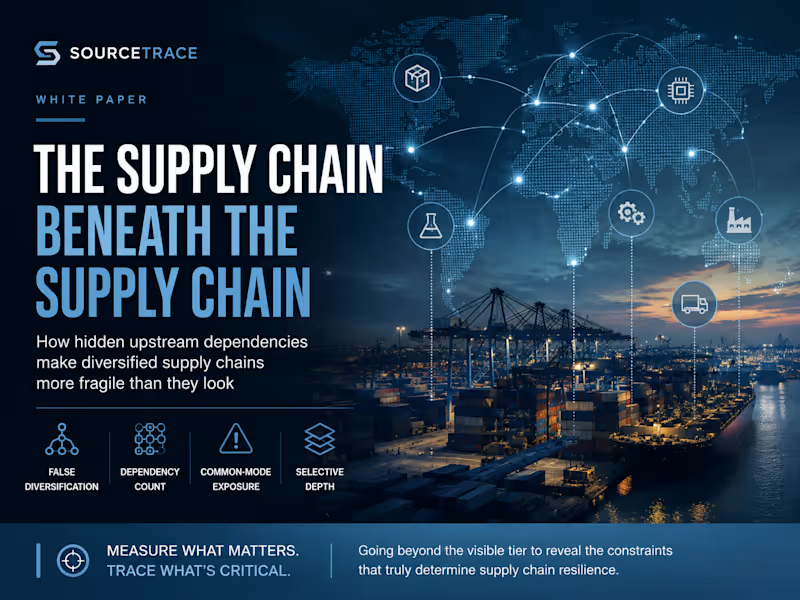
The Supply Chain Beneath the Supply Chain
Evidence-Based Supply Chain Risk Research
How hidden upstream dependencies can make a diversified supply chain much less resilient than it appears.
A company can have four suppliers for the same critical component and still have a serious supply problem.
Why?
Because those four suppliers may depend on the same upstream material, manufacturing process, piece of equipment, or geographic region.
That is the question behind this SourceTrace research project:
When we look beyond the suppliers we can see, how many genuinely independent supply routes are actually left?
What I investigated
I looked beyond the usual Tier-1 supplier view and traced where critical dependencies can come together further upstream.
The research examines:
Why having more suppliers does not always mean having more independent supply routes
How several suppliers can share the same hidden upstream dependency
Semiconductor supply chains and concentrated manufacturing equipment
Pharmaceutical supply chains and concentrated upstream inputs
How one upstream disruption can affect many companies at the same time
Why technology lock-in, qualification requirements, capital costs and geography create hidden bottlenecks
When deeper supply-chain research is worth the time and money
What boards and risk teams should ask before assuming a supply chain is truly diversified
The research approach
I did not try to map every company and every supplier in a global supply chain.
Instead, I used selective depth.
The idea is simple:
Keep tracing a critical dependency until the information can change a real decision — such as finding another supplier, increasing inventory, redesigning a component, or accepting the risk.
The research was then turned into dependency maps, evidence cards, industry examples, comparison tables and practical questions for decision-makers.
The central finding
Supplier count is not the same as dependency count.
Four suppliers may look safer than one.
But if all four ultimately depend on the same upstream constraint, the apparent diversification can disappear when that constraint fails.
This is what I call common-mode exposure: different suppliers can be affected by the same problem because they share part of the same upstream system.
What I created
Evidence-based research paper
Multi-tier supply-chain dependency maps
Semiconductor and pharmaceutical case analysis
Supply-chain risk framework
High-value vs. low-value mapping matrix
Executive and board-level questions
Visual evidence cards and comparison tables
SourceTrace research methodology
My role
Researcher + Investigative Writer
I researched the evidence, followed the dependencies beyond the obvious supplier relationships, tested the assumptions behind conventional diversification, and turned the findings into clear, visual and decision-focused research.
The goal was not to make the supply chain look more complicated.
It was to show where the real dependency sits.
SourceTrace principle: Truth before persuasion. Evidence before opinion.
0
389
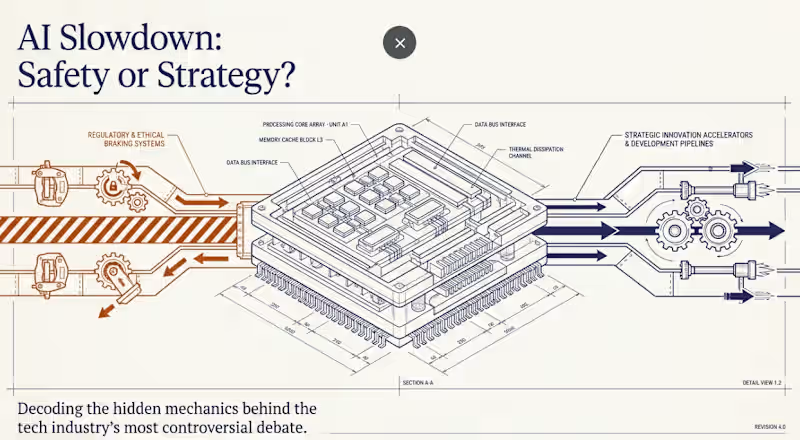
AI Slowdown: Safety or Strategy?
Anthropic's CEO asked for AI development to be paced. Nvidia's CEO pushed back. The headlines called it "safety versus speed." The evidence is more complicated.
This 5-page brief separates what each side actually said, how chip and cybersecurity stocks moved on the same day, and why antitrust law and China make any slowdown plan hard to design. It ends with four guardrails for a narrow, time-limited safety framework.
Facts, attributed claims, and my own analysis are kept separate, so you always know which is which.
Made for: founders, security and policy teams, and content leads who need a clear, sourced read fast.
Need a brief like this on your topic? Message me.On here
0
81
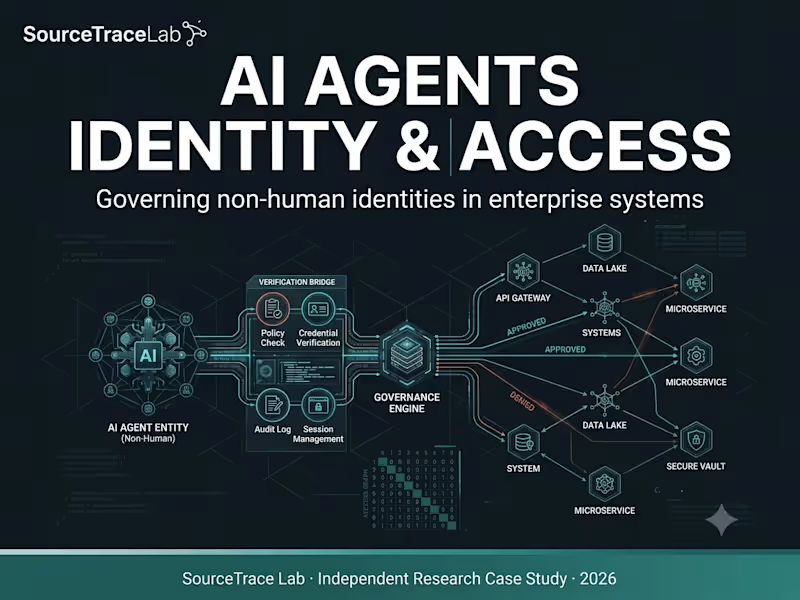
When the “User” Is an AI Agent: A Zero Trust Case Study
This independent research case study looks at what changes when an AI agent moves beyond answering questions and starts taking actions through tools, APIs, workflows and enterprise systems.
Using public cyber-threat reporting and Zero Trust principles, the report examines why AI agents need to be treated as a new type of non-human identity, with limited, traceable and revocable access.
The research focuses on practical questions security leaders need to ask:
What is the agent’s identity?
What can it access?
What can it change?
How is its activity monitored?
And who can stop it when something goes wrong?
The case study covers AI-agent identity, least-privilege access, segmentation, continuous verification, monitoring, access revocation and human control.
It also demonstrates my approach to cybersecurity research: finding and checking sources, connecting emerging threats with established security principles, turning technical issues into clear analysis, and presenting the findings in a way that business and security leaders can understand.
This sample is intended for security teams, CISOs, risk leaders and technology executives looking for clear, evidence-based research on AI security, Zero Trust, identity and access management, and emerging cyber risk.
1
157
Greenwashing Risk for Mid-Size & SaaS Companies
How Weak Environmental Claims Create Commercial and Regulatory Exposure
Environmental claims are no longer just a marketing issue. For mid-size and SaaS companies, a simple phrase such as “sustainable,” “eco-friendly,” or “carbon neutral” can create regulatory and commercial risk when the evidence behind it is weak or incomplete.
This Source-Trace white paper investigates how greenwashing risk is changing across the UK, US, and EU, and what businesses can do to make their environmental claims more defensible.
What I researched and developed
Investigated the regulatory landscape for environmental claims across the UK, US, and EU
Examined primary regulatory guidance, enforcement records, court decisions, and agency sources
Analyzed real-world cases involving environmental claims and misleading marketing
Identified 7 recurring claim patterns that can create compliance problems
Developed a 6-level evidence scale for evaluating environmental claims
Created a practical 9-point pre-publishing checklist
Built guidance for turning broad environmental statements into specific, evidence-backed claims
Developed recommendations for founders, marketing, legal, compliance, and sales teams
Designed evidence tables, case-study analysis, and practical decision frameworks
My Role
I worked as the investigative researcher and sole author, taking a complex and evolving regulatory subject and turning primary-source research into a practical business-risk framework.
SourceTrace Investigative Research & Writing
Author: Nutan Navsariwala, Founder
The project demonstrates my ability to connect environmental regulation, evidence, commercial risk, and clear communication, and to turn complex research into useful decision-making tools.
Full whitepaper: [Link will be added here]👇
0
369

Freelance Content Writer
Freelance Content Writer




View more →

Expert copywriter for all your needs
Expert copywriter for all your needs



View more →