Ghostwriting Projects in DelhiGhostwriting Projects in DelhiExecutive Summary of my latest 50-minute AI-assisted educational module on Pollination.
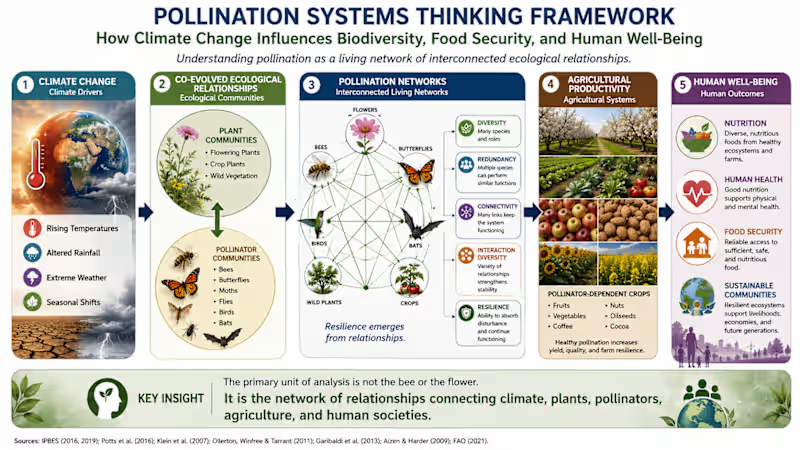
Pollination is one of the most important ecological processes sustaining life on Earth. By enabling the reproduction of flowering plants, pollination supports biodiversity, agricultural productivity, food security, and human well-being. Although often viewed as a simple interaction between a flower and a pollinator, pollination
is better understood as a complex ecological network shaped by relationships among plants, pollinators, climate, habitats, seasonal cycles, and evolutionary processes.
This module adopts a systems-thinking perspective to examine pollination as a living network of interconnected relationships. Rather than focusing solely on individual
species, it explores how ecological resilience emerges from diversity, redundancy, connectivity, and interaction diversity within pollination systems. Through examples drawn from tomato production, meadow ecosystems, and California almond orchards, the module demonstrates how biodiversity
contributes to the stability and adaptive capacity of both natural and agricultural ecosystems.
The module also examines the growing impact of climate change on pollination networks. Rising temperatures, altered precipitation patterns, phenological mismatches,
geographic range shifts, and extreme weather events are disrupting long-established relationships between plants and pollinators. From a systems perspective, the greatest risk is not simply the loss of individual species but the erosion of the ecological relationships that connect species into functioning networks.
The consequences extend beyond biodiversity conservation. Pollinator-dependent crops include many fruits, vegetables, nuts, oilseeds, coffee, and cocoa that contribute significantly to human nutrition and economic well-being. Declines in pollination can therefore affect agricultural productivity, food security, nutritional diversity, and public health.
A central theme of this module is that resilience emerges from relationships. Healthy ecosystems depend not only on the number of species they contain but also on the strength
and diversity of the connections among them. nderstanding pollination through a systems-thinking lens provides valuable insights into ecosystem functioning, climate adaptation, biodiversity conservation, and the long-term sustainability of food systems.
The objective of this companion reading and the associated educational video is not merely to convey information about pollination, but to help learners understand how
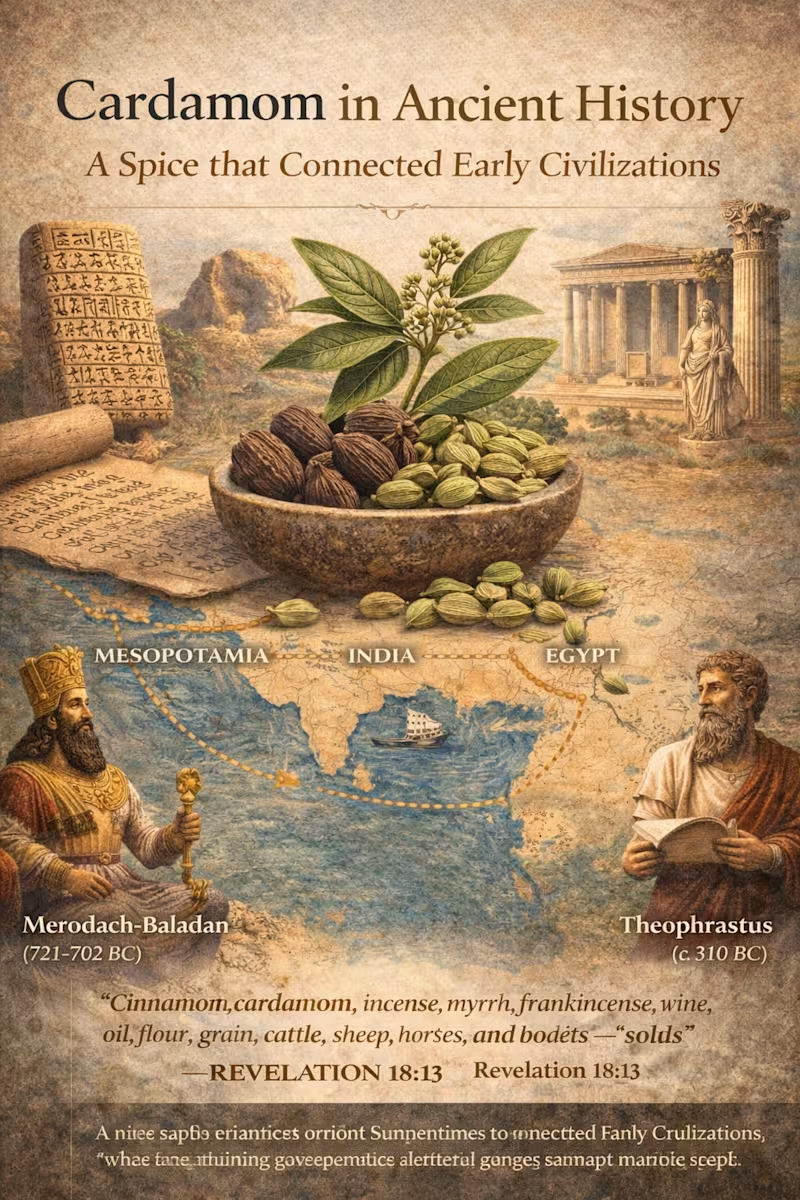
interconnected ecological systems support resilience, sustain biodiversity, and contribute to human well-being in a rapidly changing world. Cardamom’s story spans thousands of years—from the gardens of Mesopotamian rulers to the spice routes linking India, Egypt, and the Mediterranean.
Ancient texts, archaeological evidence, and botanical research reveal how this small aromatic pod influenced trade, medicine, and cuisine across civilizations.
Transforming historical research into engaging narratives is one of the most rewarding aspects of writing about food, culture, and science.
If you are working on a book, article, or research project in history, food culture, herbs, or natural products, I help turn complex material into clear, compelling writing.
#Ghostwriting #BookWriting #HistoryWriting #FoodHistory