
Daramola Ayomide
AI Developer | Data Science, Healthcare & Automation
New to Contra
Daramola is ready for their next project!
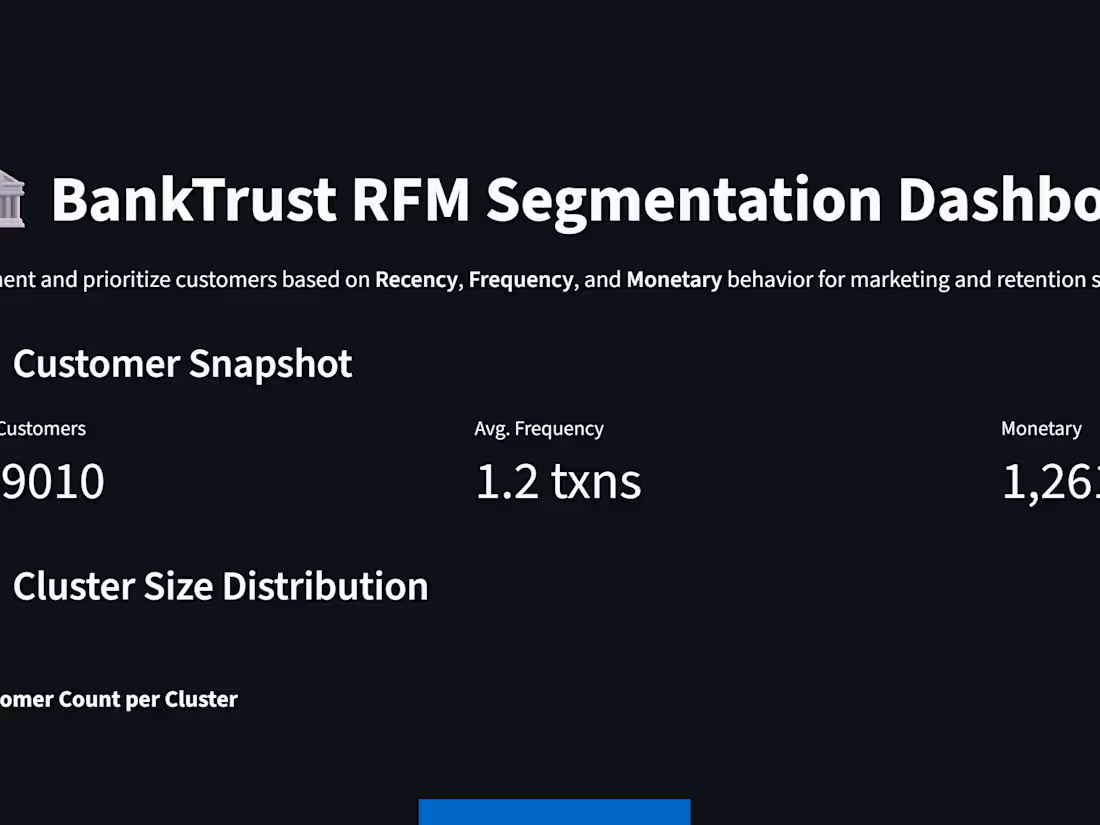
Retail Banking Analytics: Optimizing Customer Engagement and Business Performance
This project focused on analyzing retail banking data to uncover customer behavior patterns, product adoption trends, and opportunities for business growth. Through exploratory data analysis and visualization, key factors influencing customer engagement and banking product usage were identified.
The objective was to transform raw banking data into actionable insights that can support strategic decision-making, improve customer retention, and optimize product marketing efforts.
Key Features
• Customer segmentation and behavioral analysis
• Product adoption and usage trend evaluation
• Identification of high-value customer groups
• Data-driven insights for targeted marketing strategies
• Interactive visualizations to support decision-making
Business Impact
The analysis helps financial institutions better understand customer needs, identify growth opportunities, and develop more effective customer acquisition and retention strategies.
Technologies
Python • Pandas • NumPy • Data Visualization • Statistical Analysis • Business Intelligence
1
9
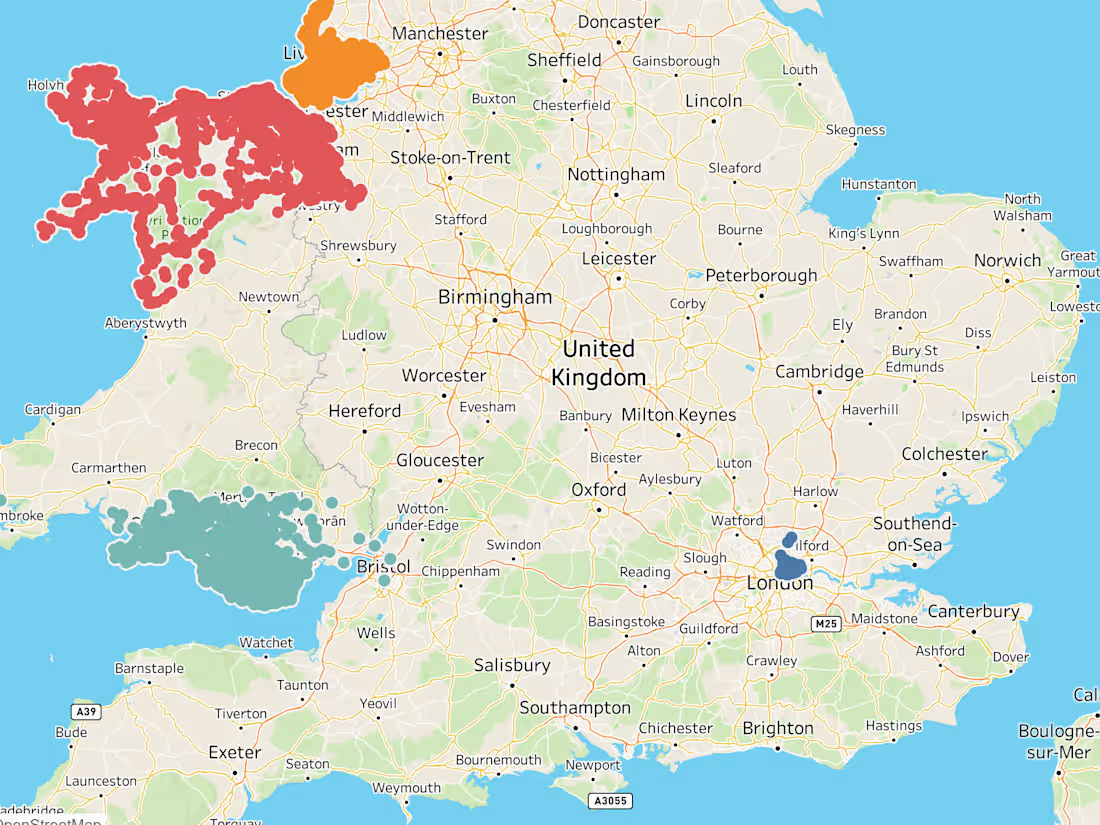
Developed an interactive crime analytics solution using UK crime data to identify crime patterns, regional hotspots, and long-term trends. The project involved data cleaning, exploratory data analysis, and visualization to uncover insights that can support public safety initiatives and data-driven decision-making.
The dashboard provides a comprehensive view of crime distribution across regions, crime categories, and time periods, enabling users to monitor trends, compare locations, and identify areas requiring intervention.
Key Features
• Crime trend analysis across multiple years
• Regional crime hotspot identification
• Crime category distribution and comparison
• Interactive visualizations for decision support
• Data-driven insights to support public safety planning
Technologies
Python • Pandas • Data Visualization • Power BI • Statistical Analysis • Dashboard Development
1
15
Hospital Capacity Analytics: Understanding Length of Stay Trends in Ontario
Healthcare systems face increasing pressure to optimize resources, reduce bottlenecks, and improve patient outcomes. This project analyzes nearly three decades of Ontario inpatient hospital data to uncover the demographic and operational factors influencing hospital length of stay.
Using statistical analysis and data visualization, I examined trends across age groups, gender, and time to identify patterns that impact healthcare utilization and capacity planning. The analysis revealed significant differences in length of stay among older patient populations and detected structural changes in hospitalization patterns around 2020.
Key Outcomes
• Identified age groups associated with the highest average length of stay.
• Analyzed gender-based differences in hospitalization duration.
• Detected long-term utilization trends and structural shifts affecting healthcare demand.
• Generated insights that can support hospital resource allocation, operational planning, and policy decision-making.
Technologies
Python • Pandas • NumPy • Matplotlib • Statistical Analysis • Healthcare Analytics • Data Visualization
Business Value
The findings provide a data-driven foundation for understanding hospital capacity pressures, forecasting resource requirements, and supporting evidence-based healthcare planning.
0
17
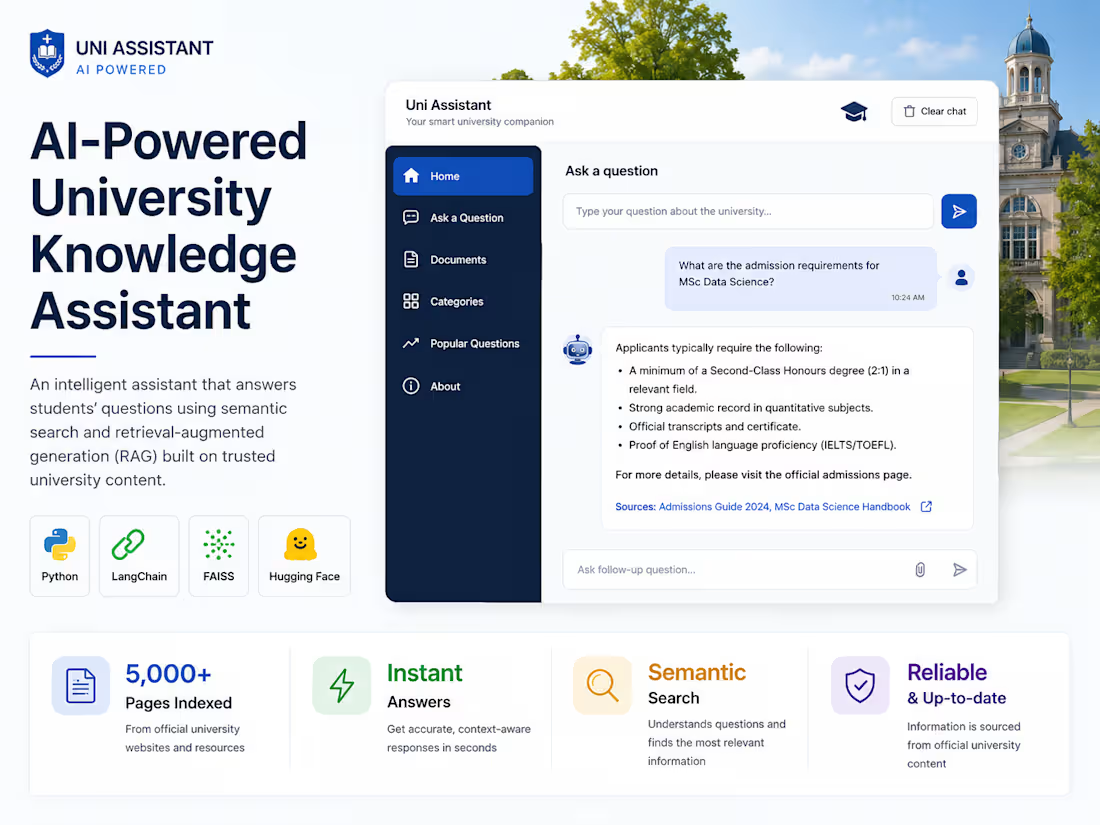
Students often struggle to find accurate information scattered across university websites, including admission requirements, course details, tuition fees, scholarships, and campus services. Searching through multiple pages can be time-consuming and frustrating.
To address this challenge, I developed an AI-powered university knowledge assistant that combines web scraping, semantic search, and Retrieval-Augmented Generation (RAG). The system automatically collects and indexes information from university websites, converts content into vector embeddings, and retrieves the most relevant information when users ask questions in natural language.
The solution enables students to receive fast, context-aware answers while ensuring responses are grounded in official university information. The project demonstrates expertise in data collection, natural language processing, vector databases, and AI application development.
Technologies used: Python, BeautifulSoup, Hugging Face Embeddings, FAISS, LangChain, and Large Language Models.
0
34