
Daniels El'shazzar Studios
Brand Strategist and Designer
Ready for work
Daniels El'shazzar is ready for their next project!
"Haha... You know absolutely nothing about Nike!"
I know that's what you're gonna say. Yes, Nike's primary target audience aren't people trying to stay fit. They are actual athletes.
But this is how we would approach building the Nike brand if they were starting from scratch in a world where there are many people struggling with their health. In this world, there is a problem; the heroes are fat people and Nike is deploying our Samaritan Architecture to help the heroes become who they are meant to be; physically fit people who are athletes.
0
13
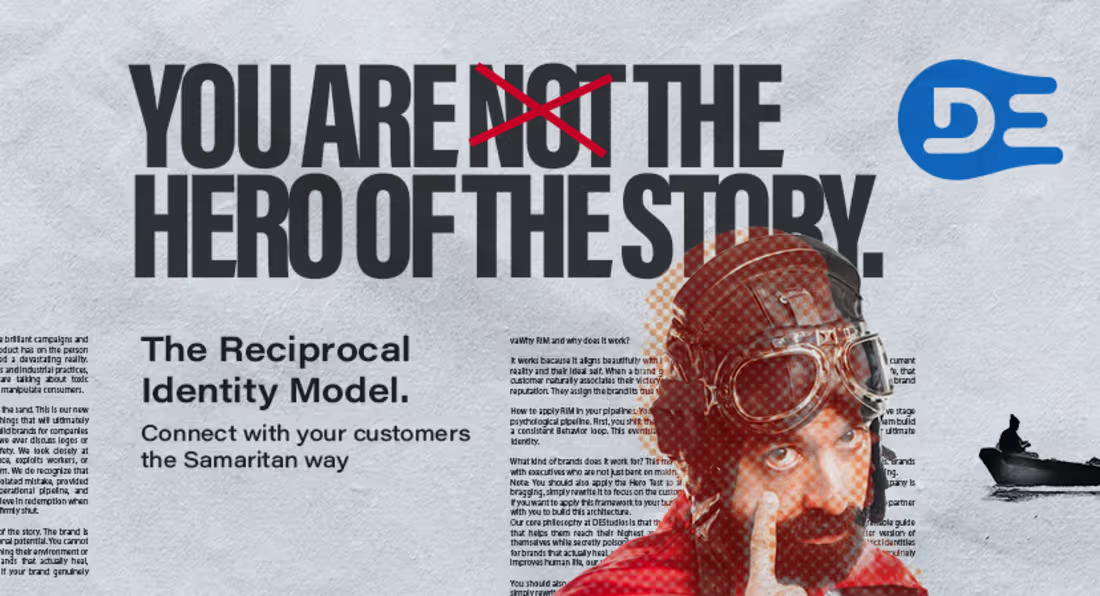
Business leaders are constantly exploring different solutions for growth. There are countless valid ways to build a company. While we certainly do not have all the answers, we want to offer a solution we have been developing called The Reciprocal Identity Model. This framework offers a very interesting perspective for companies looking to connect deeply with their audience.
What is the Reciprocal Identity Model?
RIM is a descriptive approach to brand architecture. Rather than pushing a corporate persona into the market, the brand facilitates a personal transformation for the consumer. It utilizes what we call The Samaritan Architecture.
In this framework, the brand plays the role of the helper, while the customer remains the true hero of the narrative. This model works exceptionally well for brands that truly care about the wellbeing of their prospective customers.
The 5 Stages of Transformation:
Step 1: Attitude
You spot a behavioral gap holding your customer back. You know for certain that your product can help bridge that gap. Your goal is to disrupt their limiting beliefs with messaging that proves you understand their situation and can guide them forward.
Step 2: Action
You provide a clear first step they can take right now. You know how daunting change can feel, and this initial small action eases them into the process.
Step 3: Behavior
You find a way to help them repeat that positive action. They might stumble a few times, which is completely expected. You care enough to encourage them to get up again by incentivizing the action or building a supportive community.
Step 4: Character
Before long, they begin to speak of themselves as the kind of person who embodies this new positive attitude.
Step 5: Identity
This is the culmination of your efforts. Their new character has helped them become their ideal self, and they have your brand to thank for facilitating that journey. This is how you create a loyal tribe.
Why does it work?
It aligns perfectly with human motivation. People want to close the gap between their current reality and their ideal self. When a brand genuinely helps a customer develop a helpful attitude towards life, that customer naturally associates their victory with the brand. They organically build your brand reputation by assigning it true value in their own minds.
How to apply RIM
You can implement this into your marketing strategy by mapping out the five stage psychological pipeline. Additionally, you should apply the Hero Test to all your copywriting. If a piece of text sounds like the company is bragging, simply rewrite it to focus entirely on the customer journey.
What kind of brands does it work for?
This model is highly adaptable, though we built it specifically for benevolent brands. These are brands led by executives who focus on making sure humanity is secure and thriving while building a profitable enterprise.
If you want to apply this framework to your business, the team at DEStudios is ready to partner with you to build this architecture.
0
12
Grow your practice with Swiiftcare
0
2
Hayjay Engineering Services Identity
1
4