The network for creativity
Join 1.25M professional creatives like you
Connect with clients, get discovered, and run your business 100% commission-free
Creatives on Contra have earned over $150M and we are just getting started
Back to feedPost
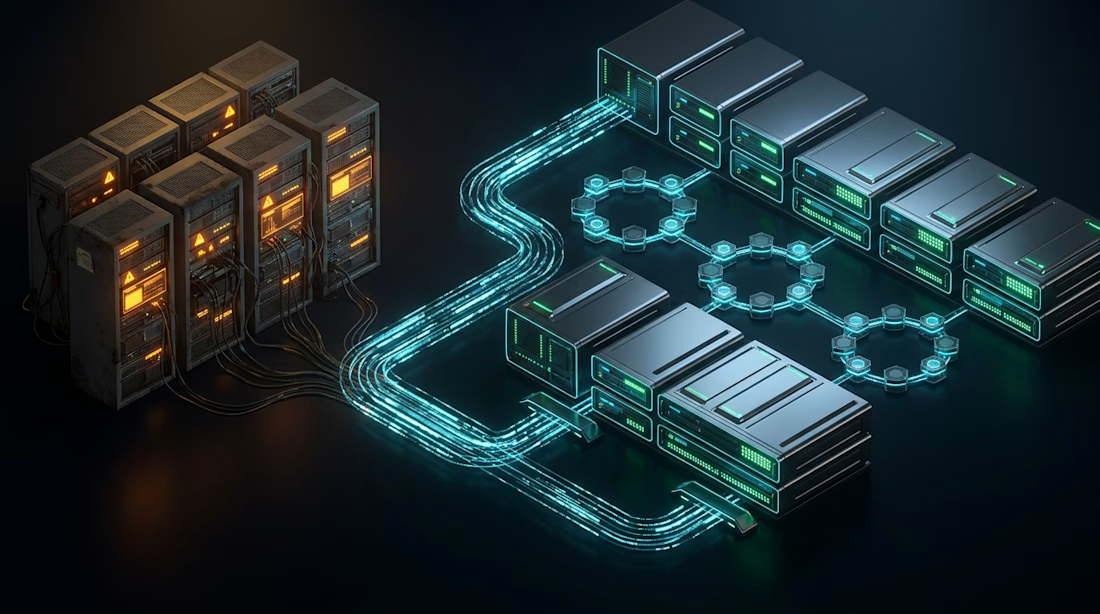
The Ceph rebalance death spiral: When a single failed disk takes down an entire enterprise virtualization cluster.
Ceph is one of the most resilient software-defined storage architectures ever engineered. When designed properly, it handles drive dropouts, host crashes, and rack outages without missing a single block I/O.
When deployed without strict physical network isolation, however, Ceph harbors a catastrophic failure mode: the cascading rebalance death spiral.
Here is the exact anatomy of the failure we forensically triaged on a 150-host private cloud cluster:
1. The Single Pipe Bottleneck: The cluster was configured with client VM traffic (public network) and internal Ceph replication/backfill traffic sharing the same physical 10GbE network interfaces. 2. The Trigger: A routine NVMe drive failed, transitioning one OSD to ``down/out``. Ceph immediately did what it was designed to do: calculate new placement group mappings and replicate degraded objects across the surviving nodes. 3. The Congestion Collapse: The flood of backfill data saturated the shared NICs. Public client traffic was choked out. OSD heartbeat pings across the cluster exceeded ``osd_heartbeat_grace`` (20 seconds). 4. The Death Spiral: The Ceph monitor quorum marked 8 more OSDs as ``down`` due to missed heartbeats. That triggered even more backfill replication across an already asphyxiated network, freezing all client KVM disk I/O and locking up hundreds of production VMs.
The fix required three non-negotiable architectural remediations: • Physical segregation of public client traffic and dedicated cluster backfill traffic across bonded 25GbE interfaces. • Strict MTU 9000 (Jumbo Frames) end-to-end across all storage switches and host interfaces to eliminate CPU packet fragmentation overhead. • Precise QoS limits on backfill and recovery I/O (``osd_max_backfills = 1``, ``osd_recovery_max_active = 2``) ensuring client I/O always retains 80%+ priority during cluster healing.
If your private cloud storage has never been tested under full-load drive loss scenarios, you don't have high availability—you have a ticking time bomb.
Migrate and harden your virtualization storage with our VMware Virtualization Rescue & Ceph Migration Sprint on Contra: https://contra.com/s/FocA2qgU-v-mware-virtualization-rescue-sovereign-kvm-and-ceph-migration
#Infrastructure #Linux #DevOps #SRE #Architecture #Performance #Cloud

The network for creativity
Join 1.25M professional creatives like you
Connect with clients, get discovered, and run your business 100% commission-free
Creatives on Contra have earned over $150M and we are just getting started




Related posts

Why clock drift in production servers cascades into split-brains, expired tokens, and silent database corruption.
In modern infrastructure, time synchronization is often treated as an invisible background detail: "We have systemd-timesyncd or default NTP running; time is fine."
In virtualized and multi-cloud environments, virtual machine clocks drift constantly due to hypervisor CPU overcommit, live migrations, and hardware timer interrupt variations.
When system clocks drift by just a few hundred milliseconds, catastrophic distributed failures begin: 1. Distributed Consensus Split-Brains: Raft clusters (etcd, Consul, Patroni) rely on precise election timeouts. Clock skew can cause healthy nodes to believe the leader has timed out, triggering non-stop leader elections and cluster paralysis. 2. Kerberos & Auth Ticket Rejections: Kerberos protocols strictly enforce a 5-minute clock skew window. A drifted node suddenly rejects valid authentication tokens, locking engineers and services out of production. 3. Cryptographic Invalidation: TLS certificates evaluated against a skewed system clock appear expired or "not yet valid," breaking API handshakes without warning. 4. Transaction Sequencing Corruption: Database engines relying on timestamps for conflict resolution or multi-version concurrency control (MVCC) silently overwrite newer data with older records.
Modern infrastructure solves this with hardened **Chrony NTP**: • Sub-millisecond tracking against curated Stratum-1 hardware or atomic time sources. • Kernel-level PPS (Pulse Per Second) discipline and hardware timestamping. • Frequency drift slew calibration: smoothly adjusting clock speed rather than introducing jarring time jumps that corrupt transactional databases. • Restrictive firewalld and systemd sandboxing protecting time daemons from spoofing attacks.
Don't let silent clock drift corrupt your state.
Deploy hardened core network services with our 1-week Core Sovereign Network Services Sprint on Contra: https://contra.com/s/mrP3E36W-core-sovereign-network-services-bind9-dnssec-kea-dhcp-and-chrony-ntp
#Networking #Database #Infrastructure #Architecture #Performance #Linux #DevOps #SRE


breaking down high-retention launch motion: elevenlabs studio 4.0.

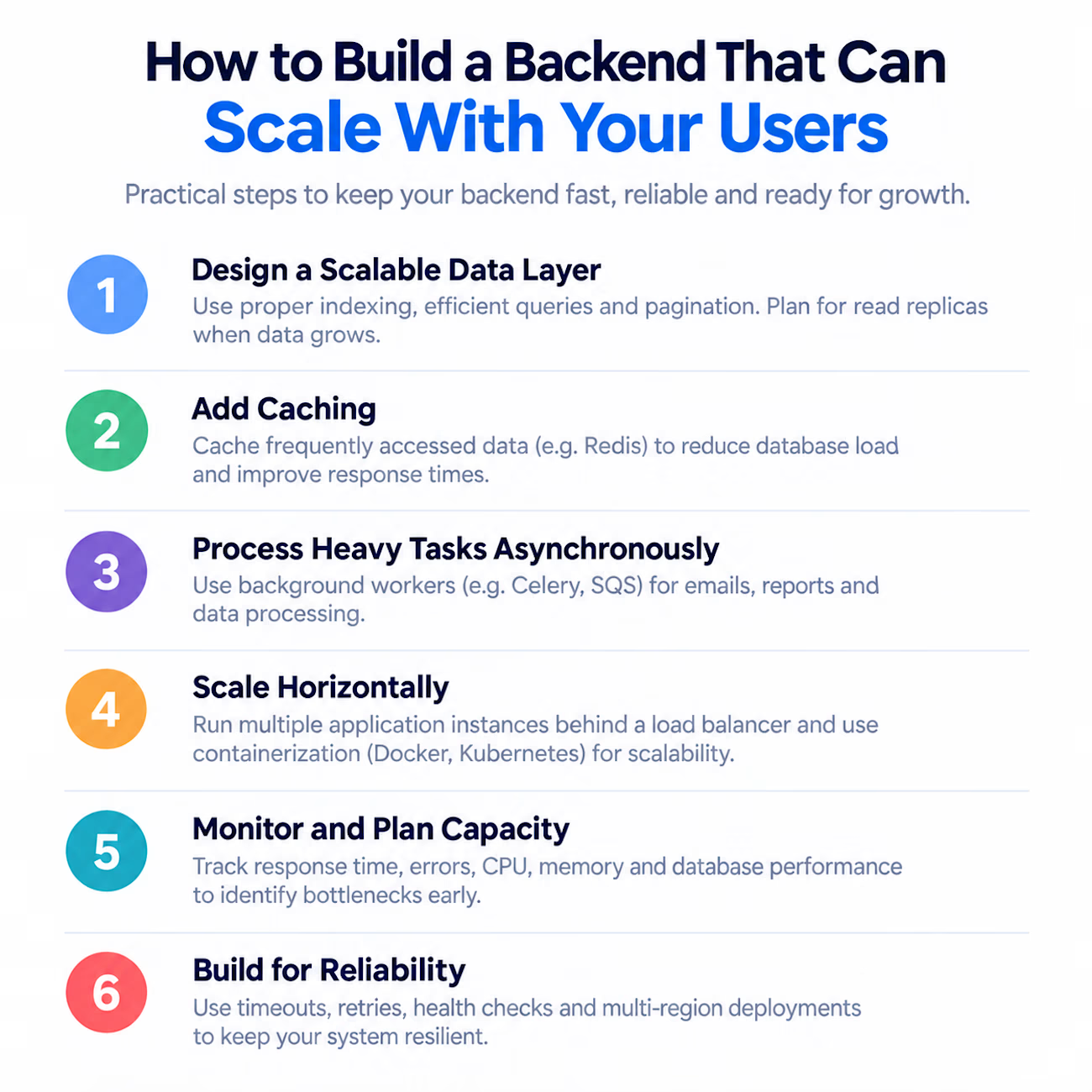
𝐀 𝐛𝐚𝐜𝐤𝐞𝐧𝐝 𝐭𝐡𝐚𝐭 𝐰𝐨𝐫𝐤𝐬 𝐟𝐨𝐫 𝟏,𝟎𝟎𝟎 𝐮𝐬𝐞𝐫𝐬 𝐦𝐚𝐲 𝐬𝐭𝐫𝐮𝐠𝐠𝐥𝐞 𝐚𝐭 𝟏𝟎𝟎,𝟎𝟎𝟎.
Scaling isn’t just about adding more servers. It starts with making the right architectural decisions early from 𝐝𝐚𝐭𝐚𝐛𝐚𝐬𝐞 𝐨𝐩𝐭𝐢𝐦𝐢𝐳𝐚𝐭𝐢𝐨𝐧 𝐚𝐧𝐝 𝐜𝐚𝐜𝐡𝐢𝐧𝐠 𝐭𝐨 𝐚𝐬𝐲𝐧𝐜 𝐩𝐫𝐨𝐜𝐞𝐬𝐬𝐢𝐧𝐠, 𝐡𝐨𝐫𝐢𝐳𝐨𝐧𝐭𝐚𝐥 𝐬𝐜𝐚𝐥𝐢𝐧𝐠, 𝐨𝐛𝐬𝐞𝐫𝐯𝐚𝐛𝐢𝐥𝐢𝐭𝐲, 𝐚𝐧𝐝 𝐟𝐚𝐮𝐥𝐭 𝐭𝐨𝐥𝐞𝐫𝐚𝐧𝐜𝐞.
→ 𝐃𝐚𝐭𝐚𝐛𝐚𝐬𝐞: Efficient queries, indexing, pagination, and read replicas as data grows.
→ 𝐂𝐚𝐜𝐡𝐢𝐧𝐠: Redis or similar caching layers to reduce repeated database work.
→ 𝐀𝐬𝐲𝐧𝐜: Processing: Move emails, reports, and heavy processing to background workers like Celery/SQS.
→ 𝐇𝐨𝐫𝐢𝐳𝐨𝐧𝐭𝐚𝐥 𝐒𝐜𝐚𝐥𝐢𝐧𝐠: Run multiple application instances behind load balancers using Docker/Kubernetes.
→ 𝐌𝐨𝐧𝐢𝐭𝐨𝐫𝐢𝐧𝐠: Track latency, errors, CPU, memory, and database performance before they become production issues.
→ 𝐑𝐞𝐥𝐢𝐚𝐛𝐢𝐥𝐢𝐭𝐲: Use timeouts, retries, health checks, and redundancy so failures don’t take down the entire system.
The goal isn’t to over-engineer from day one. It’s to design your backend so it can scale without becoming slow, expensive, or fragile.
𝐖𝐡𝐚𝐭’𝐬 𝐭𝐡𝐞 𝐛𝐢𝐠𝐠𝐞𝐬𝐭 𝐛𝐚𝐜𝐤𝐞𝐧𝐝 𝐬𝐜𝐚𝐥𝐢𝐧𝐠 𝐜𝐡𝐚𝐥𝐥𝐞𝐧𝐠𝐞 𝐲𝐨𝐮’𝐯𝐞 𝐟𝐚𝐜𝐞𝐝?