The network for creativity
Join 1.25M professional creatives like you
Connect with clients, get discovered, and run your business 100% commission-free
Creatives on Contra have earned over $150M and we are just getting started
Back to feedPost

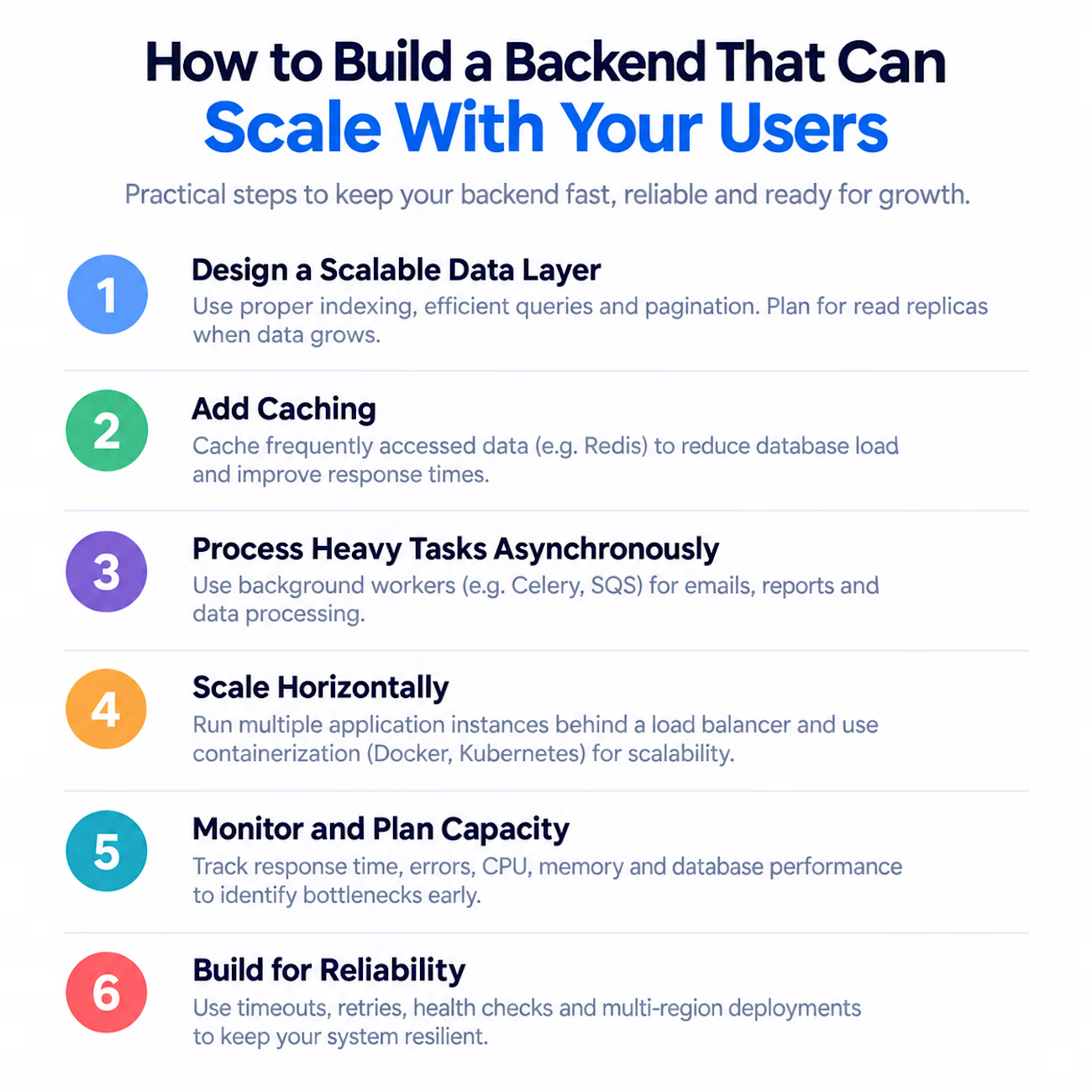
𝐀 𝐛𝐚𝐜𝐤𝐞𝐧𝐝 𝐭𝐡𝐚𝐭 𝐰𝐨𝐫𝐤𝐬 𝐟𝐨𝐫 𝟏,𝟎𝟎𝟎 𝐮𝐬𝐞𝐫𝐬 𝐦𝐚𝐲 𝐬𝐭𝐫𝐮𝐠𝐠𝐥𝐞 𝐚𝐭 𝟏𝟎𝟎,𝟎𝟎𝟎.
Scaling isn’t just about adding more servers. It starts with making the right architectural decisions early from 𝐝𝐚𝐭𝐚𝐛𝐚𝐬𝐞 𝐨𝐩𝐭𝐢𝐦𝐢𝐳𝐚𝐭𝐢𝐨𝐧 𝐚𝐧𝐝 𝐜𝐚𝐜𝐡𝐢𝐧𝐠 𝐭𝐨 𝐚𝐬𝐲𝐧𝐜 𝐩𝐫𝐨𝐜𝐞𝐬𝐬𝐢𝐧𝐠, 𝐡𝐨𝐫𝐢𝐳𝐨𝐧𝐭𝐚𝐥 𝐬𝐜𝐚𝐥𝐢𝐧𝐠, 𝐨𝐛𝐬𝐞𝐫𝐯𝐚𝐛𝐢𝐥𝐢𝐭𝐲, 𝐚𝐧𝐝 𝐟𝐚𝐮𝐥𝐭 𝐭𝐨𝐥𝐞𝐫𝐚𝐧𝐜𝐞.
→ 𝐃𝐚𝐭𝐚𝐛𝐚𝐬𝐞: Efficient queries, indexing, pagination, and read replicas as data grows.
→ 𝐂𝐚𝐜𝐡𝐢𝐧𝐠: Redis or similar caching layers to reduce repeated database work.
→ 𝐀𝐬𝐲𝐧𝐜: Processing: Move emails, reports, and heavy processing to background workers like Celery/SQS.
→ 𝐇𝐨𝐫𝐢𝐳𝐨𝐧𝐭𝐚𝐥 𝐒𝐜𝐚𝐥𝐢𝐧𝐠: Run multiple application instances behind load balancers using Docker/Kubernetes.
→ 𝐌𝐨𝐧𝐢𝐭𝐨𝐫𝐢𝐧𝐠: Track latency, errors, CPU, memory, and database performance before they become production issues.
→ 𝐑𝐞𝐥𝐢𝐚𝐛𝐢𝐥𝐢𝐭𝐲: Use timeouts, retries, health checks, and redundancy so failures don’t take down the entire system.
The goal isn’t to over-engineer from day one. It’s to design your backend so it can scale without becoming slow, expensive, or fragile.
𝐖𝐡𝐚𝐭’𝐬 𝐭𝐡𝐞 𝐛𝐢𝐠𝐠𝐞𝐬𝐭 𝐛𝐚𝐜𝐤𝐞𝐧𝐝 𝐬𝐜𝐚𝐥𝐢𝐧𝐠 𝐜𝐡𝐚𝐥𝐥𝐞𝐧𝐠𝐞 𝐲𝐨𝐮’𝐯𝐞 𝐟𝐚𝐜𝐞𝐝?
The network for creativity
Join 1.25M professional creatives like you
Connect with clients, get discovered, and run your business 100% commission-free
Creatives on Contra have earned over $150M and we are just getting started









Related posts

⚡ Vault — Design System & Color Architecture
Custom color palettes, typography variables, and 8-pt grid component systems built in Figma.
#DesignSystem #UIUX #Figma #ProductDesign #UIKIT

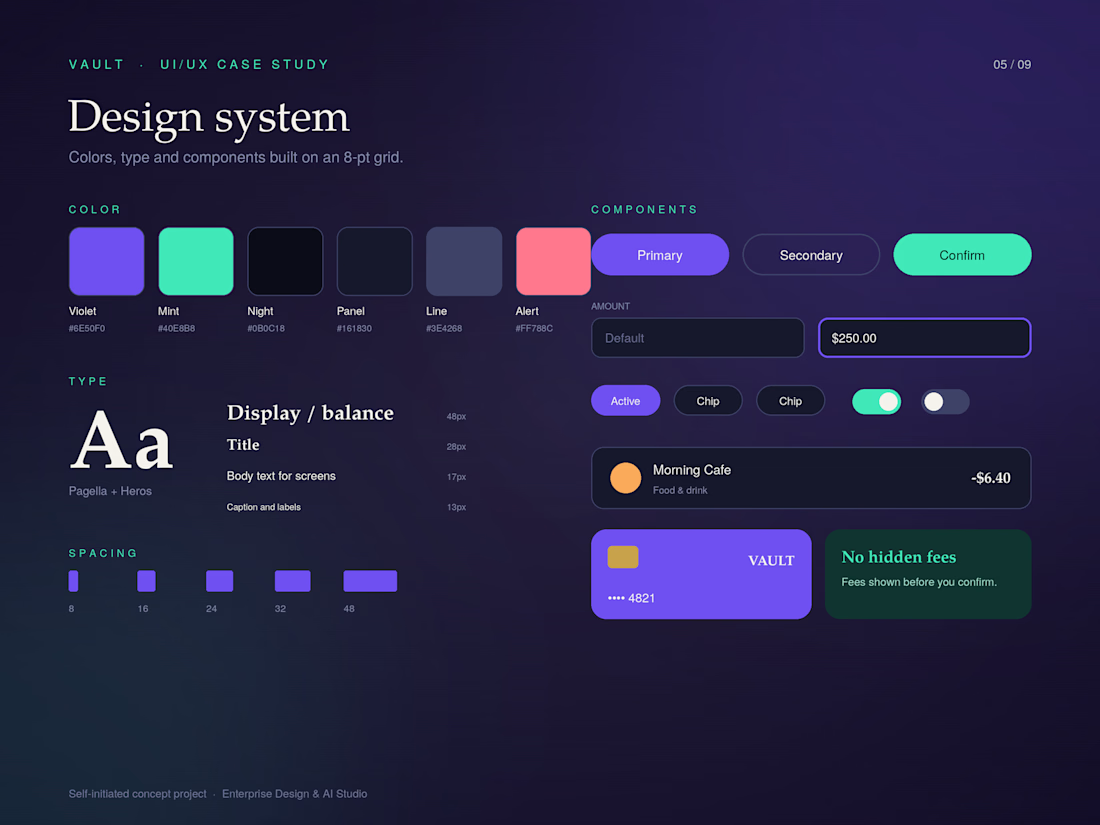

Naming the palette Violet, Mint, Night, Panel, Line and Alert makes the color architecture feel deliberate, not decorative. The 8-pt spacing scale next to the type tokens sells the whole system, this is the kind of Figma board teams actually build from.

𝗗𝗔𝗬 𝟭𝟮 𝗢𝗙 𝟯𝟬𝗗𝗔𝗬𝗦
𝗧𝗵𝗲 𝟰 𝗘𝘀𝘀𝗲𝗻𝘁𝗶𝗮𝗹 𝗛𝗮𝗻𝗱𝗼𝘃𝗲𝗿 𝗣𝗿𝗮𝗰𝘁𝗶𝗰𝗲𝘀 𝗘𝘃𝗲𝗿𝘆 𝗙𝗿𝗲𝗲𝗹𝗮𝗻𝗰𝗲 𝗪𝗲𝗯 𝗗𝗲𝘃𝗲𝗹𝗼𝗽𝗲𝗿 𝗠𝘂𝘀𝘁 𝗙𝗼𝗹𝗹𝗼𝘄
Never finish a web project by just sending login credentials. A professional handover includes:
1. A customized 5-minute Loom walkthrough showing client copy edits.
2. Automated cloud backup setup.
3. Clear DNS and custom domain ownership transfer.
4. A 14-day post-launch support window. This turns one-off clients into recurring retainer contracts.
𝗦𝗮𝘃𝗲 𝘁𝗵𝗶𝘀 𝗰𝗵𝗲𝗰𝗸𝗹𝗶𝘀𝘁 𝘁𝗼 𝗲𝗹𝗲𝘃𝗮𝘁𝗲 𝘆𝗼𝘂𝗿 𝗰𝗹𝗶𝗲𝗻𝘁 𝗲𝘅𝗽𝗲𝗿𝗶𝗲𝗻𝗰𝗲!

This is literally one of teh best way of making a design/work handover to client.
Lve this approach

Every great digital product stars with a problem worth solving.
Maybe you need a website that does more than look good. Maybe you're planning a mobile application, improving your infrastructure or looking for a stronger approach to security.
Whatever stage you're at, let's start with the right questions.
tell us what you're building.
SYRAX - we design, build & protect digital systems.
startupssoftwareengineeringwebdevelopmentCybersecurityFull Stack DevelopmentWeb DevelopmentCanvaFigma
