The network for creativity
Join 1.25M professional creatives like you
Connect with clients, get discovered, and run your business 100% commission-free
Creatives on Contra have earned over $150M and we are just getting started
Back to feedPost

One owner for live trading state. A queue for everything else.
On a real-time trading system I worked on, the dashboard, the market stream, and the simulation jobs all wanted to touch the same positions. That is how positions drift.
What we ran, as separate containers:
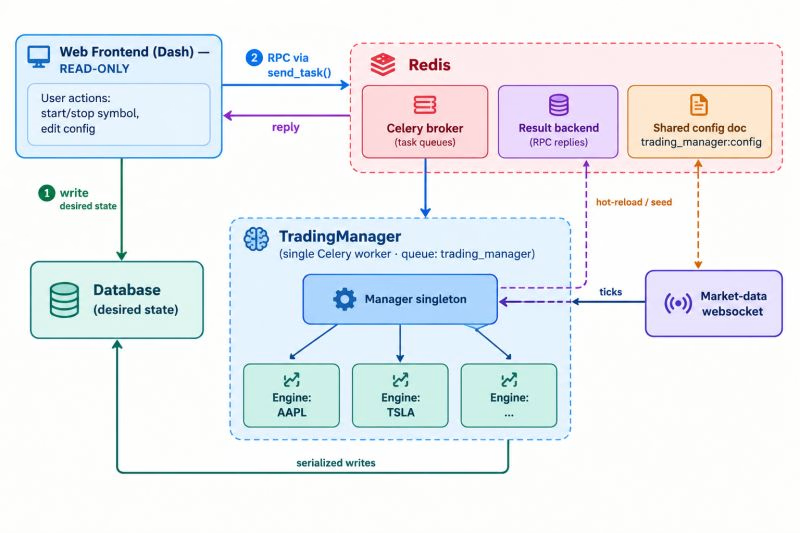
• Redis — the queue, the replies, and shared config. Not the position database.
• Celery Beat — the cron. It enqueues monitoring (30s), market data and analysis (5 min), risk (hourly), and a daily report. It never changes a position.
• Celery workers — simulations and those scheduled jobs, on their own queue.
• One manager worker — the only process allowed to change a live engine. Dashboard actions (start, stop, config) go to its queue, so a long simulation cannot block a stop.
The dashboard writes desired state to Postgres, then asks the manager through Redis. Heavy work stays off the live path. Same idea large chat systems use when they refuse to let every service rewrite a live session: one owner, a bus for the rest.
Coordination write-up, no strategy code: https://github.com/HarisUmer/trading-engine-redis-architecture
I build this kind of Python backend: Redis, Celery, and a single writer for the state that must not tear.
The network for creativity
Join 1.25M professional creatives like you
Connect with clients, get discovered, and run your business 100% commission-free
Creatives on Contra have earned over $150M and we are just getting started



Related posts

A multi-tenant inventory and accounting SaaS for retail, wholesale, distribution, and warehouse businesses. It replaces disconnected spreadsheets with one system for stock, purchases, sales, returns, quotations, dues, payables, and ledgers. Owners get dashboard analytics, downloadable reports, WhatsApp invoice sharing, and AI-assisted insights. Role-based access and organization management support multiple teams.
Built with Next.js, React, PostgreSQL, and Sequelize.


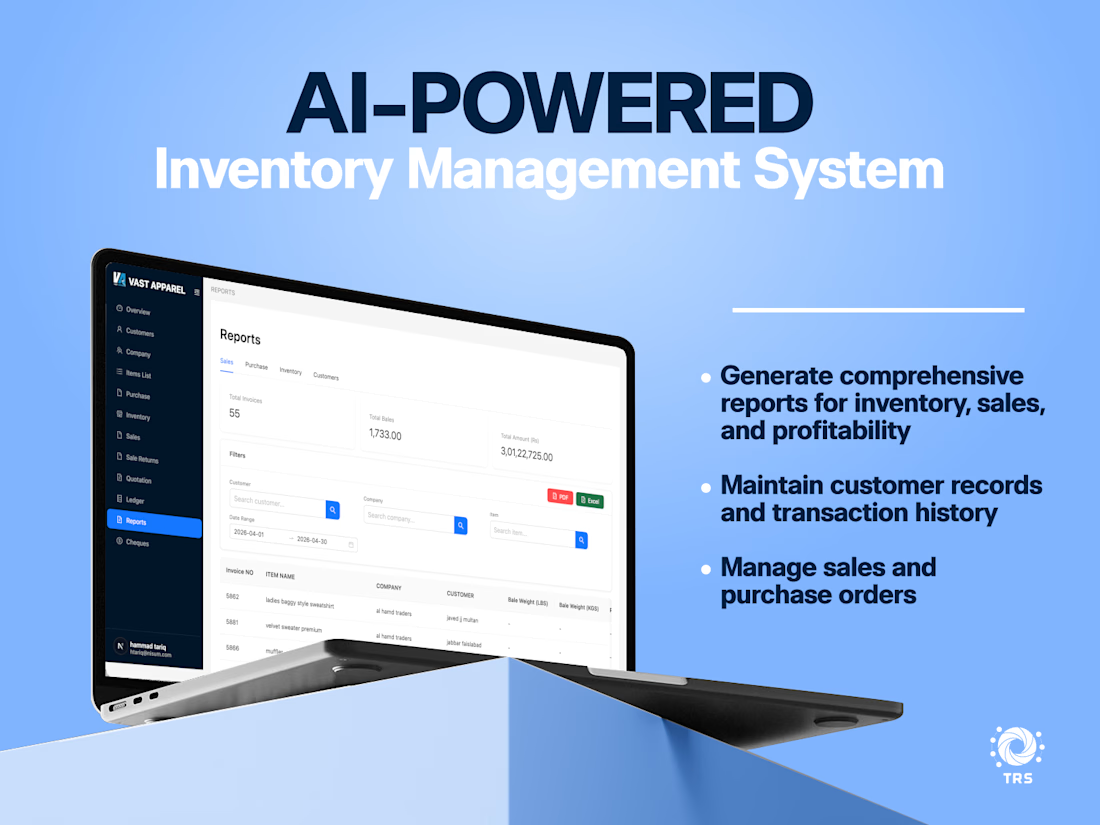

A strong use case for simplifying complex operations.

From Ongoing Deposits to Regular Withdrawals
Stop funding the market. Start building a process designed to extract from it.
The Hidden Cost of Your Trading
Take a hard look at your broker statements.
Look at the last month.
Then the last year.
Then, if you have the courage, look at the entire history.
How much money have you deposited?
How many trades have you taken?
How many hours have you spent staring at charts, waiting for the “perfect” setup?
And after all that time, what do you actually have to show for it?
For many traders, the biggest cost isn't just the losing trades.
It's the constant cycle of depositing, losing, depositing again, and starting over.
You aren't just risking capital.
You're spending something you can never recover:
Your time.
Every hour spent watching charts without a repeatable process has a cost.
Every impulsive trade has a cost.
Every account reset has a cost.
And every deposit made simply to recover previous losses keeps the cycle alive.
The goal isn't to trade more.
It's to trade with a process that gives you a clear reason when to participate, when to stay out, how much to risk, and when to take money off the table.
The objective is to move from:
Depositing → Trading → Losing → Depositing again
toward:
Analyzing → Executing → Managing risk → Withdrawing
There are no guarantees in trading.
But there is a difference between repeatedly funding an account and developing a structured approach designed to make your trading more deliberate, measurable, and sustainable.
You may already be paying the price.
The question is:
How much longer do you want to keep paying it?


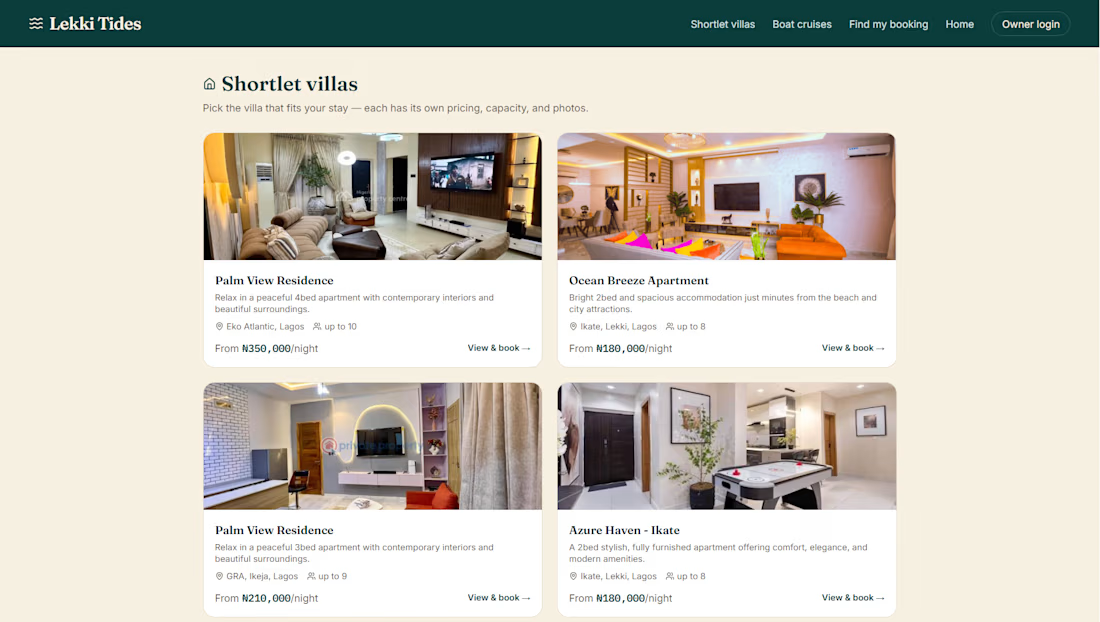
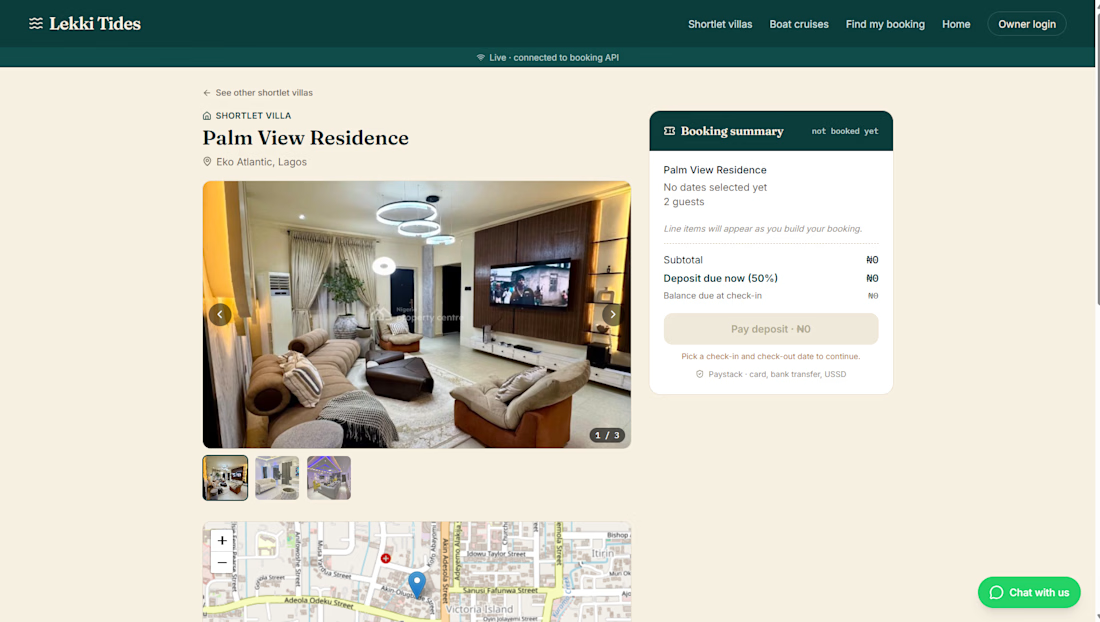
Lekki Tides is a full-stack booking platform for shortlet villas and boat cruises in Lekki, Lagos. I built it end-to-end, allowing guests to browse listings, check availability, book without an account, and pay securely through Paystack. It also includes an owner dashboard for managing listings, bookings, photos, and analytics. Built with React, TypeScript, Node.js, Express, MongoDB, Paystack, Cloudinary, and Resend.