The network for creativity
Join 1.25M professional creatives like you
Connect with clients, get discovered, and run your business 100% commission-free
Creatives on Contra have earned over $150M and we are just getting started
Back to feedPost

Most Shopify brands read inventory health at the product level. It's the wrong resolution for the decision being made.
Here's the pattern I keep finding when I audit a brand's inventory setup: an 8-variant shirt shows comfortable aggregate stock. Meanwhile, size M in black, the single combination carrying 40% of that product's demand, is three days from zero. Nobody notices until a customer emails asking where their size went.
Product-level views exist for merchandising decisions: what to feature, what to discount, what to cut. They were never built to catch a stockout before it happens. Variant-level views are what actually do that. Most systems default to product-level because it's easier to read on a dashboard, not because it's the right resolution for the decision being made.
The cost compounds quietly. It's not just the missed sale on that variant. It's the ad spend still pointing traffic at a size that's already gone. It's the customer who doesn't come back after the second support email.
This is the core of what I do, I build the variant-level judgment layer that sits on top of your existing dashboard, reorder timing, dead stock classification, and stockout prevention before the stockout becomes a lost customer.
If your inventory reporting stops at the product level, there's a good chance this exact gap already exists somewhere in your catalog.
The network for creativity
Join 1.25M professional creatives like you
Connect with clients, get discovered, and run your business 100% commission-free
Creatives on Contra have earned over $150M and we are just getting started
Related posts

Why most digital businesses lose sales without even noticing
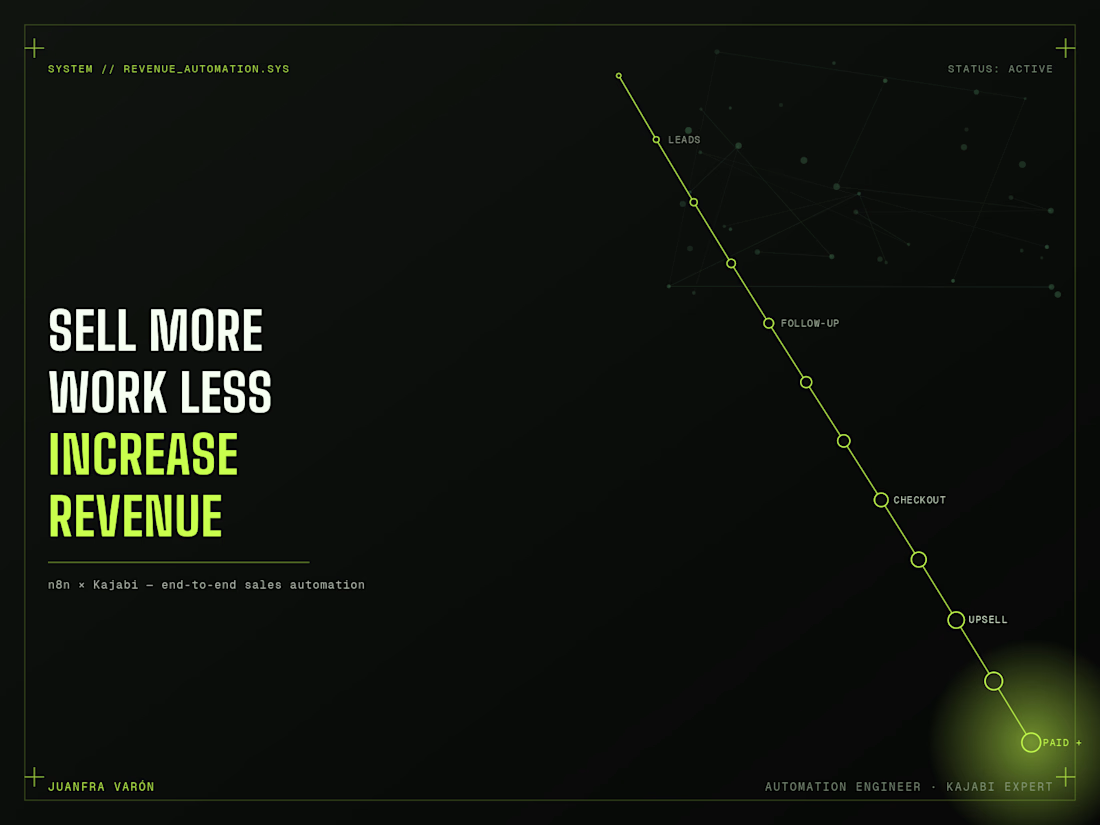
You have a good product, traffic, even sales. But between the click and the completed payment, people fall through the cracks: abandoned carts with no follow-up, leads that never get the right email at the right time, buyers nobody offers a next step.
Most platforms (Kajabi, Shopify, whatever) come with basic automation. Enough to get started, not enough to scale.
That's where n8n comes in: I connect your platform to real workflows that do the heavy lifting for you.
Automatic abandoned cart recovery
Behavior-based email sequences (not generic blasts)
Smart lead tagging so you know who to sell what
The result isn't "more work" — it's a system that sells while you do something else.
If you run a digital business and feel like you're leaving money on the table due to manual processes, let's talk.
#Automation #n8n #Kajabi #SalesAutomation #MarketingAutomation #NoCode #DigitalProducts #OnlineCourses #CreatorEconomy #RevenueGrowth #WorkflowAutomation #SaaS




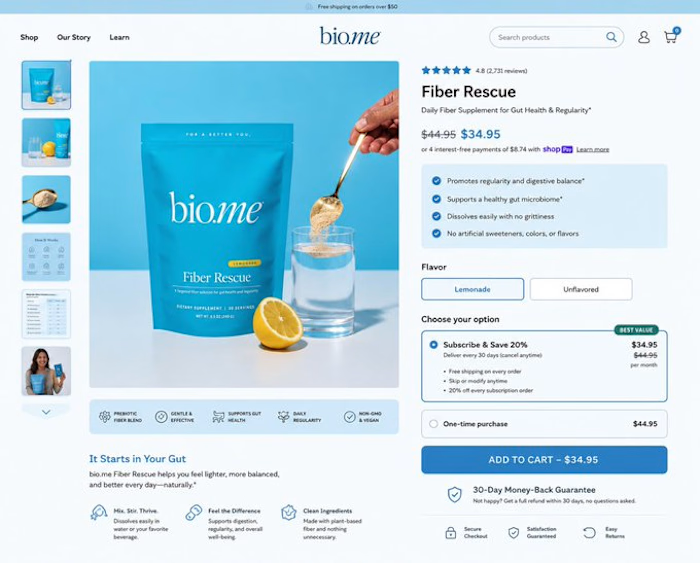
A high-converting product page is more than beautiful design it’s a sales system.
Every section of this page was crafted to guide customers from curiosity to checkout with confidence.
Here’s what makes it effective:

Premium, clean UI that immediately builds trust.
High-quality product imagery that showcases the product from every angle.
Clear value proposition with benefits customers understand instantly.
Strategic pricing, subscription offers, and savings that increase average order value and recurring revenue.
Trust-building elements including ratings, guarantees, and secure checkout badges.
Conversion-focused hierarchy that removes friction throughout the buying journey.
Fully responsive across desktop, tablet, and mobile for a seamless shopping experience.
The best ecommerce stores don’t rely on luck they rely on intentional design, user psychology, and a frictionless buying experience.
Every pixel on this page was designed with one purpose: turn more visitors into loyal customers.
If your product page isn’t converting, it’s not just a design problem it’s a conversion problem.
Design. Develop. Optimize. Convert.



Built a responsive e-commerce platform for a local apparel brand, featuring a custom inventory management admin dashboard, dynamic product filtering, and WhatsApp order placement

Challenges
View all



Trending

Claude
Claude has entered the design space. How are you using Claude Design?

Contra University
Learn from expert creatives how to earn more using next-gen AI tools.
fifaworldcup2026
The World Cup is here and the whole world's watching. How are you designing for the world stage?
creativeaiflow
Creative AI workflows are evolving. What tools do you use, and what are their strengths and weaknesses?
freelancerlife
Freelancer life is wins, pivots, and everything in between. What’s yours right now?