The network for creativity
Join 1.25M professional creatives like you
Connect with clients, get discovered, and run your business 100% commission-free
Creatives on Contra have earned over $150M and we are just getting started
Back to feedPost
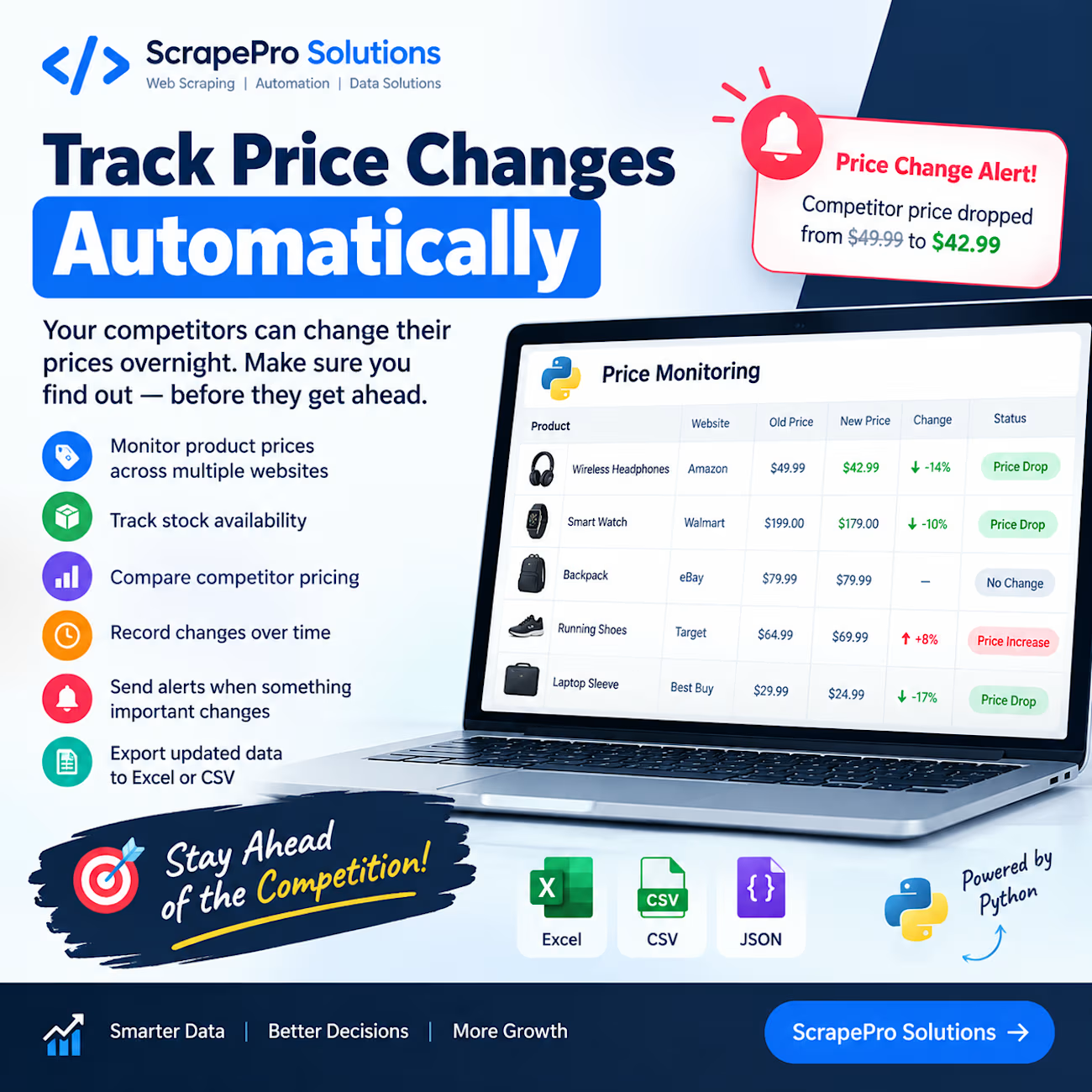
Your competitors can change their prices overnight. Your data collection system shouldn't miss it. 📊
Imagine checking 50 product pages every morning just to find out which prices have changed.
Now imagine getting that information automatically.
With Python web scraping and automation, businesses can build systems that:
→ Monitor product prices across multiple websites
→ Track stock availability
→ Compare competitor pricing
→ Record changes over time
→ Send alerts when something important changes
→ Export updated data to Excel or CSV
Instead of repeatedly checking websites, you get organized information that helps you make better business decisions.
This can be especially useful for e-commerce businesses, online retailers, and teams that regularly research competitors.
At ScrapePro Solutions, I build custom Python scraping and automation solutions tailored to specific business needs.
A quick question for e-commerce business owners:
If a competitor changed their product price today, how would you find out — manual checking or automatic alerts?
💬 Share your answer in the comments.



Good question to ask owners. In my experience alerts only get used if the threshold is set per product, otherwise people mute them after a week. Do you let clients set a percent change trigger, or alert on any change?

That’s a great point! I’d recommend offering both options: alerts for any price change and customizable percentage thresholds, depending on the client’s needs. This helps keep notifications relevant and useful.

Its really great developer and services very good
Thankyou so much

Two things bit me while building a price tracker. A page can come back "successful" but empty (in my case, compressed content the client couldn't decode), and saving that blindly overwrites good data. So I refuse any page with no title and no price, and only record a change when...
The network for creativity
Join 1.25M professional creatives like you
Connect with clients, get discovered, and run your business 100% commission-free
Creatives on Contra have earned over $150M and we are just getting started







Related posts

One business problem. Three analytical routes. One data-driven story. ☕📊
I turned raw business data into actionable decisions—not just another Power BI dashboard.
For the Onyx Data October 2026 Challenge, I worked on the Sunrise Coffee Chain analytics project, analyzing store performance, profitability, customer loyalty, revenue mix, and trading patterns across 60 UK stores (2023–2024).
🔹 My Analytical Approach
1️⃣ Python — Data Preparation
Cleaned and prepared the source datasets to establish a reliable foundation for analysis.
2️⃣ SQL — Business Analysis
Investigated store-level profitability, cost pressure, customer loyalty, revenue contribution, and trading patterns.
3️⃣ Power BI — Interactive Dashboards
Built a 3-page interactive report featuring advanced DAX measures, KPI cards, YoY comparisons, profitability analysis, and business-focused visualizations.
📊 Key Findings
• £89.7M Revenue | £16.9M Net Profit
The business recorded an aggregate net profit margin of 18.8% across the analysis period.
• Store Location Matters
Transport-Hub stores achieved a 25.1% aggregate net profit margin, compared with 18.6% for High-Street stores.
• An Area Requiring Attention
South London Corner recorded a £50.5K net loss over 24 months.
• Product Revenue Contribution
Espresso contributed 45.7% of daily revenue, while food contributed 26.1%.
• Trading Patterns
Average daily revenue was approximately 24% lower on weekends and 33% lower on UK bank holidays than on regular trading days.
💡 My Biggest Takeaway
Revenue alone does not tell the whole story. Understanding profitability, cost pressure, product contribution, and trading patterns helps businesses identify where to improve performance and make better decisions.
🔗 Explore the Complete Project
GitHub: https://github.com/SajeebTheAnalyst/sunrise-coffee-chain-analytics
If you were advising the management team, which finding would you investigate first—and why?
#DataAnalytics #SQL #PowerBI #Python #DAX #BusinessIntelligence #DataVisualization #OnyxData


I would investigate South London Corner first. Break the 24-month loss into store-month revenue, direct costs and allocated costs, then compare it with similar stores over matched trading periods. Reconcile at store-month grain before joining product or loyalty tables so a...

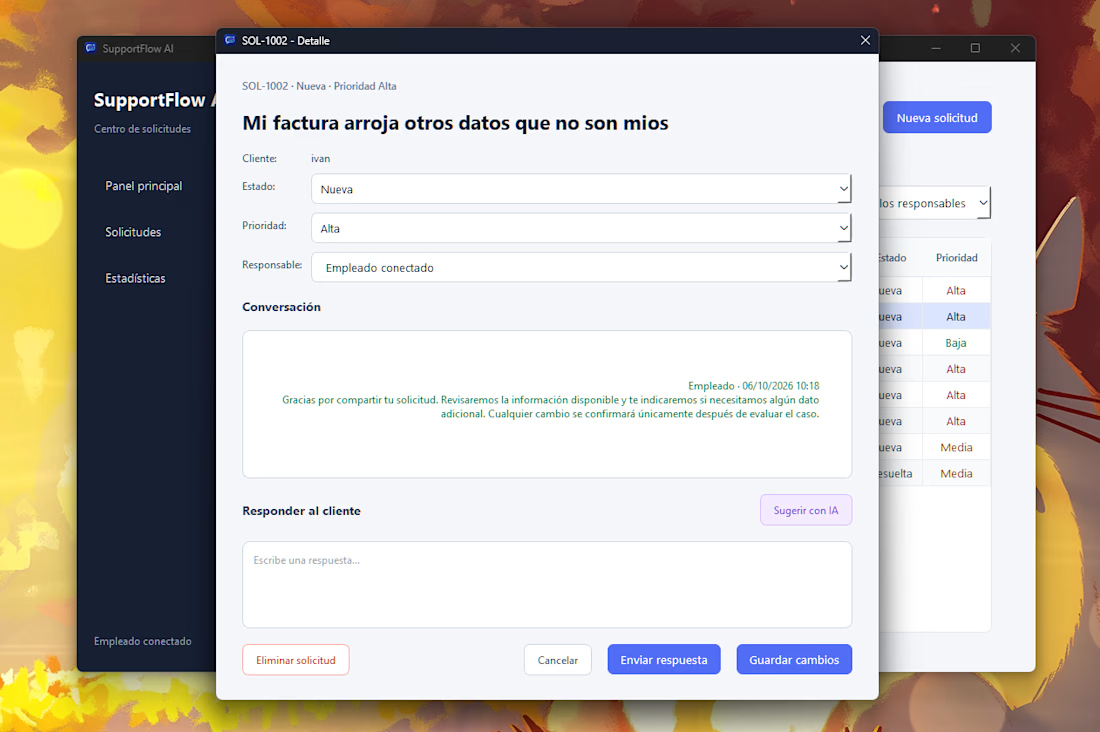
SupportFlow AI is a customer support management system built with Python, PySide6, FastAPI and PostgreSQL.
It helps teams manage customer requests, assign priorities and responsibilities, track conversations, and generate AI-assisted response suggestions while keeping a human in control of the final reply.
I built the application structure, interface, backend integration, database workflows, API layer and automated testing.

The conversation-revision idea sounds useful. I would also check that revision on the server when accepting the send, so a message arriving between review and click cannot slip through. Mark the draft stale while keeping the human edits visible. Two useful regression cases: a...

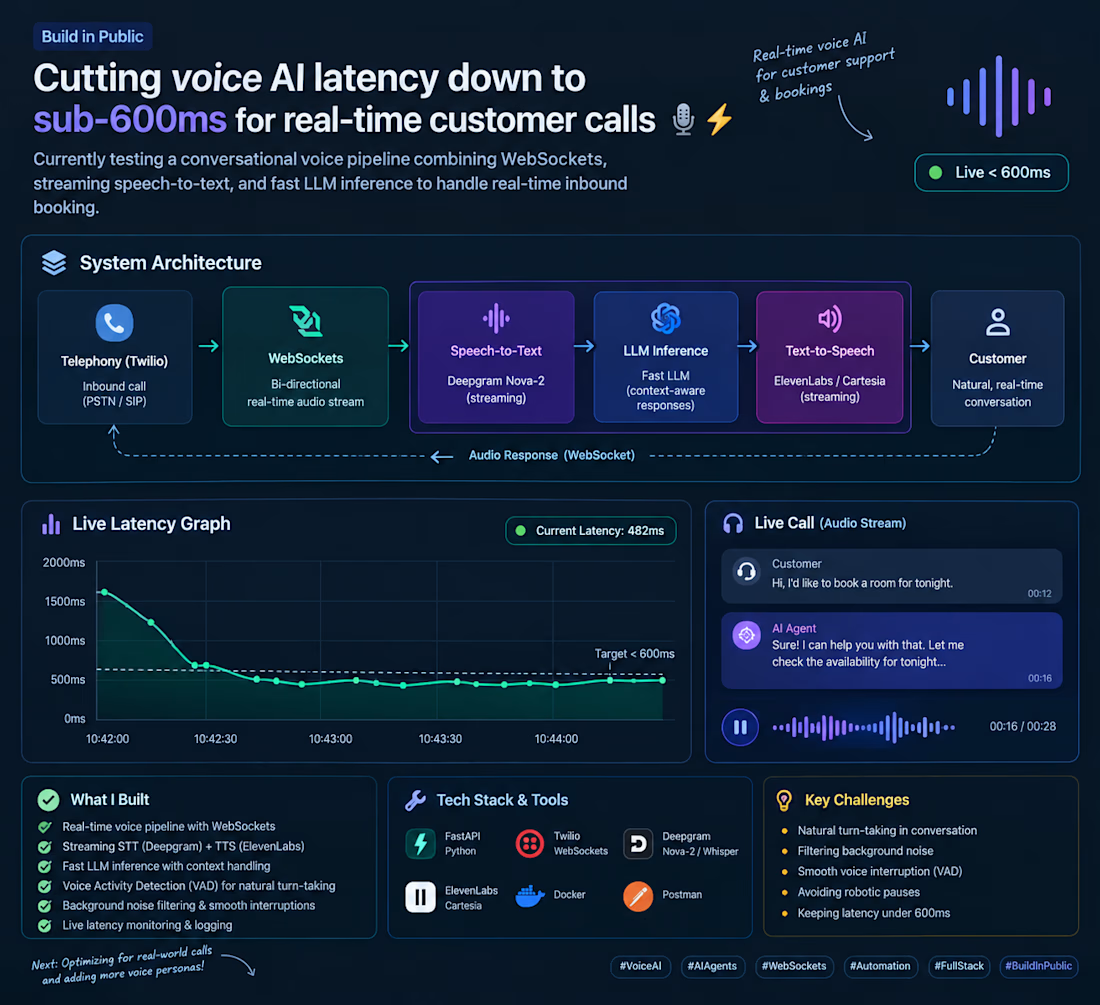
Cutting voice AI latency down to sub-600ms for real-time customer calls 🎙️⚡
Currently testing a conversational voice pipeline combining WebSockets, streaming speech-to-text, and fast LLM inference to handle real-time inbound booking.
The hardest part isn’t the generation—it’s natural turn-taking, background noise filtering, and smooth voice interruption (VAD) without awkward robotic pauses.
Sneak peek of the live latency graph and audio streaming architecture below! 👇
#VoiceAI #AIAgents #WebSockets #Automation #FullStack #BuildInPublic