The network for creativity
Join 1.25M professional creatives like you
Connect with clients, get discovered, and run your business 100% commission-free
Creatives on Contra have earned over $150M and we are just getting started
Back to feedPost
Taste Test
Which one ships faster? 🤔
Some believe experience is the biggest advantage, while others think modern AI tools can dramatically accelerate development.
🐢 Senior Developer + No AI
🐇 Junior Developer + Full AI Stack
Vote below 👇
⚠️ IMPORTANT: Vote for the option you think is WRONG.
#AI #ArtificialIntelligence #Coding #TechCommunity #DeveloperLife #SoftwareEngineering #Productivity #AITools #FutureOfWork #TechDiscussion #WebDevelopment #Innovation
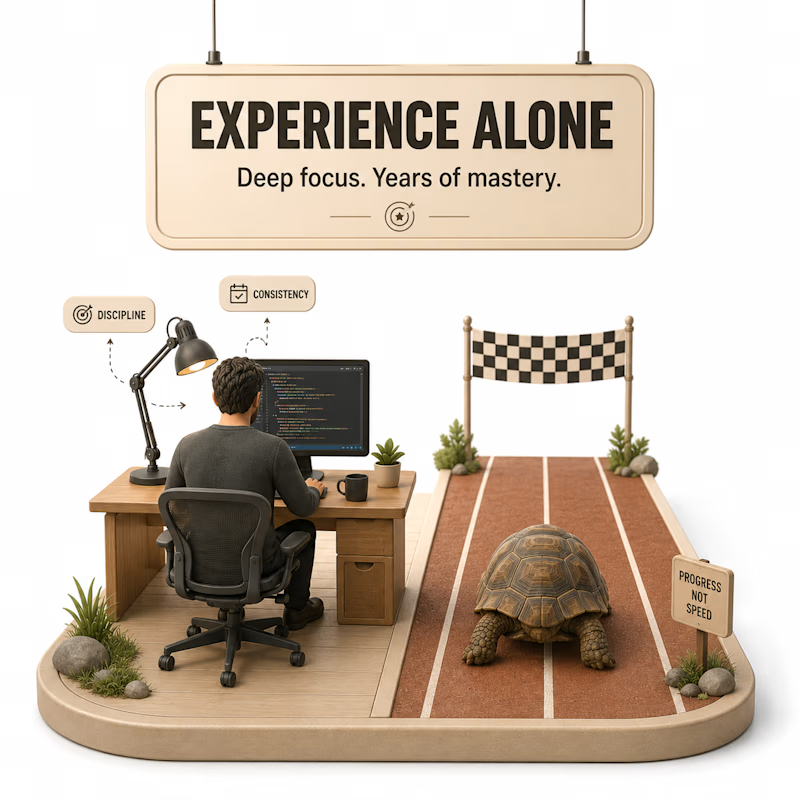
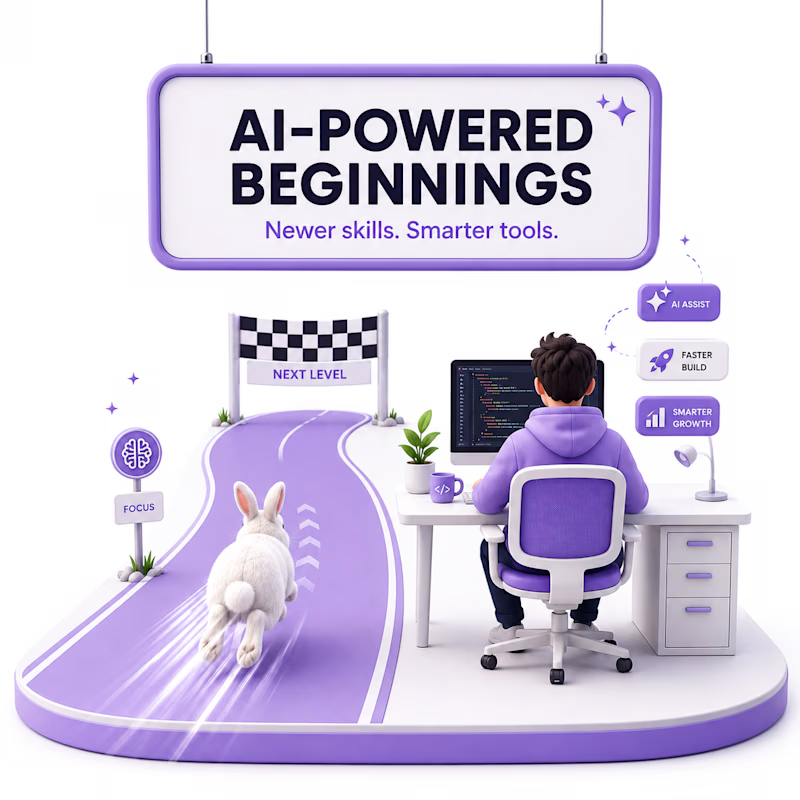
5 votes
Ends in 1d


The real winner is 🏆 Senior Developer + AI.
Experience helps you ask the right questions, while AI helps you execute faster. AI accelerates output, but judgment, architecture decisions, and handling edge cases still come from experience.

Well said. 🔥 AI can accelerate execution, but experience still drives direction.



🐇 Junior + AI. Speed isn't everything—experience prevents costly mistakes.
Exactly! 💯
The network for creativity
Join 1.25M professional creatives like you
Connect with clients, get discovered, and run your business 100% commission-free
Creatives on Contra have earned over $150M and we are just getting started
Related posts

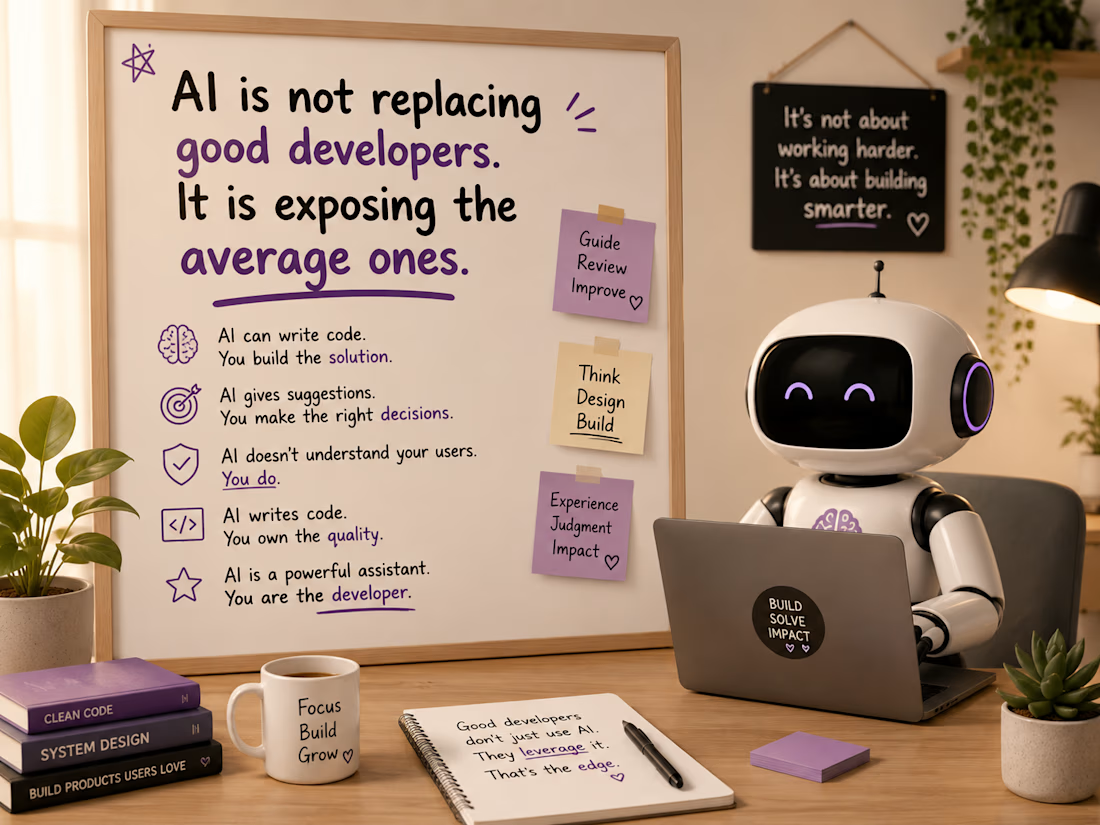
AI is not replacing good developers. It is exposing the average ones.
AI tools can now write code, generate designs, build landing pages, and connect APIs faster than ever.
But speed alone does not make a product good.
The real value is still in knowing what to build, how to structure it, what can break, how users will behave, and how to turn a rough idea into something reliable.
A good developer does not just ask AI to generate code.
They guide the system, review the output, clean the architecture, test edge cases, and connect the work to real business goals.
That is where experience still matters.
AI is a powerful assistant. But product thinking, engineering judgment, and clear communication are still the difference between “it works” and “it is ready.”
#AI #SoftwareDevelopment #FullStackDevelopment #Automation #ProductDevelopment #Contra

Every MVP I launch is different. But the viability question hasn't changed: does this solve a problem people will pay to solve?
What's changed is what happens after you answer "yes."
Shipping a functional product isn't the moat it once was. The tools to build standard software are democratizing quickly. If your product works, a competitor can build something that works just as well by standing on your shoulders.
But there is a trap: accessibility doesn't mean cheap, not anymore. We are seeing companies back off because if you rely on AI to be your technical architect as you go, the token spend becomes a snowballing expense.
So what's left?
Unless you are sitting on a hoard of proprietary data, you only have three things: Brand, Experience, and a Point of View. The human elements that make someone choose you over a functionally indistinct alternative.
And this is where most AI enhanced founders make a mistake. They turn to AI to solve differentiation the same way they used it to solve functionality.
But the trap of AI is that the homogenization is invisible. When the AI spits out a polished design or a slick feature set, you move forward thinking you just leaped ahead. What you don't realize is that because AI is built to average out its training data, it is actually pulling you and all of your competitors into similar orbital patterns. This then begs the question, why me?
If your product has found its market, your functional roadmap is just the baseline. It must be paired with a high-context POV based on your company's story. Why did you make this? Do you actually care about its success, or is it just a quick cash grab? Who are you, and what do you stand for?
In a weird way, AI is forcing a return to Opinionated Brands.
When the internet is flooded with cheap, mass-produced experiences, people stop buying based on feature lists. They buy from you because of your reputation, what you stand for, and the specific worldview you project.
And yes, even utilities can have a point of view.
For example, if you just looked at energy company Vattenfall's ads, you'd think they were an eco non-profit. They don't talk about electricity. They talk entirely about mitigating waste and fossil-free living.
Furthermore, think about companies like Linear in tech, or Liquid Death in consumer goods. They sell highly commoditized products like project management and water. They are valued in the hundreds of millions not because they have the longest feature list (or sell "better" water). They compete on a unique, high-context Point of View, based on what they care about.
If you've found Product-Market Fit, you can no longer out-prompt your competitors, because you just launched a case study they can feed into their own AI. You need a Point of View that makes you "weird" (in a data sense).
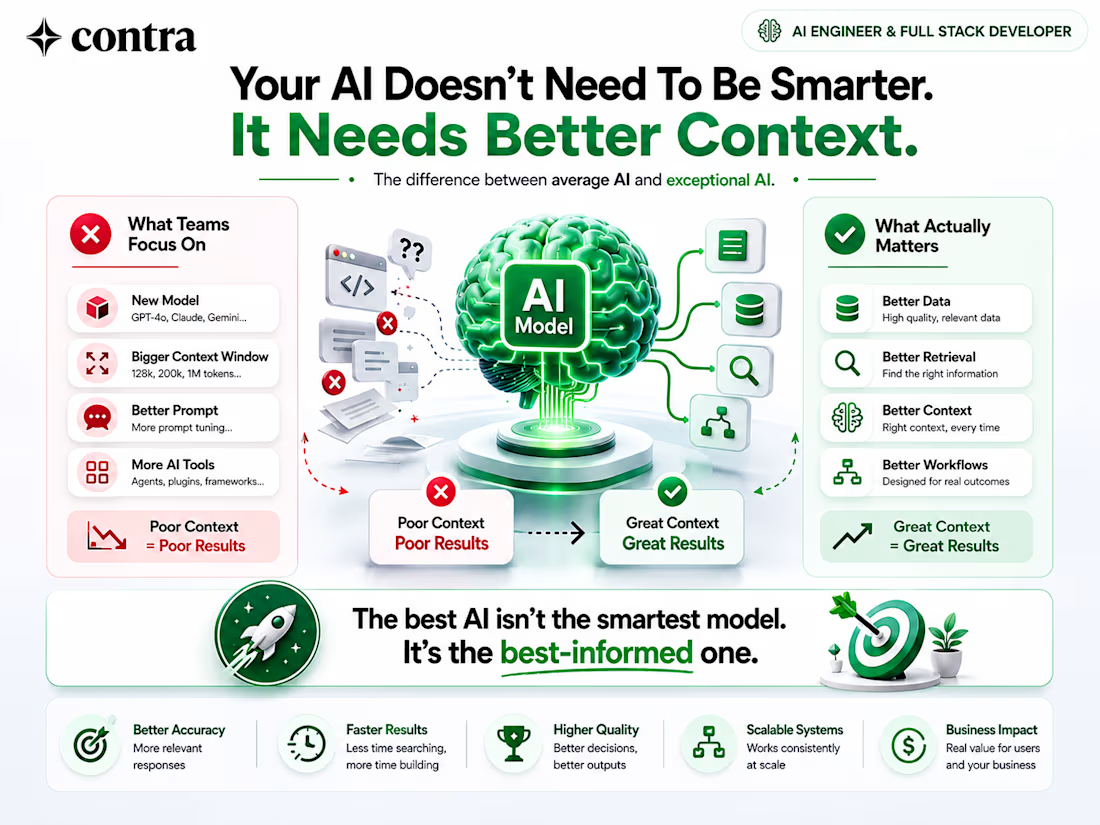
One of the biggest misconceptions in AI:
"If we switch to a better model, our results will improve."
Sometimes.
But often, the real problem isn't the model.
It's the context.
An AI system can only make decisions based on the information it receives.
That's why the highest-performing AI products focus on:
✅ Better retrieval
✅ Better data quality
✅ Better workflows
✅ Better context engineering
✅ Better system design
Not just better prompts.
In many projects, improving the context layer delivers a bigger impact than changing the model itself.
The future of AI isn't just model engineering.
It's context engineering.
And that's where great AI products are built. 🚀
What's been your experience—model upgrades or better context? 👇
#AI #GenerativeAI #RAG #ContextEngineering #LLMAgents #AIEngineering #ArtificialIntelligence #LangChain #FullStackDevelopment #SaaS #Contra











Trending

Claude
Claude has entered the design space. How are you using Claude Design?

Contra University
Learn from expert creatives how to earn more using next-gen AI tools.
creativeaiflow
Creative AI workflows are evolving. What tools do you use, and what are their strengths and weaknesses?
portfolioreview
The best portfolios tell a story, not just show a grid. Share yours for feedback.
freelancerlife
Freelancer life is wins, pivots, and everything in between. What’s yours right now?