The network for creativity
Join 1.25M professional creatives like you
Connect with clients, get discovered, and run your business 100% commission-free
Creatives on Contra have earned over $150M and we are just getting started
Back to feedPost

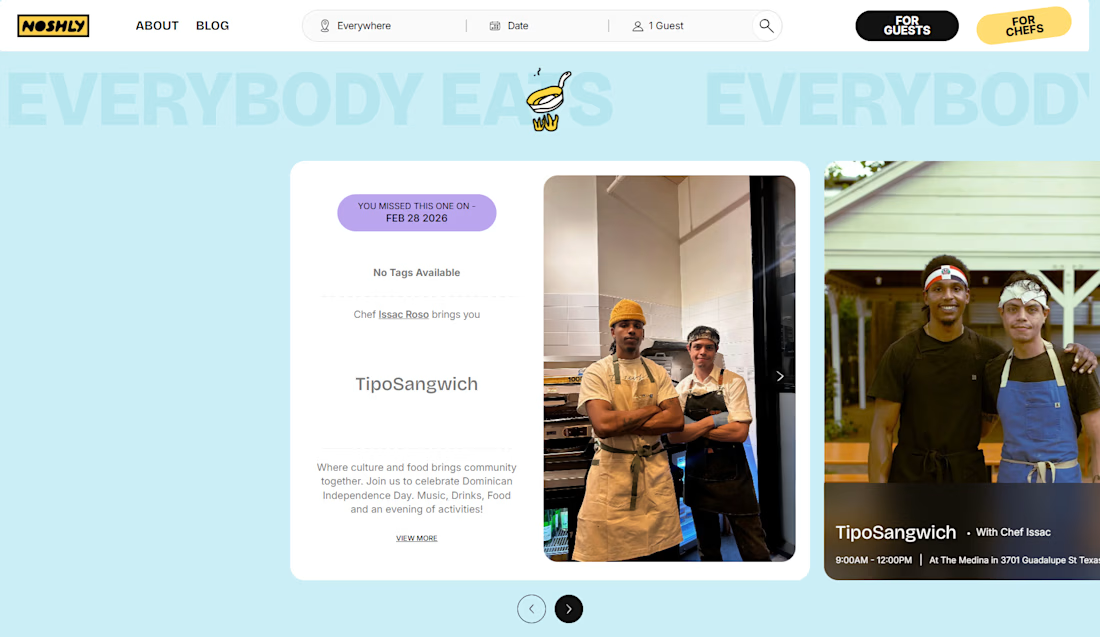
Noshly is the ideal platform for hosting culinary pop-ups, providing chefs with the essential tools to manage successful events. As a senior backend engineer, I utilized Next.js, Node.js, and MongoDB to develop a robust and scalable solution. With Noshly, chefs can create and grow their concepts on their own terms, ensuring seamless experiences.


The network for creativity
Join 1.25M professional creatives like you
Connect with clients, get discovered, and run your business 100% commission-free
Creatives on Contra have earned over $150M and we are just getting started





Related posts

Full-Stack Developer & AI Automation Engineer
I build scalable web applications, SaaS platforms, mobile apps, custom dashboards, and AI-powered automation systems that turn complex business workflows into reliable digital products.
My core stack includes Next.js, React, Node.js, NestJS, Python, PostgreSQL, MongoDB, and AI APIs.
I specialize in turning ideas into production-ready systems—from architecture and development to deployment, automation, and optimization.
Available for:
AI Automation • SaaS Development • Web Development • Mobile Apps • Custom Dashboards • API Development • Business Automation


Seeing how you stitch AI APIs into custom dashboards really cuts the manual data wrangling. The stack choice keeps the deployment pipeline smooth.

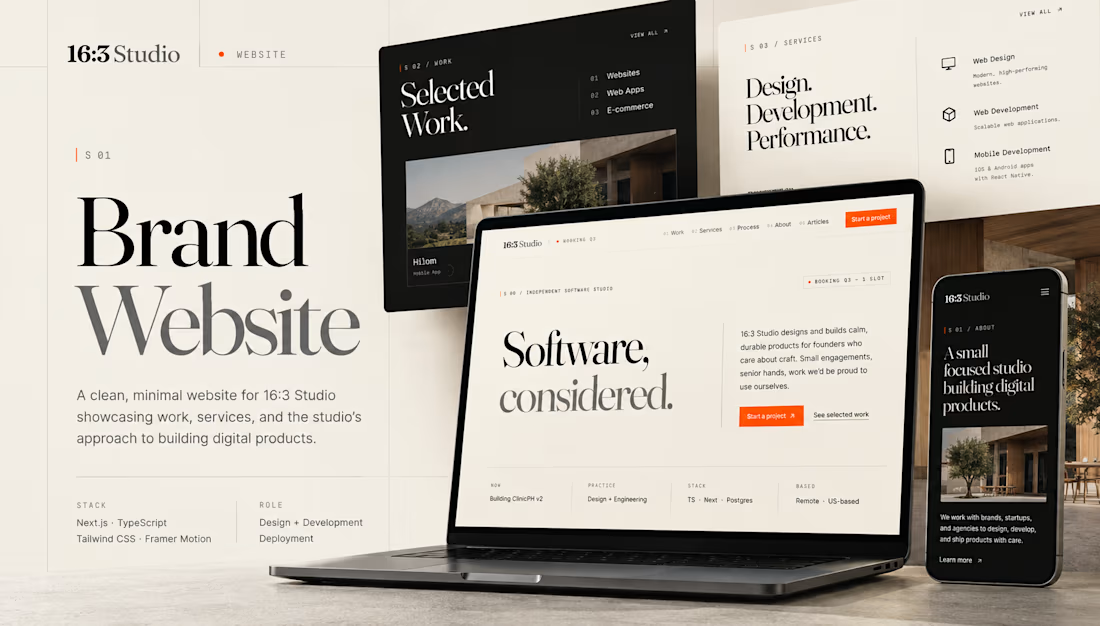
16:3 Studio is my independent software studio website, designed and developed from the ground up to showcase selected work, services, and my approach to building digital products.
The site combines an editorial-inspired visual system with a clean, structured layout, subtle interactions, and responsive design. I focused on creating a distinct studio identity while keeping the experience fast, accessible, and easy to navigate across devices.
Built with Next.js, TypeScript, Tailwind CSS, and Framer Motion, with an emphasis on reusable components, performance, responsive behavior, and polished frontend details.
My role: Design, Frontend Development & Engineering
Stack: Next.js · TypeScript · Tailwind CSS · Framer Motion



The studio site has a clear way to show both the work and how you build it. I like that you kept the motion subtle. Did you have to make any tradeoffs to keep it fast on mobile?

Can you answer these 5 system design questions in 30 seconds each? ⏱️
Out loud, while an interviewer is watching 👇
1️⃣ 1,000 requests hit one expired cache key at the same moment. How do you protect the database?
2️⃣ You add 1 node to a 3-node cache using key mod N. Roughly how many keys move?
3️⃣ 3 partitions, 4 consumers in one Kafka group. What does the 4th consumer do?
4️⃣ 3 service layers each retry 3 times. How much traffic hits the failing service?
5️⃣ A client retries a payment with the same idempotency key but a different amount. 200, 409 or 422?
If you hesitated on even one, you're not alone. Most engineers know these topics. The hard part is explaining the trade-off clearly, saying when not to use it, and surviving the follow-up.
That's why I built the System Design Interview Crack Sheet 📘
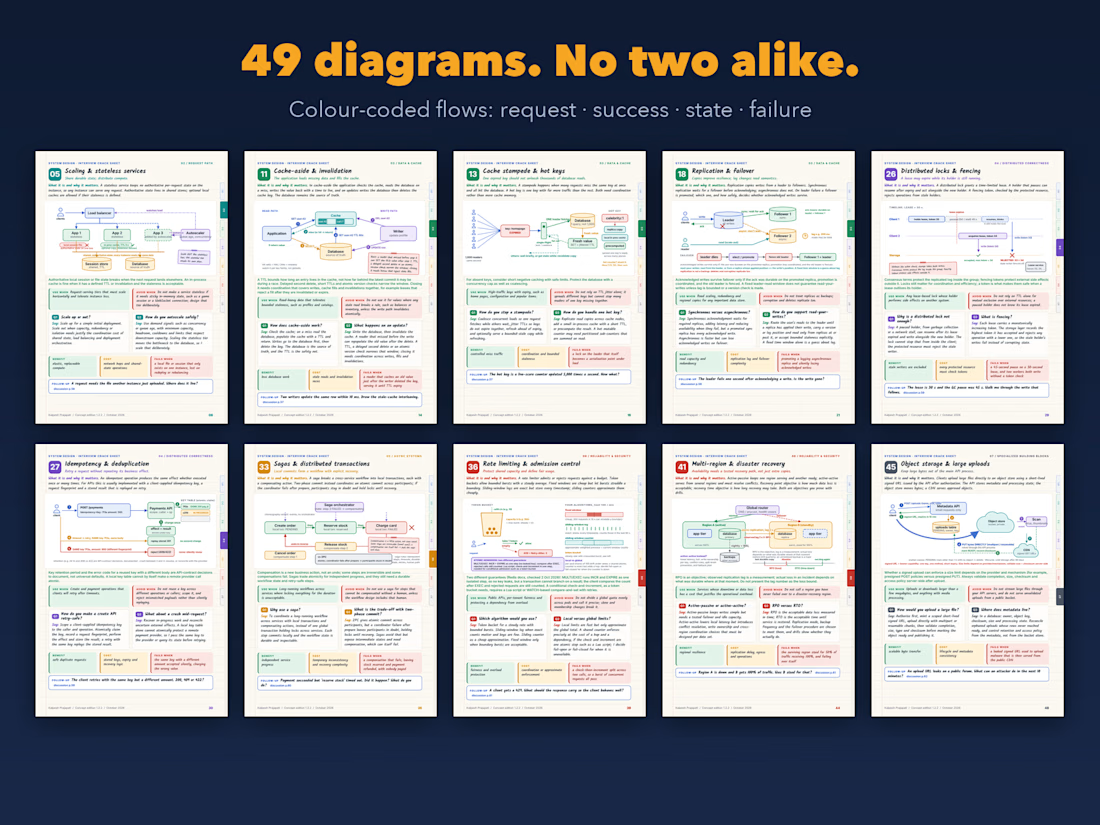
✅ 49 concepts, one page each
✅ 98 interviewer questions with ready 30-second answers
✅ 49 colour-coded diagrams that show the real mechanism
✅ Use when / avoid when / how it fails, for every concept
✅ 49 follow-up questions interviewers use to dig deeper
✅ Decision matrix, acronym glossary and a clickable revision map
Covers caching, sharding, consistent hashing, replication, Kafka, sagas, outbox & CDC, CAP & PACELC, consensus, idempotency, rate limiting, circuit breakers, multi-region & DR, and more.
🎯 Made for backend, SDE-2, senior and staff interviews
⚡ 64-page PDF · instant download · free updates
📘 Get the full crack sheet here:
https://contra.com/products/moOF13Ea-system-design-interview-crack-sheet