The network for creativity
Join 1.25M professional creatives like you
Connect with clients, get discovered, and run your business 100% commission-free
Creatives on Contra have earned over $150M and we are just getting started
Back to feedPost

A client onboarding problem rarely starts with the client.
It usually starts with information scattered across emails, notes, folders and someone’s memory.
Then the project begins and suddenly nobody is quite sure:
• What was agreed?
• What still needs to be collected?
• Who owns the next step?
• What has actually been delivered?
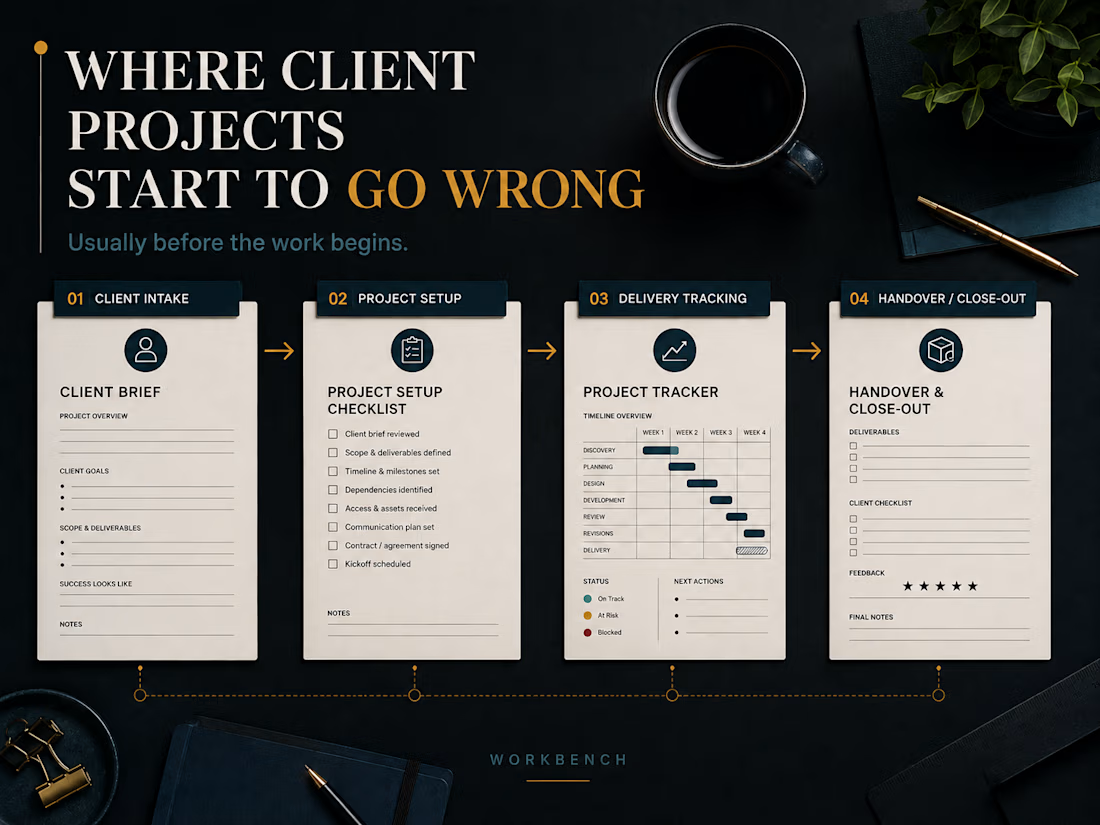
I’ve been working on a Workbench system designed around that exact problem.
Instead of another enormous project-management setup, I wanted something a small business or freelancer could actually pick up and use: client intake, project setup, delivery tracking, handover and close-out — connected as one simple workflow.
The interesting part wasn’t making the templates.
It was deciding what information needs to survive from one stage to the next.
That’s usually where good systems either work or fall apart.
What part of your client process causes the most unnecessary back-and-forth?
#BusinessSystems #ClientOnboarding #Operations #FreelanceWorkflow #SmallBusiness
The network for creativity
Join 1.25M professional creatives like you
Connect with clients, get discovered, and run your business 100% commission-free
Creatives on Contra have earned over $150M and we are just getting started
Related posts

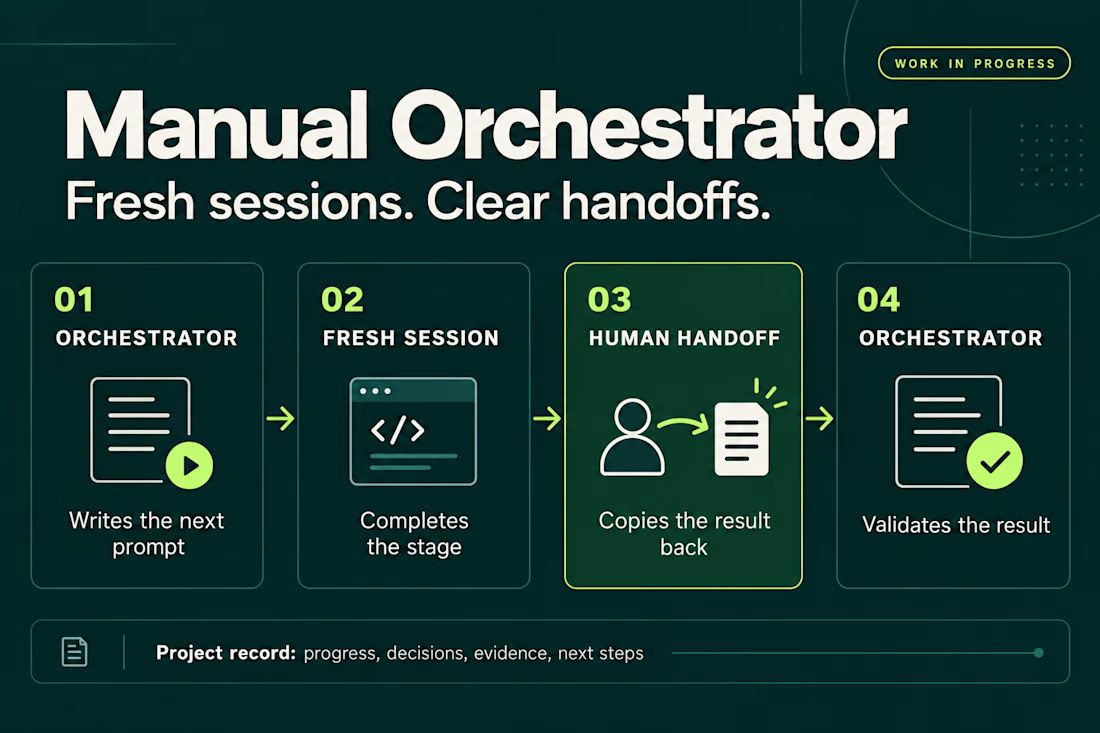
I’ve been working on a small skill called Manual Orchestrator to make longer projects with AI agents easier to manage.
The problem started with a familiar situation: one chat would accumulate plans, implementation details, corrections, and test results. By the time I was ready for the next phase, I wanted a fresh conversation without losing the decisions we’d already made.
Manual Orchestrator gives that process some structure. One chat acts as the orchestrator: it breaks the work into stages and writes a prompt for the next one. I run that prompt in a new session, then bring the result back. The orchestrator reviews it against the stage’s criteria before preparing the next prompt. If something needs fixing, I go back to the same worker session.
The skill also keeps a record in the project with the current stage, decisions, evidence, and next steps. That makes it easier to pause, resume, or hand the work to another session.
The handoff is manual. I choose when to open a session and carry the result back. The orchestrator and worker sessions can also use different agent CLIs, with the prompt adapted to the capabilities available.
It’s open source and still a work in progress. I’m using it to learn what helps in practice and where the workflow needs to improve. Installation has been checked for Codex, Claude Code, and Gemini CLI, but the full workflow hasn’t been tested across every CLI or version.
If you try it, I’d be interested in hearing what works and where it gets in your way.


A LinkedIn connection is not a lead. A reply is not a client.
The real opportunity is in what happens between those two moments.
Most businesses approach LinkedIn as a prospecting platform.
But successful client acquisition requires a complete system:
→ Profile Positioning: Make your profile communicate who you help and why they should trust you.
→ Ideal Client Research: Define your ICP, identify decision-makers, and understand their business challenges.
→ Targeted Prospecting: Use Sales Navigator to find relevant companies instead of collecting random contacts.
→ Strategic Visibility: Publish useful content, demonstrate expertise, and build credibility before reaching out.
→ Personalized Outreach: Start conversations around relevant business needs—not generic sales pitches.
→ Consistent Follow-ups: Build a natural sequence that moves conversations forward without becoming pushy.
→ Lead Qualification: Identify genuine interest, business needs, and decision-making authority.
→ Meeting Conversion: Make the next step clear and turn qualified conversations into booked calls.
→ Proposal & Closing: Present a relevant solution, clarify the scope, and move toward a decision.
I’ve mapped this journey into a 16-step LinkedIn Client Acquisition Framework, covering:
• Profile optimization
• ICP and prospect research
• Connection request strategy
• Content and lead magnets
• Four-message DM framework
• Sales Navigator prospecting
• Meeting booking
• 30-day execution plan
• Weekly performance tracking
• Proposal-to-client conversion
One principle sits behind the entire process:
Don't optimize for more connections. Build a system that creates better business conversations.
I'm curious:
Which stage creates the biggest challenge for you—finding the right prospects, getting responses, or converting conversations into clients?
SaleCraft | Crafting Opportunities.
#Linkedin #SalesFunnel #ClientAcquisition



The space between a reply and a client is where most outreach dies. What moves a replier to a booked call for you: a value asset first, or a direct ask?

Your Business Doesn't Need More Tools. It Needs Better Systems.
Most businesses don't have a software problem. They have an integration problem.
Their CRM is disconnected from their database. Their spreadsheets require manual updates. Their reports take hours to prepare. Their teams waste valuable time moving information between platforms.
That's where I come in.
I'm a Full-Stack AI Engineer specializing in building connected, intelligent business systems.
What I can build for your business:
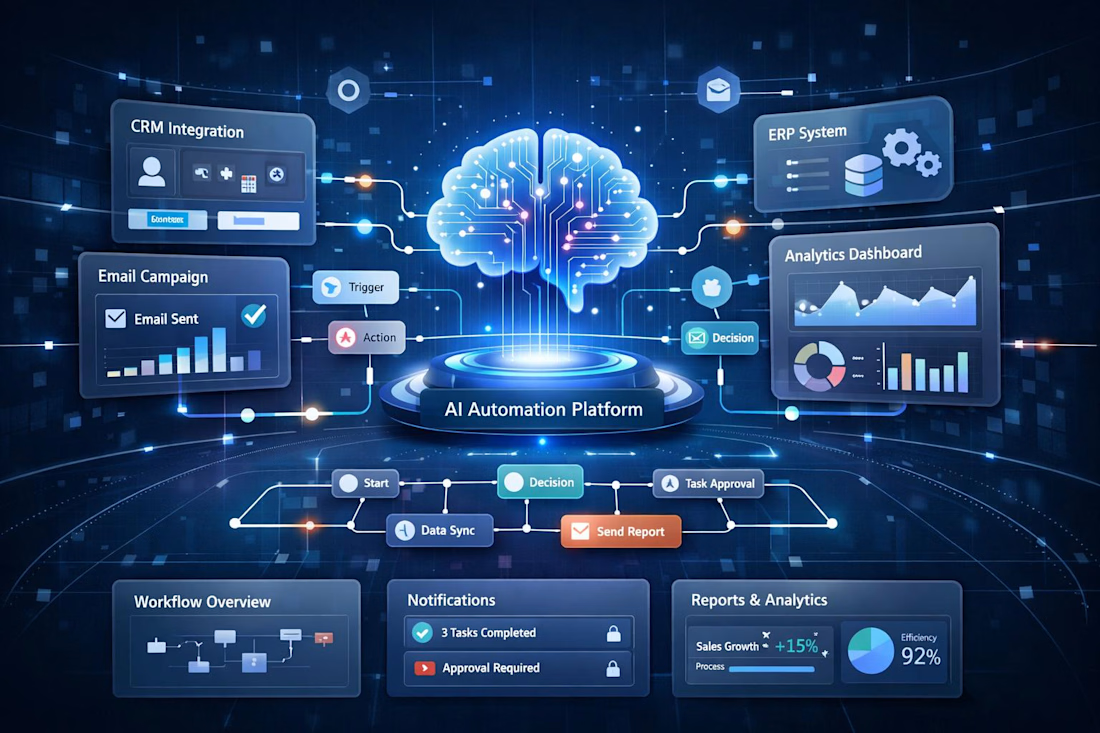
CRM & ERP Integrations — Connect business platforms, databases, and third-party services through APIs.
Workflow Automation — Eliminate repetitive processes with intelligent automation.
Custom Dashboards — Turn scattered business data into actionable insights.
Data Pipelines — Build reliable systems for collecting, processing, validating, and synchronizing data.
AI-Powered Solutions — Integrate LLMs, intelligent agents, and automation into existing workflows.
Custom Software — Build complete web applications and business platforms from architecture to deployment.
I've independently developed complex digital platforms, including government-level systems, international applications, and AI-powered products.
My approach is simple:
Understand the business problem. Design the right architecture. Build the complete solution. Make it reliable.
I'm interested in working with founders, agencies, and businesses looking to modernize their operations and build software that actually solves problems.
Have a complex workflow or an integration challenge? Let's build something that works.
#FullStackDevelopment #AIAutomation #CRMIntegration #WorkflowAutomation #SoftwareEngineering #AIEngineering #Contra

When a CRM-to-database sync fails halfway, how do you handle it: idempotent retries, or a reconciliation pass afterward? That's usually where integrations start to drift.