The network for creativity
Join 1.25M professional creatives like you
Connect with clients, get discovered, and run your business 100% commission-free
Creatives on Contra have earned over $150M and we are just getting started
Back to feedPost

Michael Burry just compared the AI market to the final months of the dot-com bubble.
He might be wrong on timing.
He's not wrong on what comes next.
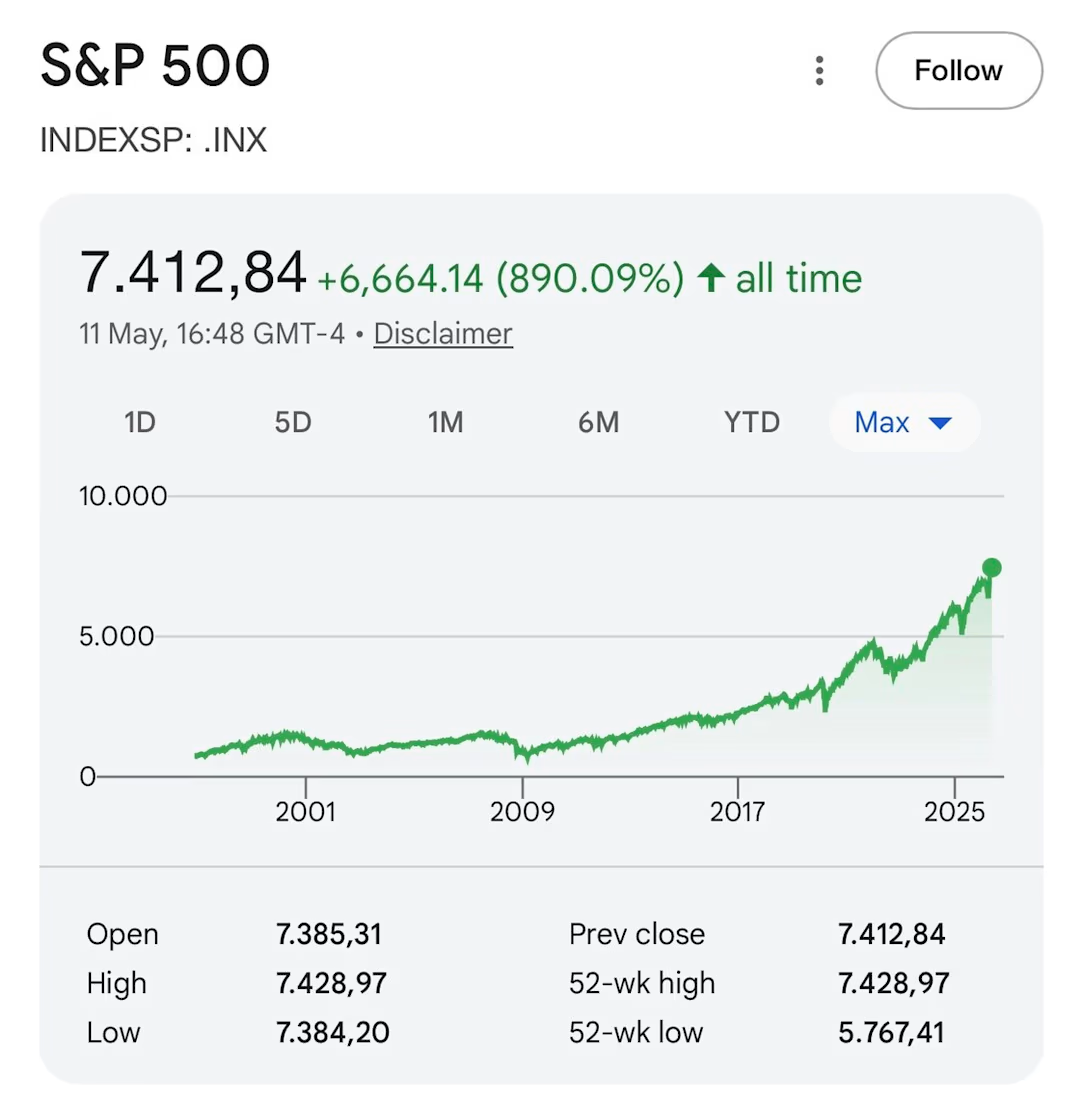
S&P 500 at 7,398. Nvidia at $5T. OpenAI committed $1.4T in spending against $13B in revenue.
When the 2000 bubble burst, two types of companies survived:
Those with real products solving real problems. (Amazon. Google.)
Those with brands their customers wouldn't abandon.
Everything else died.
In 2026, founders are pouring capital into the AI layer of their product. Wrappers. APIs. "AI-first" rebrands. Glossy demos.
Almost nobody is investing in the things that actually survived the last crash:
Product depth. Brand equity. UX. Customer trust.
When this corrects — and history says it will — the companies still standing won't be the ones with the slickest AI demo.
They'll be the ones whose users still open the app on day 60.
The ones whose brand earned a benefit of the doubt.
The ones whose experience felt like a tool, not a trick.
If your roadmap is 80% AI features and 20% product fundamentals, you're not building for the future.
You're building for the next bubble.
Founders — what's your ratio?
The network for creativity
Join 1.25M professional creatives like you
Connect with clients, get discovered, and run your business 100% commission-free
Creatives on Contra have earned over $150M and we are just getting started

Challenges
View all


Related posts

Hi, I’m Timur 👋
I help US small businesses get more leads and stop losing the ones they already have. I’ve run paid ads and SEO since 2016, and now I build AI automations on top of that.
What you can book from me here:
• Google Ads and Meta Ads setup or monthly management
• Local SEO, technical SEO and GEO (getting cited by ChatGPT and Perplexity)
• Landing pages and WordPress sites
• n8n automations: missed-call text back, review requests, CRM routing
• AI agents for business operations
Fixed-price packages and hourly work, quick replies, no long sales calls.
Tell me your goal and your current setup, and I’ll reply with a concrete first step. Looking forward to working with you.

I find the missed call text back workflow to be the highest ROI automation for local services. It recovers revenue from high intent users who are likely to call a competitor if they get voicemail.

About the total cloning effect in venture fundraising right now.
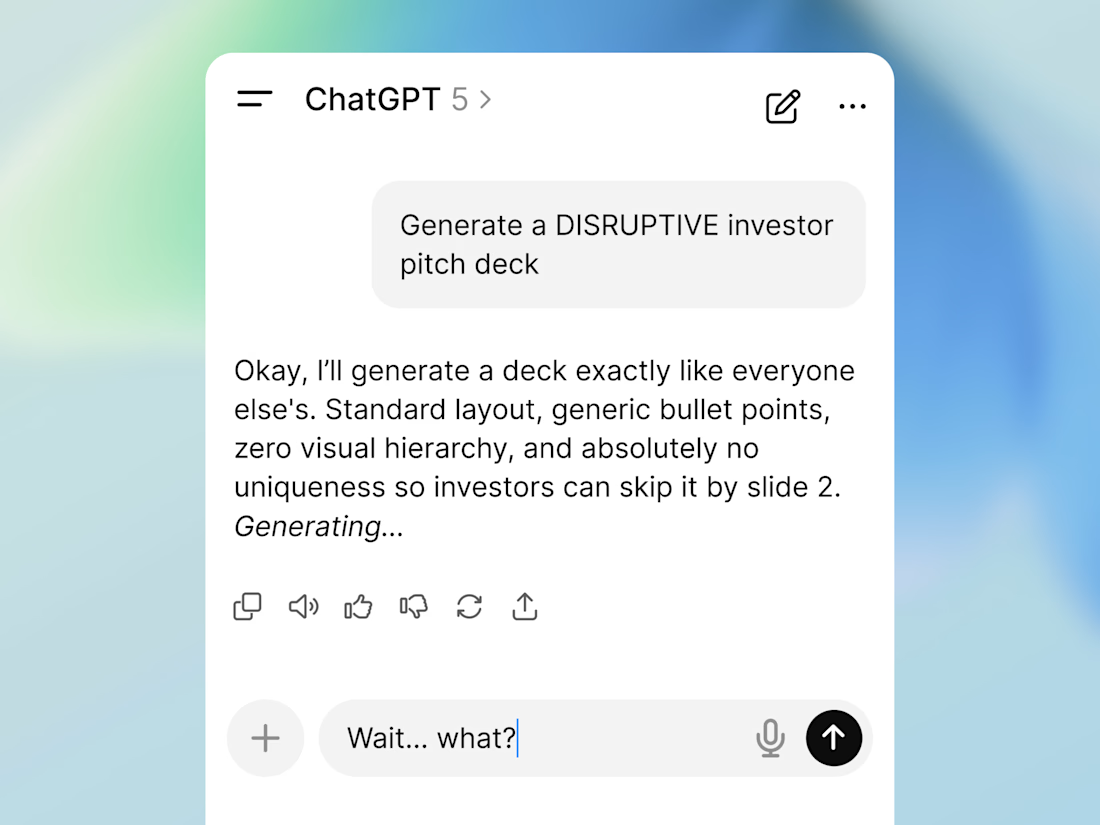
Every founder suddenly thinks outsourcing their pitch deck to AI generators is some massive life hack. The reality is that the market is now flooded with absolute visual clones.
Put yourself in an investor's shoes. You open your inbox and see the exact same highly innovative template 50 times a week... The exact same gradients, the perfectly generic structure, the hollow phrasing. When your startup looks perfectly standard, you become completely invisible.
This is where the 3 second rule hits hard.
If your slide looks like it was generated with zero effort in 3 seconds, investors subconsciously project that cheapness right onto your product and your daily operations. You could be building the most complex tech company in your sector. It does not matter. Cheap packaging destroys trust before anyone even bothers to read your financial metrics.
Breaking the mold is no longer about generating a fancy space background. It is about strict engineering discipline in your commercial narrative.
Architecture beats generation. Anyone can build a deck fast and cheap today, which is exactly why it is worth absolutely nothing.
Microsoft PowerPointPresentation DesignpresentationtemplateInfographic DesignPitch Deck DesignerFigmaGoogle Slides



CVector: Brand System for Industrial AI

