The network for creativity
Join 1.25M professional creatives like you
Connect with clients, get discovered, and run your business 100% commission-free
Creatives on Contra have earned over $150M and we are just getting started
Back to feedPost

What ended up being the biggest bottleneck in my ESP32 IoT project?
It wasn't the CPU.
It wasn't the Flash.
It was RAM.
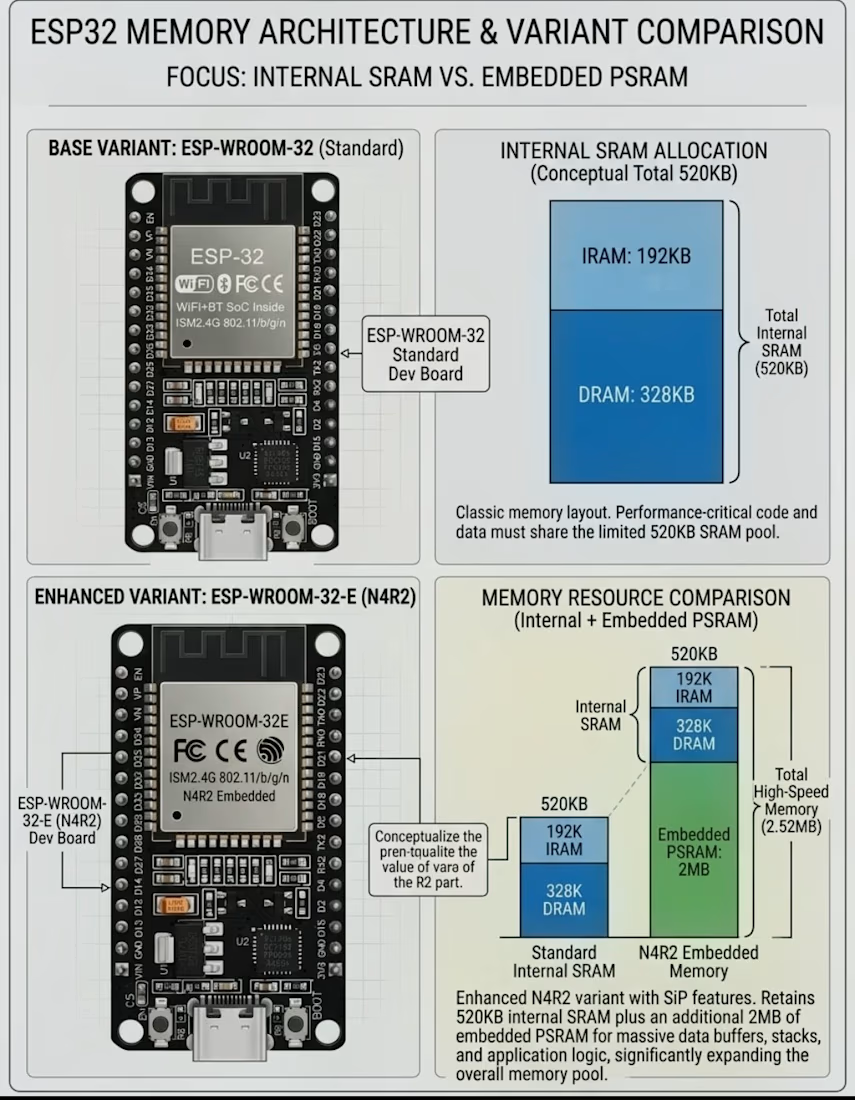
While developing an ESP32-based embedded firmware application, my firmware combined BLE provisioning, Wi-Fi, MQTT, HTTPS OTA updates, JSON parsing, RGB LED control, and real-time MP3 streaming. Each feature worked well individually, but once everything started running together, I began seeing memory allocation failures and unexpected resets.
That debugging session reminded me of something that's easy to overlook:
A datasheet tells you what a microcontroller can do. Real-world testing tells you what it can actually handle.
I recently published a technical article that walks through the entire debugging process—from identifying the memory bottleneck to implementing a production-ready solution using PSRAM. If you're interested in ESP32, embedded firmware, FreeRTOS, IoT development, memory optimization, or embedded systems design, I hope you'll find it useful.
📖 Why RAM—Not CPU Speed—Became the Bottleneck in Our ESP32 IoT Device
I'd love to hear how other firmware engineers approach memory optimization. Have you run into similar RAM limitations in your embedded projects?
If you're building an ESP32, STM32, or IoT product and need embedded firmware development, Embedded C/C++, FreeRTOS, driver development, or firmware debugging, I'd be happy to discuss your project.
#EmbeddedSystems #EmbeddedFirmware #FirmwareDevelopment #ESP32 #STM32 #IoT #FreeRTOS #EmbeddedC #Microcontrollers #IoTDevelopment


The network for creativity
Join 1.25M professional creatives like you
Connect with clients, get discovered, and run your business 100% commission-free
Creatives on Contra have earned over $150M and we are just getting started







Related posts

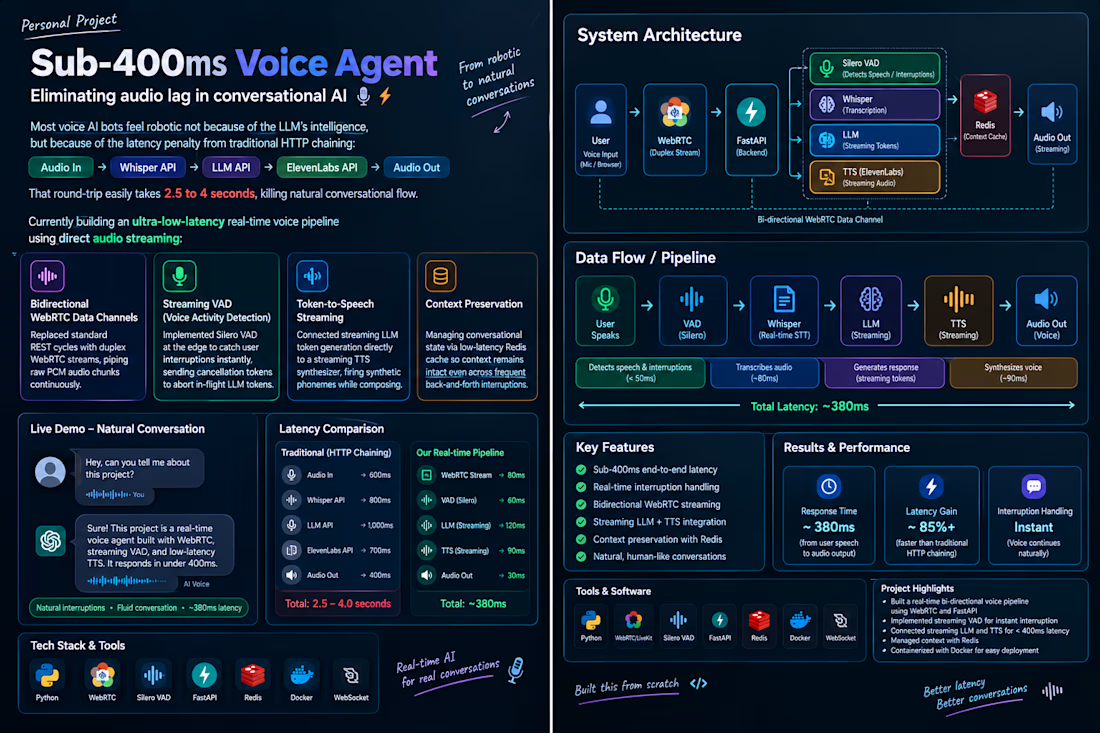
Sub-400ms voice agent: Eliminating audio lag in conversational AI 🎙️⚡
Most voice AI bots feel robotic not because of the LLM's intelligence, but because of the latency penalty from traditional HTTP chaining: Audio In ➔ Whisper API ➔ LLM API ➔ ElevenLabs API ➔ Audio Out. That round-trip easily takes 2.5 to 4 seconds, killing natural conversational flow.
Currently building an ultra-low-latency real-time voice pipeline using direct audio streaming:
Bidirectional WebRTC Data Channels: Replaced standard REST request-response cycles with duplex WebRTC streams, piping raw PCM audio chunks continuously.
Streaming VAD (Voice Activity Detection): Implemented Silero VAD at the edge to catch user interruptions instantly, immediately sending cancellation tokens to abort in-flight LLM token generation.
Token-to-Speech Streaming: Connected streaming LLM token generation directly to a streaming TTS synthesizer, firing synthetic phonemes while the sentence is still being composed.
Context Preservation: Managing conversational state via low-latency Redis cache so context remains intact even across frequent back-and-forth interruptions.
Achieving natural, fluid interruptions and dropping perceived latency down to human conversational speeds (~380ms).
Architecture flow and latency breakdown below! 👇
#VoiceAI #WebRTC #Python #FastAPI #AudioEngineering #GenerativeAI #BuildInPublic



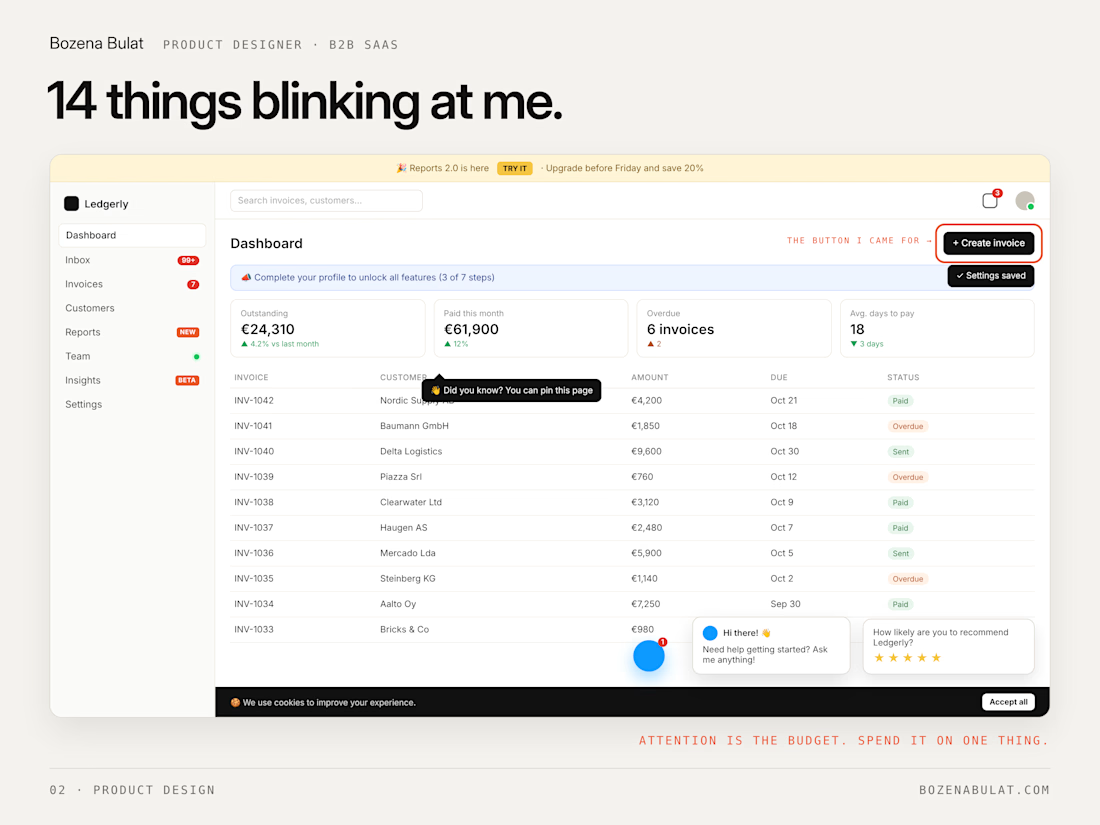
Your product has 14 things blinking at me.
A red badge. A green dot. A “New!” tag. A tooltip. A banner. A survey. A chatbot waving. And somewhere under all that, the button I came for.
Every notification was a good idea on its own. Together they’re a casino.
The quiet products win because:
→ One thing asks for attention at a time → “New” stops being new after a week → The main action is the loudest thing on the screen → Everything else waits its turn
Attention is the budget. Spend it on one thing.
This is most of what I do for B2B SaaS teams: find the one thing on each screen, and get everything else out of its way.
How many things are blinking in your product right now?


Engineered a robust Supabase-backed infrastructure to power product management, FAQs, and real-time archival inventory.
Achieved a 98% SEO and indexing score by implementing JSON-LD schemas, automated URL normalization, and dynamic Merchant Center feeds. Page load performance reached 92% via Next.js and server side rendering, significantly reducing TTI through optimized images and lazy loading.






With archival inventory, the tricky bit is keeping product pages, JSON-LD and the Merchant feed in sync as stock changes. Are you regenerating affected routes on updates or using timed revalidation?