The network for creativity
Join 1.25M professional creatives like you
Connect with clients, get discovered, and run your business 100% commission-free
Creatives on Contra have earned over $150M and we are just getting started
Back to feedPost


Sanity builders in Contra 📢
Sanity is hosting a small in-person Sanity Pioneers event in San Francisco on March 19 focused on building AI workflows with structured content.
It’s a hands-on session with Sanity engineers and builders working on real LLM + content workflows, not just talks.
If you’re using Sanity, experimenting with AI, or building with structured content, this is a great room to be in.
Sign up here!
https://luma.com/5nlzvaiu

luma.com
Sanity Pioneers: Building AI workflows with structured content · Luma
The Sanity Pioneers Program brings together operators and builders shaping the future of content operations — an intimate group of practitioners sharing…
The network for creativity
Join 1.25M professional creatives like you
Connect with clients, get discovered, and run your business 100% commission-free
Creatives on Contra have earned over $150M and we are just getting started





Related posts

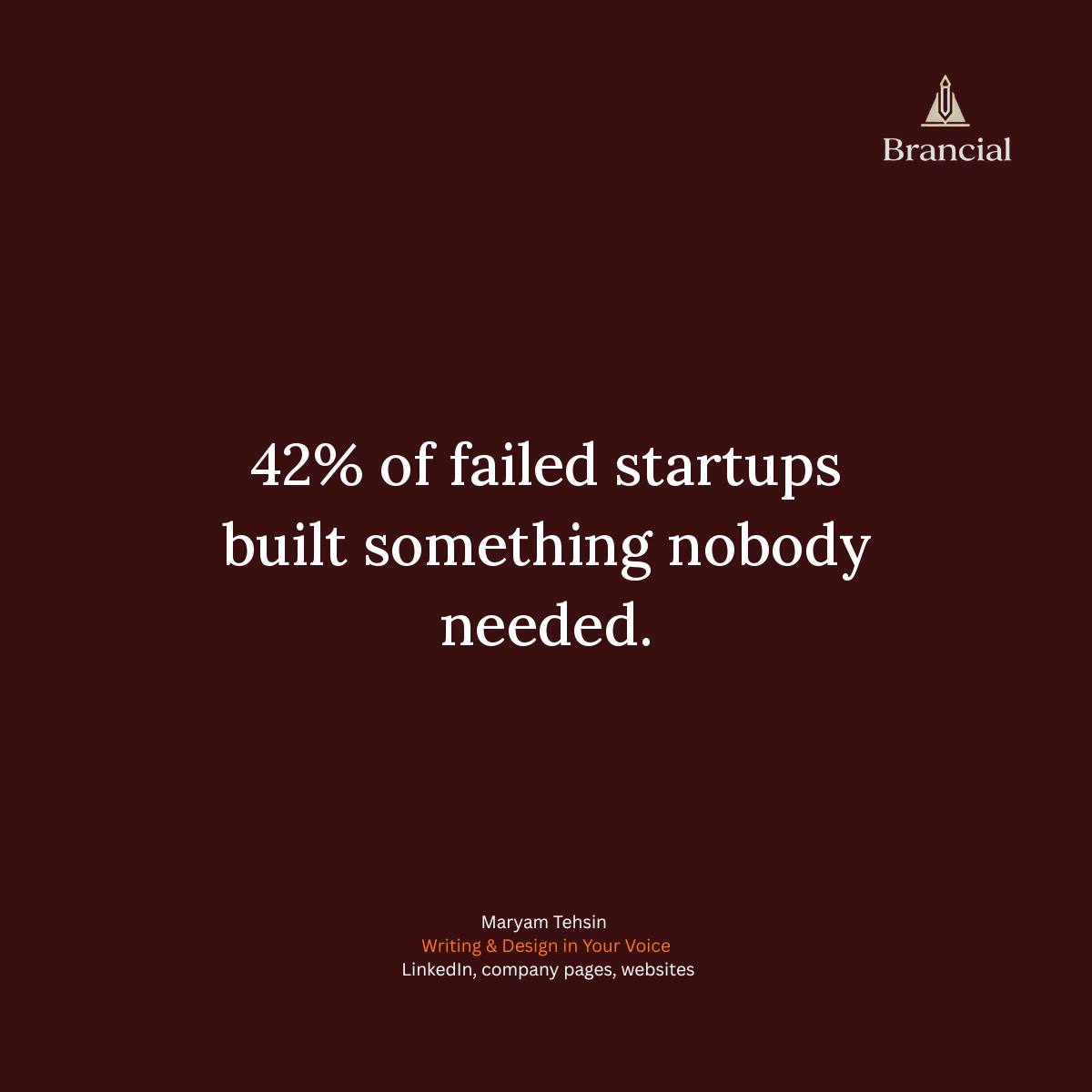
42% of failed startups built something nobody needed.
That is from one CB Insights analysis of 101 founder post-mortems.
Not bad code. Not bad luck. Nobody needed it.
If you are building an AI product...this is the cheapest fix you will ever make...
Ask these 5 questions BEFORE you build...
1. Who exactly has this problem?
Everyone is not an answer. Name a job title.
2. How are they solving it today?
If they are not solving it at all, it may not hurt enough.
3. What does it cost them?
Hours, money or missed deals. Get a number.
4. Would they pay for a fix this month?
Ask for a pre-order or a pilot, not a compliment.
5. Who have you talked to this week?
Aim for 5 real conversations before writing a line of code.
Copy-paste prompt to prepare your interviews:
I am building [product] for [job title]. Write 10 customer interview questions that uncover how they solve [problem] today, what it costs them, and what they have already paid for. No leading questions.
Compliments do not validate a product.
Payments and pilots do.
Save this before your next build sprint.
Follow me to meet again
Daily learn with me (Maryam Tehsin)


Such an important reminder! 👏 It's easy to focus on building a product, but understanding the customer's real problem should always come first. Real feedback is worth more than compliments!

Northbound🚀: Studio Autopilot
An AI-powered client pipeline for creative studios, wrapped in a hand-built 3D world. A brief comes in, gets scored and routed, becomes a priced proposal, is accepted online and turns into a running project, with no one chasing emails.
Every studio knows the feeling: a new brief lands and the clock starts. Then come hours of reading, qualifying, writing proposals, chasing replies and setting up the project. Northbound turns that whole journey into one automated flow, so a small studio can respond like a big one.
The problem: Creative studios lose their best hours to admin. Strong leads wait days for a proposal, weak ones eat the same time as good ones, and follow-ups slip through the cracks. The work that wins clients is the work nobody has time for.
The solution:
- AI brief scoring and routing. Every brief is read for budget, timeline, goals and fit, then routed one of three ways: fast track, a quick human review, or an honest, helpful decline with pointers.
- Tailored proposals in about a minute. Strong fits get a scoped proposal with workstreams, a realistic timeline and three priced packages.
- Online acceptance and kickoff booking. Clients pick a package, accept online and book their kickoff call on the spot.
- A project that runs itself. Milestones are planned on acceptance, and follow-ups and reminders go out automatically.
- A morning digest. Every day at 08:00 the studio owner gets a summary of new briefs, proposals awaiting review, clients who haven’t replied, and what’s due.
- An owner dashboard showing pipeline, win rate and hours saved, plus a review queue to approve held proposals in one click.
- A live demo console where anyone can send a sample brief through the real pipeline and watch each step happen.


The morning digest is my favorite part here. When inquiries, proposals and deadlines are all in one place, you don't have to start the day searching through conversations. I'd just put the items that need an owner's decision today at the top.

Insane work with branding and AI!


One prompt → a whole store. We designed what that should feel like 😉🛒✨
WithNation is an AI platform that builds and runs your online store for you.
⚡ We went bold: oversized type, editorial product shots and a product wall that counts up to 2000+ items as you watch.
What do you think of the concept?
Rate it 1-10 👇