The network for creativity
Join 1.25M professional creatives like you
Connect with clients, get discovered, and run your business 100% commission-free
Creatives on Contra have earned over $150M and we are just getting started
Back to feedPost

Most OET Writing letters I mark don't lose their B on grammar. They lose it on selection.
Candidates copy too much from the case notes. The reader is a busy colleague who needs one thing: what to do next for this patient. Every line that doesn't serve that request costs marks on Purpose and Content.
Before I look at language, I run three checks on every letter:
1. Can the reader find the request in the opening paragraph?
2. Does each case note you kept support that request?
3. Could the reader act on the letter without reading the full history?
I've published a free OET Medicine Writing mock: case notes, the task, a model letter, and notes on why each detail made the cut (and why the rest didn't).
Doctors and nurses preparing for OET: which part of the letter takes you longest to write?
The network for creativity
Join 1.25M professional creatives like you
Connect with clients, get discovered, and run your business 100% commission-free
Creatives on Contra have earned over $150M and we are just getting started




Related posts


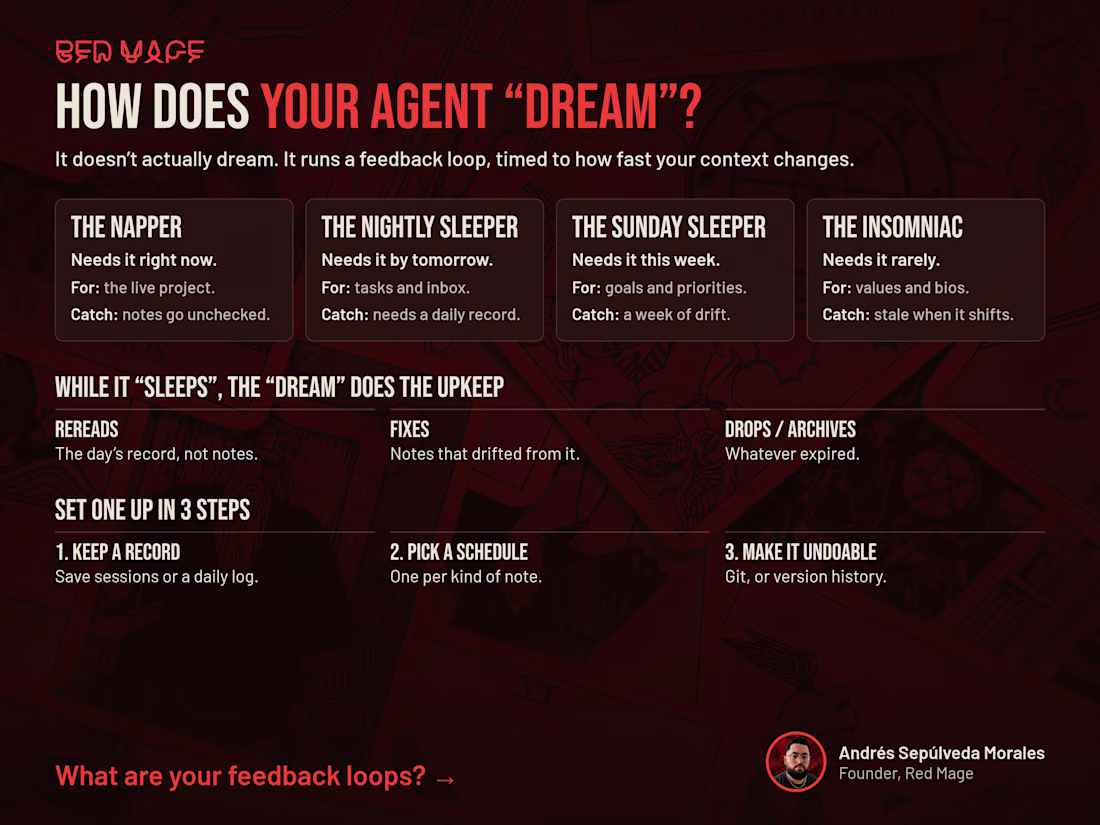
How does your agent "dream"?
Anthropic's "dreaming" is a feedback loop: between sessions, the agent rereads what happened, fixes notes that drifted, and archives what expired.
My instructions file had grown to 441 lines, with three contest deadlines in it that had already passed. Now a pass runs at 3am to catch everything I usually miss.
Not everything needs a nightly pass. Match the schedule to how fast the context changes. Your wallet and token budget will thank you for it.
What are your feedback loops?


Content Writer vs. Copywriter: What's the Difference?
People often use these two terms interchangeably, but they serve different purposes.
Both involve writing, but the goal behind the writing is different.
1. Content Writer ✍️
A content writer creates useful and informative content to educate readers, answer questions and build trust.
Examples:
Blog posts and articles
Website guides
Educational social media posts
Informative newsletters
Main goal: Give readers valuable information.
2. Copywriter 📝
A copywriter writes words that encourage people to take action. That action could be buying a product, signing up for a service or contacting a business.
Examples:
Product descriptions
Website sales pages
Advertising captions
Email marketing campaigns
Promotional content
Main goal: Encourage readers to take action.
Let's understand with one example.
Imagine a skincare brand launching a new moisturiser.
A content writer might write:
"5 Benefits of Using a Moisturiser Every Day"
A copywriter might write:
"Give Your Skin the Care It Deserves. Try Our New Moisturiser Today!"
See the difference?
One focuses on informing the audience, while the other focuses on encouraging a decision.
Can someone do both?
Absolutely!
Businesses need both types of writing. Content helps people understand a brand, while copy helps turn interest into action.
The takeaway: Good content builds trust. Good copy encourages action. And both can help a business grow.



The dark brown serif title on the peach card with a pink frame is easy to read, and the two small icons set up the comparison well. Do the next slides show the two example texts side by side?

My MS monogram passes because the M and S lock together. You can't unsee the shape, even in black and white.
Try it on yours today. What did people remember?
Drop your initials 👇 I'll do the 3-second test on yours.