The network for creativity
Join 1.25M professional creatives like you
Connect with clients, get discovered, and run your business 100% commission-free
Creatives on Contra have earned over $150M and we are just getting started
Back to feedPost

Title:
Research Data Coding & Analysis Preparation for SPSS – Survey Data
Description:
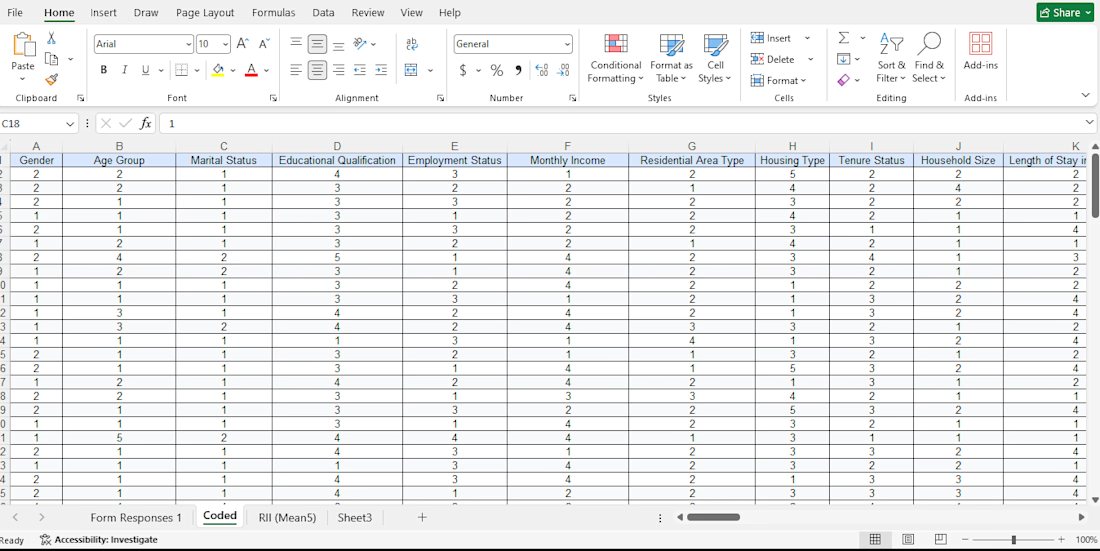
Challenge: Client had raw survey responses (Form Responses 1) that needed to be coded numerically for SPSS analysis.
What I did:
Transformed raw qualitative survey responses into coded quantitative data (1,2,3,4)
Coded variables: Gender, Age Group, Marital Status, Education, Employment, Income, Housing, etc.
Created structured sheets: Form Responses 1 (raw) → Coded (clean) → RII Mean Calculation
Ensured consistency, no missing values, and SPSS-ready format
Prepared data for statistical analysis (Relative Importance Index)
Result: Delivered a clean, coded dataset ready for immediate SPSS import and analysis. Client was able to run their project analysis without extra cleaning.
Note: Sample structure shown only. Actual survey content and respondent details are confidential.


The network for creativity
Join 1.25M professional creatives like you
Connect with clients, get discovered, and run your business 100% commission-free
Creatives on Contra have earned over $150M and we are just getting started





Related posts

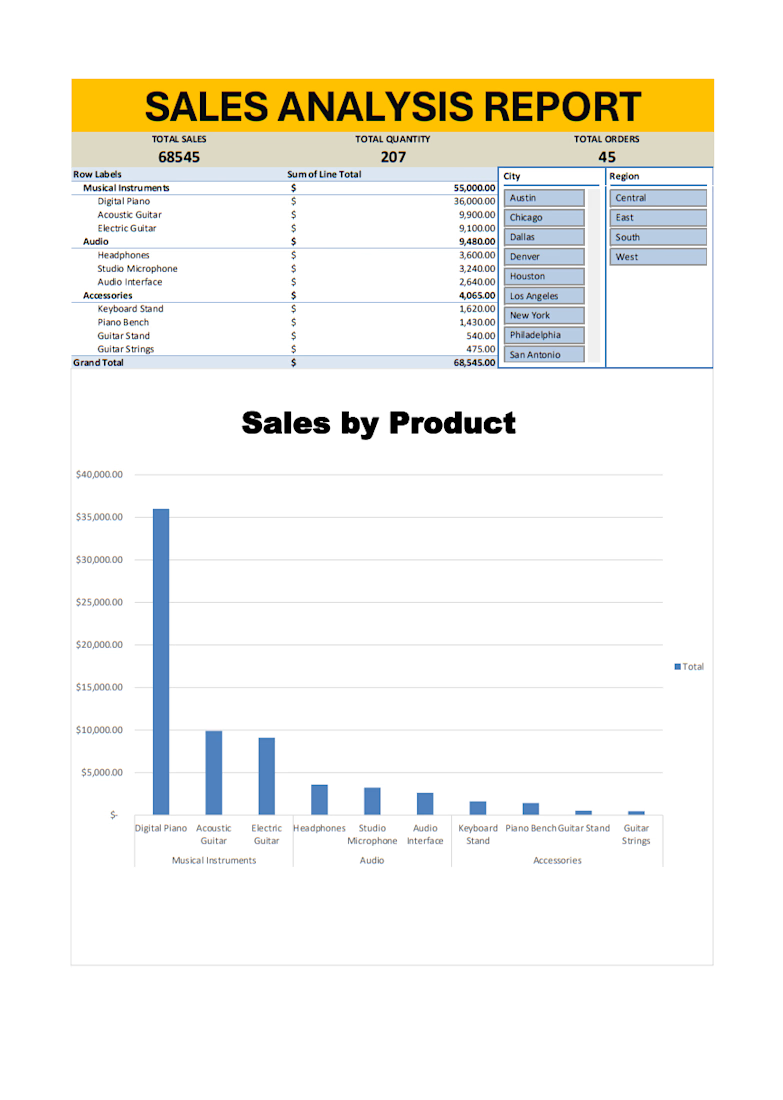

I Created Microsoft Power BI Dashboard By using many of the Tools
🚀 Data Modelling
🧠 Data Visualization
🚀 Group By
🧠 Data Cleaning

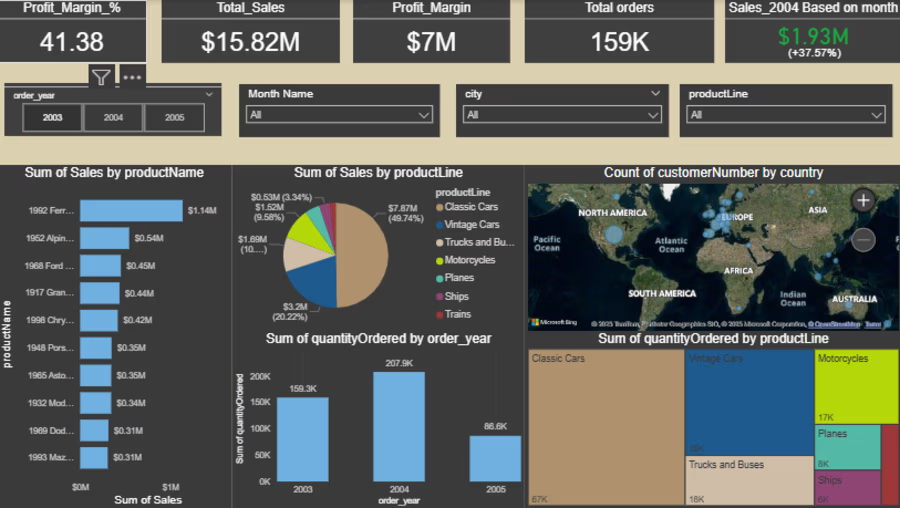


What if anyone on your team could ask your data a question and get a live dashboard back in under a minute?
That was the brief. Business users were locked out of their own data. Every question waited on someone who could write SQL, data sat across disconnected systems, and security teams refused to send sensitive records to third-party AI tools.
So we flipped the model. Instead of moving enterprise data to an AI product, we moved the AI analytics product into the customer's AWS account.
What we built:
• Natural-language querying that turns plain-English questions into governed dashboards in under 60 seconds
• Federated queries across SQL and NoSQL sources through Trino
• AI query generation on AWS Bedrock Agents, with Bedrock Guardrails keeping model output in bounds
• Dashboards generated with Apache Superset, plus proactive anomaly and trend alerts
• A white-label React widget that embeds in any product
• Role-based access, row-level security and enterprise SSO enforced at every layer
The result:
Zero data egress. The whole platform deploys inside the customer's VPC and is live on AWS Marketplace.
Building AI features for a data-heavy or regulated product? Let's talk about doing it without your data leaving your cloud.
