The network for creativity
Join 1.25M professional creatives like you
Connect with clients, get discovered, and run your business 100% commission-free
Creatives on Contra have earned over $150M and we are just getting started
Back to feedPost

I built an OSINT bot for counterparty due diligence, and it nearly defamed a real company on its first serious run.
The idea is simple. Feed it a company name, it pulls from open sources (corporate registries, Companies House, GLEIF, sanctions and PEP lists, WHOIS, social profiles) and spits out a report: risk score, red flags, a timeline, and a PASS / REVIEW / FAIL call.
I tested it on a real target. Came back MEDIUM to HIGH risk. Scary timeline, several red flags, looked solid.
Then I checked what the score was actually resting on.
Almost all of it came from one thing: a real court ruling about some business in the same county. Real case, real verdict. The problem was that the company I was checking wasn't named in that source at all. The bot connected the two because they sat in the same area, around the same time, in the same industry. That was enough for it to drop someone else's scandal into this company's file.
What surprised me is that the real danger in OSINT isn't fabricated information at all. It's accurate information attached to the wrong company. Whether an event actually happened tells you nothing about whether the link to your target is real. And letting the model "just work it out" isn't a design choice, it's you gambling with legal exposure.
So I rebuilt the logic.
Every link now gets tagged CONFIRMED, PROBABLE or UNVERIFIED. CONFIRMED means the target is named directly in a primary source, or at least two independent strong identifiers line up (registration number, full street address, a named director or owner).
Only CONFIRMED evidence can move the risk score or show up as a red flag. Everything weaker goes into a separate "unverified adjacent signals" box, tagged with which weak signal caused the guess and the one identifier that would settle it. That box has zero effect on the verdict.
Not finding a company in a registry is now a data gap, not a red flag. Plenty of businesses trade under a different entity or as sole traders.
And on top of all that, a guard step: if any red flag comes through as anything other than CONFIRMED, the whole report build fails. The scoring can no longer take the model's word for it.
None of this is exciting to build, but it's the part that matters. Automating due diligence isn't really about a model reaching conclusions for you. Most of the actual work is writing evidence rules that the code enforces whether the model likes it or not. A hedge buried in a paragraph won't protect you. If an unverified signal can shift the verdict even slightly, sooner or later it will smear the wrong company on its own.
This is going into Quantum Prism. Next job is writing test cases the validator is supposed to fail on, because a tool that checks everyone else should survive being checked itself.
The network for creativity
Join 1.25M professional creatives like you
Connect with clients, get discovered, and run your business 100% commission-free
Creatives on Contra have earned over $150M and we are just getting started
Trending
retrofuturism
Share your favorite designs from the past exploring the distant future. Or your own take on the aesthetic 🚀
halftone
Dots. Texture. Grain. Let's see your designs using the halftone technique.

Midjourney
Creatives are showing off what they're making with Midjourney.
colorgrade
Video editors sound off: How do you enhance the mood of your video in color grading?
Related posts


What does AI get wrong when you hand it a real brief?
I gave Kittl's agentic AI a brief we'd already shipped at Formeta, retail packaging for Ella by Ellaya Health, an at-home device for a common pelvic health condition, sold over the counter in Indian pharmacies. Plain language, no steering.
Pass one: four directions, three of them straight to the wellness reflex, lotus marks and sunrise gradients. All four were front faces attached to no box.
Pass two, with panel requirements and regulatory copy, came back with a real dieline. Glue flaps, directions for use, batch and expiry fields. Structurally a genuine leap.
It was also the wrong product. Invented a manufacturing licence number, added a CE mark to something sold only in India, moved the client to a different city.
On direction, Kittl is legitimately useful and I'd use it again. But healthcare packaging is a compliance problem wearing a design problem's clothes, and the model has no way to know it doesn't know that.
Vague brief gets you pretty. Precise brief gets you PLAUSIBLE. Plausible is the more dangerous one, because a founder without a designer might send it to print.
Last slide is the box we built.
Where do you let AI take the first swing, and where do you refuse?

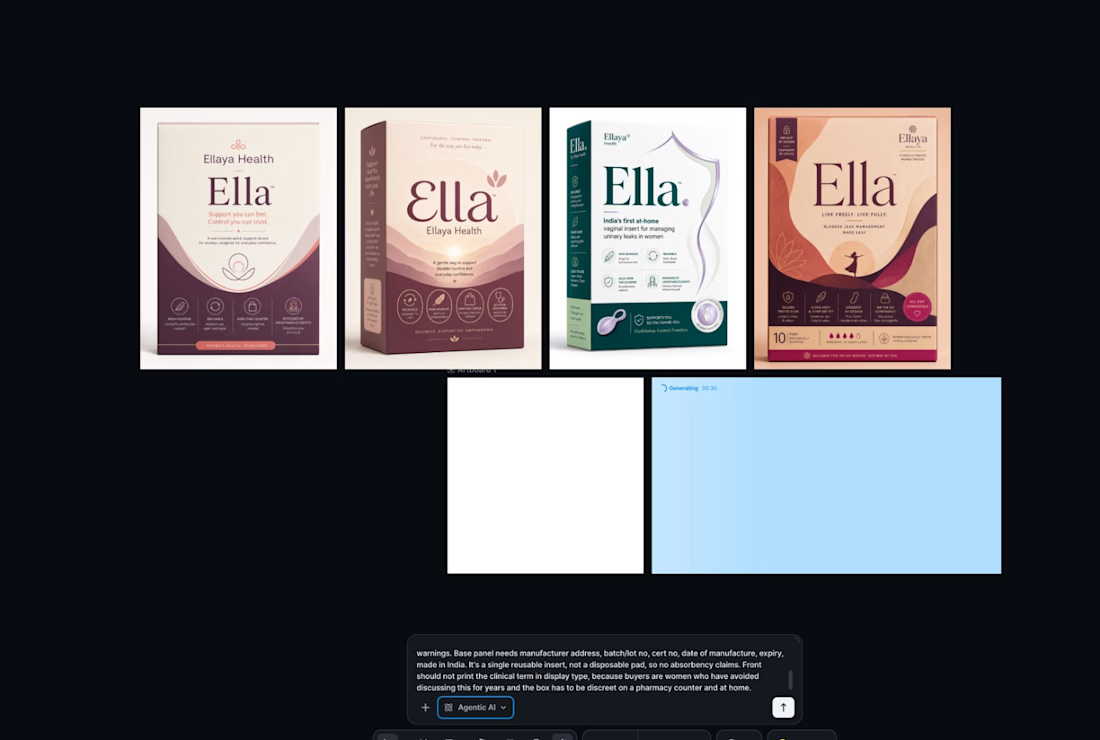
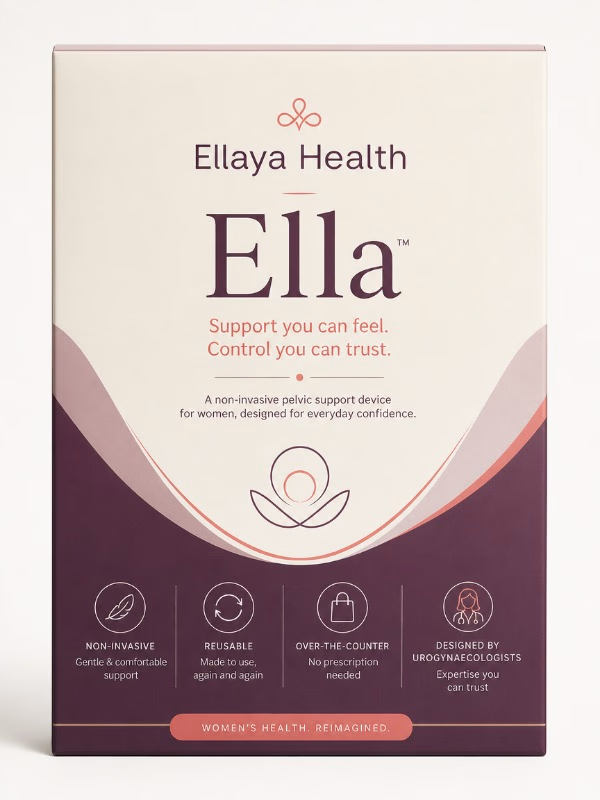
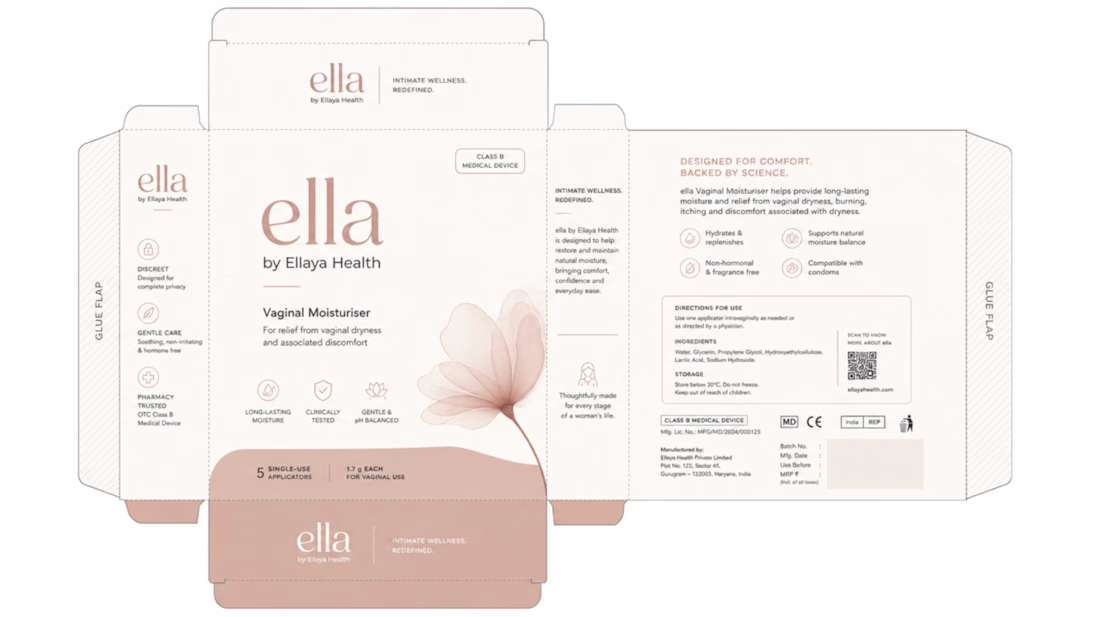
It was super fun to experiment using Kittl with @Ansh Jamdagni 🫶

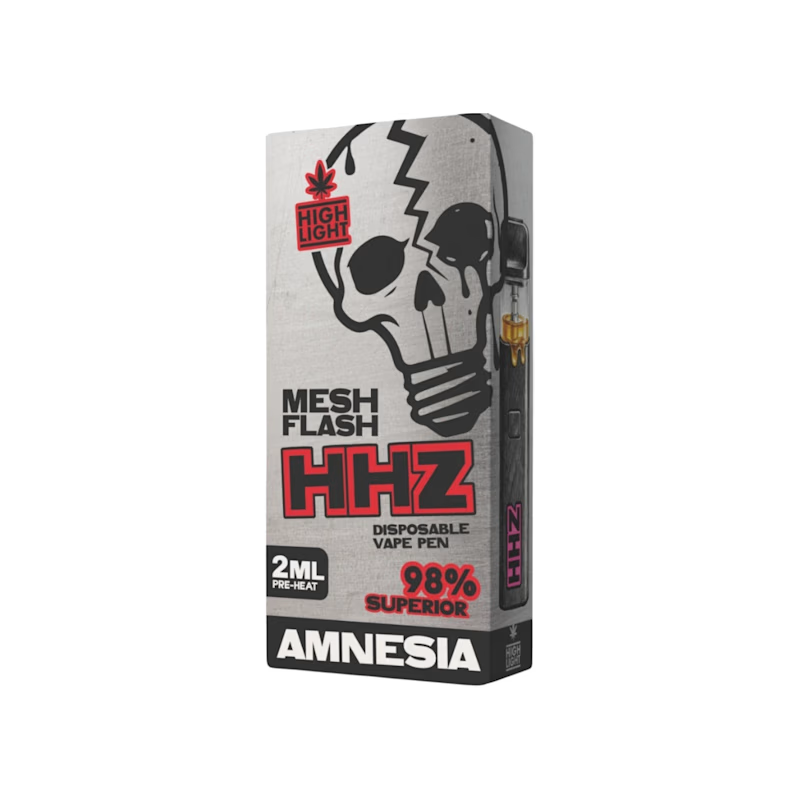
Before → After
Starting with an original product photo and turning it into a polished e-commerce visual through an AI-assisted workflow.
AI can speed up the production, but it doesn’t replace creative thinking. The creative direction behind the AI still matters; from composition, lighting, environment, and product placement to deciding what actually works for the brand.
These decisions come from human experience: everything we’ve learned, seen, and experienced, combined with our own creative taste and judgment. AI can execute the direction, but we’re still the ones defining it.
Original product photo → e-commerce-ready creative.
Faster production, without removing the human design decisions behind it.
0 voted
0%
1 voted
100%
1 vote
Closed


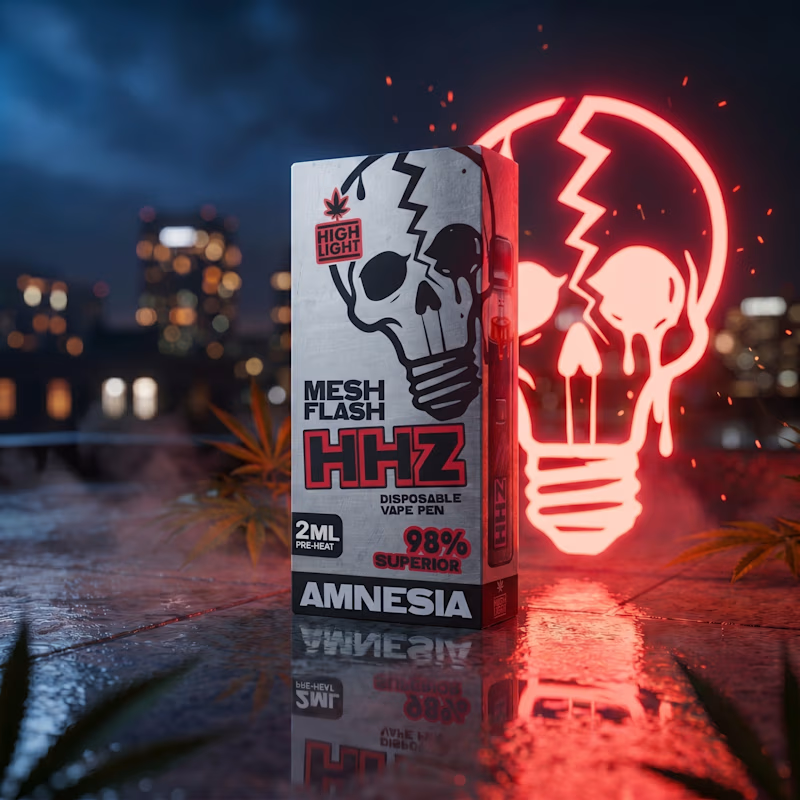
the red light makes the shot pop

Most development relationships end at the first deliverable. The handover costs the client weeks and the next developer starts from zero.
Neurosync needed someone who stayed — through one product, then the next, holding the context that never makes it into documentation.




The part nobody prices is the undocumented context — why the discount stacks in that order, which one client the odd VAT rule exists for, the migration you deliberately left half-finished. I've stayed with a few clients across three and four builds, and by the third one the...