The network for creativity
Join 1.25M professional creatives like you
Connect with clients, get discovered, and run your business 100% commission-free
Creatives on Contra have earned over $150M and we are just getting started
Back to feedPost

A pattern I use in AI-assisted operations: define the task and its boundaries, let the tool draft or analyze, require human review before consequential changes, then verify the result and document what happened.
This helps with Linux, Docker, and API workflows too. Automation is most useful when the next person can understand and maintain it.
Where do you put the human approval step in your own workflows?


The network for creativity
Join 1.25M professional creatives like you
Connect with clients, get discovered, and run your business 100% commission-free
Creatives on Contra have earned over $150M and we are just getting started





Related posts







A little sneak peek at what I’ve been working on!

"We can't afford a data analyst."
I've heard this from 3 different startups this year.
So I built one.
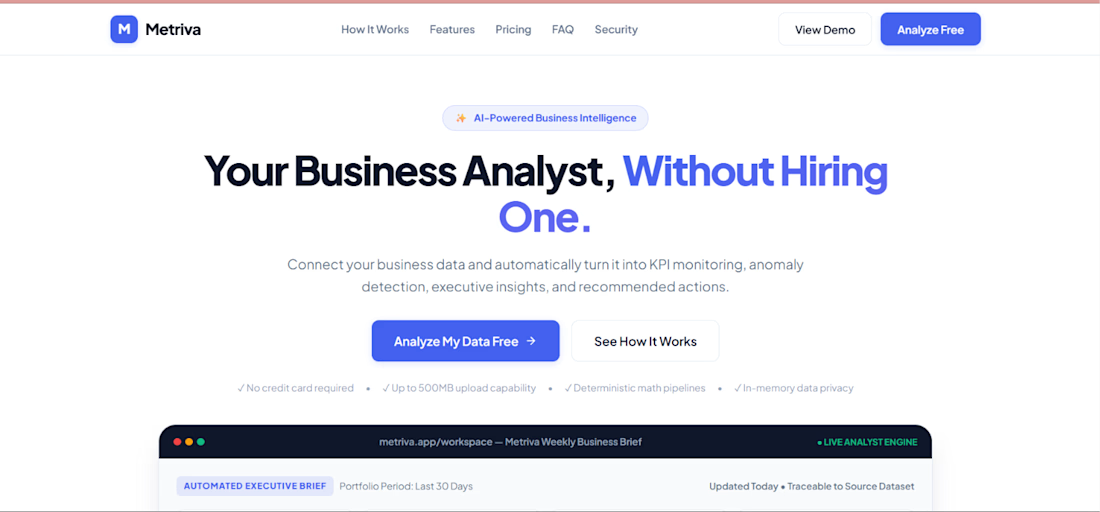
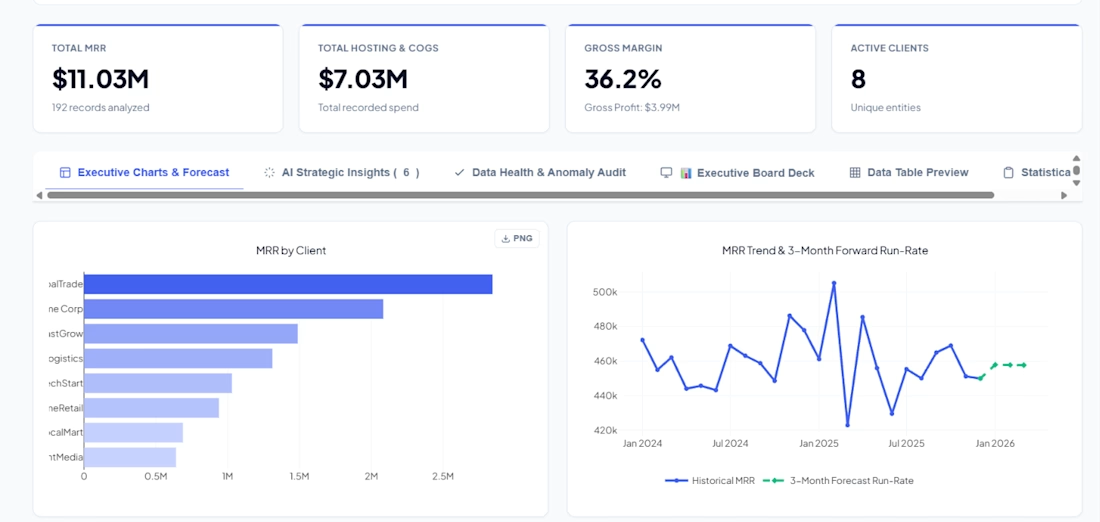
Metriva is an AI-powered business analyst that:
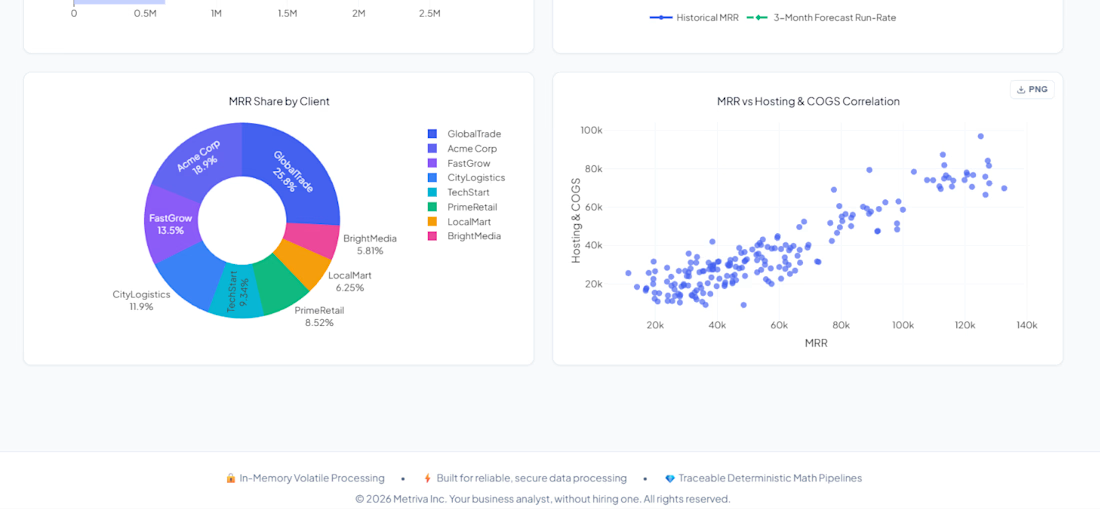
📊 Turns messy spreadsheets into executive dashboards
🧠 Writes C-level business briefs automatically
📈 Forecasts trends + detects anomalies
💬 Answers questions about your data in plain English
🎯 Finds your Pareto 80/20 — who drives 80% of your revenue?
No SQL. No Python. No data team.
Just upload your file and get answers.
Built with Flask, vanilla JS, and a lot of late nights.
🔗 Try it: metriva.ai1.vercel.app
#AI #BusinessIntelligence #Founder #IndieHacker #DataScience

The brief-writing piece is interesting — curious how you handle the validation step. AI-generated language tends to sound confident even when the underlying data is sparse or the trend is ambiguous. One pattern that helps: have the model output a confidence signal alongside the...

One thing I didn’t expect when building AI automations:
The hardest part isn’t getting the LLM to work. It’s handling everything around it.
A workflow can fail even when the model gives a good answer.
What if:
The LLM returns incomplete data?
An API times out?
The extracted information doesn't match the expected format?
That’s why I’ve started thinking about AI automation as a system, not just an LLM call.
The model is only one component.
Validation, retries, fallbacks, logging, and deterministic logic matter just as much.
A working AI demo isn't necessarily a reliable AI system.
What’s been the biggest reliability challenge in the AI workflows you’ve built?

One useful test is an API timeout after the receiving system has already created the record. A retry can look successful while quietly creating a duplicate.
I would separate read-only retries from actions that send, book or write. Give each intended action a stable identifier;...