The network for creativity
Join 1.25M professional creatives like you
Connect with clients, get discovered, and run your business 100% commission-free
Creatives on Contra have earned over $150M and we are just getting started
Back to feedPost

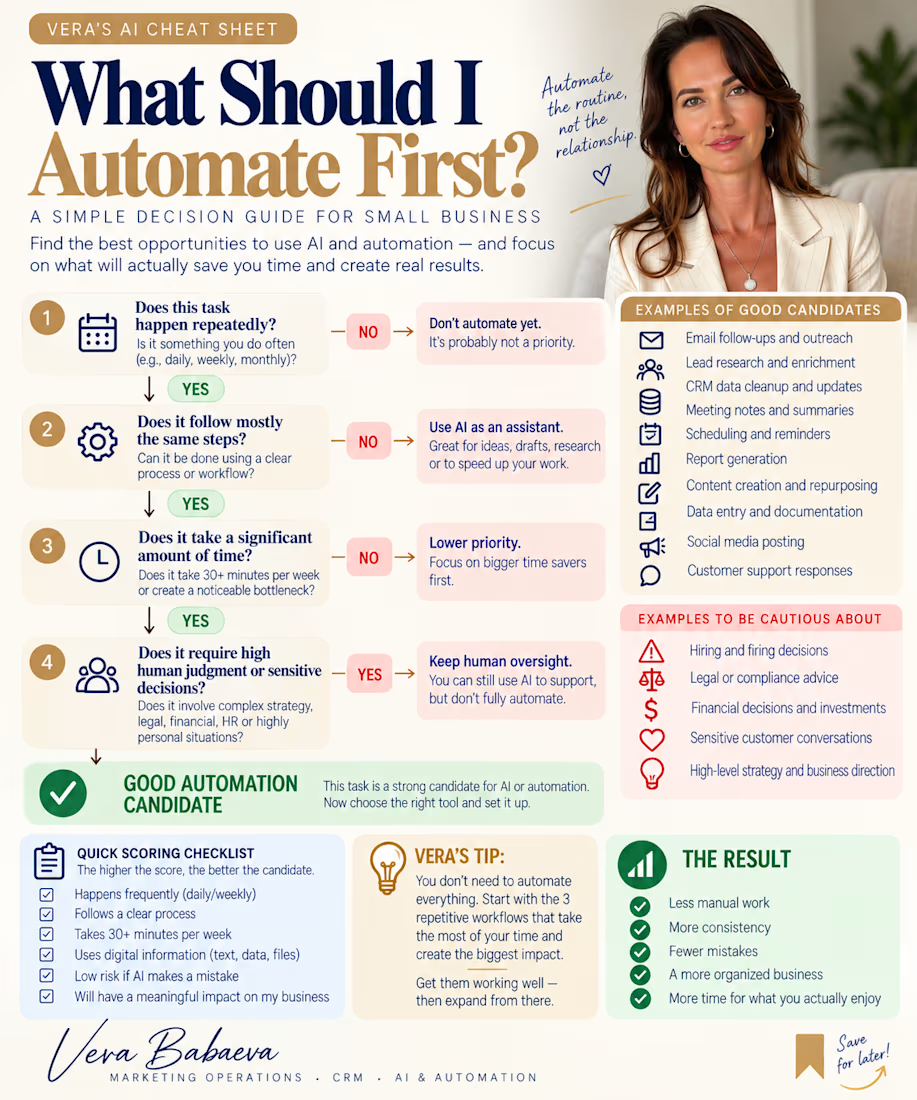
Commitments made in meetings used to live in three places: someone's notes, someone's inbox, and someone's memory.
So, I built one tracker. Every action item gets an owner, a due date, and the meeting it came from, captured before the room clears rather than reconstructed later. One weekly review pass. Automatic escalation at seven days past due.
The point wasn't the spreadsheet. It was that follow-through stopped being something people assumed and started being something you could see. illustrative recreation. No real records, agency or client.


The network for creativity
Join 1.25M professional creatives like you
Connect with clients, get discovered, and run your business 100% commission-free
Creatives on Contra have earned over $150M and we are just getting started





Related posts

Hey everyone! 👋
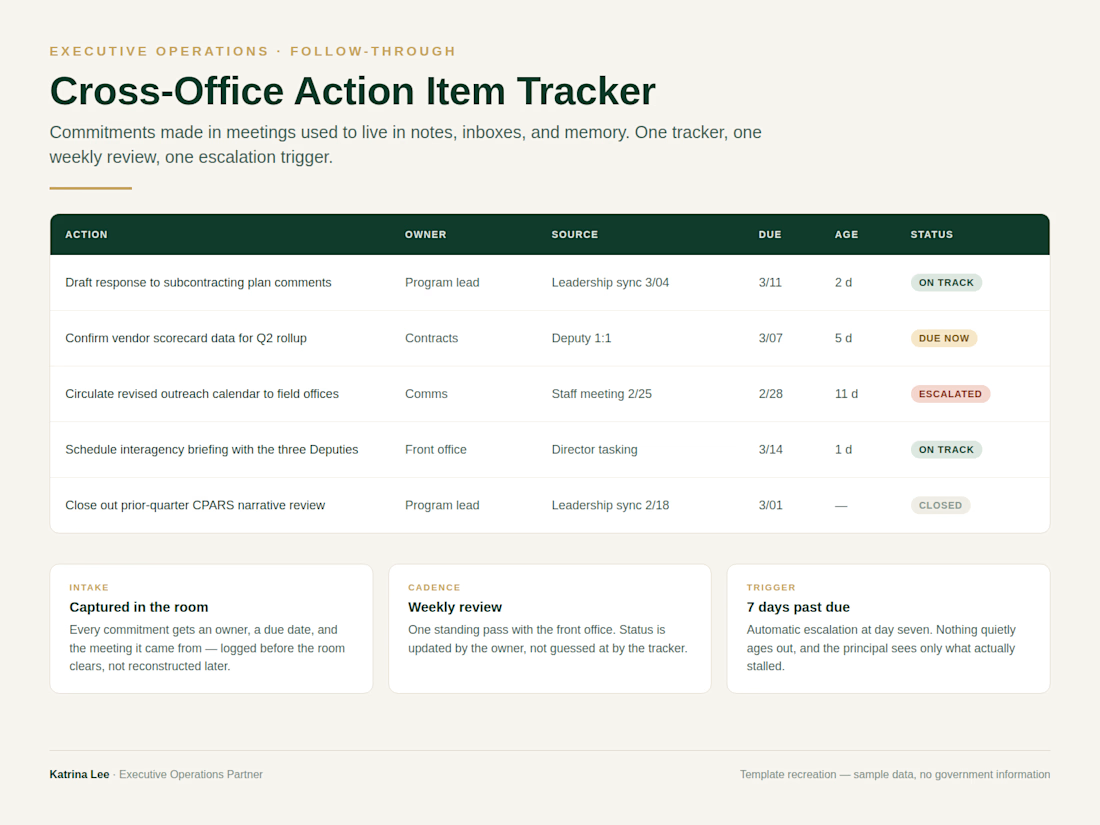
I built a Project Management Hub in Notion to run projects from brief to retrospective in one calm, minimalist workspace. It's for sale on Gumroad, but I'm sharing it for free with the Contra community.
It includes a guide, project brief, dashboard, weekly planner and review, plus 7 linked databases (tasks, phases, team, budget, risks and more). A sample project shows how everything connects.
It's for your personal use only, so please keep it within the Contra network.
Hope it helps! Let me know what you think 🙌


Love this!!

You probably don’t need more AI tools. You need the right AI stack.
One of the biggest mistakes I see businesses making with AI is collecting tools without building a system around them.
A new AI app appears → we try it.
Another one looks better → we subscribe.
A month later, we have 12 tools, 7 subscriptions… and half of them barely talk to each other. 😅
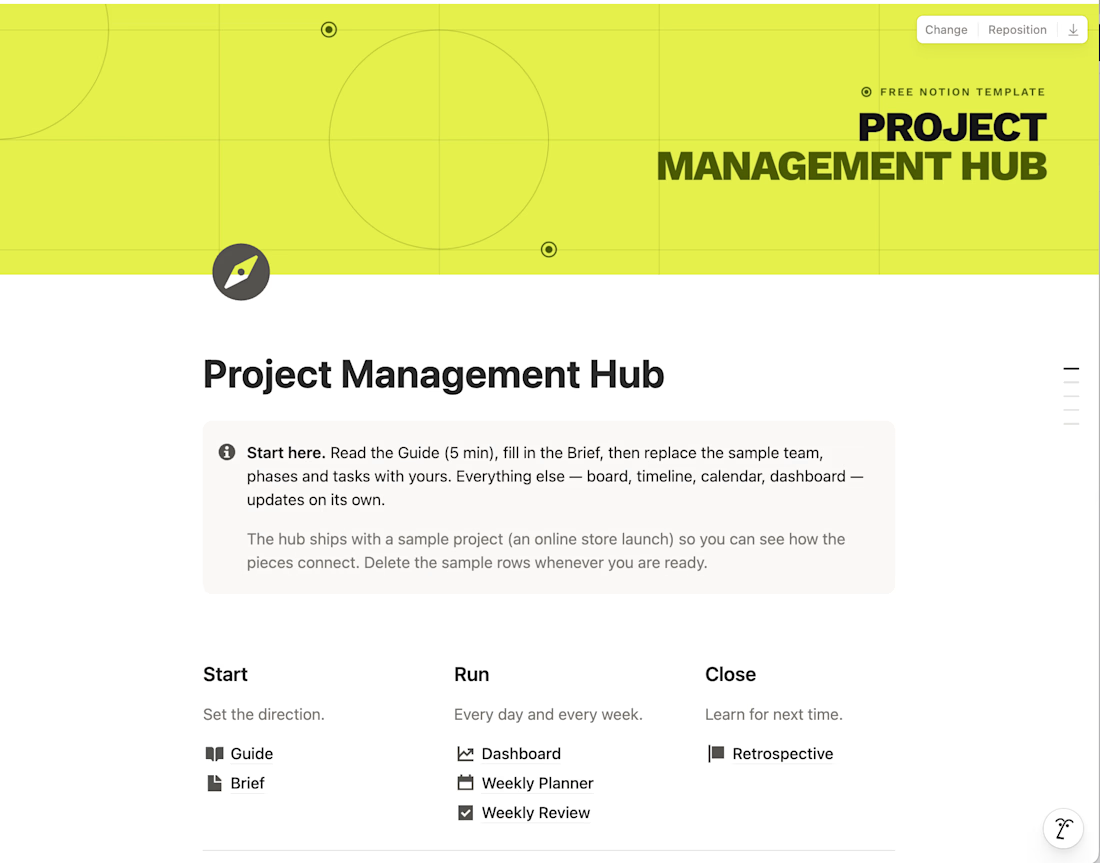
So I created this simple AI Stack for Small Business in 2026 — organized by what you actually need to get done:
AI assistants.
CRM & sales.
Automation.
Meetings.
Content.
Research.
Outreach.
Reporting.
The goal isn’t to use everything on this list.
Start with 3–5 tools that solve real bottlenecks in your business. Then connect them into workflows.
For many small businesses, a simple stack like:
AI → CRM → Automation → Communication → Reporting
can already eliminate hours of repetitive work every week.
I’m starting a new series of practical AI & Automation Cheat Sheets — no hype, just useful tools, workflows and shortcuts you can actually apply.
Save this one for later.
What should I break down next:
ChatGPT vs Claude vs Gemini or Zapier vs Make vs n8n?
— Vera Babaeva
Marketing Operations · CRM · AI & Automation
#ArtificialIntelligence #AIAutomation #SmallBusiness #MarketingOperations #CRM #BusinessAutomation #AItools

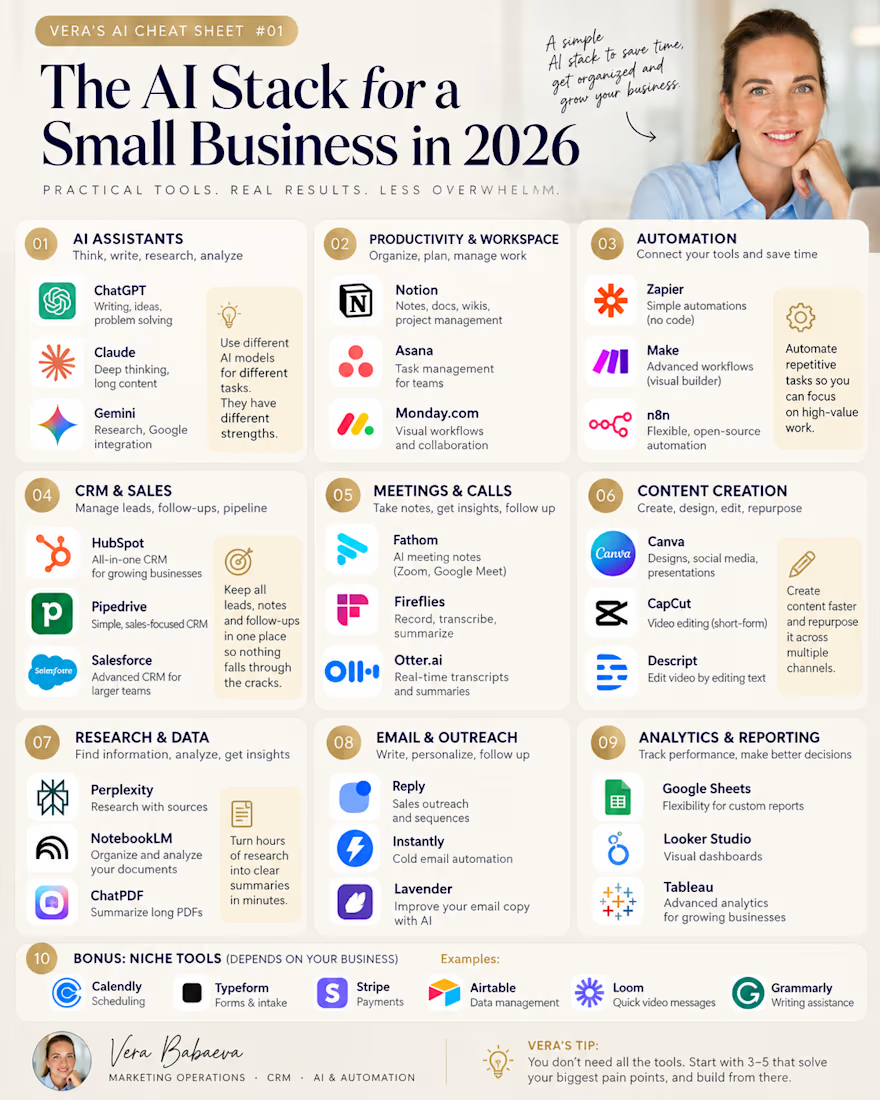
What should you automate first?
Not everything that can be automated actually should be.
Start with tasks that are:
🔁 repetitive
⏱️ time-consuming
📋 process-driven
💻 already digital
✅ low-risk
And keep human judgment where it matters most.
The best first automation is usually the boring task you’re tired of doing every week. 😉
Save this decision guide for later. 🔖
#AIAutomation #SmallBusiness #AIWorkflows #BusinessAutomation #MarketingOperations