The network for creativity
Join 1.25M professional creatives like you
Connect with clients, get discovered, and run your business 100% commission-free
Creatives on Contra have earned over $150M and we are just getting started
Back to feedPost

I built one workflow that triages inbound Gmail into noise, operational, and meeting paths. Meeting requests are split into clear versus ambiguous before any calendar logic runs. Ambiguous requests get a clarify reply. Clear requests use real calendar availability plus booking caps from Postgres.
Key outcomes
- Prevents duplicate processing with DB-backed dedupe
- Uses confidence thresholds to avoid low-quality sends
- Keeps outbound mail plain text and auditable
- Supports exact-match auto-booking only when conditions are safe


The network for creativity
Join 1.25M professional creatives like you
Connect with clients, get discovered, and run your business 100% commission-free
Creatives on Contra have earned over $150M and we are just getting started



Related posts

A LinkedIn connection is not a lead. A reply is not a client.
The real opportunity is in what happens between those two moments.
Most businesses approach LinkedIn as a prospecting platform.
But successful client acquisition requires a complete system:
→ Profile Positioning: Make your profile communicate who you help and why they should trust you.
→ Ideal Client Research: Define your ICP, identify decision-makers, and understand their business challenges.
→ Targeted Prospecting: Use Sales Navigator to find relevant companies instead of collecting random contacts.
→ Strategic Visibility: Publish useful content, demonstrate expertise, and build credibility before reaching out.
→ Personalized Outreach: Start conversations around relevant business needs—not generic sales pitches.
→ Consistent Follow-ups: Build a natural sequence that moves conversations forward without becoming pushy.
→ Lead Qualification: Identify genuine interest, business needs, and decision-making authority.
→ Meeting Conversion: Make the next step clear and turn qualified conversations into booked calls.
→ Proposal & Closing: Present a relevant solution, clarify the scope, and move toward a decision.
I’ve mapped this journey into a 16-step LinkedIn Client Acquisition Framework, covering:
• Profile optimization
• ICP and prospect research
• Connection request strategy
• Content and lead magnets
• Four-message DM framework
• Sales Navigator prospecting
• Meeting booking
• 30-day execution plan
• Weekly performance tracking
• Proposal-to-client conversion
One principle sits behind the entire process:
Don't optimize for more connections. Build a system that creates better business conversations.
I'm curious:
Which stage creates the biggest challenge for you—finding the right prospects, getting responses, or converting conversations into clients?
SaleCraft | Crafting Opportunities.
#Linkedin #SalesFunnel #ClientAcquisition



The space between a reply and a client is where most outreach dies. What moves a replier to a booked call for you: a value asset first, or a direct ask?

Processing incoming PDF attachments and logging key email data manually takes hours of tedious, repetitive work. Every time a new invoice, quote, or report lands in your inbox, you have to manually open the email, download the PDF, read through dense pages to extract important details, format the data, and log it into Google Sheets row by row.
Which one is faster, saves more time, and prevents mistakes?

1 voted
25%
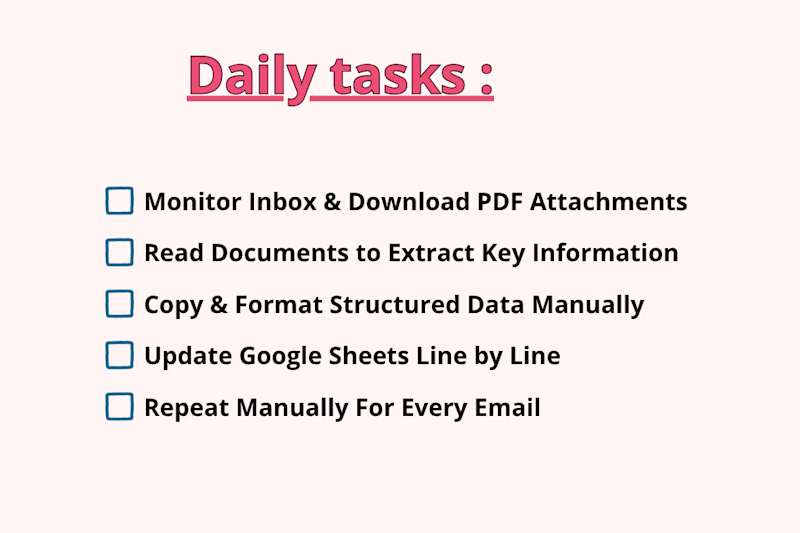
3 voted
75%
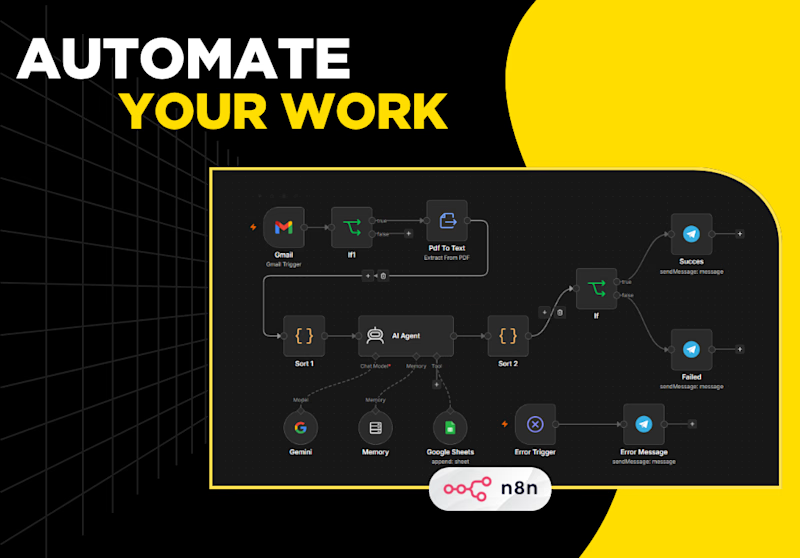
4 votes
Closed

The manual-vs-automated framing is clear, but I'm curious how the workflow copes with PDFs that don't share a layout, like scanned invoices versus quotes. Do you parse them with a fixed template or an extraction step, and what happens to rows it can't read confidently?

Resolve: an AI support agent that answers from a company’s own policies, looks up orders, and escalates weak matches to a human instead of guessing. A human approves replies before they go out.
Live demo: support-resolver.vercel.app

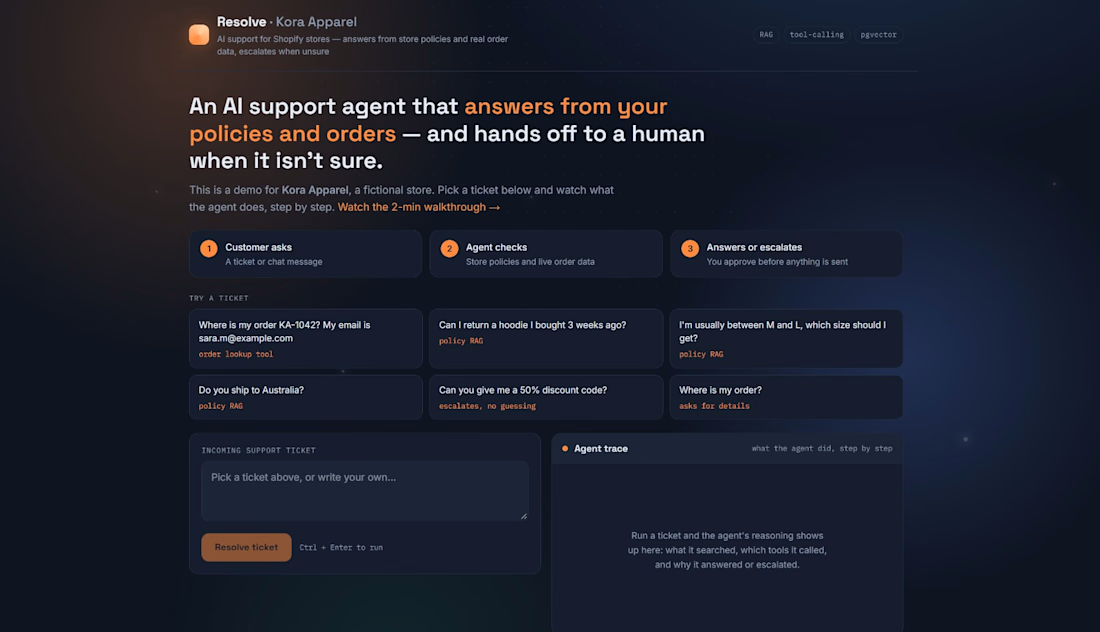

For the human approval step, I'd show the exact policy passage and its effective date beside the draft. Does Resolve flag a reply for re-review if the policy changes while it waits for approval?