The network for creativity
Join 1.25M professional creatives like you
Connect with clients, get discovered, and run your business 100% commission-free
Creatives on Contra have earned over $150M and we are just getting started
Back to feedPost

THE PROBLEM
Most training — human or AI — tells people the outcome and then pretends they learned the decision. It also breaks the moment the interface gets complicated, which is why a lot of training tools look impressive and teach very little.
WHAT I BUILT
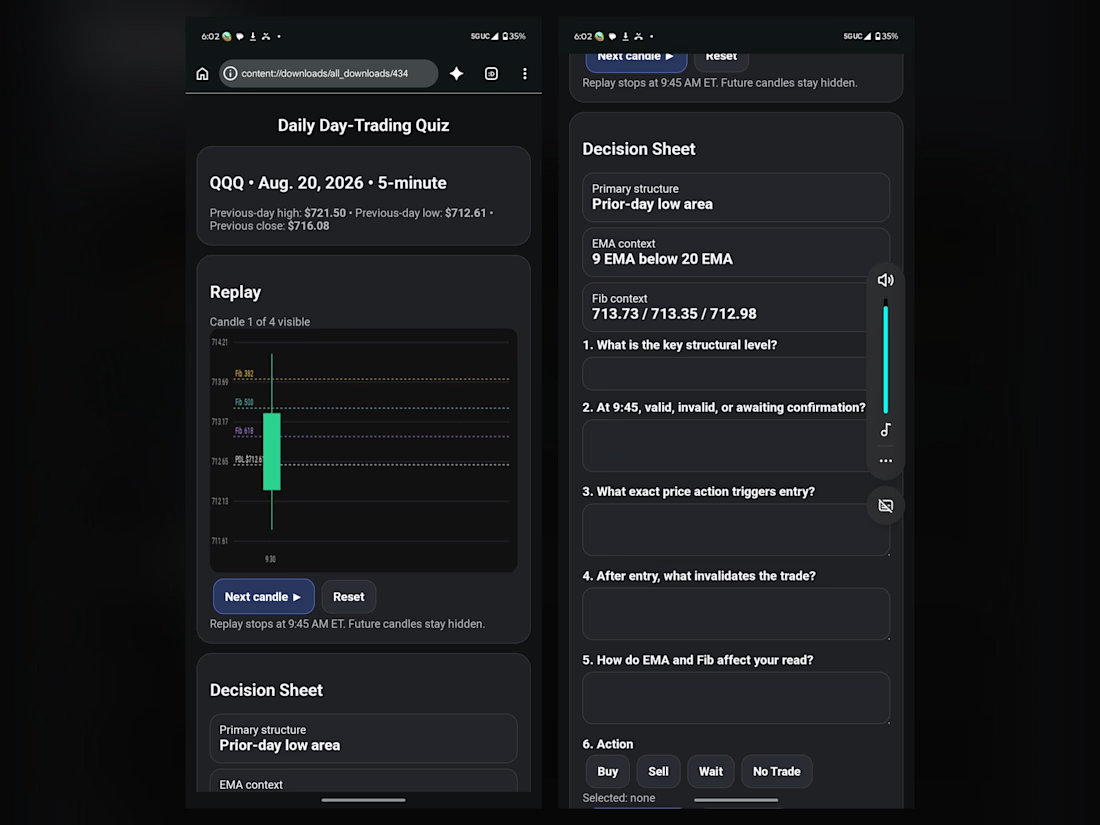
An adaptive, rule-based training system for day trading, developed iteratively from real failure in the interface itself:
Hidden outcomes — the learner commits to a call before seeing what happened
Structure-first grading, with indicators (EMA / Fibonacci / VWAP) as secondary confluence, not the decision itself
Deliberately hard cases — near-invalidation and controlled false alarms, so learners can't just pattern-match easy examples
Failure-driven UI iteration: when interaction reliability failed, a chat-native fallback preserved the training function, and a later stable HTML implementation became the preferred version — function over flash
WHAT I CAN DO FOR A CLIENT
Design an AI-powered trainer / simulator for a skill your team or customers need to learn (sales calls, compliance decisions, technical diagnosis, trading, operations, onboarding)
Build grading logic that evaluates reasoning and process, not just right/wrong answers
Design practice case libraries — including the hard, ambiguous, edge cases that actually build competence
Rescue or redesign a training tool that looks good but isn't teaching


The network for creativity
Join 1.25M professional creatives like you
Connect with clients, get discovered, and run your business 100% commission-free
Creatives on Contra have earned over $150M and we are just getting started





Related posts

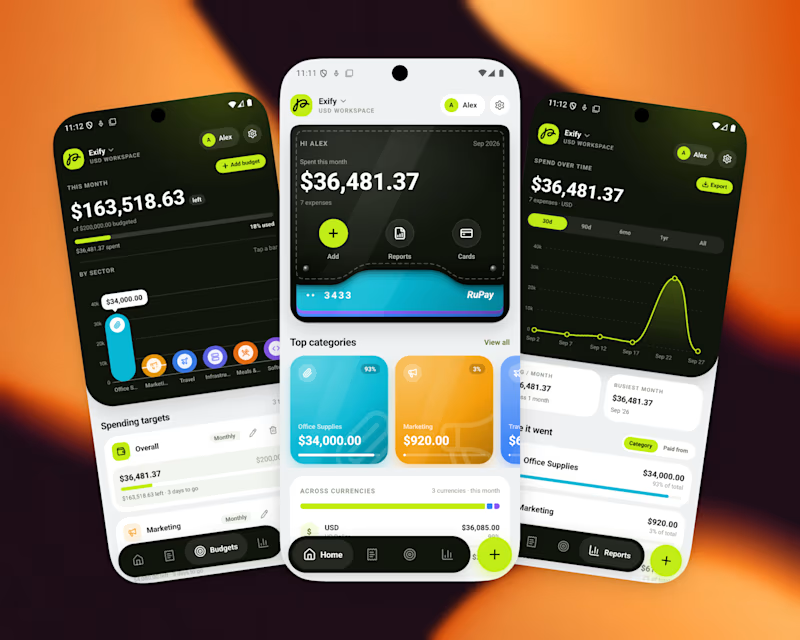
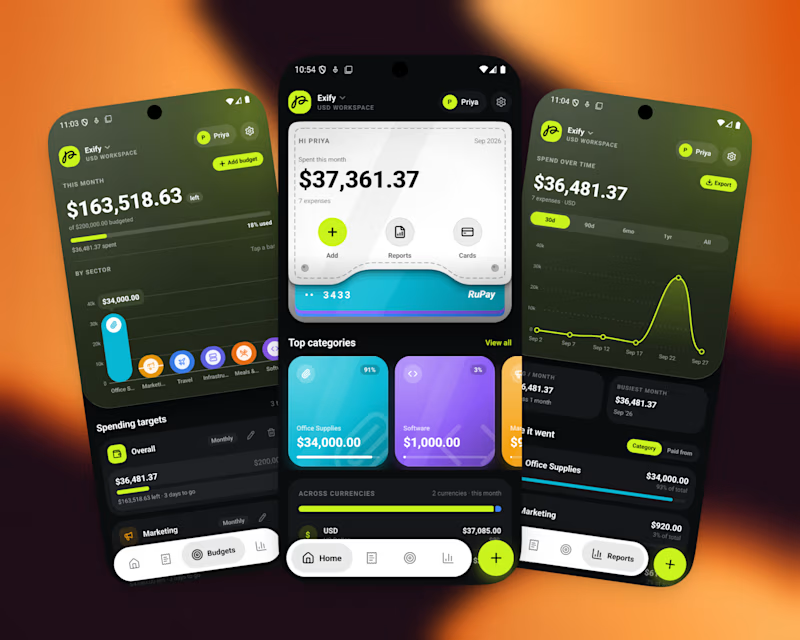
A great app should not just function, It should feel visually distinct
When the market is full of similar-looking products, design becomes part of the product’s well identity
For this finance project, we focused on a sleek UI, intuitive UX, and a visual language that doesn’t feel generic
Both dark and light modes were designed to feel equally intentional.
Which one do you prefer?

10 voted
56%
8 voted
44%
18 votes
Closed

I’d go with Light Mode. 👌 It feels fresh, clean, and the UI elements stand out beautifully against the background. Both are strong, though! 🔥

The real cost of bad UX:
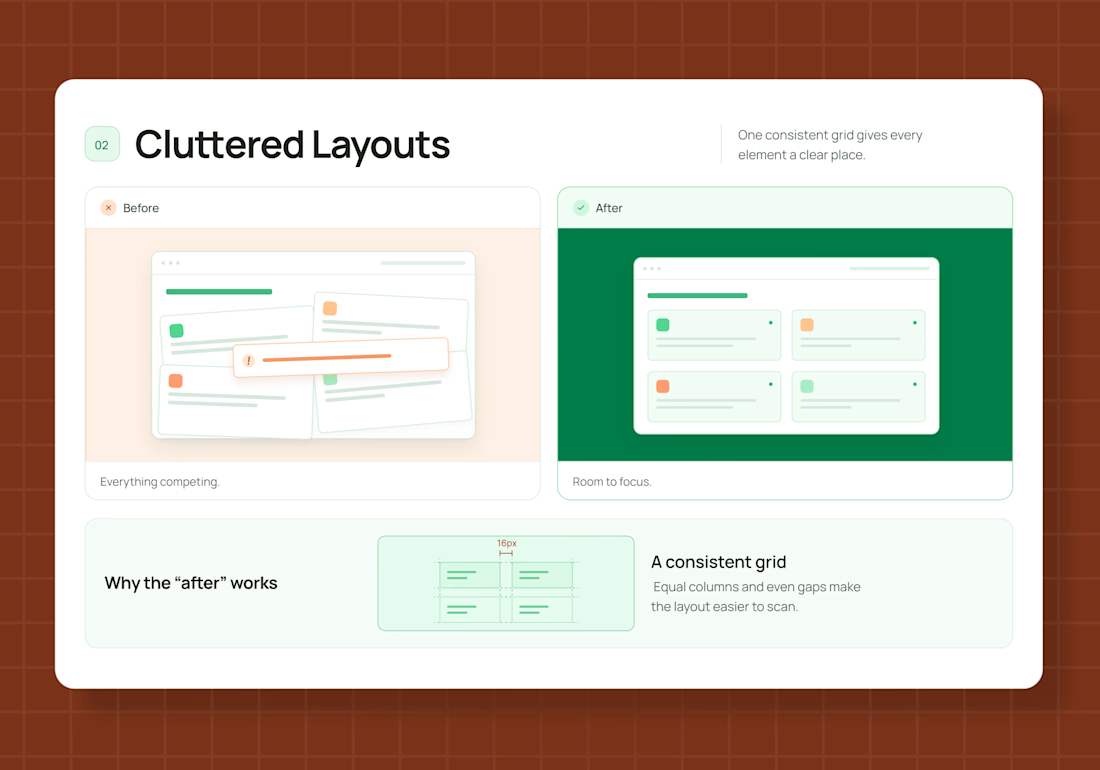
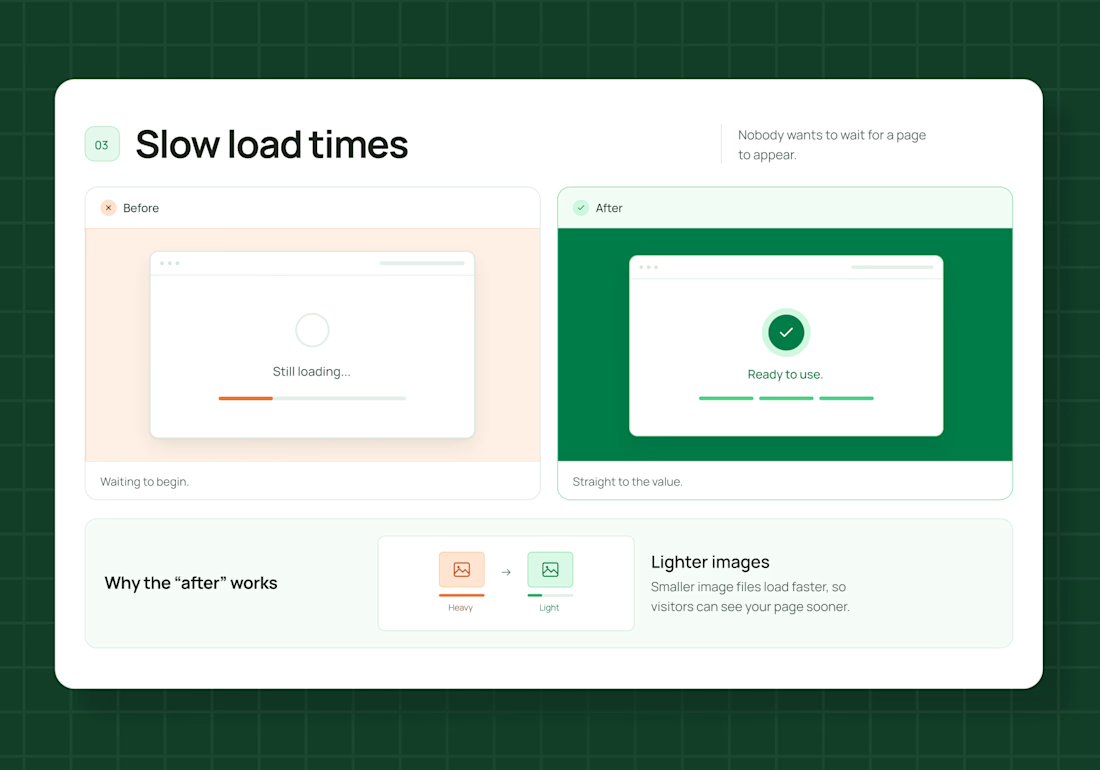
Cluttered layouts, and slow load times quietly push people toward competitors before they even read your value prop. Good design isn't decoration. It's retention.
If you're not sure how your product's UX is performing, that uncertainty is usually the first sign it needs a look.
Send me a message - happy to share quick audit on your existing design!
#UXDesign #UIUX #WebDesign #UserExperience #WebsiteDesign #ConversionFocusedDesign


Good design isn't decoration, it's retention is a line every founder should tape to their monitor. People bounce over clutter and slow loads before they ever reach the value prop, and that lost revenue is invisible so it never gets fixed. Framing UX as retention is exactly right.