The network for creativity
Join 1.25M professional creatives like you
Connect with clients, get discovered, and run your business 100% commission-free
Creatives on Contra have earned over $150M and we are just getting started
Back to feedPost

How 5G Technology Is Changing the Future of Connectivity
Every generation of mobile network has reshaped how we live, work, and communicate — and 5G is no exception. With ultra-reliable, low-latency communication and the ability to connect everything from smartphones to self-driving cars, 5G isn't just a faster version of 4G. It's the foundation for an entirely new era of connectivity.
Here's a closer look at what 5G actually offers and how it's already transforming industries around the world.
What Makes 5G Different From Previous Generations
Unlike previous network upgrades that primarily focused on faster browsing and downloads, 5G was built around three core pillars: significantly higher speeds, ultra-low latency, and the capacity to connect a massive number of devices simultaneously. This combination unlocks use cases that simply weren't possible with 4G infrastructure.
Ultra-Reliable Low-Latency Communication (URLLC)
One of 5G's most important capabilities is Ultra-Reliable Low-Latency Communication, which reduces network delay to just a few milliseconds. This near-instant responsiveness is critical for applications like remote surgery, industrial automation, and real-time vehicle-to-vehicle communication, where even small delays can have serious consequences.
Enhanced Mobile Broadband
For everyday users, 5G delivers substantially faster download and upload speeds, making activities like streaming 4K video, video conferencing, and cloud gaming smoother and more reliable, even in crowded areas like stadiums or city centers.
Vehicle-to-Everything (V2X) Connectivity
5G plays a central role in the development of connected and autonomous vehicles. Through Vehicle-to-Everything (V2X) communication, cars can exchange real-time data with other vehicles, traffic infrastructure, and pedestrians, improving road safety and enabling more efficient traffic management.
Massive Device Connectivity for IoT
5G networks are designed to support a much higher density of connected devices per square kilometer compared to 4G. This makes it a key enabler for the Internet of Things (IoT), supporting everything from smart home devices to large-scale industrial sensor networks.
Remote Surgery and Healthcare Innovation
The combination of high speed and ultra-low latency has opened the door to remote surgery, where specialists can operate on patients from a different location using robotic systems, with minimal delay between the surgeon's movements and the robotic response.
Smart Cities and Infrastructure
Cities around the world are leveraging 5G to power smart infrastructure — from intelligent traffic lights that adjust in real time to connected public safety systems and efficient energy grids that respond dynamically to demand.
Industrial Automation and Manufacturing
Factories are increasingly adopting 5G-enabled automation, using real-time data from connected machinery to optimize production lines, reduce downtime, and enable predictive maintenance before equipment failures occur.
Challenges in 5G Rollout
Despite its potential, 5G rollout faces real challenges, including the high cost of infrastructure, the need for dense networks of small cells, and varying regulatory approaches across different countries and regions.
What's Next: The Path Toward 6G
As 5G networks continue to mature and expand, research into 6G is already underway, promising even faster speeds and new capabilities. However, 5G's full potential — particularly in IoT, healthcare, and autonomous systems — is still very much in its early stages of adoption.
FAQs
How is 5G different from 4G in simple terms?
5G offers significantly faster speeds, much lower latency, and the ability to connect far more devices at once compared to 4G, enabling new applications like remote surgery and autonomous vehicles.
Is 5G safe to use?
Yes. Regulatory bodies worldwide, including the WHO, have found no established health risks associated with 5G technology within approved exposure limits.
Which industries benefit most from 5G?
Healthcare, manufacturing, transportation, and smart city infrastructure are among the industries seeing the most transformative benefits from 5G adoption.
Conclusion
5G is more than an upgrade to mobile internet speed — it's a foundational shift in how devices, industries, and cities connect and communicate. As adoption grows, its impact on healthcare, transportation, and everyday connectivity will only become more visible.
Meta Title: How 5G Technology Is Changing the Future of Connectivity
Meta Description: Explore how 5G technology is transforming connectivity — from ultra-low latency communication to smart cities and autonomous vehicles.



The network for creativity
Join 1.25M professional creatives like you
Connect with clients, get discovered, and run your business 100% commission-free
Creatives on Contra have earned over $150M and we are just getting started
Trending
retrofuturism
Share your favorite designs from the past exploring the distant future. Or your own take on the aesthetic 🚀
halftone
Dots. Texture. Grain. Let's see your designs using the halftone technique.

Midjourney
Creatives are showing off what they're making with Midjourney.
colorgrade
Video editors sound off: How do you enhance the mood of your video in color grading?



Related posts

Been exploring WebGL + shaders through this cylindrical image gallery.
A few things I’m taking from it:
- Think about the surface before the individual images.
- Small speed differences can add a lot of depth.
- Shaders work best when they support the interaction.
- Most of the polish is in fixing seams, timing and transitions.
- Performance quickly becomes part of the design.
Still experimenting with how far this can go while keeping it useful for real websites.

Super cool animation Franco!! 🚀


We had this coming soon page up for a client within a couple hours after our initial kickoff. Pulled their current logo from their site, vectorized it, whipped up a scene in Unicorn Studio, and voila 🤌


the blue shield looks cool. how long did that take?

Three years ago, we built a service provider booking app (plumbers, carpenters, electricians) from scratch, fully custom code. Took close to 4 months to get live.
Today, with AI tools like Claude and ChatGPT in the workflow, I think a comparable MVP could realistically ship in 4-6 weeks. The boilerplate and repetitive work compress fast, matching logic and payment edge cases still need real engineering judgment.
If you had to rebuild something similar today, what timeline would you expect?


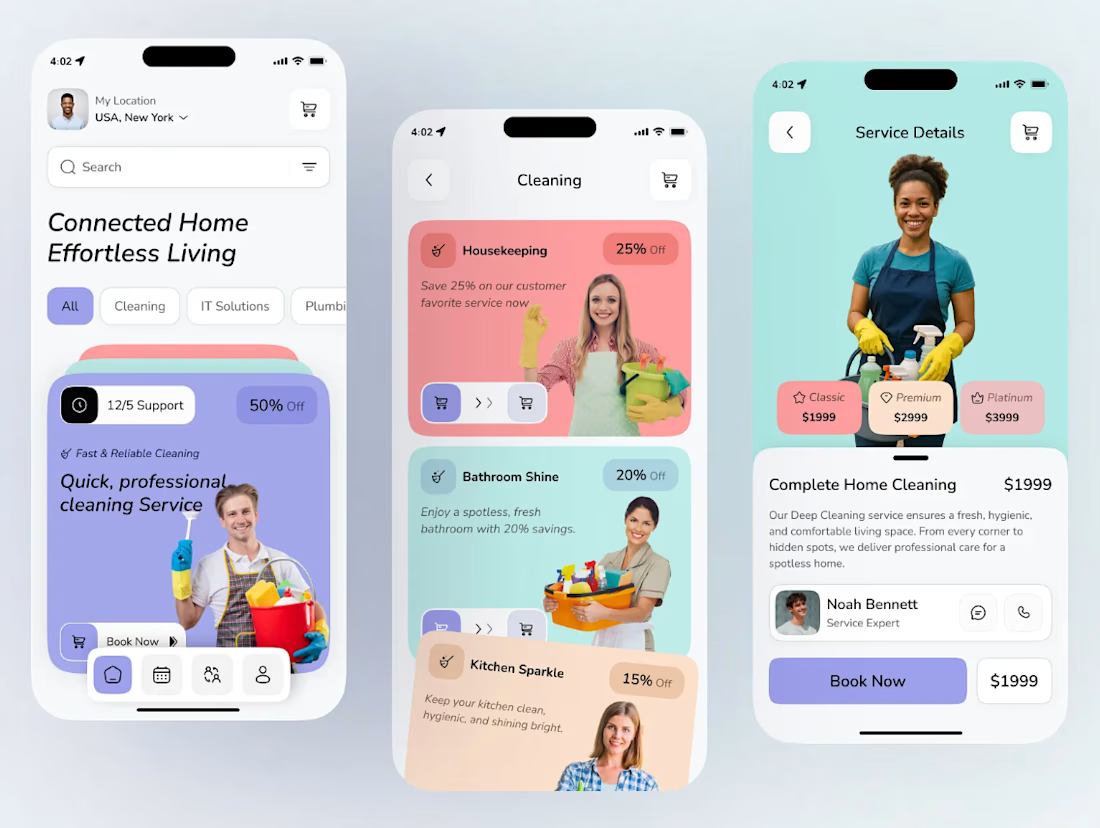
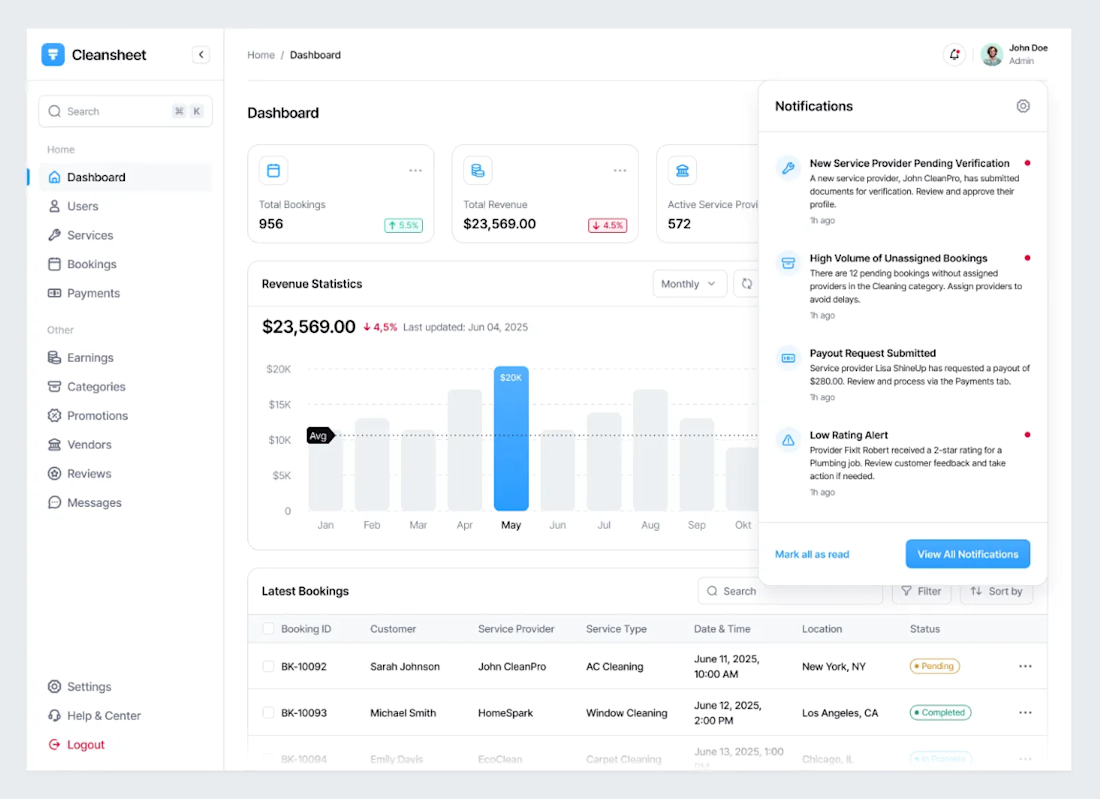

Four to six weeks feels realistic for a focused MVP now. The acceleration is real, but matching rules and payment edge cases are still where the product needs careful engineering.