The network for creativity
Join 1.25M professional creatives like you
Connect with clients, get discovered, and run your business 100% commission-free
Creatives on Contra have earned over $150M and we are just getting started
Back to feedPost

Hello,
I would welcome the opportunity to support your project with thorough research, accurate data collection, and well-organized deliverables.
My approach focuses on attention to detail, reliable sources, structured reporting, and clear communication throughout the project. My goal is to deliver practical, easy-to-understand results that save you time and support informed decision-making.
I would be happy to discuss your requirements, confirm the expected deliverables, and work within your timeline and budget.
Would you be available for a quick discussion about your project requirements? I'd be happy to suggest an approach tailored to your goals.
Thank you for your time and consideration. I look forward to hearing from you.
Contact : HARSHIKA LONDHE | londheharshika0@gmail.com
Best regards😊


The network for creativity
Join 1.25M professional creatives like you
Connect with clients, get discovered, and run your business 100% commission-free
Creatives on Contra have earned over $150M and we are just getting started







Related posts

Decide what would interrupt an A/B test before the first visitor arrives.
A fictional studio compares two consultation buttons. Halfway through the planned window, its form starts failing on mobile. A higher completion rate on one button is now only part of the story.
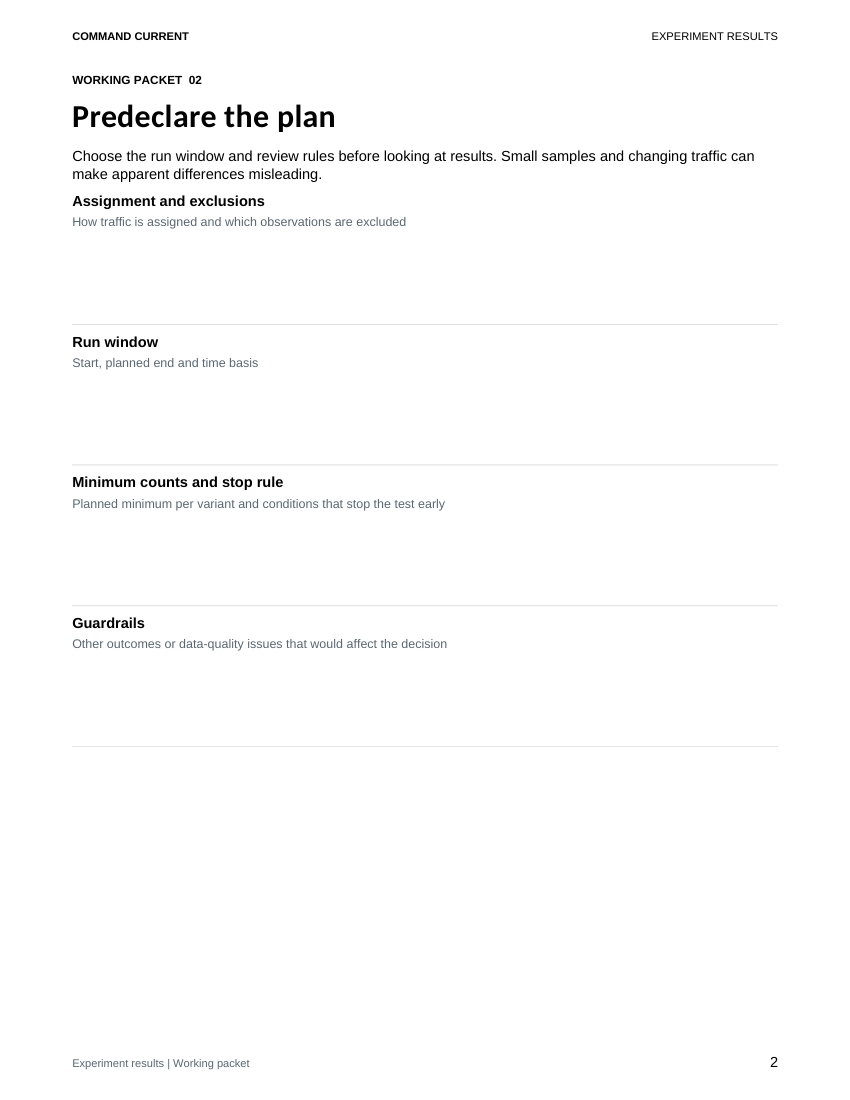
Write the interruption rules alongside the experiment plan:
• Define the eligible audience, assignment method and exclusions before the run
• Use one reporting timezone and a planned start and end
• Name the functional failures or data-quality issues that require an early stop
• If a guardrail is breached, record when it happened, which observations may be affected and who owns the investigation
• Keep the original plan and source exports with the deviation record so the next reviewer can understand what changed
Choose the next step after reviewing the issue and the evidence. Reaching a minimum count does not resolve a broken form or make an interrupted run a reliable winner.
The preview is the actual Predeclare the plan worksheet from the Business Experiment and A/B Results Kit. The download includes an editable Word packet, Excel tracker, printable PDFs, a fictional completed example and Quick Start.
The kit documents a manual comparison. It does not assign website traffic, detect failures or perform a statistical significance test.
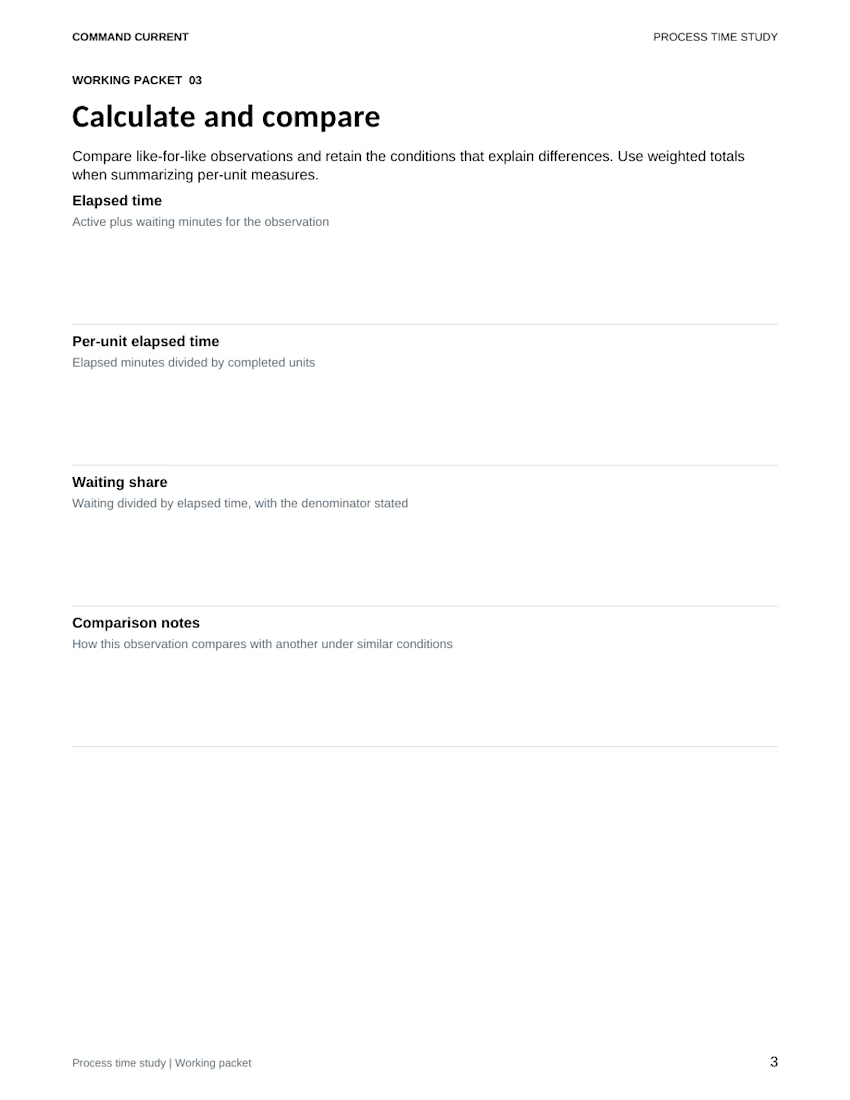
When batch sizes differ, calculate the overall minutes per unit from totals.
A fictional print-studio example:
• Batch A takes 50 elapsed minutes for 10 completed orders: 5 minutes per order
• Batch B takes 40 elapsed minutes for 20 completed orders: 2 minutes per order
Across both batches, that is 90 minutes for 30 orders, or 3 minutes per order. Averaging the two row rates gives 3.5, because it gives each batch equal weight despite the different order counts.
Before combining observations:
• Keep the same start and finish boundary and definition of a completed unit
• Check order mix, interruptions and other conditions; split unlike work into separate comparisons
• Add elapsed minutes and completed units, then divide the totals
• Retain the individual records so variation remains visible
The preview shows the actual Calculate and compare worksheet from the Process Time Study and Bottleneck Review Kit. Its Excel tracker uses total elapsed minutes divided by total units for the overall rate. The download also includes an editable Word packet, printable PDFs, a fictional completed example and Quick Start.
These are observed sample averages. They do not establish a standard labor rate, staffing requirement or employee performance rating.

OSINT Recon Assistant for Security Researchers
I’m developing cleaner ways to organize authorized reconnaissance.
GEARZ OSINT Helper brings link extraction, subdomain discovery, and research workflows into one Replit interface with optional AI support. Separately, ReconSynth is a local Next.js prototype that runs subfinder and ProjectDiscovery httpx and turns the output into a reviewable report.
GEARZ OSINT Helper: https://replit.com/@gear8405/GearzOSINT?v=1
ReconSynth source: https://github.com/Gearsoldier/gearz-reconsynth

replit.com
Loading...
Build and deploy software collaboratively with the power of AI without spending a second on setup.