The network for creativity
Join 1.25M professional creatives like you
Connect with clients, get discovered, and run your business 100% commission-free
Creatives on Contra have earned over $150M and we are just getting started
Back to feedPost

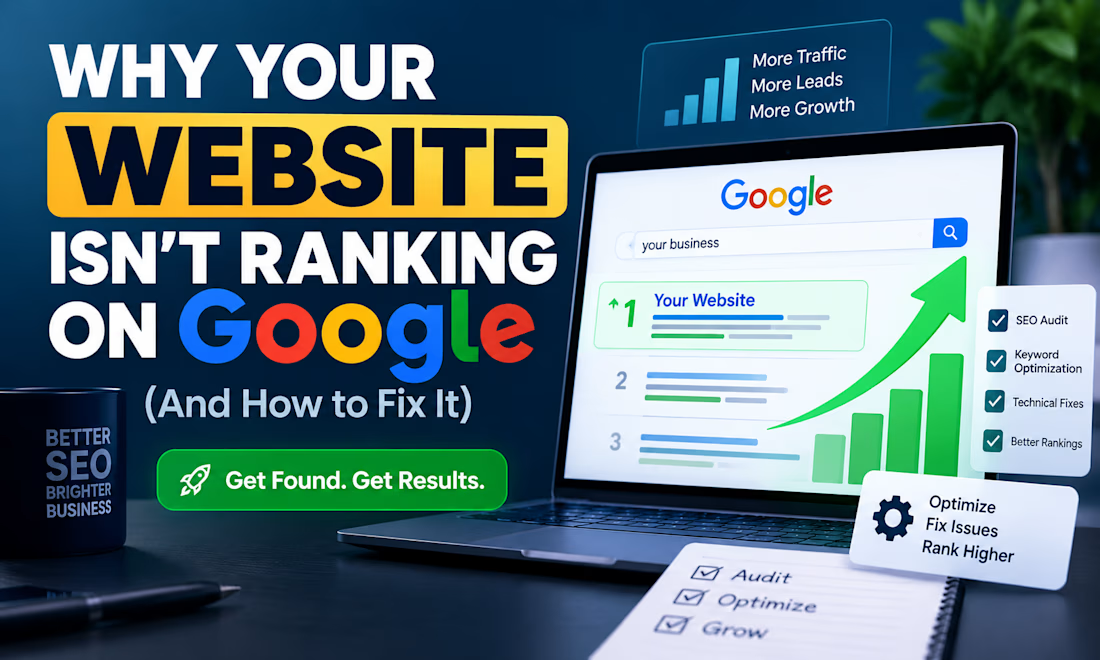
Why Your Website Isn't Ranking on Google (And How to Fix It)
Many business owners invest time and money into building a beautiful website, only to discover that it barely receives traffic from Google. The reality is that a great-looking website does not automatically rank well in search results.
If your website isn't attracting organic visitors, one or more SEO issues may be holding it back.
Common SEO Problems That Hurt Rankings
1. Poor Keyword Targeting
Many websites target keywords that are either too competitive or unrelated to what potential customers are searching for.
For example, a local HVAC company may try to rank for "air conditioning" instead of more targeted phrases like "HVAC repair in Dallas" or "emergency AC service near me."
2. Slow Website Speed
Page speed is a ranking factor and a major user experience factor.
A slow website often leads to:
Higher bounce rates
Lower conversions
Reduced search visibility
Common causes include oversized images, unnecessary plugins, and poor hosting infrastructure.
3. Weak On-Page SEO
Search engines rely on page structure to understand content.
Missing elements such as:
Optimized title tags
Meta descriptions
Header tags (H1, H2, H3)
Internal linking
can make it difficult for Google to understand and rank your pages.
4. Lack of Quality Content
Google prioritizes websites that provide useful, relevant, and authoritative information.
Many businesses have only a few pages and rarely publish content that answers customer questions or addresses industry challenges.
5. Technical SEO Issues
Technical problems can prevent search engines from properly crawling and indexing your site.
Examples include:
Broken links
Duplicate content
Missing XML sitemaps
Poor mobile optimization
Crawl errors
6. Low Domain Authority
Even with good content, websites often struggle to rank if they lack quality backlinks from trusted websites.
Backlinks remain one of the strongest ranking signals in Google's algorithm.
The Solution: A Structured SEO Optimization Strategy
Improving rankings requires a systematic approach.
Step 1: Conduct a Full SEO Audit
Identify technical, on-page, and content-related issues affecting performance.
Step 2: Optimize Website Structure
Improve:
Site architecture
Internal linking
Navigation
Mobile responsiveness
Step 3: Perform Keyword Research
Target keywords with:
Strong search intent
Real business value
Achievable competition levels
Step 4: Create Helpful Content
Develop content that solves real customer problems and answers common search queries.
Step 5: Improve Technical Performance
Focus on:
Faster loading speeds
Core Web Vitals
Mobile usability
Crawlability
Step 6: Build Authority
Earn quality backlinks through:
Guest posting
Digital PR
Strategic partnerships
Valuable content assets
Final Thoughts
SEO is not about tricking search engines. It's about creating a technically sound website that delivers value to users while making it easy for search engines to understand your content.
Businesses that consistently improve their website performance, content quality, and authority typically see long-term growth in organic traffic, leads, and revenue.
The websites that rank highest are usually not the biggest companies—they are often the ones with the best SEO strategy and execution.



waw......
The network for creativity
Join 1.25M professional creatives like you
Connect with clients, get discovered, and run your business 100% commission-free
Creatives on Contra have earned over $150M and we are just getting started







Related posts

Primland puts a whole mountain resort on one interactive 3D map. You start high above the Blue Ridge Mountains with clouds drifting through the valley, then pick a pin and fly down to the lodge, the pool, or the mountaintop restaurant. The terrain, the trees, and the smooth camera moves make you want to book a trip.
Big shout-out to Robert Borghesi for building this. The scale and the attention to detail are impressive.


would actually use this lol. the customizable part is what runners care about

Klenster is a professional cleaning services website designed to present residential and commercial cleaning solutions, build customer confidence, and simplify the process of requesting cleaning services. The design combines a clean, modern layout with a green and yellow visual identity to communicate freshness, reliability, and professionalism.
The website is structured to help visitors quickly understand the company's services, explore its experience, review its team, and take the next step toward booking a cleaning appointment or requesting a quote. From the prominent homepage banner to the dedicated appointment form, every section is organized to make essential information accessible and guide visitors through the customer journey.