The network for creativity
Join 1.25M professional creatives like you
Connect with clients, get discovered, and run your business 100% commission-free
Creatives on Contra have earned over $150M and we are just getting started
Back to feedPost


Available for automation, integrations, and ongoing technical help.
I help founders and teams connect their tools, remove repetitive work, and build practical AI systems. I can also help with web and mobile apps, APIs, and PostgreSQL databases.
Examples of my work:
• monday CRM + Zoom workflows with transcription, AI analysis, and CRM updates
• An Instagram, Telegram, and WhatsApp agent with PostgreSQL-backed memory and human handoff
• InterviewCoach, an Android app with a FastAPI/LangGraph backend
My stack includes Python, JavaScript/Node.js, Node-RED, n8n, HubSpot APIs, PostgreSQL, Linux, and Codex-assisted development.
Starter monthly retainers begin at US$600 for a clearly agreed allocation of time and scope. We’ll define the priorities, deliverables, and monthly capacity before starting.
Message me here on Contra with your priority, current tools, budget, and preferred start date. Let’s get something useful working.
Background: https://contra.com/iurii_paimurzin/about

contra.com
About IURII PAIMURZIN | Contra
Learn more about IURII PAIMURZIN on Contra. The Independent-first, commission-free freelance marketplace shaping the future of work.

The Instagram, Telegram and WhatsApp agent that uses a PostgreSQL backed memory before routing to a human stood out; keeping context across platforms that way seems really useful.
The network for creativity
Join 1.25M professional creatives like you
Connect with clients, get discovered, and run your business 100% commission-free
Creatives on Contra have earned over $150M and we are just getting started



Related posts

A full-stack RAG application that answers questions from a team's own documents, with every answer cited to the source document and page. I designed, built, tested and deployed it end to end:
document ingestion with content-based file validation;
semantic search with PostgreSQL + pgvector;
streaming answers over Server-Sent Events, with server-side citation verification;
multi-tenant workspaces with role-based access;
usage metering with quotas and a cost dashboard;
a crash-safe PostgreSQL job queue.
Deployed as a public demo on free tiers (Vercel, Render, Supabase) with hard caps on AI spend.
Citations verified against the retrieved passages; unsupported answers return "not found"
Tenant isolation in every query; Supabase Data API locked down (verified on production)
Durable ingestion queue (SKIP LOCKED, leases, retries): kill -9 under load lost nothing
Costs reserved before every AI call; per-user, per-workspace and deployment-wide caps
Data-driven model migration (5 configurations evaluated; about 74% cheaper per answer)
1,099 backend + 393 frontend tests; load-tested; encrypted, restore-verified backups
https://knowledgepilot-ai-olive.vercel.app/


The reservation before the AI call is the detail most teams miss: you can add cost metering later, but you cannot un-spend the money after a runaway loop. On the crash-safe queue, with SKIP LOCKED plus leases, what happens to a lease held by a worker that is alive but stuck, do...

Maya is a client who has been running a one chair nail studio in Toronto. Her problem had always been managing her customers and she needed us to automate that for her to the extent, that customers keep booking and rescheduling on their own without her losing any revenue. So that’s exactly what we did!


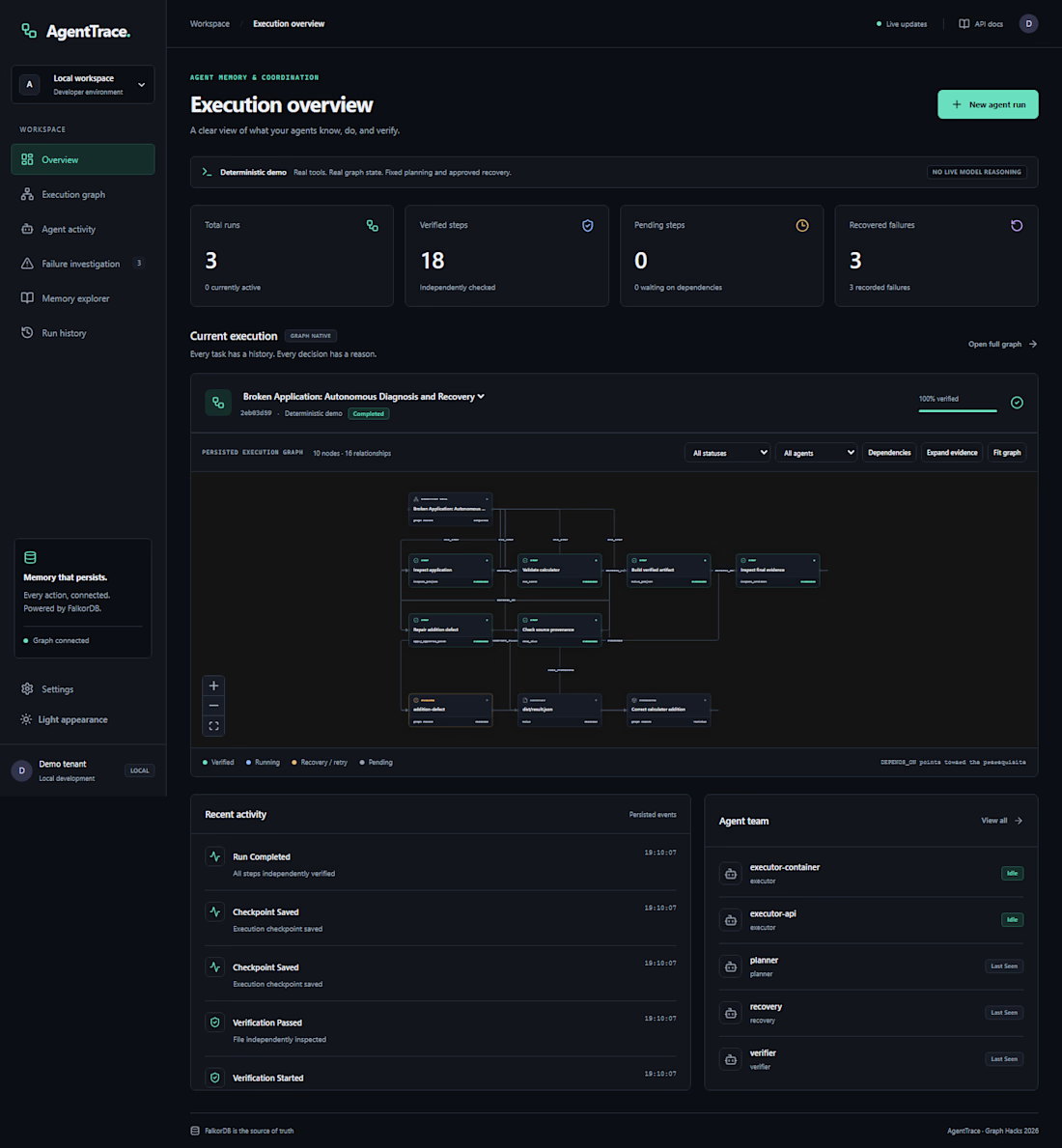
An AI agent fails halfway through a job. What should it remember when it tries again?
That question led me to build AgentTrace, a Python and FalkorDB project for keeping track of agent runs. It records task progress and decisions in a graph so you can inspect what happened and see where a run stopped. That’s especially useful when several agents share a workflow.
When you debug an agent run, what do you look for first: the failed step, the input that caused it, or the decision that sent it down that path?