The network for creativity
Join 1.25M professional creatives like you
Connect with clients, get discovered, and run your business 100% commission-free
Creatives on Contra have earned over $150M and we are just getting started
Back to feedPost

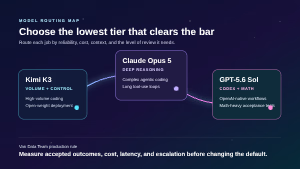
Kimi K3 vs Opus 5 vs GPT-5.6 Sol: compare architecture, context, pricing, benchmarks, and choose the right production route for each developer job today.
All three models support million-token context, so I treated the comparison as an extraction problem: separate reported facts from routing analysis instead of forcing one winner. I’m testing how clearly a reader—or an answer engine—can recover three routes: Opus 5 for complex agentic work, GPT-5.6 Sol for Codex-native or math-heavy tasks, and Kimi K3 for lower-cost, open-weight control. Turning dense source material into decision-ready AI-search content is the kind of work we help companies ship. Which comparison format is easier for you to trust: a fact-versus-analysis table or a route-by-workload matrix?
vandatateam.com
Kimi K3 vs Opus 5 vs GPT-5.6 Sol: Deep Model Guide
Kimi K3 vs Opus 5 vs GPT-5.6 Sol: compare architecture, context, pricing, benchmarks, and choose the right production route for each developer job today.
The network for creativity
Join 1.25M professional creatives like you
Connect with clients, get discovered, and run your business 100% commission-free
Creatives on Contra have earned over $150M and we are just getting started







Related posts

Really interesting experiment—seeing how the same frame transforms through different AI image models is fascinating. The results are impressive. 🔥

What happens when you take a hero frame from an AI-generated video and push it back into an image edit model?
This weekend I took a still from a recent Seedance 2.5 piece I made —depicting a solo mountaineer in a harsh alpine environment — and ran it through Midjourney's new v8.2...





Latest work for nurture+


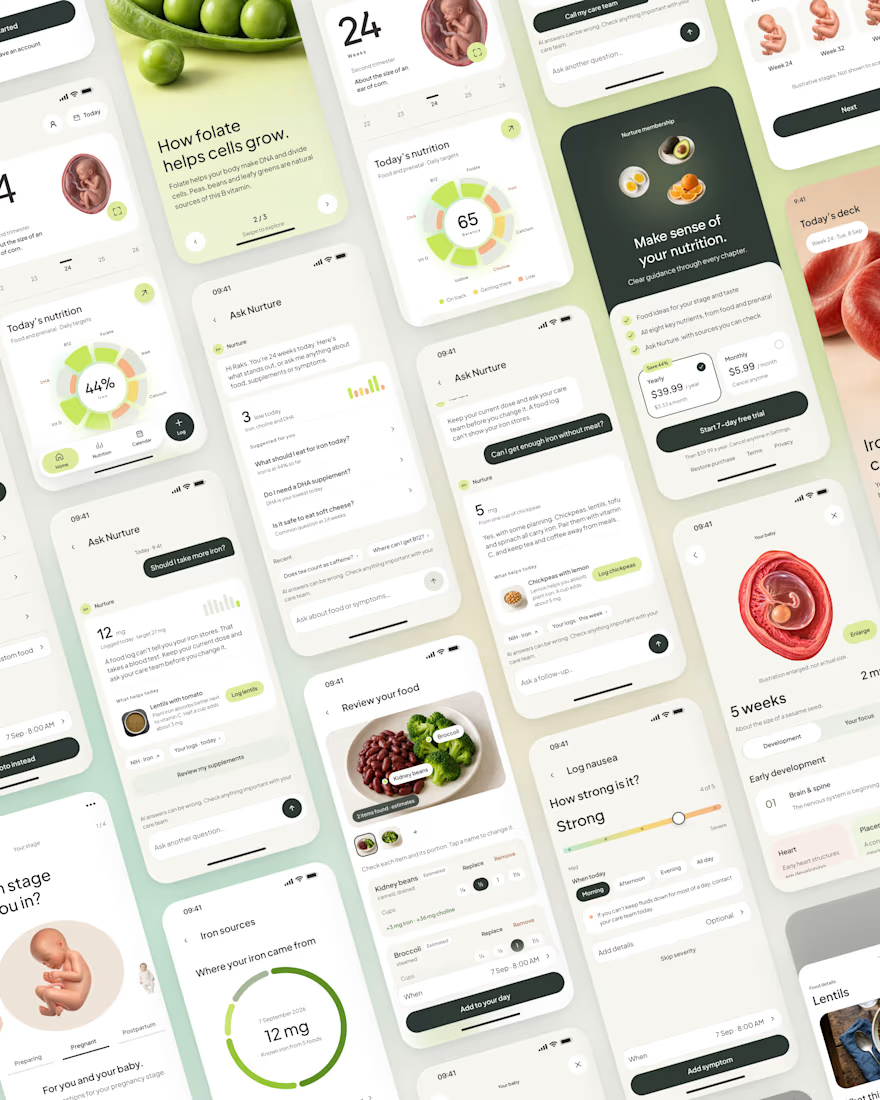

Love the soft UI and visual consistency! 👏

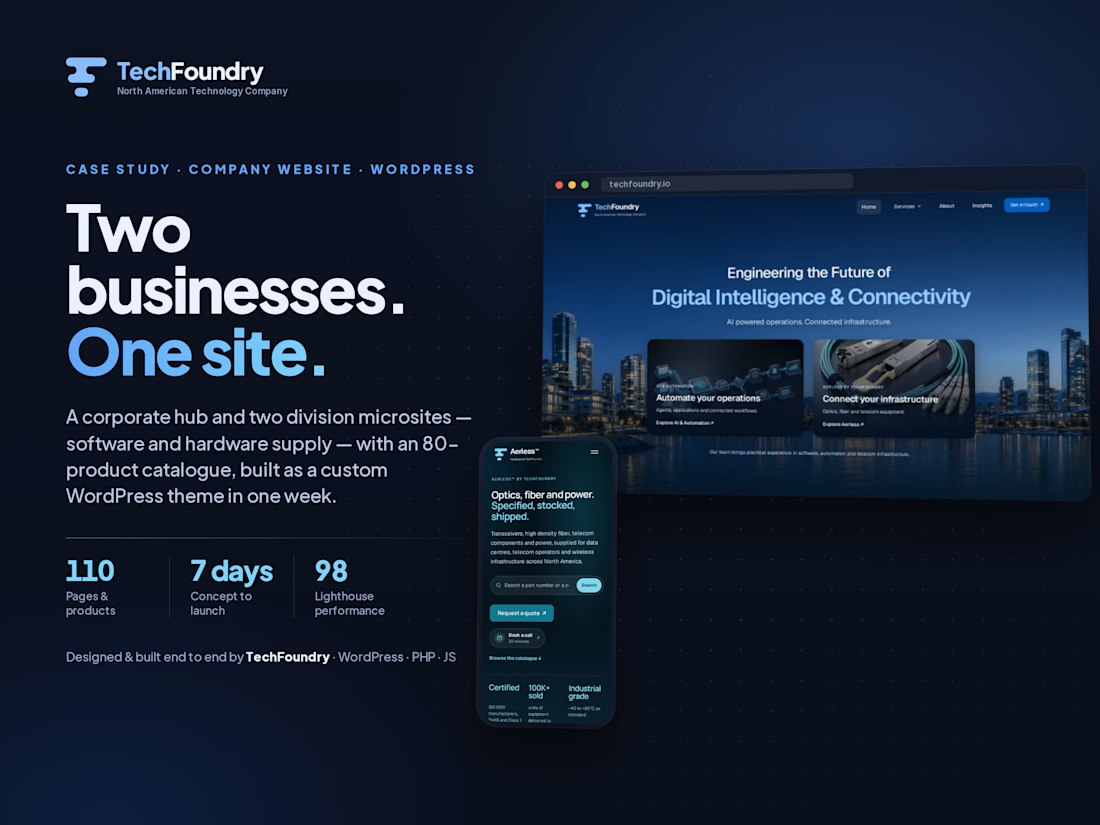
We rebuilt TechFoundry's website in a week. The brief that mattered most wasn't "make it look good". It was "make ChatGPT and Gemini able to find us".
Buyers ask an AI before they search now. So all 110 pages (26 pages, 80 Aerless™ hardware parts, 4 articles) are server-rendered with real content and structured data a model can cite: Product schema with SKU and MPN on every part, BlogPosting on articles, CreativeWork on case studies, and a robots.txt that lets AI crawlers in.
Three other decisions I'd make again.
1) One hand-coded WordPress theme, three "surfaces": corporate hub, /ai, /aerless. Each gets its own nav, palette and CTAs; the same codebase decides which company you're looking at. No page builder, no front-end framework. Homepage Lighthouse: 98 / 100 / 100 / 100.
2) Leads go where the team already is. Every form posts straight into a Microsoft Teams channel and creates a record in a lightweight CRM I built inside WordPress. Nothing lives only in an inbox.
3) Claude Code and ChatGPT alongside hand-written PHP and JS. That's how one person ships 110 pages in seven days.
What I'd fix on day one next time: reserve space for the animated heroes so mobile doesn't shift layout, and ship an llms.txt next to the sitemap.
If you're rebuilding a site this year: are you designing for AI search yet, or still just Google?

Appreciate the honesty on the mobile layout shift. Are you fixing it with explicit CSS aspect ratios to push that mobile score back above 90?