The network for creativity
Join 1.25M professional creatives like you
Connect with clients, get discovered, and run your business 100% commission-free
Creatives on Contra have earned over $150M and we are just getting started
Back to feedPost

Your Reviewers Don't Scale. Your Pipeline Does.
A follow-up to the last piece. If verification is the new bottleneck, the pipeline is the only part of it that keeps up.
Last time I wrote that AI made us much faster at producing code without making
us any faster at reading it, and that the gap is where the debt lives.
The obvious response is "review harder." I don't think that works. Your team is
the size it is, attention is finite, and telling people to be more careful has
never once fixed a systems problem.
So here's the follow-up I actually believe: stop trying to scale the human part.
Scale the machine part, and shrink what reaches the human until it's something
they can genuinely do well.
The rule
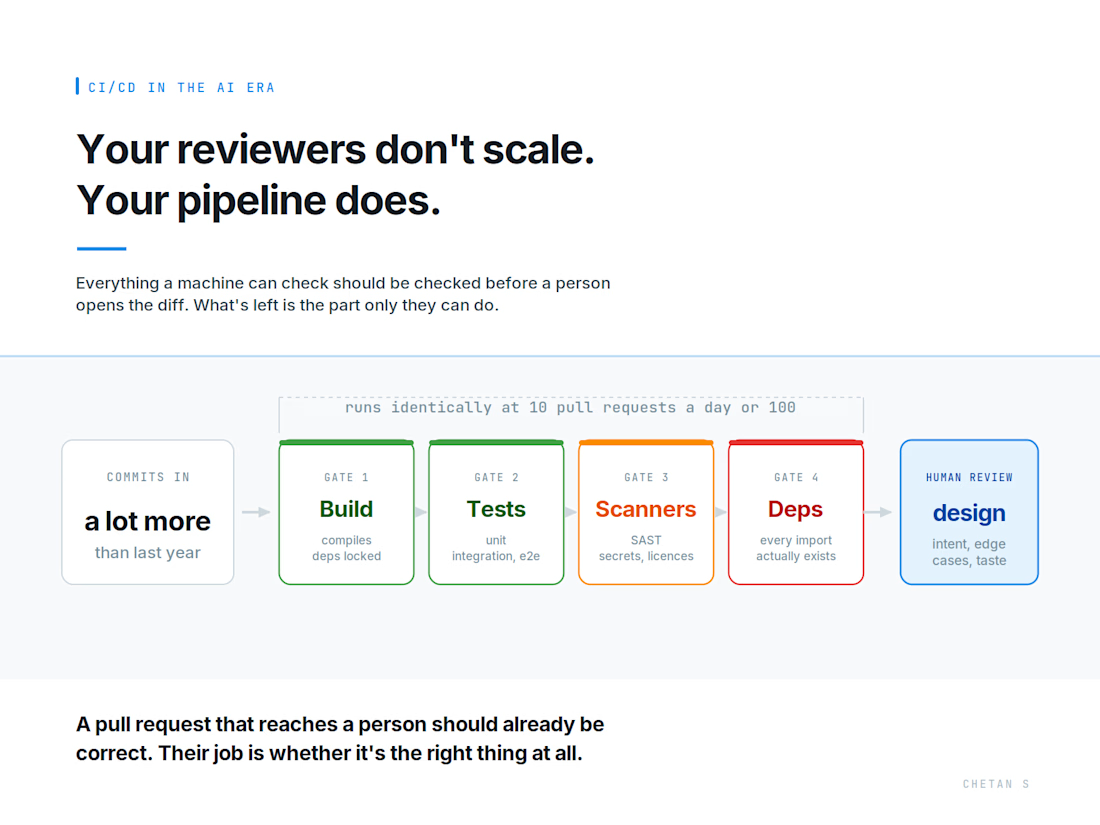
Everything a machine can check should be checked before a person opens the diff.
That sounds obvious written down. Most teams don't do it. Reviewers are still
manually noticing missing null checks, a dependency someone bumped, a secret
that got committed, a test that was quietly skipped. Every one of those is a
machine's job, and every one of them uses up attention that should have gone to
the question a machine cannot answer.
What that looks like in a pipeline
The pipeline I keep building has the same shape whatever the stack is.
Build. Compiles, dependencies locked to exact versions. If a build isn't
reproducible, nothing downstream of it means anything.
Tests. Unit, integration, end-to-end, running in parallel stages. The build
stops here on failure — a red build never reaches an environment, and never
reaches a reviewer either.
Scanners. Static analysis, secret detection, licence checks. In CI, not in a
browser tab someone remembers to open on Thursdays. If a check depends on
someone remembering, it isn't a check.
Dependencies. This one is newer and I've started treating it as
non-negotiable. Verify every import actually resolves to a real, expected
package. AI assistants suggest package names that have never existed, and
attackers have started registering those names. It's a five-second automated
check that closes an entire supply chain hole.
Only what survives all four gets a human.
The part that makes it worth the effort
Those gates run identically whether you're merging ten pull requests a day or a
hundred.
That's the whole argument. Human review degrades under volume — quietly, without
anyone deciding to let it. Automated gates don't. They're exactly as thorough on
the ninetieth PR of the day as on the first, which is precisely the property you
need when generation speeds up and headcount doesn't.
What's left for the human
This is the part I think gets undersold when people talk about automating review.
Once correctness is handled, the reviewer's job becomes the interesting one: is
this the right approach? Does it fit how the rest of the system works? What
happens at the edges nobody wrote a test for? Should we be building this at all?
That's judgement, and no pipeline does it. But it's also the work that gets
squeezed out first when a reviewer is busy checking whether someone remembered
to handle a null. You get better design review by giving people less to review,
not by asking them for more.
The bit that changed how a team I worked with behaved
None of this lands without one more piece: a rollback that's a button, not a
runbook.
We deployed blue/green, so the previous version stayed running and switching
back was one click. That sounds like a minor operational nicety. It changed
everything about how people behaved.
There was an unwritten rule about not deploying on Fridays. That rule is a
symptom — what it actually says is "we don't trust the process and we don't have
a fast way back." Once going back was cheap, going forward stopped being
frightening. The Friday rule died within a couple of weeks and nobody had to
argue about it.
If you're starting from nothing
Order matters more than tooling here, and most teams get it backwards.
Get the build reproducible first. Then get the tests trustworthy — a test suite
people don't believe is worse than none, because it teaches them to ignore red.
Then automate the deploy. Then add the gates.
Teams that automate deployment before their tests are reliable have just built a
faster way to ship bugs. That's not a hypothetical; I've watched it happen.
Where this ends up
The uncomfortable truth in my last piece was that the hard part of software moved
from writing to verifying. This is the practical follow-up: most of verification
is mechanical, and the mechanical part is the only part that scales with the
volume we're now generating.
Automate everything a machine can decide. Protect the human attention for the
things it can't.
And make going backwards cheap, because that's what makes going forwards fast.
What's in your pipeline that used to be a review comment? I'd like to know which
checks people have automated away — and which ones they've tried to and
regretted.
The network for creativity
Join 1.25M professional creatives like you
Connect with clients, get discovered, and run your business 100% commission-free
Creatives on Contra have earned over $150M and we are just getting started

Challenges
View all


Related posts

Hi everyone!
A lead fills out a form on your website. What happens in the next 5 minutes
decides whether they become a customer — or forget you exist.
THE PROBLEM
Leads sit in a mailbox or a spreadsheet until someone notices them. By then,
78% of buyers have already contacted a competitor.
THE SOLUTION
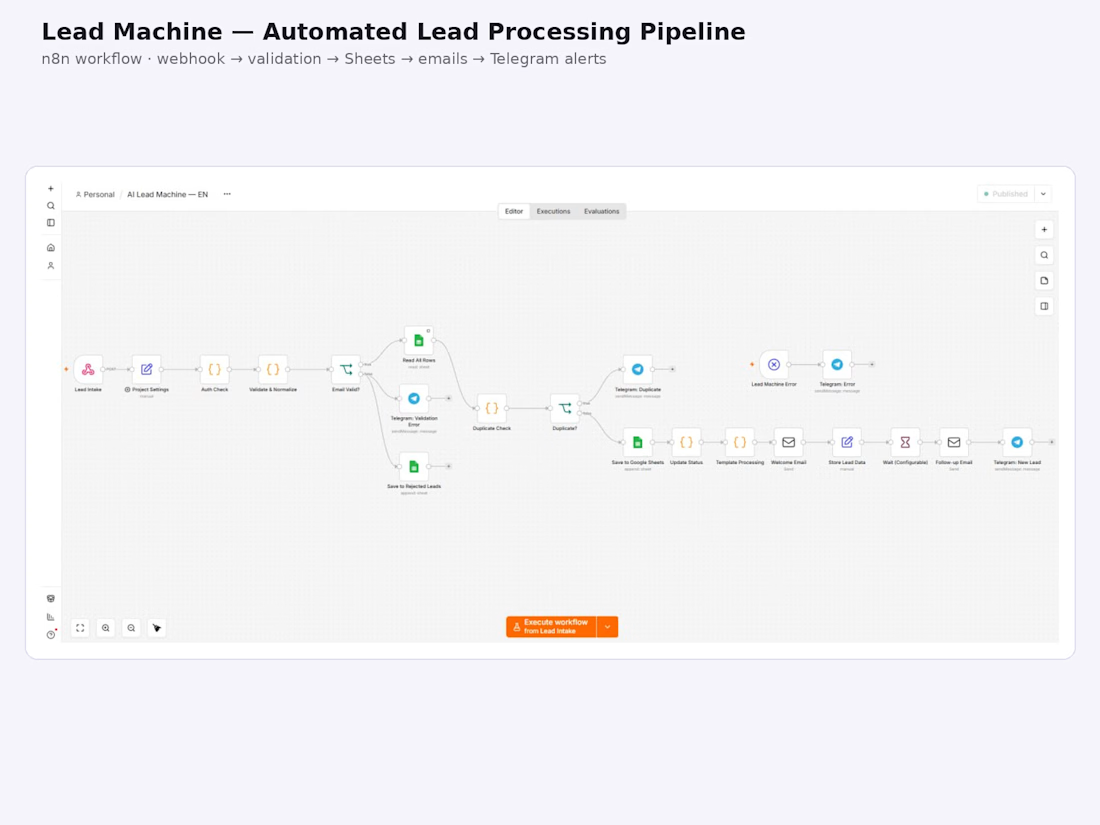
Lead Machine — an n8n pipeline that handles every inbound lead automatically,
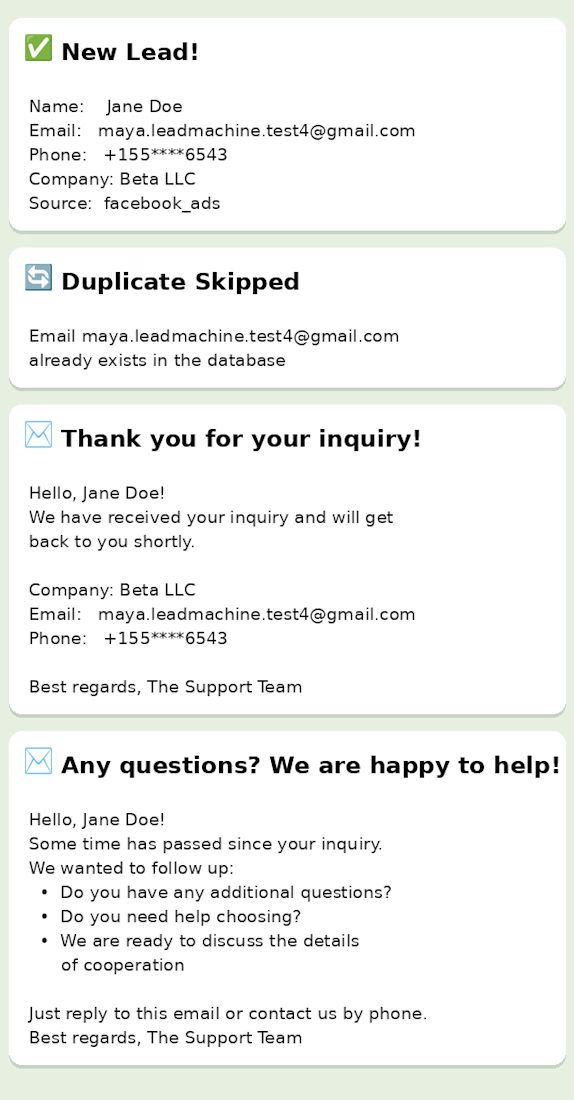
from form submission to follow-up email in about 30 seconds, 24/7:
webhook → validation → duplicate check → Google Sheets → welcome email
→ Telegram alert to the manager → automatic follow-up in 24h
Every step is plain n8n nodes: no AI keys, no token fees, no monthly SaaS.
Validation rules, email texts, follow-up delay — all editable in the n8n UI.
It runs on YOUR infrastructure: credentials stay with you.
LIVE DEMO — send a test lead and watch the pipeline:
https://dvc-shared.dvc-ai.workers.dev/t/leadmachine-demo
Full case study on my profile.




Amazing

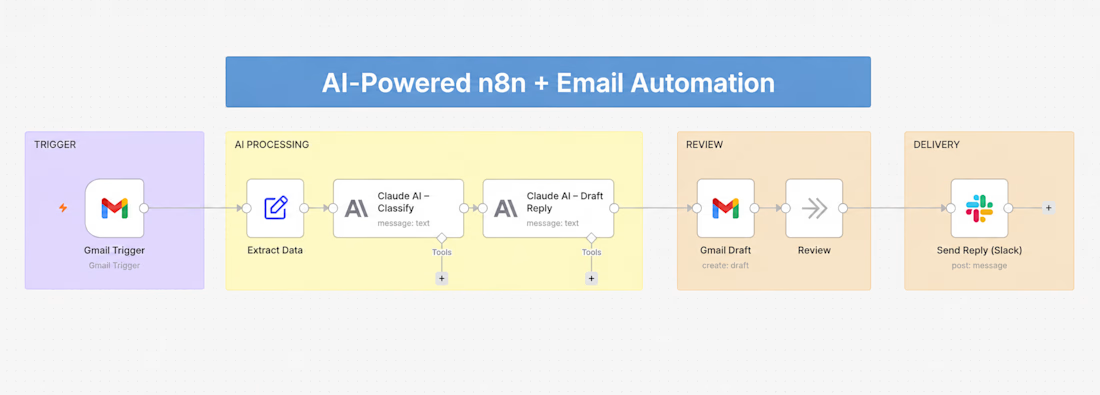
AI-Powered Email & Response Automation
I built this workflow for a US-based client to automate email processing using n8n and Claude. It extracts incoming Gmail messages, classifies them with AI, generates contextual replies, creates Gmail drafts for review, and sends Slack notifications.



AI can build a page quickly. Keeping it recognizably yours is the harder part.
Vercel is testing a simple idea: give AI clear design guidance before it starts—not just colors and fonts, but the decisions that make a brand feel consistent.
The bigger lesson applies to any business: AI works better when your taste is documented instead of trapped in someone’s head.
A clear creative guide turns “make something nice” into repeatable decisions—and makes faster work feel less generic.
If an AI had to represent your brand tomorrow, what rule would you teach it first?