The network for creativity
Join 1.25M professional creatives like you
Connect with clients, get discovered, and run your business 100% commission-free
Creatives on Contra have earned over $150M and we are just getting started
Back to feedPost

How I helped an auto parts dismantling store fix a broken product feed and rebuild the storefront (74,000+ products)
The client runs an online store for a vehicle dismantling business used and reclaimed auto parts pulled from decommissioned vehicles. Engines, body panels, electronics, trim pieces, the works. Every listing needs to reference the exact make, model, and often the specific VIN the part came from, so buyers can confirm fitment before they buy. It's a catalog where accuracy isn't optional a wrong part number costs the customer a return and costs the store trust.
When I started, there were two separate problems stacked on top of each other: the backend data was a mess (feed rejections, bad shipping setup, non-compliant listings), and the storefront itself didn't reflect the scale or credibility of the business. Fixed both, in order.
Phase 1 Fix the data foundation
Diagnosed the GMC rejection root cause. Pulled the actual feed errors and traced them to wrong country targeting and missing policy fields a structural issue, not a settings toggle.
Fixed shipping and returns first. Set up 46 shipping profiles through Shopify's Advanced Shipping tools and Shopify Flow, so logistics were correct before touching product data.
Bulk-rebuilt 74,000+ product descriptions with Matrixify. Each listing got a unique, GMC-compliant description referencing the correct OEM part number, safety flags, and Google taxonomy mapping.
Cleaned up alt text sitewide for accessibility and feed readability.
Caught a data exposure issue during audit VINs and invoice numbers sitting exposed in public product tags. Flagged and fixed.
Delivered a branded audit PDF so the client had a clear record of what was broken and fixed.
Phase 2 Rebuild the storefront
Once the data was solid, the store still looked and felt like a generic parts listing site, not a business customers could trust with a big-ticket purchase. Went section by section on the live theme:
Redesigned the homepage sections to actually lead with credibility and make it obvious what the business does and how to find parts fast, instead of a generic template layout.
Fixed mobile responsiveness. A huge share of buyers were browsing on phones from garages and driveways sections that looked fine on desktop were breaking or awkward on mobile, so I reworked the layout for that.
Added a brand logo strip to build trust signals the kind of visual cue that tells a visitor in two seconds "this is a real, established operation," not a fly-by-night listing site.
Redesigned the "Currently Dismantling" cards a feature showing which vehicles are actively being stripped for parts. Rebuilt these to be clearer and more visually engaging, since this section is genuinely useful for buyers trying to catch a specific part before it's gone.
The result: a feed that gets approved and stays approved, a catalog that's accurate at 74k+ SKU scale, and a storefront that finally looks like the size of business it actually is.
Most people treat data cleanup and design as separate projects. On a catalog this size, they're the same problem — customers won't trust a site that looks generic, and Google won't approve a feed that's structurally broken. Fix both, or neither sticks.

The network for creativity
Join 1.25M professional creatives like you
Connect with clients, get discovered, and run your business 100% commission-free
Creatives on Contra have earned over $150M and we are just getting started











Related posts


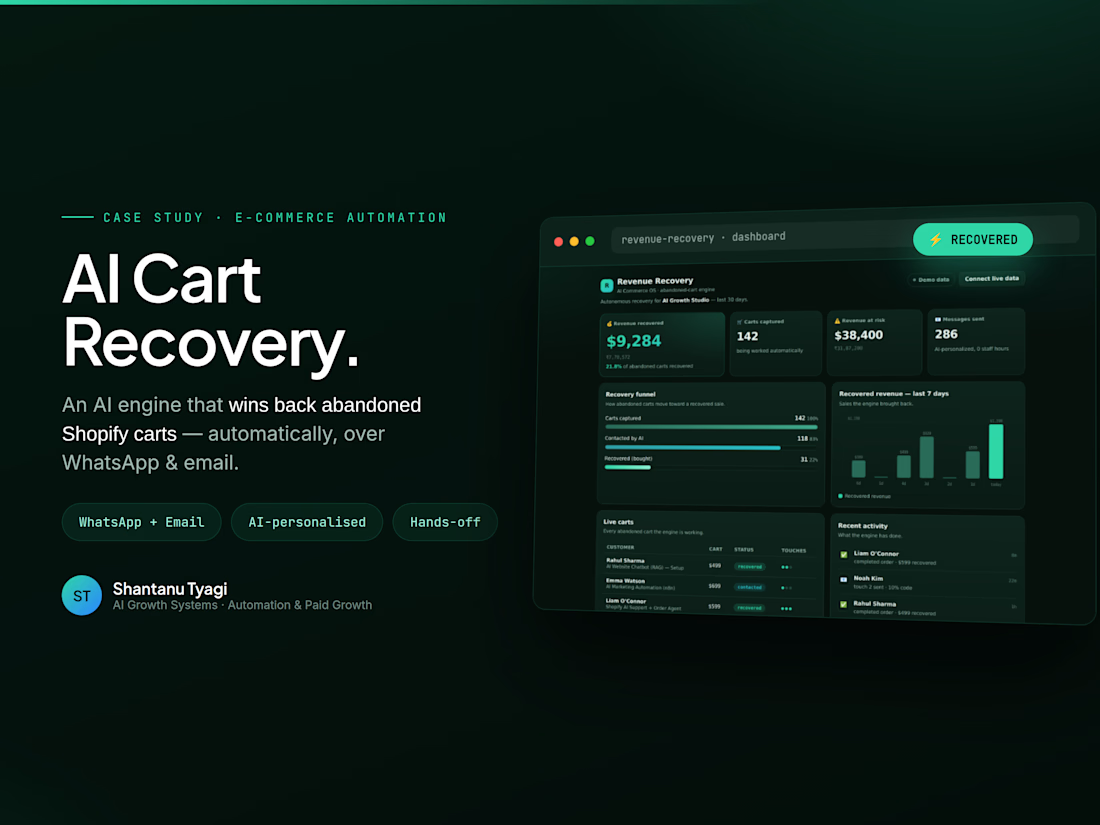
Thanks Shantanu. WhatsApp first with email only as the fallback is the right call, nobody wants the same reminder twice. Clean build.

I designed the site in Figma and built it as a headless Shopify storefront with Hydrogen. I created a custom bundle creator with a live counter that unlocks the add-to-cart button only when the box is exactly full, and a custom cart that lists each box's flavour mix alongside order notes and ship and arrival dates. On mobile, the box summary stays pinned to the bottom of the screen.


Nice temple Saad it's really modern and minimalistic that's really great 🎉🎉🎉
Great job Saad❤️

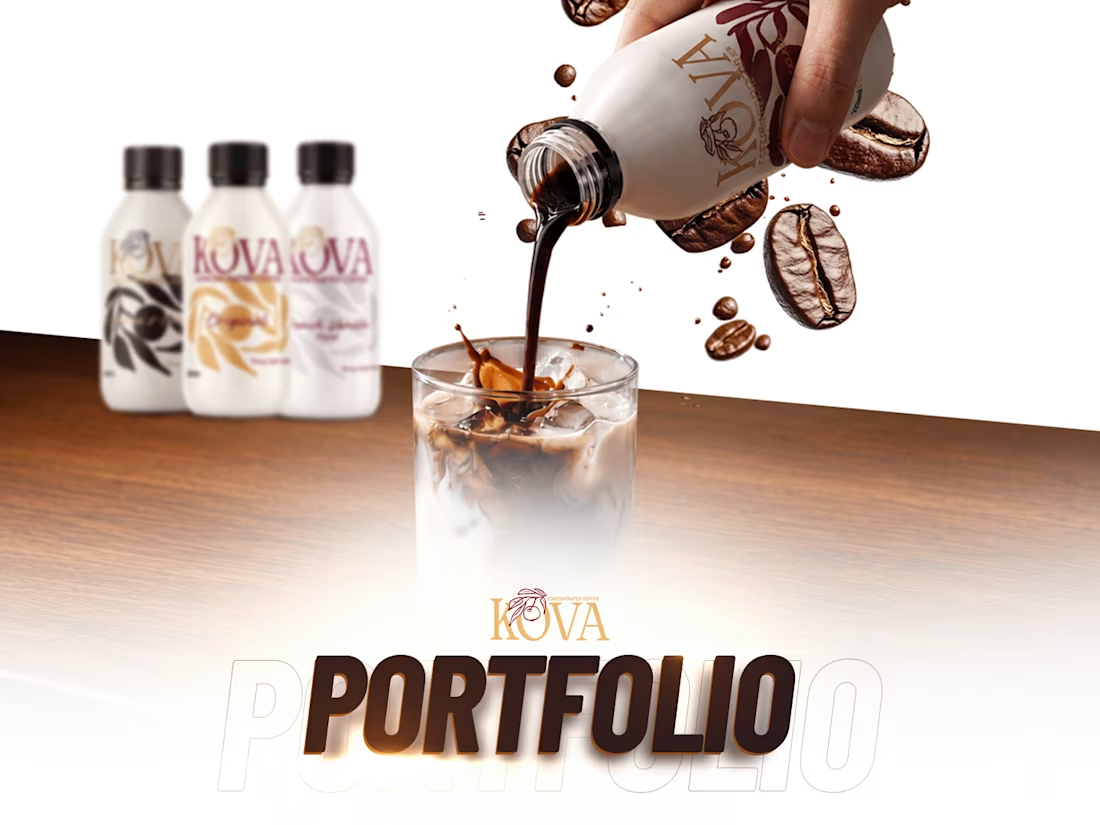
KOVA is a coffee concentrate made for busy mornings and long workdays: rich, smooth coffee that's quick to make and easy to enjoy.
I brought KOVA to life online, with one consistent look across every channel:
Website: designed and managed on Shopify, built around the product and easy to buy from
Social media: content and reels that keep the feed fresh and on brand
Ads: campaigns that put KOVA in front of the people it's made for
Need a website, content and ads that work together? Message me here on Contra. Which part of this project would you like to see in more detail?

Oh that's unique great job Awais 🎉🎉🎉
The visuals and motion effects are great ❤️❤️