The network for creativity
Join 1.25M professional creatives like you
Connect with clients, get discovered, and run your business 100% commission-free
Creatives on Contra have earned over $150M and we are just getting started
Back to feedPost

Back to building AI-assisted content systems this week — using AI for drafts, edits, and scheduling support so the creative time goes to direction, polish, and actually publishing. The tool speeds things up; the judgment still has to be human.
The network for creativity
Join 1.25M professional creatives like you
Connect with clients, get discovered, and run your business 100% commission-free
Creatives on Contra have earned over $150M and we are just getting started



Related posts

Clients often start with the same request: "Let's build an AI agent."
My counter-question is always: which manual process actually costs you time, errors, or money right now?
My selection rule: remove it first. If it can't be removed, simplify it. If it's still needed, automate it with a plain script. Only then add an integration or an agent. Often the best result is the process that no longer exists.
Safe automation means real scenarios, error handling, and alerts. Without alerts, a workflow can silently lose data for weeks. I always define what stays with a human and what goes to the system.
Question for you: which process would you automate first, and why is it still manual?
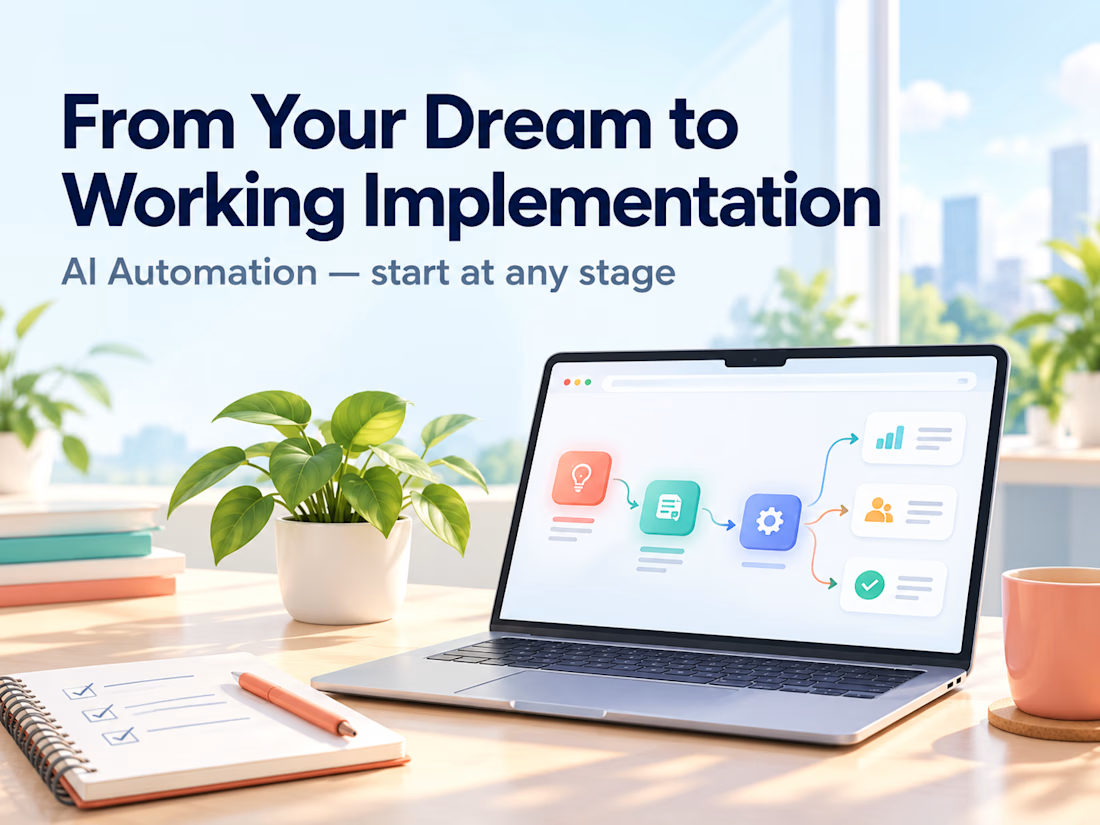
Service for audit and implementation: https://contra.com/s/BmWLbgFU-ai-automation-from-your-dream-to-working-implementation?r=auto_booster



TOP!!

Multi-Model Social Media Agent — Automated Content Workflows
Built by QuantEve Technologies | AI Automation & Full-Stack Engineering
Designed and developed an AI-powered social media workflow that streamlines content research, drafting, evaluation, approval, publishing, and performance analysis.
Rather than relying on a single model for every task, the system uses a multi-model workflow to organize content operations into manageable stages, with persistent state and human review where needed.
Core Capabilities
Content Research: Organizes topics and research inputs into a structured content workflow.
AI-Assisted Drafting: Generates social media content for platforms such as X and LinkedIn.
Multi-Model Processing: Supports model-provider alternatives and fallback handling for more resilient workflows.
Draft Evaluation: Adds an evaluation stage to review and improve content before it moves forward.
Human Approval: Keeps content review separate from publishing so drafts can be checked before external actions.
Workflow Persistence: Uses SQLite-backed queues and stored state to track content as it moves through the system.
Performance Feedback: Organizes publishing analytics and feedback to inform future content decisions.
Engineering Focus
The system brings AI model orchestration, application logic, persistent workflow state, and social media operations together in one maintainable automation pipeline.
Technology Stack
Python / Node.js (depending on the deployed component) · LLM APIs · REST APIs · SQLite · Workflow Automation · Social Platform Integrations
Built by QuantEve Technologies to demonstrate how AI can automate repetitive content operations while keeping the workflow organized, reviewable, and controllable.


Keeping content review separate from publishing, with state in SQLite queues, is a sensible setup. When a model provider fails mid-run and the fallback kicks in, does the queue retry just that stage with the next model, or does the draft restart from research?