The network for creativity
Join 1.25M professional creatives like you
Connect with clients, get discovered, and run your business 100% commission-free
Creatives on Contra have earned over $150M and we are just getting started
Back to feedPost

You don't get this kind of result from a single prompt.
You get it from building your own workflow. Here's mine ⬇️
For SECOND SKIN, I wanted the piece to feel like a fashion campaign, a product film and an organic body-horror visual system at the same time. Not just “AI video”, but a full visual direction pipeline where every step has a specific role.
The process behind it:
· Editorial character and outfit image creation in ComfyUI using Z-Image, a modified SeedVR2 upscaling setup with SkinDiff, and my own PERSONA custom nodes for character creation.
· GPT Image 2 for archetype exploration and character sheet development.
· Caimera for campaign development, fashion editorial stills, product direction, LLM-assisted concept expansion and video scripting. (get a 50% discount in the first comment link 😉 )
· Dreamina AI AI OCTO with Seedance 2.0 to animate the stills and typographic title sequences.
· Final upscaling with Starlight 2.5 from Topaz Labs Labs. Exquisite! 😍
· Final edit, compositing and polish in DaVinci Resolve.
The important part is not the list of tools.
The important part is knowing what each tool is good at, where it breaks, how to connect it to the next stage, and how to keep the creative direction intact through the whole chain.
That is where AI production starts becoming professional.
Not faster random output.
A controlled system.
A workflow with taste.
A pipeline that can repeat quality.

The network for creativity
Join 1.25M professional creatives like you
Connect with clients, get discovered, and run your business 100% commission-free
Creatives on Contra have earned over $150M and we are just getting started





Related posts

Thrilled to share my latest piece—a 25-second commercial for "BobaJoy."
The goal was to break away from standard, static beverage ads and pull the viewer directly into a hyper-kinetic world. I pushed the limits of next-gen AI video generation (specifically Seedance 2.5) to build this visual narrative from the ground up.
From the aggressive macro shots of tapioca pearls splashing to the POV camera diving straight into the ice, every frame was crafted for maximum dynamism. Balancing that high-speed, intense opening with a deadpan, comedic "Is this... legal?" dialogue at the end was the highlight of the editing process.
Bypassing the physical limitations of traditional production to achieve a professional, cinematic commercial aesthetic is exactly why I love working with AI in video production.
#AIVideoProduction #MotionDesign #AIArt #Commercial #CreativeDirection #Seedance


Amazing camera movements 🙌

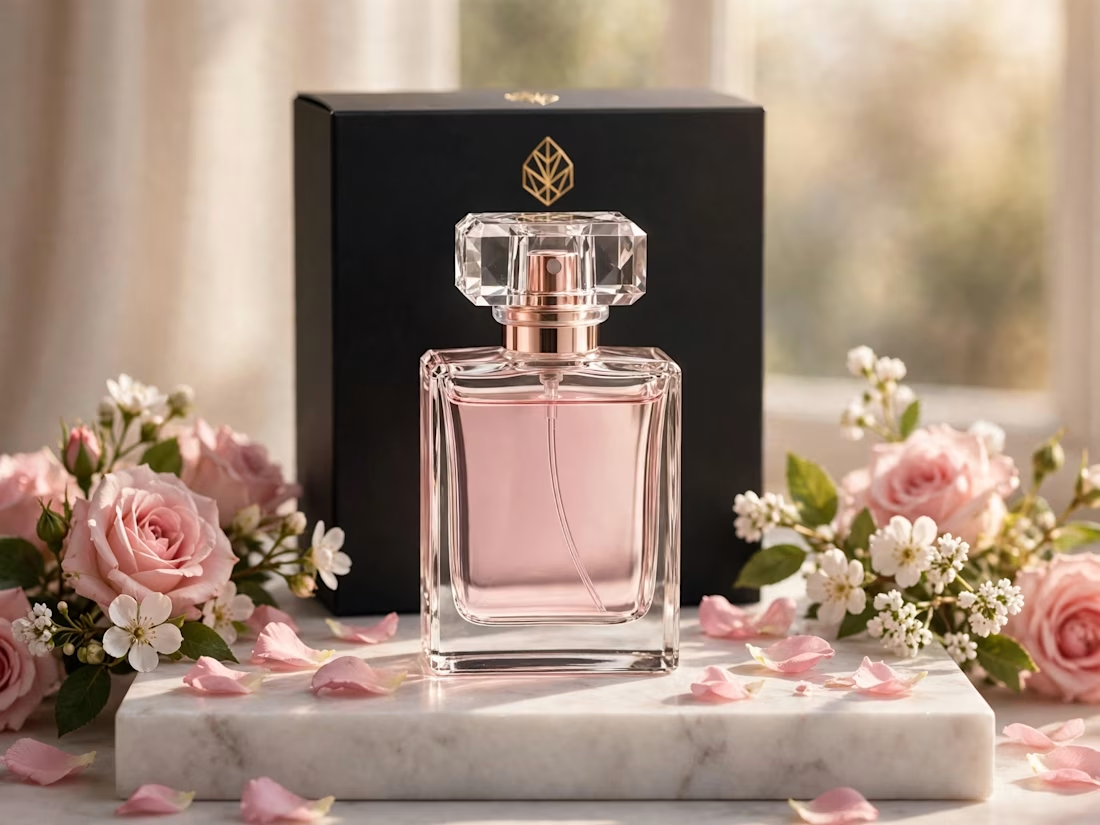
Luxury AI Perfume Commercial – Premium 3D Product Video & Photography
created a stunning, photorealistic luxury perfume advertisement designed to showcase premium beauty and fragrance products.
What I Created:
Premium 3D perfume product visuals
Realistic liquid and glass effects
Luxury studio lighting and elegant composition
Marble podium, roses, and floral details
Cinematic product presentation
High-end commercial advertising style
Tools: AI Creative Tools, Blender (if used), ComfyUI (if used).
This project demonstrates how AI-powered visuals can transform a simple product into a premium advertising experience.
I create professional AI product commercials, UGC-style video ads, and luxury product visuals for beauty, skincare, perfume, and lifestyle brands.




Experimenting is the best exercise!
As an AI video producer, I’ve been working on a lot of videos lately, from product launches to AI filmmaking and advertising.
What has stood out to me the most throughout this journey as a creative is how little we appreciate the power of strong, focused experimentation.
Sometimes, the biggest creative breakthroughs don’t come from knowing exactly what you’re doing. They come from pushing an idea a little further, trying something unexpected, breaking it, rebuilding it, and seeing where it takes you.
The more you experiment, the more you discover.
And honestly, that might be one of the most valuable creative skills to build in this new era of filmmaking.

Nice One! : )