The network for creativity
Join 1.25M professional creatives like you
Connect with clients, get discovered, and run your business 100% commission-free
Creatives on Contra have earned over $150M and we are just getting started
Back to feedPost

I built an automated NSE market-analysis system for intraday and swing trading.
What began as a stock screener has grown into a system that connects market data, multi-layer analysis, risk controls, alerts, and outcome tracking.
⚡ Live intraday engine
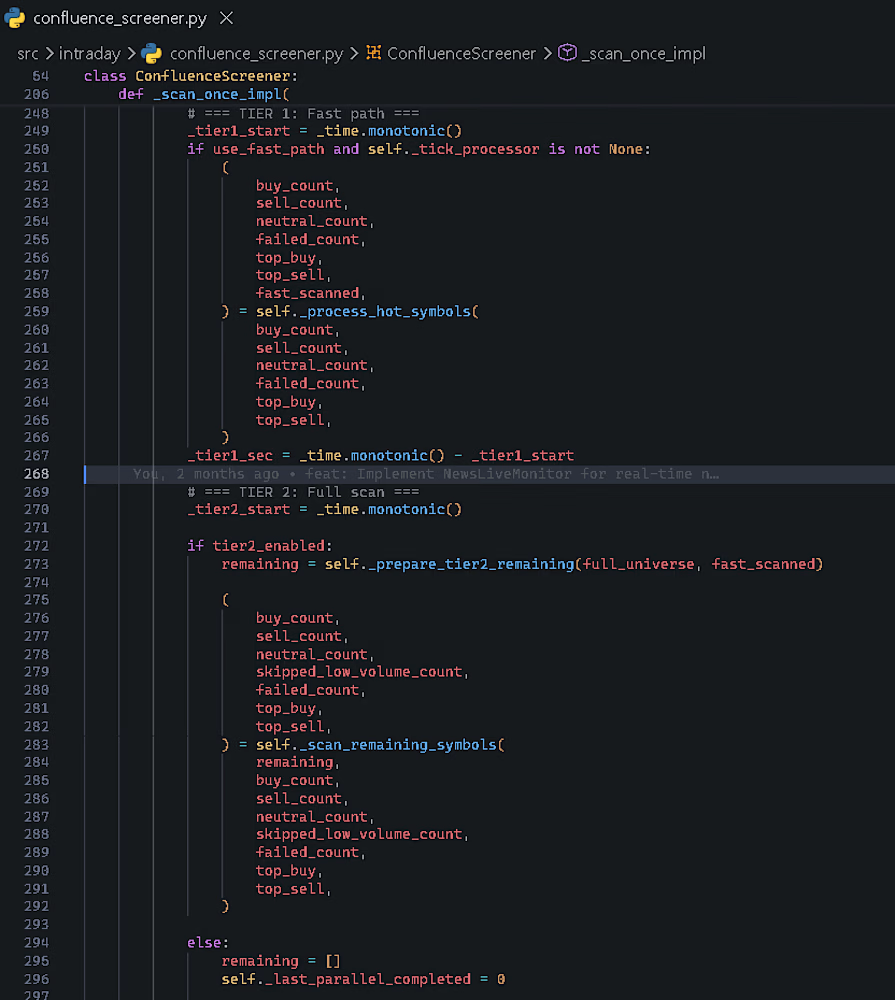
During market hours, the system uses FYERS as its primary market-data source, with Angel One SmartAPI for fallback data access and optional live WebSocket ticks. It monitors up to 300 NSE stocks through a dynamic watchlist: a 250-stock core universe plus slots for emerging market movers.
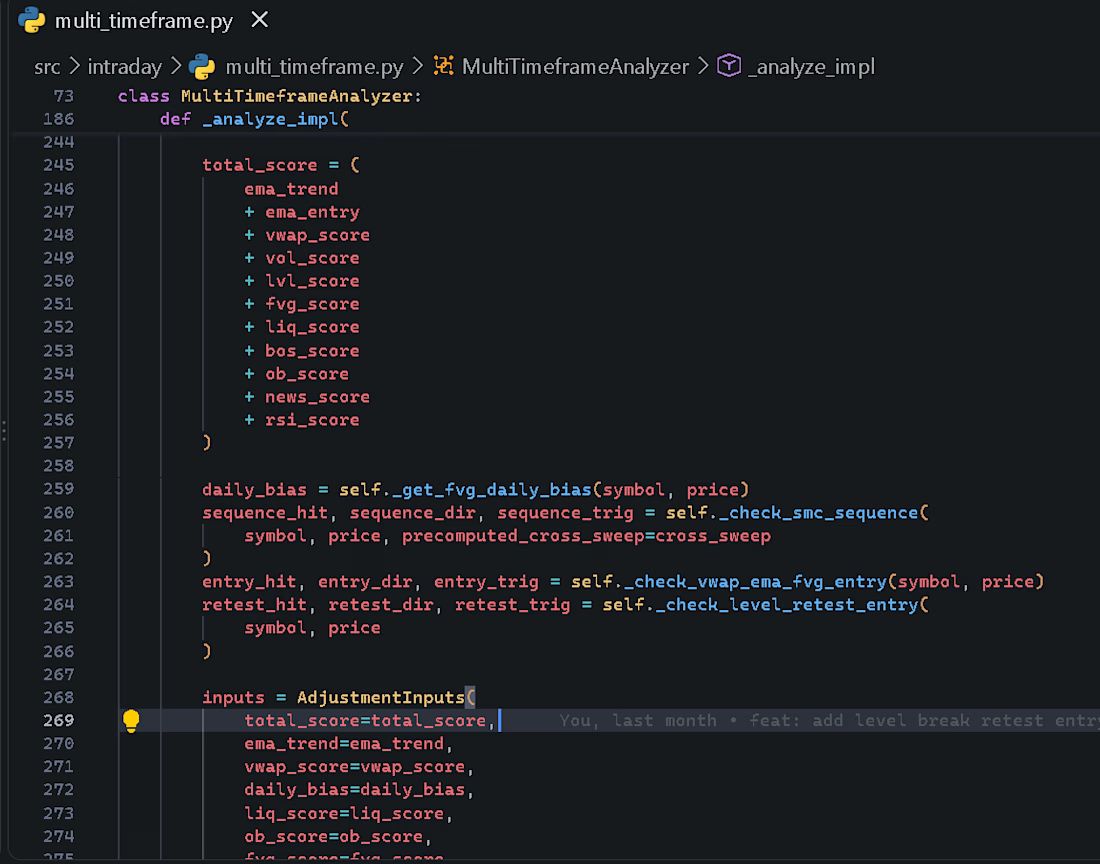
Its multi-timeframe analysis combines EMA, VWAP, RSI, volume spikes, opening range breakouts, support and resistance, level breaks and retests, fair value gaps, liquidity sweeps, market structure, order-book signals, and market regime. It also monitors stock-specific news and uses relevant headlines as an input to scoring.
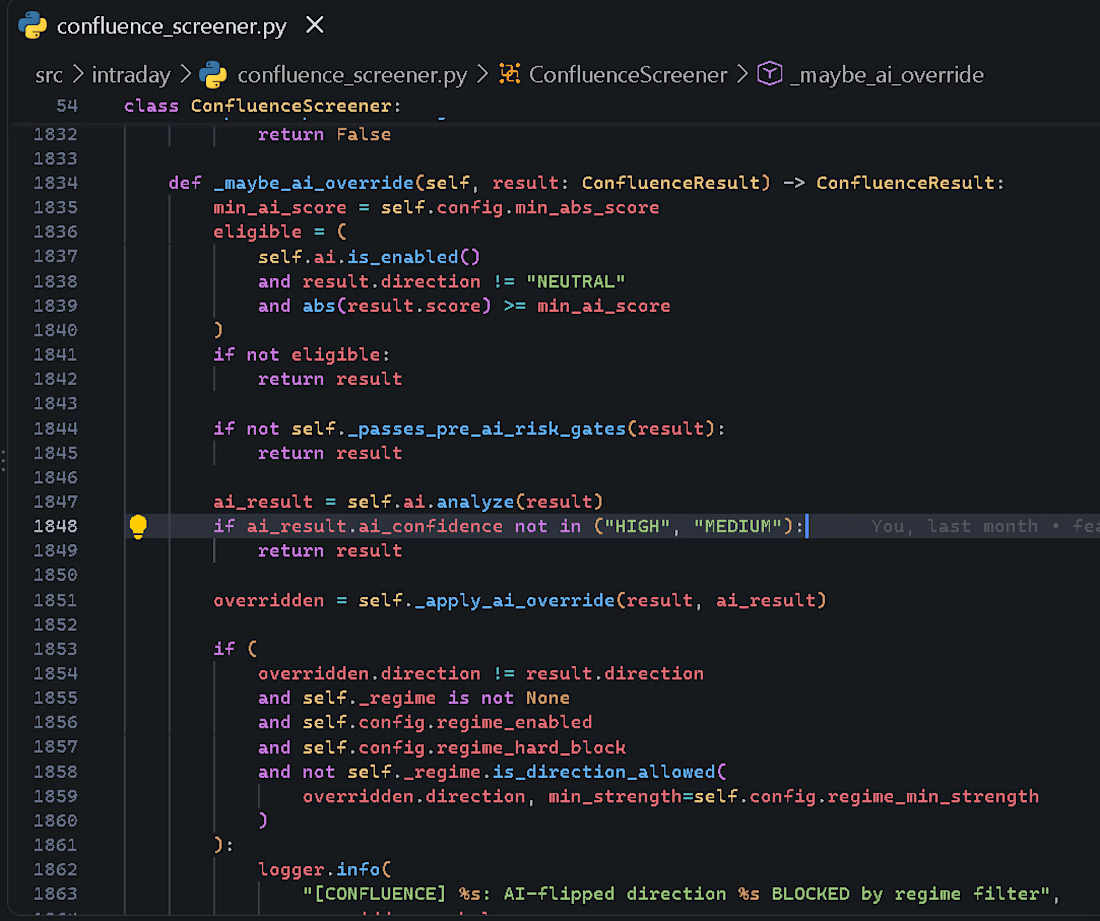
Before an alert is sent, the system checks signal strength, risk–reward, entry timing, cooldowns, sector exposure, and loss limits. An optional AI layer reviews qualifying setups and adds a risk note. Position monitoring, end-of-day reconciliation, and missed-opportunity tracking help measure what happens after detection.
📈 Daily swing engine
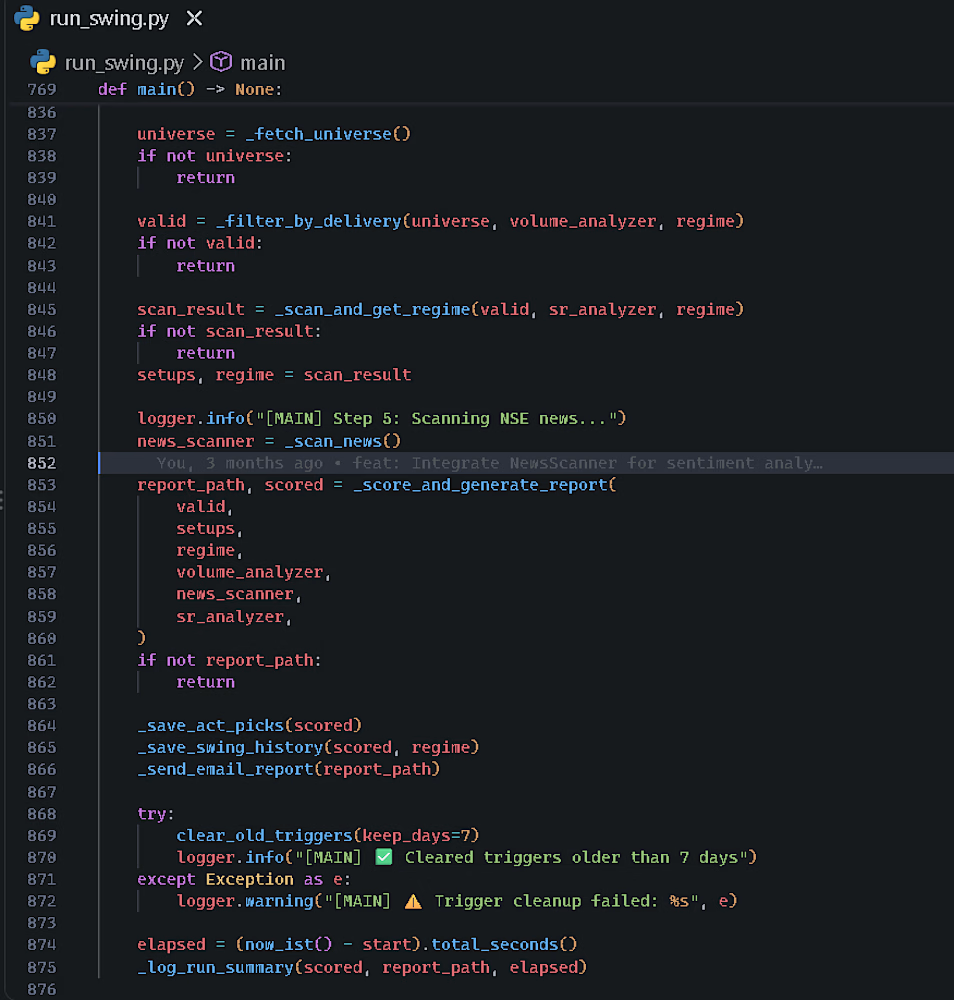
The swing pipeline starts with the NSE 500 universe. It filters candidates using delivery data and scans for VCP, breakouts, pullbacks, and result-driven momentum.
Its conviction score brings together technical structure, support and resistance, VWAP, sector strength, quarterly results, news and corporate events, delivery trends, bulk-deal activity, and the broader market regime. Reports include entry, stop-loss, target, and risk–reward levels. When no setup qualifies, the system sends a no-trade report.
🌅 A premarket module analyzes gaps and prepares a day-trading report. The project also includes a separate backtesting module, Telegram and email alerts, PostgreSQL-based history and outcomes.
The intraday loop has a configured 60-second polling interval; actual scan completion time depends on data availability and processing. Signal generation is automated, while trade execution is manual.
The engineering challenge I enjoyed most was building the full loop: detecting a setup, explaining why it qualifies, applying risk checks, and tracking its outcome.
#Python #FinTech #TradingTechnology #NSE #SystemDesign
The network for creativity
Join 1.25M professional creatives like you
Connect with clients, get discovered, and run your business 100% commission-free
Creatives on Contra have earned over $150M and we are just getting started











Related posts

Built SpeedPulse AI — an automated website performance teardown and local client acquisition engine.
Most local businesses lose over 35% of their mobile conversions due to slow load times and missing Google SEO schema. Auditing each client manually took hours, so I automated the entire process on Base44:
⚡ Real-time Core Web Vitals, Local SEO & UX friction score dials
🔄 Dynamic Before/After sprint projections (gliding scores from 45 to 91+)
📄 Automated Executive PDF brief generation
🤖 Built-in Agency CRM that captures incoming leads, tracks stages, and auto-drafts client proposals with one-click copy
Live App: https://speedpulse-flow.base44.app


I built FlowPilot AI ⚡ — an AI-powered operations platform that transforms customer requests into intelligent workflows.
From AI-powered request analysis and smart prioritization to conditional automation and human approval, FlowPilot helps small businesses streamline operations and reduce repetitive work.
Built with @Base44 for the #Base44Challenge

There's a lot to appreciate in this piece. Great job!

AI-Assisted Product Advertisement | Butter Slime Kit
Created a vibrant and engaging product advertisement for Butter Slime Kit, combining AI-assisted visuals, creative storytelling, and dynamic video editing to showcase the product in an appealing way.
The video focuses on capturing attention through colorful product presentation, playful visuals, smooth transitions, and engaging promotional storytelling. The goal was to create an eye-catching advertisement that highlights the product's appeal and connects with its target audience.
Skills: AI Video Creation, Video Editing, Motion Graphics, Product Advertising, Visual Storytelling, Creative Direction.


The bright pacing matches the playful product perfectly.