The network for creativity
Join 1.25M professional creatives like you
Connect with clients, get discovered, and run your business 100% commission-free
Creatives on Contra have earned over $150M and we are just getting started
Back to feedPost

Hiring a web designer sounds simple until you start comparing portfolios, prices, platforms, timelines, and proposals.
Two designers might both show you beautiful websites, yet one might be a much better fit for your business.
So how do you know who to choose?
Here are the things I think you should look at before hiring a web designer.
Look beyond the portfolio
A beautiful portfolio tells you what someone has designed.
It doesn't tell you how they think.
When reviewing someone's work, don't only ask whether you like the colors, layout, or animations.
Ask:
Does the website make the offer clear?
Is the next step obvious?
Does the structure make sense?
Does the design guide visitors toward taking action?
A website should look good, but every design decision should have a reason behind it.
2. Make sure they understand your business
Your website represents your business, so your designer needs to understand more than your preferred colors and fonts.
They should understand:
Who your customers are.
What you sell.
What makes your business different.
What you want visitors to do.
How people currently find you.
The better they understand your business, the easier it becomes to make decisions that support your goals.
3. Ask what happens after someone visits your website
This is one question I think more business owners should ask.
What happens when someone fills out your form?
Where does the lead go?
Who follows up?
What happens after someone books a call?
Does the lead enter your CRM?
Does the customer receive an email or text?
Your website often sits at the beginning of a much bigger customer journey.
If nobody has thought about what happens after the click, you might end up with a website that looks good but creates little business value.
4. Understand their process
Before hiring someone, ask how they approach a project.
Do they start by understanding your business?
Do they plan the website structure before designing?
Do they think about the customer journey?
How do they handle revisions?
What happens if you need changes after launch?
A clear process gives you a better idea of what working with them will look like.
5. Don't choose based on price alone
Price matters, but it shouldn't be the only thing you compare.
Look at the full picture:
Experience.
Communication.
Technical skills.
Process.
Strategy.
Post-launch support.
Understanding of your business.
A cheaper website might look attractive at first, but the real question is what you're getting for the investment.
6. Ask what success looks like
Before the project starts, define what you want the website to achieve.
Maybe you want:
More enquiries.
More booked calls.
More sales.
Better quality leads.
More credibility.
A clearer way to explain your offer.
Your answer should influence how the website is structured.
A website built to generate leads will require different decisions from one built mainly to provide information.
7. Pay attention to the questions they ask you
This is one of the easiest ways to understand how someone approaches web design.
A designer who asks only:
“What colors do you want?”
“What style do you like?”
“How many pages do you need?”
is gathering design information.
A designer who also asks:
“Who is your ideal customer?”
“What happens when someone becomes a lead?”
“What is the main action you want visitors to take?”
“What isn't working with your current website?”
“What does a successful website look like for your business?”
is trying to understand the bigger picture.
The questions someone asks before building your website often tell you a lot about how they will approach the project.
The right web designer isn't necessarily the person with the biggest portfolio or the lowest price.
Look for someone who understands your business, understands your customers, and knows how your website fits into the bigger picture.
Because your website isn't simply a collection of pages.
It is one part of how people discover your business, understand your offer, build trust, and decide what to do next.
P.S. I'm Odunayo, a website designer, sales funnel strategist, and automation expert. I help businesses build websites and systems designed to generate and convert leads.



The network for creativity
Join 1.25M professional creatives like you
Connect with clients, get discovered, and run your business 100% commission-free
Creatives on Contra have earned over $150M and we are just getting started





Related posts


Parley is now available as a free Astro template.
It's a warm, editorial site for AI startups and SaaS products, and the code version of our most remixed Framer template. You get all 22 pages: home, workflows with three detail pages, pricing with a full comparison table, a blog with ten posts, contact, waitlist and legal pages. The blog is written in Markdown, and there's an optional CMS for editing it. It's MIT licensed, so you can use it for client work.


wow this is amazing and thanks for sharing

For me personally, an intro/loading screen is a must for every website I make.
Same with a subtle blur when opening a modal. Just blur, no dark overlay. It makes the site feel more premium imo.
Wdyt? What's your favorite detail on your own sites?


Top-notch design.

The real cost of bad UX:
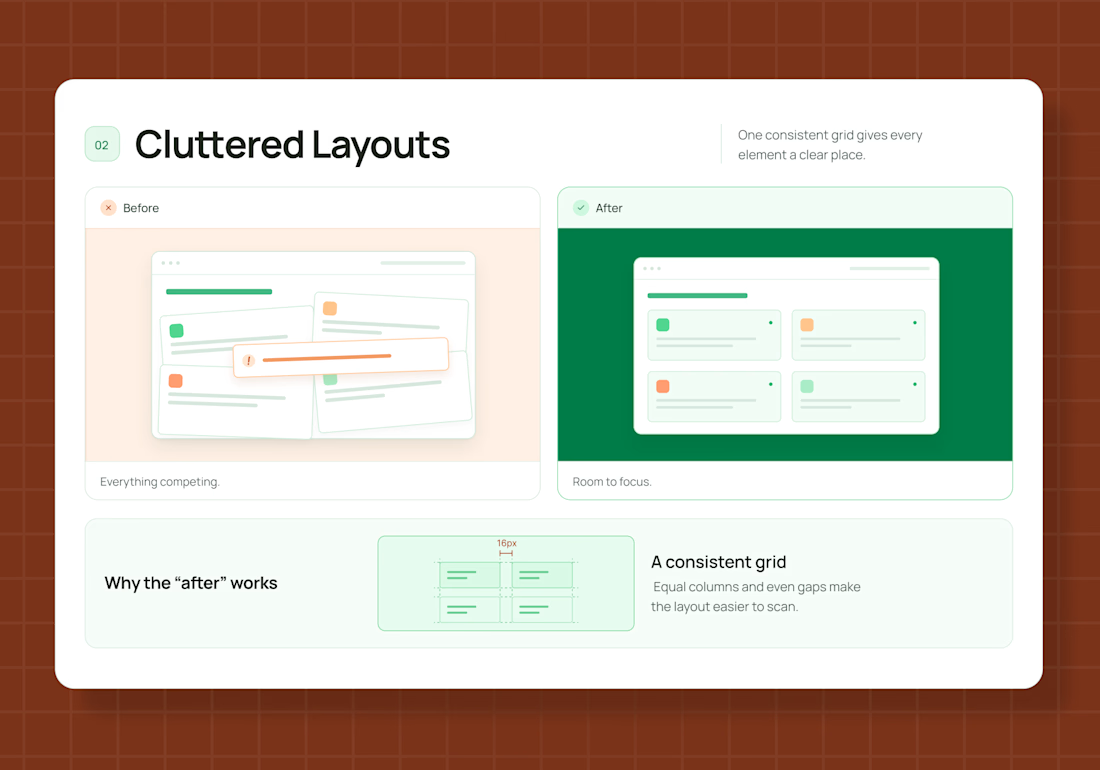
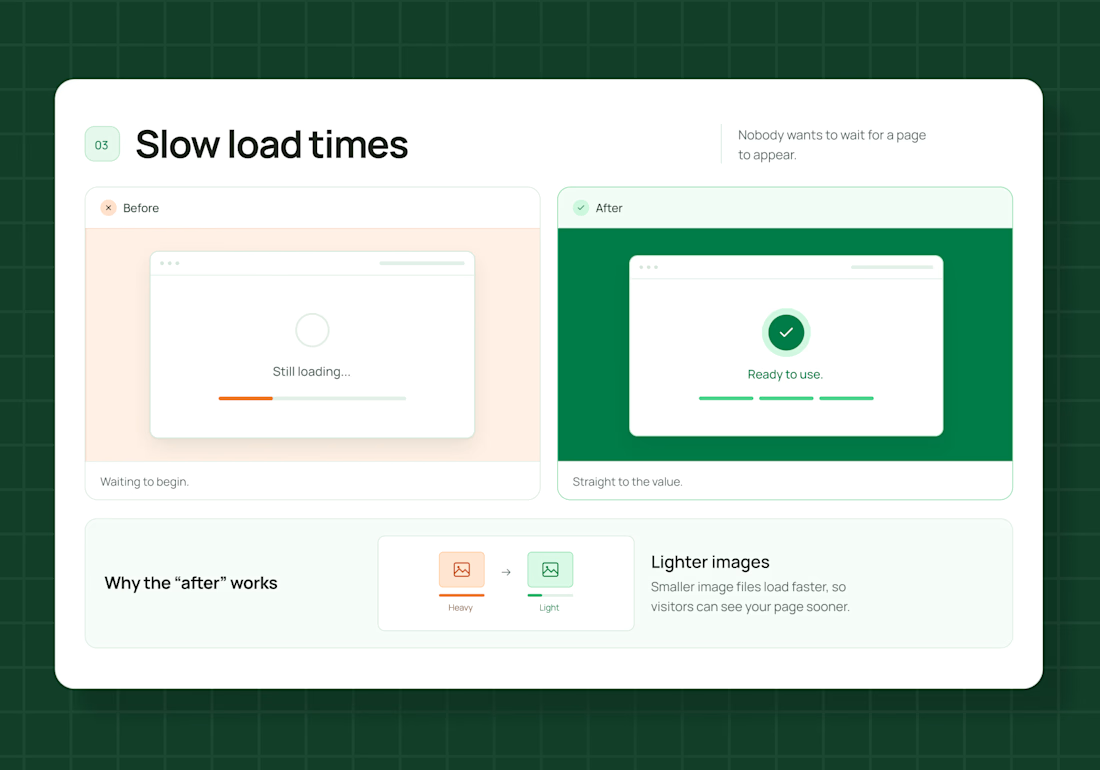
Cluttered layouts, and slow load times quietly push people toward competitors before they even read your value prop. Good design isn't decoration. It's retention.
If you're not sure how your product's UX is performing, that uncertainty is usually the first sign it needs a look.
Send me a message - happy to share quick audit on your existing design!
#UXDesign #UIUX #WebDesign #UserExperience #WebsiteDesign #ConversionFocusedDesign


Good design isn't decoration, it's retention is a line every founder should tape to their monitor. People bounce over clutter and slow loads before they ever reach the value prop, and that lost revenue is invisible so it never gets fixed. Framing UX as retention is exactly right.